NFL Power Rankings Betting Value: How to Turn Rankings Into Winning Bets

NFL power rankings create betting value when there is a measurable gap between where the media and public perceive a team's strength and where the sportsbook's line actually prices them. That gap reveals games where the spread does not accurately reflect the true matchup quality. Building your own power ratings and comparing them to the market's implied ratings is the most reliable method professional handicappers use to identify mispriced NFL games week after week throughout the regular season and into the postseason.
NFL power rankings create betting value when there is a measurable gap between where the media and public perceive a team's strength and where the sportsbook's line actually prices them, because that gap reveals games where the spread does not accurately reflect the true matchup quality. Building your own power ratings and comparing them to the market's implied ratings is the most reliable method professional handicappers use to identify mispriced NFL games week after week.
NFL power rankings are one of the most misused tools in sports betting. Most bettors look at rankings as a reflection of current team quality, which is fine for bar conversations and fantasy football drafts, but if you are trying to beat the number, you need to think about rankings entirely differently. In my 20 years of handicapping football, I have found that power rankings are most valuable not for confirming what you already know but for spotting when the market is lagging behind reality. The real edge comes from identifying gaps between public perception and actual team strength, then finding games where the spread has not caught up to the shift. Last season I identified a team that dropped from 8th to 19th in the ESPN power rankings after a three-game losing streak, but my own model had them at 11th based on efficiency metrics. I bet them as underdogs in three consecutive games and went 3-0 ATS because the market was pricing narrative rather than data.
What Are NFL Power Rankings and Why Do They Matter for Betting?
Power rankings are a hierarchical ordering of all 32 NFL teams based on overall strength. Every media outlet publishes their version, from ESPN to NFL.com to countless independent analysts. Sportsbooks build their own internal power ratings, which are numerical values assigned to each team, and use those numbers to generate point spreads. The public-facing power rankings you see on television and websites are useful as a starting point, but they often reflect narrative momentum more than objective data.
When a team goes 3-0 in September, the media bumps them up the rankings. When they go 1-3 in a brutal stretch, they get dropped fast. But a sharp handicapper at The Best Bet on Sports is not reacting to last week. We are projecting where a team is trending over the next three to four games based on efficiency metrics, injury trajectory, and schedule difficulty. The betting value lives in that gap between media perception and actual team strength.
| Power Rating Component | Weight | Why It Matters |
|---|---|---|
| Offensive efficiency (pts per drive) | 25% | Most stable predictor of scoring output |
| Defensive efficiency (pts per drive allowed) | 25% | Correlates strongly with ATS performance |
| Turnover margin (adjusted for luck) | 15% | Turnovers have a high variance component |
| Strength of schedule adjustment | 15% | Beating bad teams inflates raw stats |
| Recent form (last 4 games weighted) | 10% | Captures momentum and scheme changes |
| Special teams efficiency | 10% | Overlooked by most models, impacts field position |
The distinction between power rankings and power ratings is important. Rankings are ordinal, just a list from 1 to 32. Ratings are numerical values that quantify the gap between teams. Knowing that Team A is ranked 5th and Team B is ranked 15th tells you almost nothing about the expected margin of victory. Knowing that Team A has a power rating of 28.5 and Team B has a rating of 22.0 tells you the expected margin is approximately 6.5 points before home field and situational adjustments.
How Do Sportsbooks Use Power Ratings to Set NFL Lines?
Every major sportsbook has a team of analysts who assign numerical power ratings to each team based on performance data, roster quality, and contextual factors. A point spread is essentially the difference between two teams' power ratings, adjusted for home field advantage, rest, travel, injuries, and weather. When the sportsbook's model says Team A is 6 points better than Team B and the game is at Team A's home stadium with a 2.5-point home field adjustment, the opening line is approximately Team A -8.5.
When you build your own power ratings and compare them to the market's implied ratings, you can identify games where the number is off. If your model says Team A is 6 points better than Team B, but the sportsbook has the line at only -3.5, that is a potential value play on Team A. The discrepancy might exist because the public perception of Team B has been inflated by a flashy recent win, or because Team A has been undervalued after a loss that was driven by turnover variance rather than actual team quality.
The key to making this work is consistency in your rating system. Your ratings need to account for opponent-adjusted performance because beating a bad team does not mean the same thing as beating a good team. They need to balance recent form against season-long sample to avoid overreacting to small-sample fluctuations. They need to adjust for key personnel changes that skew season averages. And they need to factor in pace and scheme matchups because some teams are legitimately better or worse against specific opponent styles regardless of their overall ranking.
Where Do Most Bettors Go Wrong With Power Rankings?
The biggest mistake casual bettors make is chasing rankings without accounting for price. A highly ranked team is not automatically worth betting if the public has already inflated the line beyond their true edge. This is the fundamental trap of betting on favorites. You might be right about the team being better, but if you are laying -8.5 when the true line should be -6, you are grinding the long side of a bad bet that will lose you money over any meaningful sample.
This is why I always stress to my subscribers: it is not about who is better, it is about the number. The number is everything in spread betting. A team ranked 1st in the NFL is not a good bet at -14 if the true spread should be -10. A team ranked 20th might be an excellent bet as a +7 underdog if the true spread should be +4. Your opinion about team quality is only valuable when it differs from the market's opinion, and only when you can quantify that difference through your own power ratings.
The second mistake is using a single source for rankings. If you are basing your entire betting model on one media outlet's power rankings, you are working with incomplete and often narrative-driven information. At The Best Bet on Sports, our approach combines multiple analytical inputs, including efficiency metrics, situational trend databases, injury impact projections, and real-time market movement data, to build a more complete picture than any single ranking system can provide.
How Can You Build Your Own NFL Power Ratings for Betting?
Building your own power ratings does not require a PhD in statistics. It requires a consistent methodology and the discipline to update it weekly without letting bias creep in. Here is a practical framework you can start applying today.
Start with points per drive on offense and points per drive allowed on defense as your base metrics. These are more stable and predictive than raw points per game because they account for pace of play differences. A team that scores 28 points per game in a fast-paced offense might actually be less efficient than a team scoring 24 points per game in a slow, methodical attack if the first team needs more possessions to reach their total.
Adjust for strength of schedule by comparing each team's efficiency metrics against the average quality of their opponents. A team with strong per-drive numbers against a bottom-10 schedule might be rated too high, while a team with modest numbers against a top-five schedule might be underrated. Weight recent performance more heavily than early-season games because NFL teams evolve significantly throughout the season as schemes gel, injuries accumulate, and coaching adjustments take effect.
Assign a numerical rating to each team on a scale that allows you to generate projected point spreads. If your highest-rated team is a 30 and your lowest is a 15, the maximum expected spread in a head-to-head matchup would be approximately 15 points before home field. Compare your projected spread for every game against the posted line, and any game where the discrepancy exceeds 1.5 points is worth investigating further as a potential betting opportunity.
How Do Overreaction Spots Create Power Rankings Betting Value?
After a bad loss, teams often drop in public perception faster than their true ranking deserves. The media runs with the narrative of collapse, the public fades the team in the betting market, and the line shifts to accommodate the overreaction. These are some of the most profitable spots in NFL betting because you are buying a team at a discounted price based on emotional narrative rather than structural reality.
The key is distinguishing between genuine decline and narrative-driven overreaction. If a team lost because of three fluky turnovers, that is variance, not decline. Turnovers are among the most random, least repeatable events in football, and a team that suffered from turnover luck in one game is no worse than they were the week before. If a team lost because their offensive line cannot block and their secondary cannot cover, those are structural problems that persist, and the drop in perception is justified.
When I identify a post-loss overreaction spot, I check three things: Did the loss change anything fundamental about the team's roster or scheme? Were the key performance metrics, efficiency per drive, third-down rates, red zone rates, significantly worse than the team's season average? And has the line moved more than my power ratings suggest it should? If the answers are no, no, and yes, I have a value play.
What Is the Best Way to Apply Power Rankings to NFL Picks Against the Spread?
Against the spread, the goal is finding situations where the line does not match your power ratings. Some of the highest-value spots I have found over the years follow predictable patterns.
Divisional road dogs are consistently undervalued because division teams know each other well, and the road team often gets more points than they deserve to lose by. Power rankings tend to undervalue the familiarity factor, which compresses margins in divisional games. Teams following a big primetime win often see inflated spreads the following week because the public overvalues momentum and the media narrative amplifies the previous performance. Strength-of-schedule disconnects create value when a team with a great record against weak opponents looks better in the rankings than they actually are, and the line does not reflect the quality gap when they face a real test.
Cross-reference your power ratings with our results page to see exactly where we have found value against the power rankings consensus. For updated NFL picks built on this exact methodology, check our full analysis each week during the season. See how power ratings feed into a complete football handicapping system and how they inform football handicapping strategies that work. Transparency matters in this business, and we post our football picks with full reasoning so you can evaluate the process, not just the results.
We go deeper on the related market in how power ratings work in sports betting.
How Should You Update Power Rankings During the NFL Season?
The cadence and methodology of your weekly updates matters as much as the initial ratings you set in September. Most recreational bettors either update too aggressively, overreacting to single-game results, or not aggressively enough, clinging to preseason assumptions that no longer reflect reality. The correct approach is somewhere in between.
I recommend a weighted update system where the most recent four games carry approximately 60% of the weight and the full-season sample carries the remaining 40%. This balances recency, which captures genuine improvements or declines in team quality, against sample size, which smooths out single-game variance. After a team fires their offensive coordinator, for example, the first two games under the new system should carry extra weight because they represent a genuine structural change, not just random variation.
Update your ratings every Tuesday, after Monday Night Football concludes and before the betting lines for the following week open. This gives you the freshest possible data to compare against the opening lines, and it ensures your ratings are informed by the complete results of the previous week rather than partial data. For weekly NFL picks that already incorporate this power rating methodology, explore our sports picks packages — or review our NFL handicapping myths debunked guide for a reality check on common power ranking misconceptions.
Frequently Asked Questions
How do NFL power rankings affect point spreads?
Sportsbooks use internal power ratings, which are numerical values assigned to each team, to generate point spreads. The spread reflects the difference between two teams' ratings plus home field advantage and situational adjustments. When public power rankings diverge from the book's model, value opportunities arise because public betting based on narrative rankings pushes lines away from their true probability.
Are power rankings useful for betting NFL totals?
Absolutely. When you cross-reference offensive and defensive efficiency rankings, you can identify mismatches that point toward high or low-scoring games. A top-tier offense against a poor defense is a strong over signal. Two top-10 defenses meeting is a strong under signal. Power ratings applied to totals analysis add a valuable dimension beyond the standard team scoring averages that most casual bettors rely on.
How often should I update my NFL power ratings?
Update your power ratings weekly, ideally on Tuesday after all games from the previous week are complete. Use a weighted system that emphasizes recent performance while maintaining enough historical data to avoid overreacting to single-game variance. Major events like quarterback injuries, coaching changes, or trade deadline moves should trigger immediate adjustments outside the normal weekly cycle.
What makes The Best Bet on Sports different from other handicapping services?
Our NFL handicappers use multi-factor power rating models combined with situational analysis, injury impact projections, and market intelligence rather than relying on media rankings or public sentiment. We document our record publicly so you can evaluate performance before committing, and every pick release includes the full reasoning behind the selection.
Can I build useful power ratings without advanced statistics knowledge?
Yes. Points per drive on offense and defense, adjusted for strength of schedule, gives you a solid foundation that outperforms most media power rankings for betting purposes. You do not need regression models or machine learning. You need consistency, discipline in updating weekly, and the patience to let your system prove itself over a full season sample.
How do power rankings change during the NFL playoffs?
Power ratings in the playoffs should weight defensive metrics and turnover protection more heavily than during the regular season because playoff games feature tighter margins and higher-intensity defensive play. Additionally, coaching quality and quarterback performance under pressure become more predictive in the postseason. Adjust your model to reflect these playoff-specific dynamics rather than applying your regular-season weightings unchanged.
What is the most common mistake when using power rankings for betting?
The most common mistake is betting a highly ranked team regardless of the price. A team ranked first in the NFL can still be a bad bet if the spread is inflated beyond their true edge. Always compare your power rating spread to the posted line and only bet when the discrepancy is large enough to provide genuine value. The number matters more than the ranking.
The Best Bet on Sports · 1.5M followers on TikTok
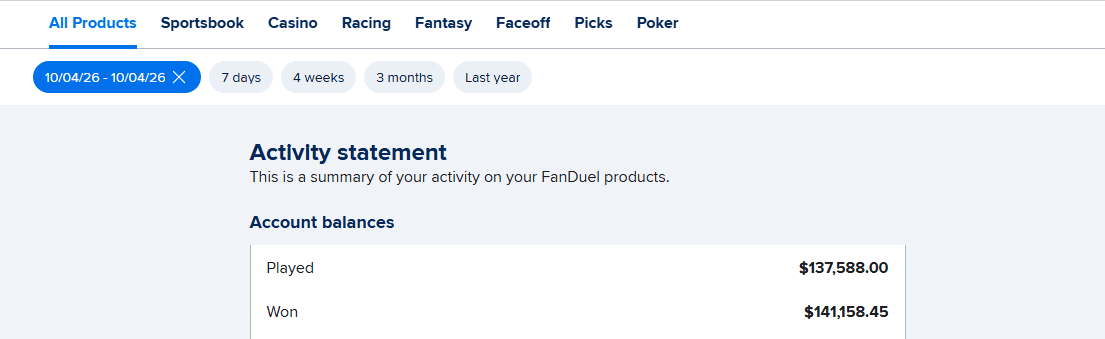
Sports Betting TikTok is the live betting account behind The Best Bet on Sports, covering NFL, NCAAF, NBA, NCAAB, MLB and WNBA markets in real time. The account has been limited on all six major U.S. sportsbooks — FanDuel, DraftKings, Caesars, BetMGM, Fanatics and ESPN BET — for winning on live betting, with $367,520 in verified profit since 2005. View full profile →
Past results do not guarantee future performance. Must be 21 or older to wager.
Related Articles
Football Handicapping System Explained: How the Pros Pick Winners
NFL Division Winner Odds and Futures Best Bets for 2026
Best Football Prediction Sites 2026: What to Look For
Best NFL Handicapper with a Proven Record: How to Find One That Actually Wins
Football Betting Secrets From the Best Sports Handicappers
Football Handicapping Strategies That Actually Work in 2026
Get real live betting picks
From $39.95/mo · Cancel anytime · Email + Discord delivery
● Get The Picks
Choose your package
Tap any tier below to select · Subscribe in one tap
👇 Tap any package to select it
✓ You're selecting
25 Units · $99.95/month
25 unit picks per month. Sweet spot for most bettors — plenty of action without going all-in.
- ✓25 live betting selections/month
- ✓Email + Discord delivery
- ✓All sports (NFL, NCAAF, NBA, NCAAB, MLB)
- ✓Mix of 1, 2, 3, 5-unit rated plays
- ✓Cancel anytime
Secure PayPal · Cancel anytime · No hidden fees · 21+ · +$367K verified
+$367,520 verified · Limited on 6 sportsbooks · 20 years documented · See Proof
Join Our Newsletter
Get free expert sports picks and analysis delivered weekly.