What Makes a Good Sports Handicapper? The Traits That Separate Experts From Pretenders

A good sports handicapper is defined by a verified long-term track record, transparent methodology, disciplined bankroll management recommendations, and a realistic approach to win rates that acknowledges 54 to 58 percent on sides and totals as genuinely elite performance. What separates legitimate handicappers from fraudulent operators is their willingness to document and share complete results — including losing periods — rather than cherry-picking highlights, using pressure tactics, or making mathematically impossible claims about guaranteed profits and unrealistic winning percentages.
A good sports handicapper is defined not by a single hot month or a memorable winning streak but by a documented, multi-year track record of identifying lines where the market has mispriced the true probability, communicated with full transparency including accountability for losses as well as wins — because in an industry where 90% of self-proclaimed experts cannot produce verified long-term records, understanding what genuine handicapping expertise looks like is the most valuable knowledge any bettor can possess.
My name is Sports Betting TikTok, and I have been a Senior Sports Analyst covering the handicapping industry for over 20 years. In that time, I have watched it evolve from a relatively small community of serious analysts into a massive, largely unregulated marketplace where fraudulent operators dramatically outnumber legitimate professionals. The proliferation of social media has made it trivially easy for anyone to screenshot a winning ticket, fabricate a record, and market themselves as an expert — making it harder than ever for bettors to distinguish genuine skill from manufactured hype. At The Best Bet on Sports, we have built our entire operation around the principles that define a truly good handicapper: analytical rigor, transparent documentation, consistent methodology, and the intellectual honesty to own our losses as publicly as we promote our wins. This guide will walk you through what separates real handicapping expertise from pretender marketing, and how to evaluate any handicapper — including us — using objective criteria.
What Is the Core Job of a Sports Handicapper?
A sports handicapper's job is fundamentally about finding pricing errors in the betting market — identifying games where the sportsbook's line misprices the true probability of an outcome. They are not trying to predict who will win the game in a straight-up sense. They are trying to determine when the cost of betting on a specific outcome is less than the value of winning that bet.
This distinction between predicting winners and beating the number is the single most important concept in professional handicapping, and it is the concept that most recreational bettors fail to grasp. A handicapper might believe Team A will win 60% of the time, but if the line prices them as if they will win 65% of the time, there is no value on Team A — the bet is overpriced regardless of whether Team A ultimately wins. The professional handicapper passes on that bet and looks for a game where the pricing error favors the bettor.
This framework means a good handicapper will sometimes recommend betting on teams they think will lose. If Team B has only a 40% chance of winning but the line prices them at +180 (implied probability 35.7%), the handicapper's job is to identify that 4.3% gap between the true probability and the implied probability and exploit it. Over hundreds of such bets, that gap produces consistent profit even though many of the individual bets lose.
The difference between professional handicapping and recreational betting is precisely this: recreational bettors try to predict winners, while professionals try to beat the number. Those are meaningfully different tasks that require different skills, different mindsets, and different evaluation criteria.
What Skills Define a Truly Good Handicapper?
After 20 years in this industry, I have identified five core skills that separate genuinely profitable handicappers from those who get lucky for a stretch and then regress.
Statistical and analytical ability is the technical foundation. Building or using models that go beyond basic box-score statistics requires understanding of efficiency metrics, regression analysis, sample size requirements, and the difference between descriptive statistics and predictive analytics. The best NFL handicappers use advanced metrics like EPA per play, DVOA, success rate, and situational splits to identify edges invisible in standard statistics. A handicapper who relies exclusively on points scored, yards gained, and win-loss records is working with outdated tools that the market has already incorporated.
Market awareness distinguishes handicappers who find value from those who merely have opinions about games. Understanding how betting lines are set, what drives line movement, and how to interpret the difference between public money and sharp money allows a handicapper to evaluate not just which team is better, but whether the current price accurately reflects that advantage. A handicapper with excellent game analysis but poor market awareness will frequently bet on the right team at the wrong price — and the wrong price erases the analytical edge.
| Skill | What It Looks Like | Red Flag If Missing |
|---|---|---|
| Statistical ability | Custom models, efficiency metrics, sample-aware analysis | Relies on basic stats like points per game |
| Market awareness | Tracks line movement, understands sharp vs. public money | Ignores the line entirely, only picks "winners" |
| Emotional discipline | Consistent unit sizing, process adherence during losing streaks | Varies bet sizes based on confidence or desperation |
| Specialization | Deep expertise in 1-2 sports, detailed knowledge | Claims expertise across 6+ sports simultaneously |
| Transparency | Full records published, losses acknowledged | Only shares wins, hides or deletes losing picks |
Emotional discipline is rarer and more valuable than analytical ability. The capacity to maintain a consistent process through extended losing streaks — without abandoning the methodology that generated the edge, without chasing losses with inflated unit sizes, and without shifting to lower-quality plays out of desperation for a winner — separates the handicappers who survive long enough to profit from those who blow up during their first significant drawdown. I have seen brilliant analysts with superior models destroy their bankrolls and their subscribers' trust because they could not maintain discipline when the variance turned against them.
Specialization produces consistently better results than generalization. The sharpest handicappers I know are excellent in one or two specific areas rather than mediocre across all sports. A handicapper who has spent 15 years deep in NFL betting will consistently outperform a generalist who spreads their attention across football, basketball, baseball, hockey, and soccer. The depth of knowledge required to beat modern betting markets is too great for any individual to master across more than a few sports simultaneously. At The Best Bet on Sports, our team has specialized expertise across football, basketball, and baseball developed over 20 years.
Transparency — the willingness to publish full pick records including wins, losses, and pushes before games are played with verifiable timestamps — is the behavioral standard that separates professionals from performers. Retroactive "best of" records, selectively shared winning tickets, and post-game claims of having "liked" the winning side are meaningless. Real handicappers document their positions in advance, accept accountability for the full record, and present their results with the same honesty during losing stretches as during winning ones.
How Do You Evaluate Whether a Handicapper Is Genuinely Good?
Evaluating handicapper quality requires looking past surface-level win percentages to the metrics that actually predict future performance. Here is the evaluation framework I use, both for assessing competitors and for holding myself accountable.
Units won over a large sample is the first metric. Has the handicapper generated positive units of profit over 500 or more documented picks? A small sample of 50-100 picks can produce impressive-looking results through pure variance — a true 50% bettor has a meaningful probability of going 30-20 over 50 picks through luck alone. Over 500 picks, that luck evens out, and only genuine skill produces sustained positive unit totals.
Closing line value is the gold standard for evaluating analytical quality independent of short-term outcomes. A handicapper who consistently beats the closing line — betting at -3 when the line closes at -4.5, for example — is demonstrating that the professional market agrees with their assessment after processing all available information. Consistent positive CLV is the strongest possible evidence of genuine edge, because it measures the quality of the analysis rather than the randomness of the outcome.
Bet size consistency reveals whether a handicapper is padding their record with selectively sized bets. If a service claims 65% on "5-star max plays" while going 49% on "standard plays," and they bet twice as many units on the max plays, their overall unit profit may be positive despite a mediocre overall win rate. This is not necessarily dishonest, but it requires careful evaluation. A good handicapper bets consistent units across their full card, or if they use tiered sizing, they present the full-card results prominently rather than cherry-picking the top tier.
Long-term performance across multiple complete seasons eliminates the possibility that a great stretch was driven by variance rather than skill. A handicapper who posts an excellent season followed by two losing seasons followed by another excellent season is riding variance — their true win rate is probably close to the losing seasons, with the great seasons being positive outliers. Consistent year-over-year performance, even at a modest 54-56% rate, is far more indicative of genuine skill than alternating between brilliant and terrible seasons.
Our results page at The Best Bet on Sports presents historical performance across all sports and seasons with full transparency, because our track record supports scrutiny.
What Should a Good Handicapper's Pick Analysis Look Like?
The quality of a handicapper's written analysis is one of the most informative indicators of their analytical depth, and it is something every potential subscriber should evaluate carefully before committing money.
A legitimate handicapper's analysis does far more than name a team and a spread. It explains specifically why the line is wrong — what the sportsbook's model is missing or underweighting that creates the pricing error. It identifies the data or situational factors that support the pick — matchup dynamics, efficiency splits, injury impacts, weather considerations, or line movement patterns that indicate sharp-money agreement. It acknowledges the key risk factors — what could go wrong and what game-script scenarios would produce a loss. And it describes the expected flow of the game — what kind of performance would need to happen for the pick to cover.
When a service provides this level of analytical context, subscribers gain two benefits. They can independently evaluate whether the reasoning is sound for each specific game, which protects against blindly following a bad analysis. And they learn from the analytical framework over time, developing their own handicapping skills by studying how a professional approaches matchup evaluation.
Services that send picks in the format "Best Bet: Chiefs -3" with no supporting analysis are providing a number, not a service. They are asking you to trust them without giving you any basis for that trust. At The Best Bet on Sports, every pick release includes the full analytical reasoning behind the selection because we believe informed subscribers make better decisions with their bankrolls.
What Red Flags Indicate a Bad or Fraudulent Handicapper?
The handicapping industry contains more fraudulent operators per capita than almost any other financial service, and knowing the warning signs protects your money as effectively as finding the right service.
Claiming sustained win rates above 60-65% over large samples is the most common and most damaging lie in the industry. The sports betting market is far too efficient for any individual to sustain those rates over hundreds of picks. The very best handicappers in the world — the ones employed by professional betting syndicates — operate in the 55-60% range. Anyone claiming higher rates over large samples is either fabricating records, selectively reporting their best period, or counting only their top-tier plays while hiding losses on the rest.
Inability or refusal to produce full historical records is an immediate disqualification. Every legitimate handicapper has extended losing periods — they are an inevitable feature of sports betting variance. A service that cannot show you their complete history, including the bad stretches, is hiding information that would change your assessment.
Marketing language like "guaranteed winners," "lock of the century," or "can't-miss plays" is the vocabulary of fraud. There are no guarantees in sports betting. The uncertainty is the entire point of the market, and anyone promising certainty is exploiting your desire for it rather than delivering genuine analytical value.
Selling expensive packages based on a single hot streak exploits recency bias in its most dangerous form. A handicapper who went 18-6 over a three-week stretch and then markets a $500 "premium package" is monetizing variance. That same handicapper's 200-pick record might be 102-98 — essentially breakeven — but you will never see those numbers in the marketing.
Testimonials without verifiable subscriber identities provide zero evidence of quality. Any operation can fabricate positive reviews, purchase fake social media endorsements, and create the illusion of satisfied customers. Look for third-party verification, audited records, and the ability to independently verify the claimed results.
How Do Good Handicappers Handle Losing Streaks?
A handicapper's behavior during losing streaks reveals more about their professionalism and genuine skill than their behavior during winning periods. Every handicapper — without exception — experiences extended losing runs. The question is how they respond.
Good handicappers maintain their standard process without deviation. They continue to bet consistent unit sizes, they do not chase with inflated plays, and they do not abandon their methodology in favor of panic-driven changes. They communicate honestly with their subscribers about the losing period, explain what their analysis shows, and reiterate that variance is a normal and expected part of the process.
Bad handicappers respond to losing streaks by doubling down on unit sizes, shifting to different sports or bet types where they have less expertise, issuing "guaranteed recovery" plays at inflated prices, going silent and hoping subscribers forget about the losses, or deleting their losing picks from social media.
The way a handicapper navigates adversity tells you everything you need to know about whether their success is based on a repeatable process or on favorable variance that they cannot control and cannot replicate when it turns against them.
At The Best Bet on Sports, our approach to losing streaks is the same as our approach to winning streaks: consistent methodology, transparent communication, and standard unit sizing. Our results page includes our losing periods alongside our winning ones because both are part of the honest picture of professional handicapping.
How Do You Choose the Right Handicapper for Your Betting Style?
Selecting a handicapper is a personal decision that should align with your own betting style, risk tolerance, and learning goals. Not every legitimate handicapper is the right fit for every bettor.
Consider the handicapper's sport specialization relative to your interests. If you primarily bet NFL football, a service that covers six sports may give you less depth than a service that focuses exclusively on football. Specialization typically produces sharper analysis than breadth.
Evaluate the analytical depth of their write-ups relative to your own knowledge level. A beginner benefits from detailed explanations that teach the reasoning process. An experienced bettor may prefer concise analysis that cuts to the key factors without the educational context.
Assess the bet volume relative to your bankroll and betting style. A service that releases 15 picks per week requires a larger bankroll and more active engagement than one that releases 4-5 high-conviction plays. Neither approach is inherently better, but they serve different bettor profiles.
Review the historical performance across the specific bet types you plan to follow. A service might have excellent ATS results but mediocre totals results — if you primarily bet totals, the ATS record is less relevant to your experience.
Visit our sports handicappers page at The Best Bet on Sports to learn about our team's specific areas of expertise, and review our NFL picks and football picks pages to see whether our analytical approach aligns with what you are looking for in a handicapping service.
If this is your entry point, pair it with our guide to best sports betting advisors.
For a closer look at this angle, our breakdown of how sports handicapping has changed picks up where this leaves off.
Related Strategy Reading
For deeper context on the angles covered above, our analysis of online sports handicapping safety guide and best nba handicappers how to find winners pairs well with this guide; our NBA handicappers reflect these same principles applied to live games.
Frequently Asked Questions
How Do You Know If a Sports Handicapper Is Legitimate?
Demand full pick history including losses, verify that picks were posted before games with documented timestamps, evaluate units-won metric rather than just win percentage over a minimum of 500 picks, and look for consistent multi-year performance rather than a single standout season. Third-party monitoring by independent tracking services provides the strongest verification. If a handicapper cannot produce any of these forms of evidence, move on regardless of how compelling their marketing or social media presence may be.
What Win Rate Makes a Sports Handicapper Good?
A sustained 55-60% win rate against the spread over 500 or more picks is exceptional performance by any objective standard. At -110 standard juice, 55% produces approximately 5% ROI, and 57% produces approximately 10% ROI — both are outstanding returns that compound significantly over time. Any handicapper claiming sustained rates above 60% over large samples should be viewed with deep skepticism, as the market is too efficient for those returns to be genuine across a meaningful number of picks.
Should I Follow One Handicapper or Multiple?
Following one service with a verified record is generally more effective than splitting your bankroll and attention across multiple services with potentially overlapping or conflicting picks. Multiple services create decision fatigue, inconsistent bankroll management, and the temptation to cherry-pick only the picks that confirm your pre-existing biases. Find a handicapper whose methodology you understand, whose transparency you can verify, and whose analytical approach aligns with your betting philosophy — then commit to their process for a meaningful evaluation period of at least one full season.
What Is More Important — a Handicapper's Win Rate or Their ROI?
ROI is the more comprehensive metric because it captures both the win rate and the average odds at which those wins occur. A handicapper winning 56% at standard -110 juice has a different ROI than a handicapper winning 56% while identifying plus-money underdogs at an average of +120. The second handicapper generates substantially higher unit profit despite identical win percentages. When evaluating services, look at units won and ROI over their full documented sample — these metrics tell the complete financial story.
How Long Should I Follow a Handicapper Before Judging Their Performance?
A minimum of 50-100 picks is necessary for any statistically meaningful evaluation, and 200 or more picks provides substantially more reliable data. Over fewer than 50 picks, the variance in sports betting is large enough that a truly skilled handicapper could appear mediocre and a mediocre handicapper could appear skilled. One full NFL season of weekly picks — approximately 80-120 bets — provides a reasonable evaluation window, though multiple seasons of data increase your confidence dramatically.
Can a Handicapper Be Good at One Sport and Bad at Another?
Absolutely, and this is one of the most common mistakes bettors make when selecting a service. The skills required to handicap NFL football, NBA basketball, and MLB baseball are overlapping but distinct. A handicapper with deep expertise in NFL offensive schemes and defensive matchups may have no meaningful edge in evaluating NBA pace and efficiency or MLB pitching matchups. Always evaluate a handicapper's record in the specific sport you plan to follow, not their aggregate cross-sport performance which may be inflated by strong results in a sport you are not betting.
What Makes The Best Bet on Sports a Good Handicapping Service?
Our differentiation comes from 20 years of documented performance with full transparency, detailed analytical write-ups that explain the reasoning behind every selection, realistic expectations communicated honestly, and a team of specialized analysts with deep expertise in their respective sports. We do not sell guarantees, we do not hide losing periods, and we do not rely on marketing hype to attract subscribers. Our results page presents our complete historical record, our sports handicappers page introduces the team behind the analysis, and our daily pick releases demonstrate the level of analytical depth we bring to every recommendation. We believe the quality of our work speaks for itself when evaluated honestly.
The Best Bet on Sports · 1.5M followers on TikTok
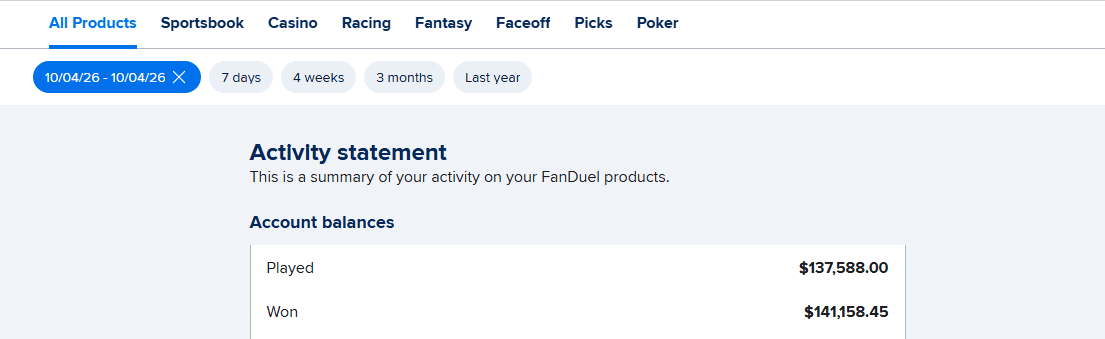
Sports Betting TikTok is the live betting account behind The Best Bet on Sports, covering NFL, NCAAF, NBA, NCAAB, MLB and WNBA markets in real time. The account has been limited on all six major U.S. sportsbooks — FanDuel, DraftKings, Caesars, BetMGM, Fanatics and ESPN BET — for winning on live betting, with $367,520 in verified profit since 2005. View full profile →
Past results do not guarantee future performance. Must be 21 or older to wager.
Related Articles
Free vs Paid Sports Picks: Which Is Actually Worth It in 2026?
Free Sports Handicapping Picks: Are They Worth It and How to Use Them
Why the 2026 World Cup Is About to Become the Biggest Betting Event in U.S. History
How Much Can You Make Sports Betting? An Honest Look at the Numbers
Sports Betting Tips for Beginners: What You Need to Know Before Your First Bet
Sports Picks Service vs Doing It Yourself: Which Approach Wins?
Get real live betting picks
From $39.95/mo · Cancel anytime · Email + Discord delivery
● Get The Picks
Choose your package
Tap any tier below to select · Subscribe in one tap
👇 Tap any package to select it
✓ You're selecting
25 Units · $99.95/month
25 unit picks per month. Sweet spot for most bettors — plenty of action without going all-in.
- ✓25 live betting selections/month
- ✓Email + Discord delivery
- ✓All sports (NFL, NCAAF, NBA, NCAAB, MLB)
- ✓Mix of 1, 2, 3, 5-unit rated plays
- ✓Cancel anytime
Secure PayPal · Cancel anytime · No hidden fees · 21+ · +$367K verified
+$367,520 verified · Limited on 6 sportsbooks · 20 years documented · See Proof
Join Our Newsletter
Get free expert sports picks and analysis delivered weekly.