Oregon Football Picks 2026: Tempo, a Home-Heavy Schedule, and a November With No Bye
By Sports Betting TikTok
Oregon football betting in 2026 comes down to three structural facts: tempo works by denying the opposing defense its substitutions rather than by simply scoring faster, seven home games inflate a power rating the schedule does not road-test until November 7 at Ohio State, and a single early bye leaves the Ducks playing their last seven games in consecutive weeks. The Best Bet on Sports is limited on all six major U.S. sportsbooks, with $367,520 in verified profit.
Every Oregon betting preview says the same thing: the Ducks play fast, so look at the over. That observation was useful around 2010. It has been fully priced for more than a decade, and a plays-per-game figure is one of the first inputs any modern total accounts for. Repeating it is not analysis, it is nostalgia, and it will cost you the vig every time.
The version worth paying attention to is mechanical. Tempo matters in 2026 for what it does to the other team's defensive rotation, not for what it does to Oregon's snap count. Layer that onto a schedule that is unusually home-heavy at the front and unusually punishing at the back, and the mispricings are locatable — they are just not where the previews are pointing.
Tempo Is a Substitution Argument, Not a Scoring One
Here is the piece of the tempo story that survives the market having priced everything else. College rules let the defense substitute when the offense substitutes, and the officials will hold the ball to allow it. An offense that lines up immediately and snaps without personnel changes takes that opportunity away. The defense on the field when a drive begins is frequently the defense that finishes it.
For a defensive line, that is the whole ballgame. Interior linemen are rotational players by design — they are built to give maximum effort for a handful of snaps and then come off. Deny the rotation and you are asking a 320-pound player to hold his gap on his fourteenth consecutive snap. He will not. Not because he is not trying, but because nobody can. Gap discipline degrades before effort does, and it degrades quietly, which is why it does not appear anywhere in a box score until it appears in the final margin.
This is why the tempo edge is a second-half and fourth-quarter argument rather than a pre-game one. Nothing about it is visible in the first quarter. Both teams are fresh, the defense is executing, and the score often looks tighter than the process. A pre-game over on tempo alone is betting a number that already contains pace. A live second-half position, taken because you have been counting the opposing front's snaps without relief, is betting something the market genuinely has not measured.
Autzen makes the same mechanism worse for the visitor
Autzen Stadium seats roughly 54,000, which by modern standards is small — several Big Ten venues Oregon now shares a conference with hold nearly twice as many people. It has a reputation for playing far louder than that capacity suggests, and the reason is architectural rather than mystical: a compact bowl with steep sides and the crowd close to the field keeps sound in the building instead of letting it escape over the rim.
The betting relevance is that noise and tempo attack the same thing. A visiting defense trying to get personnel on and off the field is communicating those changes verbally, and a defense that cannot substitute because of tempo and cannot communicate the substitution because of volume is dealing with one problem twice. This lands hardest on a Big Ten opponent making its first trip to Eugene, which is a category the 2026 schedule supplies repeatedly.
Seven Home Games Build a Rating Nobody Has Road-Tested
Oregon hosts seven regular-season games at Autzen in 2026 — the fourth consecutive year with that split. It is a genuine scheduling advantage and it creates a genuine measurement problem, and the second part is the part worth money.
A power rating updates on results. Results earned at home contain a home advantage that the rating has to estimate and remove, and that estimate is generic — it is a league-average adjustment applied to a specific team in a specific building. When a team accumulates most of its early results at home, whatever the generic adjustment gets wrong compounds week over week, and the rating drifts upward on performances that were never tested anywhere else.
Look at how the 2026 schedule feeds that. Oregon opens against Boise State at home, visits Oklahoma State, hosts an in-state FCS opponent, then opens Big Ten play at USC. Those September results will move the rating and none of them will interrogate it: two home games against overmatched opposition, and a road trip to Los Angeles that is a same-time-zone flight rather than the kind of body-clock disruption a genuine cross-country trip imposes. Then come home dates against UCLA and Nebraska and a road game at Illinois.
The first time this rating is asked a hard question away from Eugene is November 7 at Ohio State. That is nine games of accumulated confidence resting on a schedule structurally incapable of testing it. The angle is not "fade Oregon" — that is lazy, and Oregon is a legitimately strong program. The angle is that the market's confidence interval around an Oregon number in late October is narrower than it should be, and narrow confidence intervals around untested estimates are where prices go wrong.
The Bye Is Spent Before the Hard Part Starts
Oregon's open date falls in early October, immediately after the trip to USC. There is not a second one. From that point the Ducks play their remaining seven games in seven consecutive weeks, and the final four are at Ohio State, home against Michigan, at Michigan State, and home against Washington to close the regular season.
Four consecutive games of that weight, with no relief scheduled and no low-leverage opponent to absorb the wear, is among the more demanding closing stretches any contender will face. And the market prices each of them in isolation, because a game line is a game line — it is built from two power ratings, a home-field adjustment, and situational factors specific to that Saturday. Cumulative physical cost does not arrive on a Saturday. It accrues, and it expresses itself in the back half of the third and fourth games of a run like that.
Look-ahead and letdown are real here, and they are locatable
Most talk about look-ahead spots is unfalsifiable hand-waving. This schedule makes it concrete. The trip to Michigan State on November 21 sits between a home game against Michigan and a rivalry finale against Washington — a road game against a less-celebrated opponent, wedged between two games that will consume the entire preview cycle. That is the structural definition of a sandwich spot, and it is the sort of game where a number reflects season-long ratings while the participants' actual attention does not.
The honest caveat is that Playoff positioning cuts against this. A team with something to secure in late November has a reason not to lose focus, and modern selection incentives are strong. That is exactly why this is a live-market read rather than a pre-game conviction: you watch how the first quarter of that Michigan State game actually looks before deciding whether the spot is real. The framework for that judgment is on the live betting picks pillar, with weekly application on the Week 1 2026 breakdown.
Oregon Game Windows and What Each Number Tends to Miss
The slot determines the opponent's familiarity with Eugene, the weather, the amount of sharp attention the game receives, and how much the result should be allowed to move a rating. The table maps each recurring Ducks window to the environment it produces and the input the market handles least carefully.
| Game Window | Environment | What the Market Underweights | Typical Lean |
|---|---|---|---|
| Autzen, September non-conference | Boise State and an in-state FCS visitor, full house, nothing at stake nationally | How little these results say about the rating they will inflate | Live second-half positions only; fade the September rating later |
| Autzen, Big Ten home date | A conference opponent making an unfamiliar trip to Eugene, loud, tempo sustained | Substitution denial against a front that cannot rotate | Second-half live over; live rushing props |
| Autzen, late November | Rain likely, wet ball, both offenses narrowing the play sheet | That rain changes personnel usage rather than simply lowering the total | Under the pre-forecast number; live unders once the script confirms |
| Big Ten road (Illinois, Michigan State) | Cold, unglamorous, buried under a full national slate, no storyline | Cumulative wear in a stretch with no bye remaining | The most likely genuine edges on the schedule |
| at Ohio State / Michigan at home / Washington finale | Peak national handle, two weeks of preview coverage, both rosters fully scouted | Nothing meaningful before kickoff | Pre-game pass; everything worth doing happens live |
The fourth row is the one that matters. Cold, unglamorous Big Ten road games with no storyline attached are where a program of Oregon's profile is most likely to be mispriced, precisely because nobody is arguing about them.
Membership
Get the picks
Live betting picks across NFL, NCAAF, NBA, NCAAB, MLB and WNBA — delivered by Email and Discord the moment we spot value.
● Get The Picks
Choose your package
Tap any tier to select · Subscribe in one tap
👇 Tap any package to select it
✓ You're selecting
25 Units · $99.95/month
25 unit picks per month. Sweet spot for most bettors — plenty of action without going all-in.
- ✓25 live betting selections/month
- ✓Email + Discord delivery
- ✓All sports (NFL, NCAAF, NBA, NCAAB, MLB)
- ✓Mix of 1, 2, 3, 5-unit rated plays
- ✓Cancel anytime
Secure PayPal · Cancel anytime · No hidden fees · 21+ · +$367K verified
Rain Changes Who Touches the Ball. Wind Changes the Total.
Weather gets discussed carelessly in college football, usually as a single undifferentiated input where any bad forecast means bet the under. The two variables that actually matter behave differently and deserve to be separated.
Wind acts on the ball in flight. It degrades field goal accuracy at distance and makes deep passing unreliable, and its effect on a total is direct and reasonably well modeled by anyone paying attention. Rain acts on grip and footing. It does not make scoring impossible — it makes certain kinds of scoring less attractive, which pushes a play-caller toward interior runs and short controlled throws and away from the timing routes that require a receiver to plant and change direction on a wet surface.
That distinction matters more for Oregon than for a generic opponent. Sustained November rain in Eugene suppresses precisely the elements that make the Ducks' offense distinctive — an operation that wants to snap quickly and throw on schedule becomes an operation that is managing a wet football. The Washington finale on November 28 is the game where this is most likely to be live, and the useful version of the analysis is done before the forecast becomes a national talking point, because once it is, the number has already moved.
Where Oregon Numbers Are Already Efficient — and the Play Is No Play
A page claiming every Ducks game is an opportunity is a page selling volume. Three categories on this schedule are priced well enough that betting them pre-game is a coin flip with vig attached.
November 7 at Ohio State
The most-anticipated game on Oregon's schedule and one of the most-anticipated in the sport. It will be previewed for two weeks, both rosters will be exhaustively scouted, and professional money will arrive early and correct anything soft. See the counterpart analysis on the Ohio State football picks 2026 page.
Michigan at Autzen
A national brand visiting a hostile environment one week after Oregon's trip to Columbus. Everything on this page about noise, tempo, and accumulated wear will be part of the public conversation before kickoff, which means it will be part of the number. Angles stop being angles once they are the broadcast's opening segment. The Michigan football picks 2026 page covers the other side.
The Washington finale
A rivalry closing the regular season with Playoff implications attached draws handle that makes the closing number good. Emotional certainty about a rivalry outcome is the most expensive feeling in sports betting, and it is the one this game is designed to produce. For the broader principle across the sport see the college football handicappers page, the Big Ten football picks 2026 conference view, and the Washington football picks 2026 page.
The Live Betting Record That Got the Accounts Limited
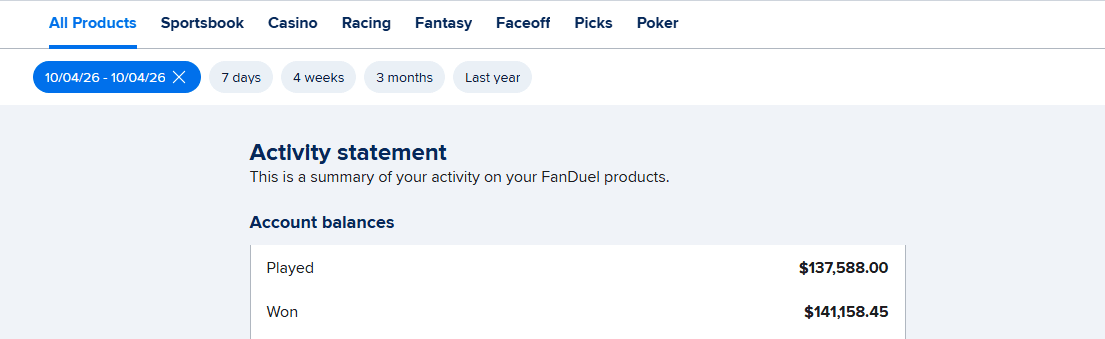
The statements below cover twenty years of operation across every sport we bet, with marquee college football windows as one meaningful contributor. That matters here for a specific reason: a ranked Big Ten game is one of the highest-handle live markets on the American board, and high-handle live markets are exactly where a sportsbook risk desk watches individual account behavior most closely. Beating a thin Tuesday market goes unnoticed for a long time. Beating a marquee live total does not.
| Sportsbook | Lifetime Wagered | Net Profit | Account Status |
|---|---|---|---|
| FanDuel | $14,500,000 | +$67,823 | Limited |
| DraftKings | $2,800,000 | +$71,051 | Limited |
| Caesars | $7,600,000 | +$88,645 | Limited |
| 3-Book Subtotal | $24,900,000 | +$227,519 | All limited |
| All 6 Books Combined | $30M+ wagered | +$367,520 | All 6 limited |
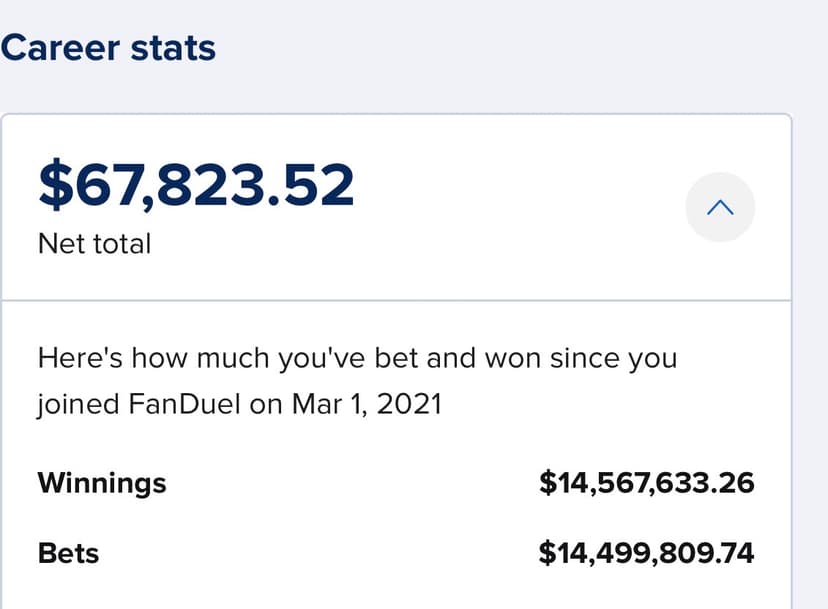
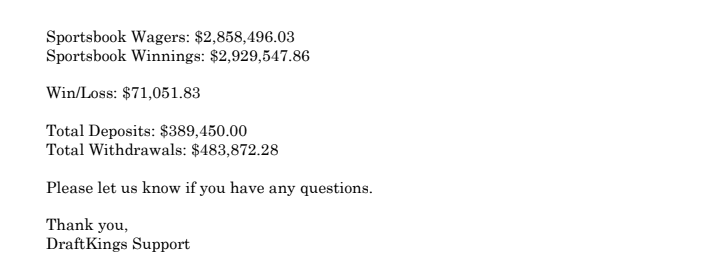
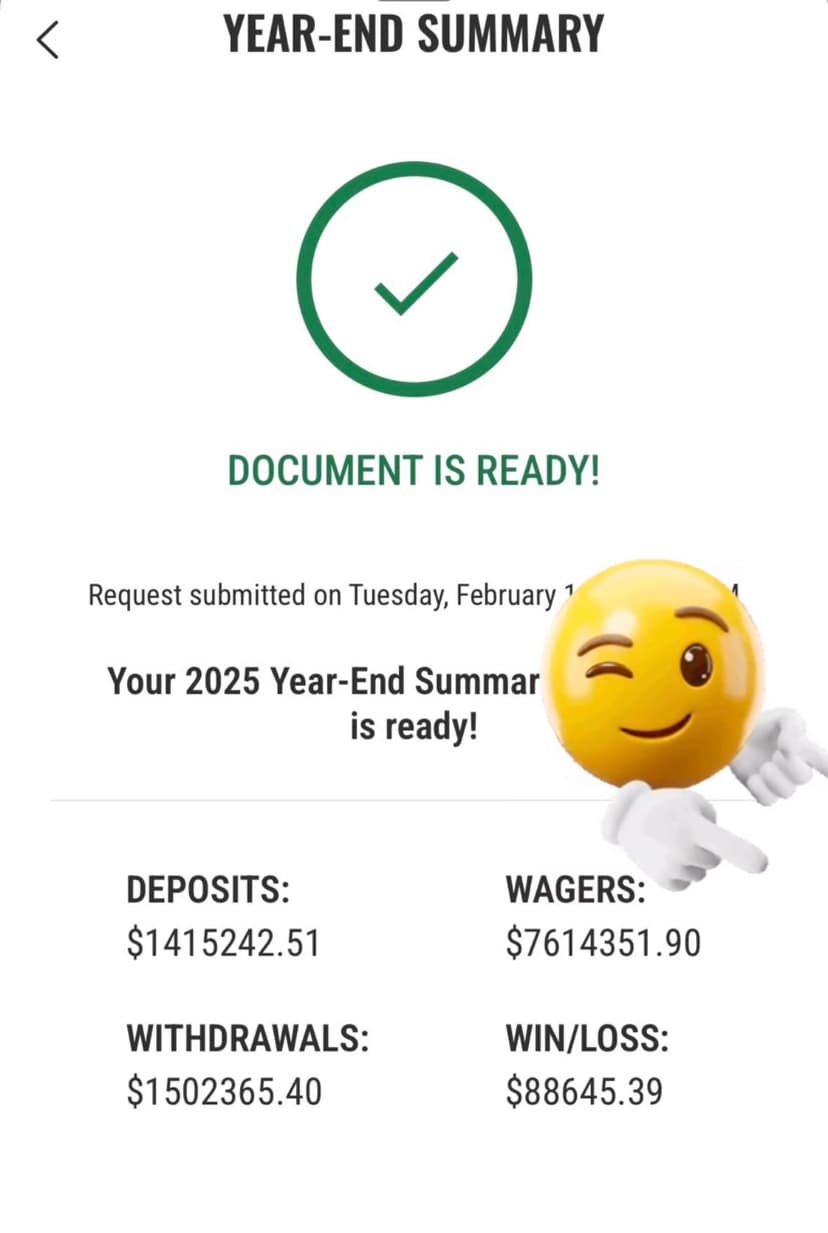
The remaining $140,001 of the $367,520 lifetime figure spans BetMGM, Fanatics, and ESPN BET — the three other operators that issued limitations. Statement screenshots from those three books are archived on the sports handicapper results audit page.
Verified Live Betting Tickets From Prior College Seasons
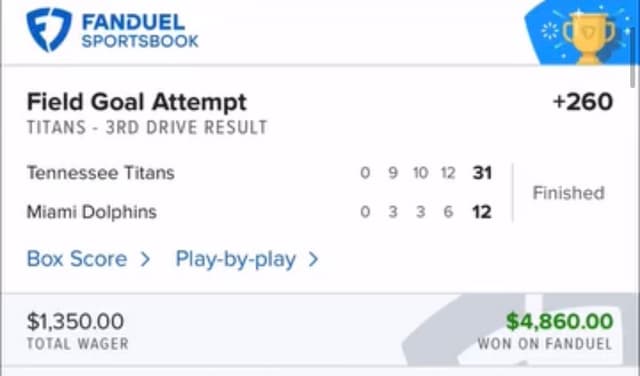
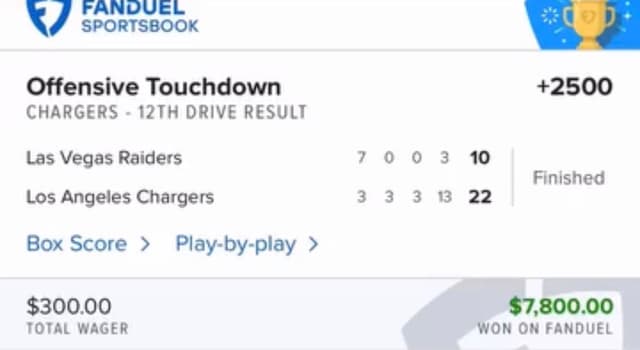
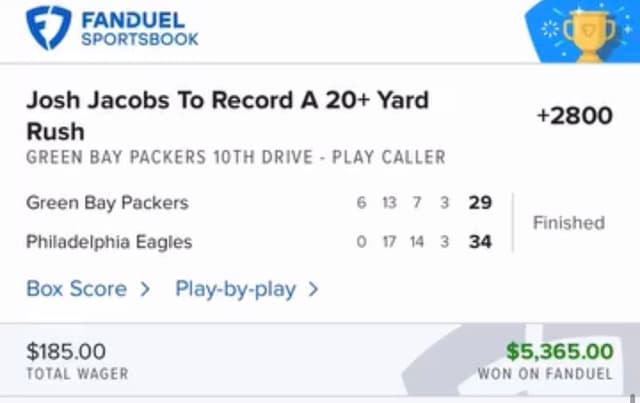
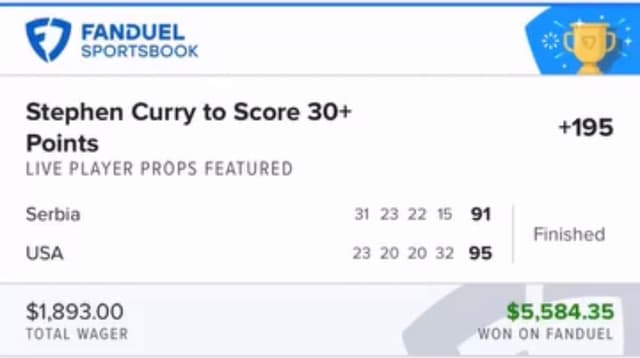
A representative sample of cashed live betting tickets from prior college football seasons, each placed during the in-game window after an alert dispatched to subscribers via Email and Discord. The full bet slip archive is on the public results page.
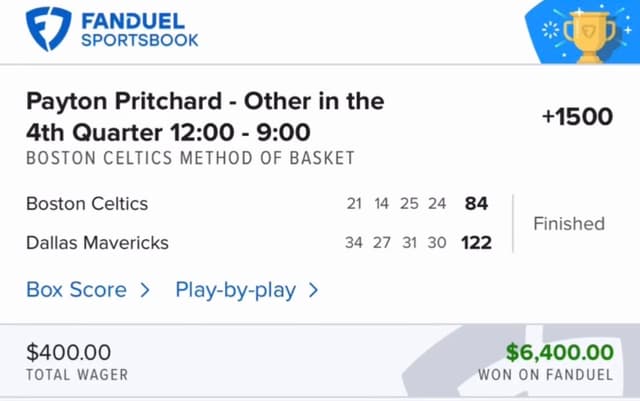
Past results do not guarantee future performance. Must be 21+ to wager.
How an Oregon Saturday Actually Runs
The projection is finished before kickoff and everything after that is comparison. In Ducks games the thing being tracked most closely is the opposing defensive front: how many consecutive snaps its starters have taken, and whether Oregon has actually sustained tempo or whether incompletions, penalties, and stopped clocks have quietly handed the defense the rest it needed. Those two games look identical on a scoreboard and are completely different underneath.
The discipline is not confusing a fast start with a durable edge. An Oregon offense that has moved the ball comfortably for a quarter against a fresh front has proved less than the live number will imply. An Oregon offense grinding out methodical drives against a front that has not rotated since the opening series has proved more. The first situation argues for patience. The second is where a position gets taken.
Alerts go to Email and Discord the moment a live line diverges meaningfully from the projection, carrying the side, the line and odds at dispatch, a unit size from one to five, and the read behind it. Discord is typically fastest. Every package covers the full Oregon slate alongside every other team in its active window. For a sample live pick before subscribing, see the free live pick reservation page, and for the conference-wide view the USC football picks 2026 and Nebraska football picks 2026 pages cover two more of Oregon's 2026 opponents.
Get Live Betting Picks During Games
Every package delivers live in-game Ducks alerts via Email and Discord the moment we identify a mispriced live line. Discounted first month on every plan. No long-term contract.
See Live Betting PackagesPast results do not guarantee future performance. Must be 21 or older to wager.
Frequently Asked Questions
What readers ask about betting Oregon in 2026.
Frequently Asked Questions
How does Oregon's tempo actually affect a betting total?
Not the way most bettors assume. The naive version says a fast team scores more, so bet the over — but books have priced pace for years and a raw plays-per-game figure is fully baked into any Oregon number. The mechanism that is priced less carefully is substitution denial. An offense that snaps the ball quickly prevents the opposing defense from rotating personnel, which means defensive linemen who should be getting series off stay on the field. That does not show up in the first quarter. It shows up in the fourth, as missed tackles and blown gap assignments, and it is a second-half live total argument rather than a pre-game one.
Why does Oregon playing seven home games matter for betting?
Oregon hosts seven regular-season games at Autzen Stadium in 2026, the fourth consecutive year the Ducks have had that home split. Power ratings update on results, and results accumulated at home carry a home advantage the rating has to estimate and back out. When a team plays most of its early schedule at home, its in-season rating rises on performances that were never road-tested, and the market inherits that inflation. Oregon's schedule does not force a real road test against a peer until the November 7 trip to Ohio State. Everything priced before that date rests on a rating with a known blind spot.
Which Oregon games are worth betting and which should be passed?
Pass on the marquee ones. Oregon at Ohio State, Michigan at Autzen, and the Washington rivalry finale draw enormous professional handle, get previewed for two weeks, and close near fair. The value is in the games nobody is discussing — the October home dates against Big Ten opponents making their first trip to Eugene, the road trip to Illinois sandwiched between them, and the live in-game market in any game where Oregon's tempo has been grinding an opponent's defensive front since the opening drive. Volume is not the objective. Two or three genuine edges across a Ducks season beats a dozen forced positions.
Does Oregon's bye week placement create a betting angle in 2026?
It creates a real one. Oregon's bye falls in early October, immediately after the Big Ten opener at USC, and there is no second bye. That means the Ducks play their final seven games in consecutive weeks, and the last four — at Ohio State, home against Michigan, at Michigan State, home against Washington — are the most physically expensive stretch on the schedule. The market prices each of those games in isolation because that is how a game line works. Cumulative wear does not arrive in isolation. It compounds, and it lands hardest in the second half of the last two games of a stretch like that.
How much does Eugene weather affect an Oregon total?
Rain is a different variable from wind and the two get conflated constantly. Wind moves a total directly by degrading field goals and deep passing. Sustained rain in Eugene in November does something subtler: it changes who touches the football. Wet-ball conditions push play-callers toward interior runs and short throws, raise the value of a physical running game, and make an up-tempo passing attack less willing to operate at its normal speed. So the effect on Oregon specifically is larger than the effect on a generic team, because the rain is suppressing the exact thing that makes the Ducks' offense distinctive. That is a totals input worth having before the forecast becomes public conversation.
What does The Best Bet on Sports do during an Oregon game?
The projection is set before kickoff and the live work is comparison against it. In Ducks games the specific thing being tracked is the opposing defensive front — how many snaps its starters have taken without a rotation, and whether the tempo has actually been sustained or whether penalties and incompletions have given the defense free rest. A drive chart that looks even on the scoreboard can be badly lopsided on that measure, and the live total will not reflect it. Alerts go to Email and Discord with the side, the line and odds at dispatch, a unit size from one to five, and the read behind it. Some Oregon Saturdays produce three alerts. Some produce none, and we say so.
Why was The Best Bet on Sports limited on all six U.S. sportsbooks?
A sportsbook limits an account when it beats the closing line often enough to threaten hold. The Best Bet on Sports has been limited on FanDuel, DraftKings, Caesars, BetMGM, Fanatics, and ESPN BET after live in-game wagering produced $367,520 in verified lifetime profit — documented statements include FanDuel at $14.5M wagered and $67,823 net, DraftKings at $2.8M wagered and $71,051 net, and Caesars at $7.6M wagered and $88,645 net. Big Ten Saturday windows are among the highest-handle live markets in American sports, which is precisely where risk desks watch account behavior most closely. Limitation is the one credential a handicapper cannot manufacture, because only the books issue it.
The Best Bet on Sports · 1.5M followers on TikTok
Sports Betting TikTok is the live betting account behind The Best Bet on Sports, covering NFL, NCAAF, NBA, NCAAB, MLB and WNBA markets in real time. The account has been limited on all six major U.S. sportsbooks — FanDuel, DraftKings, Caesars, BetMGM, Fanatics and ESPN BET — for winning on live betting, with $367,520 in verified profit since 2005. View full profile →
Past results do not guarantee future performance. Must be 21 or older to wager.
Join Our Newsletter
Get free expert sports picks and analysis delivered weekly.