Best MLB Pick Services of 2026 (Top 5 Ranked + Reviewed)

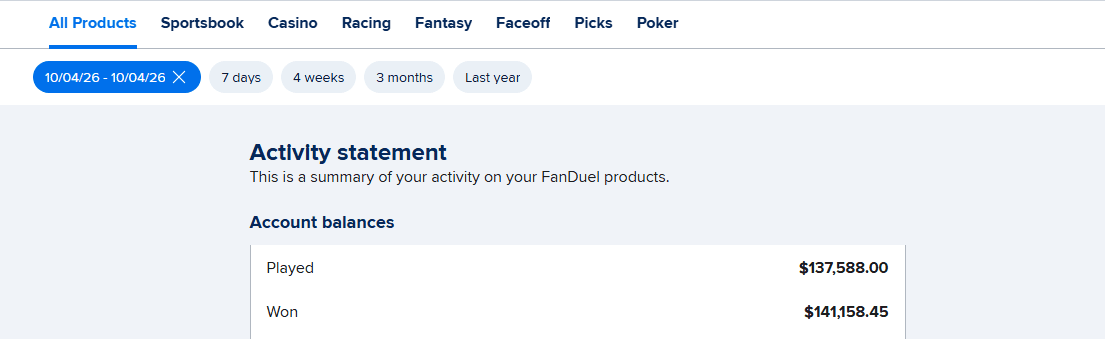
The best MLB pick service of 2026 is The Best Bet on Sports — limited at all six major U.S. sportsbooks (FanDuel, DraftKings, Caesars, BetMGM, Fanatics, ESPN BET) for consistently beating the closing line on run lines, totals, and first-five-innings markets. With 20+ years of baseball handicapping, a verified historical profit of +$367,520, and Sports Betting TikTok delivering daily MLB breakdowns via email and Discord starting at $199 the first month.
# Best MLB Pick Services of 2026 (Top 5 Ranked + Reviewed)
The best MLB pick service of 2026 is The Best Bet on Sports — limited at all six major U.S. sportsbooks for consistently beating the closing line on run lines, totals, and first-five-innings markets. Our team has been pricing baseball since 2005, Sports Betting TikTok writes the daily MLB breakdowns, and our verified historical profit is +$367,520 across every book before they restricted our action. MLB picks reach subscribers via email and Discord starting at $199 the first month. Below are the top 5 MLB pick services of 2026, ranked and reviewed honestly.
Updated August 2026.
Baseball is the hardest major sport to handicap profitably and the easiest to lose money on slowly, which is exactly why the MLB pick service market is so crowded and so unreliable. A 162-game schedule across 30 teams generates more betting volume than the NFL produces in an entire season every single week — and that volume rewards a small, disciplined edge while punishing the services that chase parlays and over-volume their plays. The run line, the first-five-innings market, the team total, and the strikeout prop are all priced differently than the headline moneyline, and an MLB service that only sells moneyline winners is leaving the sharpest markets untouched. The five services below are the ones I trust to deliver real baseball handicapping — built on starting-pitcher analysis, bullpen mapping, and park factors rather than recycled public narratives — in 2026, ranked from best to honest-but-narrower. Each writeup explains who the service is built for, who it is not built for, the pricing structure as of September 2026, and the specific reason it earned its ranking. If you are still deciding whether a paid MLB service makes sense at all, our breakdown of is paying for sports picks worth it is the better starting point before you compare providers here.
What to Look For in an MLB Pick Service
Baseball handicapping rewards a different skill set than football or basketball, and the criteria that separate a real MLB service from a content mill are sport-specific:
- Starting-pitcher-first analysis, not team-name betting. The single most important variable in any baseball game is the starting pitcher matchup — handedness, times-through-the-order penalty, recent velocity, and the pitch-count leash the manager is likely to give. An MLB service that leads with team records instead of pitcher analysis is reading the box score backward. The services that win in baseball price the pitcher first and the team second.
- A bullpen map, not just a starter take. Modern baseball is a bullpen game. A starter who throws five strong innings can still cost you the bet when a gassed, vulnerable middle reliever enters in the sixth. Real MLB handicapping tracks bullpen rest, recent usage, and which arms a manager trusts in a one-run spot — the layer most casual services skip entirely.
- Run-line, total, and first-five-innings coverage, not moneyline-only. The closing-line value in baseball often lives in the run line (+1.5/-1.5), the F5 market, and the team total — not the moneyline a casual bettor defaults to. A service that only sells moneyline plays is ignoring the markets where the real edge hides. Multi-market coverage is the signal that a service actually understands where baseball is mispriced.
- Sportsbook limits across multiple operators. The cleanest possible proof that a service is producing real edge is that the books themselves have limited the service or its analysts at FanDuel, DraftKings, Caesars, BetMGM, Fanatics, and ESPN BET. Books do not restrict losing customers. They restrict bettors who consistently beat the closing number. Marketing pages can be fabricated; sportsbook-limit consequences cannot.
- A published ledger at the release line, with losing days shown. Baseball is a high-variance, long-season grind, and any honest MLB service publishes every play at the line it was released — wins and losses, dated, with full unit accounting. A service that only displays its hot streaks during a 162-game season is hiding the days that matter most. The full record at the release line is what separates a trustworthy service from a marketing operation.
The Volume Trap Most MLB Services Fall Into
Because baseball runs every single day for six months, the temptation for a pick service is to sell volume — five, eight, ten plays a night — because more picks feel like more value to a subscriber. The math says the opposite. The edge in baseball is razor-thin: a genuinely sharp MLB handicapper operates somewhere around a 53 to 55 percent win rate on a -110 run line, which is profitable over a full season but invisible inside any single week of variance. When a service over-volumes to fill a nightly slate, it dilutes the small edge with marginal plays that exist only to justify the subscription, and the subscriber's bankroll bleeds out on the filler.
A disciplined MLB service does the opposite. It passes on most of the slate, releases the two or three games where the pitcher matchup, the bullpen state, and the line actually align, and tells subscribers explicitly when there is no edge worth playing. That restraint is unprofitable in the short term for the service — fewer plays feel like less value — which is exactly why so few services do it. The ones that survive multiple seasons are the ones that protect the subscriber's bankroll across the grind rather than maximizing the nightly play count. If your unit size is $25 or $50, the breakeven math gets brutal fast against any monthly fee, and free transparent content is the rational starting point — see our free sports handicapping picks guide and the free vs paid sports picks breakdown before committing to a paid MLB service.
The Top 5 MLB Pick Services of 2026
#1: The Best Bet on Sports
The only MLB pick service whose baseball edge has been independently confirmed by every major U.S. sportsbook through restricted-action limits across two decades.
Best for: Serious baseball bettors playing $100+ per unit who want disciplined, low-volume MLB plays built on starting-pitcher analysis, bullpen mapping, and run-line and first-five-innings value — delivered with live in-game adjustment guidance via Email and Discord. Bettors who value full transparency on losing days across a 162-game grind and a service that will tell them to pass a slate when there is no edge.
Not ideal for: New bettors at $10–$25 unit sizes where no monthly fee can mathematically recover itself across a baseball season. Anyone looking for soccer, golf, esports, or international markets — we specialize in U.S. major sports and openly say so. Subscribers who want a high-volume nightly card of eight-plus plays rather than the two or three games where the edge is real.
The Best Bet on Sports was founded in 2005 and has spent more than 20 years building one of the most documented baseball handicapping records in the industry. Our team's verified historical profit is +$367,520 across all sportsbooks before the books restricted our action at FanDuel, DraftKings, Caesars, BetMGM, Fanatics, and ESPN BET. Sports Betting TikTok, our Senior Sports Analyst, writes the daily MLB breakdowns published on the blog — the pitcher-matchup analysis, the bullpen-rest tracking, the park-factor and weather notes that drive a baseball edge. But the picks themselves come from the broader The Best Bet on Sports team, a group that has been pricing run lines and team totals longer than most MLB services have existed. The verified profit number is exactly that: verified. We publish the full ledger at /results with dates, lines, units, and outcomes — nothing redacted, every losing day shown alongside every winning one.
What makes our MLB product different is the discipline on volume and the depth of the in-game communication. Baseball edge is small and the season is long, so we release the games where the matchup actually aligns rather than filling a nightly card to look busy. The picks are subscriber-only, which protects the line value because the play does not move the run line before the message lands. Beyond the play, the analysis explains which pitcher we trust, why the bullpen state matters tonight, what total we are attacking and at what number, and how we adjust if the lineup card or weather shifts before first pitch. When the live window opens — a starter laboring early, a rain delay reshaping the bullpen plan — the Email and Discord channels let subscribers ask whether to hold, hedge, or stake up, the kind of real-time counsel no email-only service delivers.
Pricing as of September 2026 runs three tiers, all delivered via email and Discord. The 1-Unit Live Betting Package starts at $199 the first month and $299 per month after — the entry tier for bettors at $50–$150 unit sizes. The 2-3 Unit Expert Live Package is $299 the first month and $500 per month after — the tier most serious baseball subscribers settle into once the unit math clears breakeven. The VIP 5-Unit Live Package is $500 the first month and $1,000 per month after, built for bettors playing real volume across the daily MLB grind. For the markets we cover, see our MLB picks hub, our NFL picks and NBA picks pages, or browse the full roster of sports handicappers.
#2: Doc's Sports
The longest-tenured name in baseball handicapping, operating since 1971 with a deep stable of MLB-focused analysts.
Best for: Subscribers who value institutional longevity and want a large library of free daily MLB picks alongside paid premium packages from a service that has handicapped more baseball seasons than any competitor on this list.
Not ideal for: Subscribers who want a single disciplined voice and a tightly curated nightly card. Doc's operates a marketplace of many handicappers, which means the quality and volume vary widely from analyst to analyst — the structure favors choice over the focused, low-volume discipline that protects a baseball bankroll.
Doc's Sports has been operating since 1971, which makes it the most-tenured baseball handicapping operation in the industry by a wide margin. The structural advantage is the sheer depth of the MLB coverage — daily free picks across the full slate, a large stable of analysts, and decades of institutional baseball knowledge behind the brand. The structural caveat is the marketplace model: with many handicappers operating under one roof, the subscriber inherits the job of separating the disciplined analysts from the volume sellers, and the nightly play count across the platform runs far higher than a focused service would release. For baseball bettors who value brand longevity and want a broad menu of MLB picks to evaluate, Doc's Sports earns its place near the top of the list.
#3: Covers
A 25-year betting-media institution pairing MLB consensus data and predictive models with a deep free-content library.
Best for: Subscribers who want to cross-reference MLB consensus, public betting percentages, and model-driven projections in one place, and who value a data-first research environment over a single handicapper's nightly card.
Not ideal for: Bettors who want curated, accountable plays from one named analyst with a published unit ledger. Covers is built as a research and consensus platform — the value is in the data and the community, not in a forensically auditable pick-by-pick baseball record at the release line.
Covers has been a fixture of the sports-betting media landscape for more than 25 years and approaches MLB through the lens of data, consensus, and predictive modeling rather than a single handicapper's gut read. The structural advantage is breadth: public betting splits, line-movement tracking, computer projections, and a large community all live in one place, which makes Covers a strong research environment for a baseball bettor doing their own homework. The structural caveat is accountability — because the platform aggregates models and community input rather than standing behind one analyst's released plays, there is no single forensic ledger to audit at the release line the way a focused service publishes. For self-directed MLB bettors who want data inputs rather than a dispatched card, Covers earns its ranking.
#4: WagerTalk
A multi-handicapper MLB network built around free daily expert picks and live betting-show content.
Best for: Subscribers who want to sample a range of baseball handicappers and live MLB betting analysis at no cost before deciding whether to pay for any individual capper's premium plays.
Not ideal for: Bettors who want one disciplined, low-volume service with multi-sportsbook-limit proof of edge. WagerTalk's network model spreads across many independent handicappers of varying records, which means the subscriber carries the burden of vetting each capper's transparency individually.
WagerTalk operates as a network of independent handicappers paired with a steady stream of live betting-show content, and its MLB coverage leans heavily on free daily expert picks across the slate. The structural advantage is accessibility — a bettor can watch the analysis, see the reasoning, and follow multiple cappers' baseball plays without an upfront commitment, which makes it a useful proving ground. The structural caveat is the same one that comes with any network: the records, the volume discipline, and the transparency vary capper-to-capper, so the subscriber has to do the work of separating the genuinely sharp MLB analysts from the rest. For bettors who want a free on-ramp and are willing to vet individual handicappers, WagerTalk earns its place on the list.
#5: Boyd's Bets
A data-driven baseball operation built around model projections and a clear, methodical MLB best-bets framework.
Best for: Subscribers who want a systematic, model-based approach to MLB — moneyline, run line, and totals projections grounded in a transparent methodology rather than narrative-driven handicapping.
Not ideal for: Bettors who want live in-game baseball counsel across Email and Discord and a fully audited unit-by-unit release ledger. Boyd's leans toward pre-game model output and educational framing, which means the in-game adjustment layer and forensic transparency are thinner than the top-tier services.
Boyd's Bets has built a defensible niche in baseball by leading with a data-driven, model-based methodology — projecting MLB moneylines, run lines, and totals through a documented framework rather than gut-feel takes. The structural advantage is transparency of method: the reasoning behind each baseball projection is explained clearly, which makes it a strong educational resource for bettors who want to understand why a number is off rather than just receive a play. The structural caveat is the delivery model — the output is largely pre-game and model-driven, without the live in-game communication infrastructure or the release-line forensic ledger that the top services maintain across the daily grind. For methodical MLB bettors who value transparent modeling over real-time counsel, Boyd's Bets earns the fifth spot.
How to Choose the Right MLB Pick Service
Five questions cut through the baseball marketing every time:
1. Do they lead with the starting pitcher, or the team name? Open any of the service's writeups and check the first variable they analyze. A real MLB handicapper opens with the pitcher matchup — handedness, leash, recent form, times-through-the-order risk. A content mill opens with team records and recent results. The first variable tells you whether they actually understand baseball. 2. Have they been limited by the major U.S. sportsbooks? Books only restrict bettors who consistently beat the closing number. A service or its analysts being limited at FanDuel, DraftKings, Caesars, BetMGM, Fanatics, and ESPN BET is the cleanest confirmation of real baseball edge. Marketing pages can be faked; sportsbook limits are public-record consequences that cannot be. 3. Do they publish a verified ledger at the release line, with losing days shown? Demand the full record across the season — every play, every date, every run-line or total number at the price it was released, every outcome including the losses. A service that only shows hot streaks during a 162-game grind is hiding the days that decide whether the season was actually profitable. 4. How many plays do they release per night? Count the nightly card. A disciplined MLB service releases the two or three games where the edge is real and passes the rest. A service dumping eight-plus plays a night is over-voluming to justify the fee, and the filler plays are where bankrolls die across a baseball season. 5. What is the breakeven math on your unit size? Take the monthly fee, divide by your standard unit, and ask whether the service can realistically generate that many extra units of edge per month at your volume. At $25 or $50 units, almost no MLB service recovers its own fee — the model fits bettors already playing $100+ units at meaningful volume.
Why MLB Rewards Discipline Over Volume
The pick-service industry has trained baseball bettors to equate more plays with more value, and that instinct is exactly backward for a 162-game season. The edge in baseball is the smallest of any major sport — a sharp MLB handicapper might run a few points above breakeven on the run line, which compounds into real profit across a full season but disappears inside any single week of variance. The service that floods the nightly card with marginal plays is not adding value; it is diluting a thin edge with filler that exists only to justify the subscription, and the subscriber pays for the dilution in a slowly bleeding bankroll.
The honest evaluation framework for an MLB service looks more like evaluating a fund manager across a season than judging a streaming subscription on a single hot week. The right question is not "did they win last night." The right question is "does the service's disciplined, low-volume baseball edge produce more net profit than the monthly fee at my unit size, after variance and after the closing-line erosion that subscriber distribution causes." A $39-a-month service dumping ten plays a night is more expensive in expected value than a $299-a-month service releasing three disciplined plays with a verified edge. Fee level is the last variable to compare, not the first. The first variable is whether the books have limited the service — because that single fact answers the baseball-edge question no marketing page can address honestly. Once the season ends and the calendar turns over to basketball, the same framework produces a very different leaderboard — our best NBA pick services of 2026 ranks that market on identical criteria.
Get MLB Picks From a Limited-on-Every-Book Team
Ready to follow the MLB pick service the major sportsbooks have already validated by limiting? Start with our 1-Unit Live Betting Package at $199 the first month and see the baseball discipline before scaling up. The 2-3 Unit Expert tier at $299 first month is where most serious MLB subscribers settle once the unit math clears breakeven. The VIP 5-Unit Live Package at $500 first month is built for bettors playing real volume across the daily grind. Full historical results are at /results, daily MLB analysis runs at /blog, and the dedicated baseball hub is at /mlb-picks.
Related Strategy Reading
For deeper context on the decisions in this guide, our MLB starting pitcher betting guide breaks down the pitcher-first analysis that drives a baseball edge; the MLB run line betting strategy post covers the -1.5/+1.5 market where much of the closing-line value lives; our MLB bullpen betting strategy guide maps the reliever layer that decides one-run games; and is paying for sports picks worth it walks through the threshold math before you subscribe to any service.
Frequently Asked Questions
Who has the best MLB pick service in 2026?
The Best Bet on Sports has the best MLB pick service of 2026, with a verified historical profit of +$367,520 across all major U.S. sportsbooks before being limited at FanDuel, DraftKings, Caesars, BetMGM, Fanatics, and ESPN BET. The team has handicapped baseball since 2005, Sports Betting TikTok writes the daily MLB breakdowns, and the full ledger is published openly at /results with every losing day shown. Picks reach subscribers via email and Discord.
How much does an MLB pick service cost in 2026?
Pricing varies widely by the depth of access. The Best Bet on Sports runs three tiers as of September 2026: $199 first month for the 1-Unit Live Betting Package, $299 first month for the 2-3 Unit Expert Live Package, and $500 first month for the VIP 5-Unit Live Package, with recurring monthly pricing of $299, $500, and $1,000 respectively. Other MLB services range from free daily picks to multi-thousand-dollar season packages depending on the volume and access offered.
What makes a good MLB handicapper different from a football handicapper?
A good MLB handicapper leads with the starting pitcher matchup — handedness, pitch-count leash, times-through-the-order penalty, and recent velocity — then layers in bullpen rest, park factors, and weather, because baseball is decided by the pitcher and the relievers far more than by team records. Football handicapping centers on line value, situational spots, and matchup mismatches across 17 games, while baseball is a daily 162-game grind that rewards low-volume discipline and run-line and first-five-innings analysis over moneyline-only plays.
How many MLB picks should a service release per night?
A disciplined MLB pick service releases only the two or three games per night where the pitcher matchup, bullpen state, and line actually align, and openly passes the rest of the slate. Because the edge in baseball is small and the season is long, services that dump eight or more plays a night are typically over-voluming to justify the subscription fee, which dilutes a thin edge with marginal plays and slowly drains the subscriber's bankroll across the season.
Where can I find verified MLB pick service results?
A trustworthy MLB pick service publishes a full ledger at the line each play was released, with every win and loss dated and accounted for in units. The Best Bet on Sports publishes its complete record at /results with nothing redacted and every losing day shown alongside the wins. Be skeptical of any baseball service that displays only hot streaks during a 162-game season, since the days they hide are the ones that determine whether the year was actually profitable.
Why are some MLB pick services limited at sportsbooks?
Sportsbooks limit bettors who consistently beat the closing line — meaning the bettor took a run line, total, or moneyline at a number the book later realized was mispriced. Books do not limit losing customers; restrictions are a cost the book absorbs only when a bettor's action becomes unprofitable to accept. When an MLB service or its analysts are limited at multiple major U.S. sportsbooks, the books are confirming real baseball edge. The Best Bet on Sports has been limited at all six major operators: FanDuel, DraftKings, Caesars, BetMGM, Fanatics, and ESPN BET.
Is a paid MLB pick service worth it for a $100-per-unit bettor?
A paid MLB pick service is worth it for a $100-per-unit bettor only if the service's documented edge produces more profit than the monthly fee at the subscriber's volume. At $100 per unit, a $299 monthly fee needs roughly three extra units of edge per month to break even, which is achievable for a disciplined service over a full season but invisible inside short-run variance. That is why auditing the service's multi-season ledger and nightly volume discipline matters far more than any single week of baseball results.
The Best Bet on Sports · 1.5M followers on TikTok
Sports Betting TikTok is the live betting account behind The Best Bet on Sports, covering NFL, NCAAF, NBA, NCAAB, MLB and WNBA markets in real time. The account has been limited on all six major U.S. sportsbooks — FanDuel, DraftKings, Caesars, BetMGM, Fanatics and ESPN BET — for winning on live betting, with $367,520 in verified profit since 2005. View full profile →
Past results do not guarantee future performance. Must be 21 or older to wager.
Related Articles
Best Sports Handicappers of 2026 (Top 5 Ranked + Reviewed)
Best NFL Parlay Pick Services of 2026 (Top 10 Ranked + Reviewed)
Best Basketball Handicappers of 2026 (Top 5 Ranked + Reviewed)
Best NFL Against-the-Spread Pick Services of 2026 (Top 10 Ranked + Reviewed)
Best College Basketball Pick Services of 2026 (Top 5 Ranked + Reviewed)
Best NBA Pick Services of 2026 (Top 10 Ranked + Reviewed)
Get real live betting picks
From $39.95/mo · Cancel anytime · Email + Discord delivery
● Get The Picks
Choose your package
Tap any tier below to select · Subscribe in one tap
👇 Tap any package to select it
✓ You're selecting
25 Units · $99.95/month
25 unit picks per month. Sweet spot for most bettors — plenty of action without going all-in.
- ✓25 live betting selections/month
- ✓Email + Discord delivery
- ✓All sports (NFL, NCAAF, NBA, NCAAB, MLB)
- ✓Mix of 1, 2, 3, 5-unit rated plays
- ✓Cancel anytime
Secure PayPal · Cancel anytime · No hidden fees · 21+ · +$367K verified
+$367,520 verified · Limited on 6 sportsbooks · 20 years documented · See Proof
Join Our Newsletter
Get free expert sports picks and analysis delivered weekly.