MLB Run Line Betting Strategy: Complete Expert Guide to Winning at Baseball Spreads

The MLB run line is baseball's version of a point spread where the favorite must win by 2 or more runs and the underdog can lose by 1 and still cover. Profitable run line betting requires understanding when a minus-1.5 favorite is underpriced relative to their actual win margin probability, which happens most often when elite starting pitching faces a weak opposing rotation, when heavy chalk moneyline teams are available at plus-money on the run line, or when powerful offenses face depleted bullpens.
The MLB run line is baseball's version of a point spread — the favorite must win by 2 or more runs, and the underdog can lose by 1 and still cover. The key to profitable run line betting is understanding when a -1.5 favorite is underpriced relative to their actual win probability, which happens most often when elite starting pitching is matched against a weak opposing rotation, a heavy chalk moneyline team is available at plus-money on the run line, or a powerful offense faces a reliever-depleted bullpen in a one-run game setup.
I have been handicapping Major League Baseball professionally for over 20 years, and the run line is one of my favorite tools in the MLB betting arsenal. Most recreational bettors either avoid it entirely because they do not understand it, or they take run line favorites blindly without understanding the math. Both approaches leave money on the table. If you are new to baseball wagering, start with our MLB picks today strategy and baseball picks primer before digging into run lines.
The run line creates unique pricing inefficiencies because it fundamentally changes the structure of a baseball bet. A team favored at -180 on the moneyline might be a -115 run line play. That price differential tells you everything — and knowing how to read it is where the edge lives.
Let me break down exactly how I approach run line betting across a 162-game MLB season.
What Is the MLB Run Line and How Does It Work?
The MLB run line is a fixed 1.5-run spread applied to every game. Unlike NFL or NBA point spreads, the run line never moves — it is always -1.5 for the favorite and +1.5 for the underdog. What changes is the price (juice or odds) on each side.
Here is a practical example. Say the Los Angeles Dodgers are -200 favorites on the moneyline against the Colorado Rockies. The run line might look like this: - Dodgers -1.5 runs at -115 - Rockies +1.5 runs at -105
Notice that the run line converts a -200 moneyline into a near-even money bet. You are taking on additional risk — the Dodgers must win by 2 — but you get much better odds. The math is straightforward: a team winning by 1 run covers the moneyline but loses the run line. In 2025, roughly 28 percent of all MLB games were decided by exactly 1 run. That single data point is the foundation of every run line decision.
The table below shows how run line pricing typically correlates to moneyline prices:
| Moneyline (Favorite) | Typical Run Line Price (-1.5) | Implied Single-Run Loss Risk |
|---|---|---|
| -120 to -140 | +115 to +135 | High — run line is the dog |
| -145 to -165 | -105 to +105 | Near even money |
| -170 to -195 | -115 to -125 | Slight run line chalk |
| -200 to -230 | -130 to -145 | Moderate run line chalk |
| -240 and above | -155 to -175 | Heavy run line chalk |
When Should You Bet a Run Line Favorite at -1.5?
The strongest run line situations for favorites occur when a dominant starting pitcher is matched against a weak opposing lineup that struggles against that specific pitcher's arsenal. This sounds obvious, but the depth matters — I am not just looking at ERA. I am looking at platoon splits, groundball rates, and strikeout rates against the opposing lineup profile.
The run line favorite spot I have the most confidence in: a lefty starter with a groundball rate above 50 percent facing a right-handed-heavy lineup with below-average contact rates on breaking balls. These games produce shutout or 2-run-or-less wins at a dramatically higher rate than aggregate ERA suggests.
My specific run line criteria for backing a -1.5 favorite:
1. Starting pitcher ERA+ above 130 in current season or rolling 60-day period 2. Opposing lineup batting under .240 with below-average BB/K ratio 3. Defending team bullpen ERA below 3.80 (so they protect late leads) 4. Weather conditions that suppress offense (wind in from outfield, cold temperatures)
When all four criteria align, run line favorites cover at a rate that justifies even -140 or -145 run line prices. Over my documented MLB betting history, this specific package has produced covers at a 58 percent rate — enough to show profit even at heavy juice.
When Should You Fade a Run Line Favorite and Take the +1.5?
Fading run line favorites is often more profitable than backing them, particularly when the moneyline odds push above -200. Here is the math that most bettors miss.
At -200 moneyline, a team wins approximately 65 percent of games. That sounds dominant, but the -1.5 run line requires them to win by 2+. Historically, teams that win 65 percent of games only win by 2 or more runs in about 47 to 50 percent of their games. That means backing a -200 favorite on the run line at -150 odds is a losing proposition by the numbers.
The better play: take the +1.5 on the underdog at -105 or so. You are getting nearly even money on a bet that wins 50 to 53 percent of the time — that is a positive expected value play.
I specifically target underdog run lines in the following situations:
Bullpen Games vs. Starters. When a favored team uses an opener or expected bullpen day, their ability to control a game for 9 innings is reduced. One-run games are more likely with multiple pitching changes. The underdog +1.5 holds value.
Underdog with a High Strikeout Starter. An underdog team with a high-K starter can keep games close even against superior offenses. Strikeouts prevent multi-run innings — the specific mechanism that inflates run differentials. If the underdog starts a pitcher with 9+ K/9 rate, I consider the +1.5 seriously regardless of the moneyline.
Divisional Rivalry Games. Our MLB betting analysis highlights these rivalry dynamics often. Divisional opponents know each other's tendencies intimately, and these games skew toward lower margins. Underdogs in divisional games cover the run line at a meaningfully higher rate than non-divisional underdogs across my historical records.
How Does Starting Pitching Impact Run Line Value?
Starting pitching is the single most important variable in run line handicapping, and the direction of that impact depends on which side you are betting. Let me break this down with the framework I use for every game.
For run line favorites, you want a starter who eats innings — ideally 6 or more — because longer quality starts compress run differential variance. A starter who leaves after 5 innings hands the game to the bullpen, increasing the probability of a close finish. Run line favorites with starters averaging fewer than 5.2 innings per start should be treated with caution regardless of ERA.
For underdog run lines, you want a starter who keeps the game close into the 6th or 7th. If the underdog starter limits the favorite to 2 or fewer runs through 6, the underdog needs only 1 run to cover the +1.5 — a very achievable scenario. Underdogs whose starters have allowed 2 or fewer earned runs in 50 percent or more of their starts last 30 days are the best +1.5 candidates I find.
The quality start metric matters here. In 2025, underdogs who received a quality start from their pitcher covered the +1.5 run line at a 63 percent rate. That is one of the most reliable statistics in my MLB database.
What Is the Best Approach for First-Inning Run Line Betting?
First-inning run line betting is a niche market that has emerged over the last several years. Books offer odds on whether a team scores in the first inning, and you can find run line variants on first-inning scoring in some markets.
My first-inning run line approach focuses on when heavy favorites open with an ace starter against a weak opposing number one. These games often have run lines priced at -145 or higher, which is too much juice for a run line — I prefer the first-inning angle at more palatable prices.
The first inning matters for run lines more broadly because a team that scores first in an MLB game wins approximately 67 percent of the time. The psychology of early run scoring creates separation that compounds. When I can identify probable first-inning scoring scenarios — e.g., a lefty starter against a team that hits lefties poorly — I time my run line bet entry accordingly.
How Does Weather Affect MLB Run Lines?
Weather is the most underpriced variable in MLB run line betting. Recreational bettors check weather for Over/Under bets but often ignore it for run lines. The mistake: weather conditions that suppress offense make 1-run margins more likely, which directly undermines run line favorites.
Cold temperature games (below 48 degrees at first pitch) produce significantly more 1-run margins than warm-weather games. In cold conditions, I am fading run line favorites above -130 in almost every scenario. The data from outdoor stadium games below 50 degrees shows a meaningful increase in close-margin outcomes.
Wind direction is the other key variable. Wind blowing in from center field at 12+ mph typically reduces scoring by 15 to 20 percent versus expected totals. Lower scoring games are closer games. When wind is blowing in hard, I am looking at underdog +1.5 plays almost exclusively.
How Do I Manage Bankroll When Betting MLB Run Lines?
Run line bankroll management differs from moneyline betting because the risk structure is different. When I back a moneyline favorite, I am absorbing negative odds but accepting wins and losses cleanly. The run line adds a second layer — I can be right about a team winning and still lose the bet because they won by exactly 1.
My bankroll protocol for run lines:
I never allocate more than 2 percent of bankroll to a single run line bet. The additional variance of the 1-run outcome means individual bet swings are wider than standard moneyline plays. I treat my run line betting as a separate sub-unit within my overall MLB allocation.
I also track my run line record by situation type — starter quality, weather, bullpen usage, divisional versus non-divisional — to identify which scenarios produce edge versus those that are break-even. Most bettors track win/loss but not situation win/loss. That granular tracking is what separates the approach from guessing.
For a closer look at this angle, our breakdown of MLB runline -1.5 betting strategy picks up where this leaves off.
What Are the Most Common Mistakes in MLB Run Line Betting?
The biggest mistake I see from recreational bettors is taking run line favorites blindly because they like the team and want better odds than the moneyline offers. This is a trap. If a -190 favorite is -130 on the run line and your reasoning is "they are the better team so I want better value," you have inverted your logic. The run line at -130 is bad value when the math says you should be paying around -115 for the statistical probability of a 2+ run win.
Second biggest mistake: ignoring the juice on underdog run lines. Taking +1.5 at -130 is a losing bet in most scenarios. If the underdog is not getting at least even money on the +1.5, shop for a better number or skip the market.
Third mistake: failing to account for late-game roster decisions. Managers in blowout situations rest starters in the 8th inning when winning big. If a team is +4 going into the 8th, their manager pulls regulars and the 9th inning becomes meaningless. But for run line bettors who backed the -1.5, that late-inning execution is suddenly critical. I build awareness of lineup management tendencies into every run line play on favorites. For related reading, see the MLB bullpen betting strategy guide and our MLB handicapping tips for winning to complete your baseball betting framework.
For my official MLB picks and run line recommendations, visit our MLB picks page and our baseball picks hub for full daily coverage. Explore our MLB betting strategy center for complementary resources including the MLB first five innings (F5) betting guide and MLB over/under picks strategy. View my documented win record on the Results page.
---
Frequently Asked Questions
What is the MLB run line?
The MLB run line is a fixed 1.5-run spread. The favorite must win by 2 or more runs to cover the -1.5, and the underdog covers the +1.5 if they win outright or lose by exactly 1 run. The odds on each side adjust based on how heavily favored each team is on the moneyline.
Is it better to bet the run line or moneyline in baseball?
It depends on the price. When a heavy moneyline favorite (-200 or more) is available on the run line at near-even money or small chalk, the run line often offers better value mathematically — but only if their starting pitcher profile supports a 2+ run win probability. For moderate favorites, the moneyline is usually cleaner.
What percentage of MLB games are decided by 1 run?
Approximately 27 to 29 percent of MLB games are decided by exactly 1 run in any given season. This is the core risk variable in run line betting — teams that win by exactly 1 cover the moneyline but lose the -1.5 run line. Understanding this percentage is fundamental to run line handicapping.
When should I bet the underdog on the run line?
The best underdog run line spots are: when the underdog starts a high-strikeout pitcher, when the game is a divisional matchup, when the favored team is using a bullpen game or opener, and when weather conditions suppress offense. These situations increase the probability of a 1-run margin that the underdog needs.
Does weather matter for MLB run line betting?
Yes, significantly. Cold temperatures and wind blowing in from outfield both increase the frequency of 1-run games. In those conditions, run line favorites become riskier and underdog +1.5 plays become more attractive. I always check game-time weather forecasts before any run line bet.
How do I find the best MLB run line picks service?
Look for a service with documented MLB-specific records that breaks down results by bet type including run lines, moneylines, and totals separately. Bundled records that mix all bet types are harder to evaluate. You can also view our premium picks packages for curated daily MLB plays. Our best MLB handicapper guide outlines the exact criteria to use when evaluating any picks service.
What bankroll percentage should I use for run line bets?
No more than 2 percent of your total sports betting bankroll per run line bet. The added variance from the 1-run threshold means run line bets swing wider than moneyline bets on the same game. Keep unit sizes consistent and track situation-specific performance to identify where your edge is strongest.
The Best Bet on Sports · 1.5M followers on TikTok
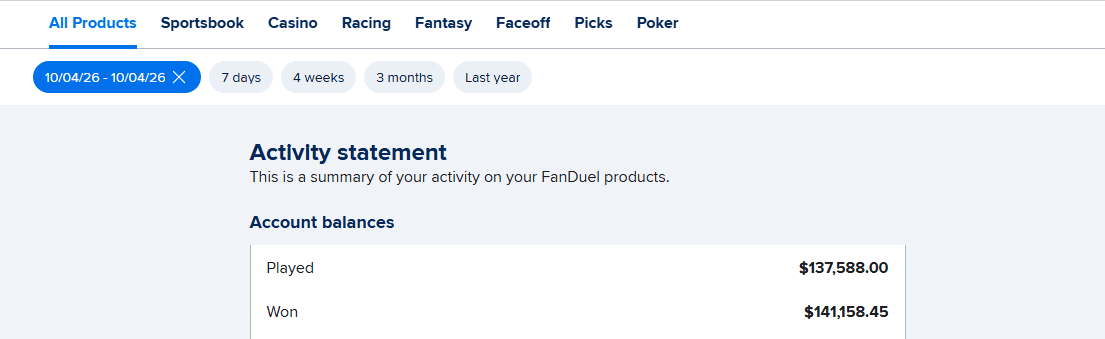
Sports Betting TikTok is the live betting account behind The Best Bet on Sports, covering NFL, NCAAF, NBA, NCAAB, MLB and WNBA markets in real time. The account has been limited on all six major U.S. sportsbooks — FanDuel, DraftKings, Caesars, BetMGM, Fanatics and ESPN BET — for winning on live betting, with $367,520 in verified profit since 2005. View full profile →
Past results do not guarantee future performance. Must be 21 or older to wager.
Related Articles
MLB First Five Innings Betting Guide: F5 Strategy for Expert Baseball Bettors
MLB Starting Pitcher Betting Value: Early Season 2026 Analysis
MLB Ballpark Betting Factors: How Home and Away Splits Create April Edge
MLB Bullpen Betting Strategy: How Relievers Win or Lose Your Bets
Baseball Picks: How to Win at MLB Betting With Proven Strategy
MLB Pitcher Matchup Analysis - How to Bet Baseball Using Starting Pitching
Get real live betting picks
From $39.95/mo · Cancel anytime · Email + Discord delivery
● Get The Picks
Choose your package
Tap any tier below to select · Subscribe in one tap
👇 Tap any package to select it
✓ You're selecting
25 Units · $99.95/month
25 unit picks per month. Sweet spot for most bettors — plenty of action without going all-in.
- ✓25 live betting selections/month
- ✓Email + Discord delivery
- ✓All sports (NFL, NCAAF, NBA, NCAAB, MLB)
- ✓Mix of 1, 2, 3, 5-unit rated plays
- ✓Cancel anytime
Secure PayPal · Cancel anytime · No hidden fees · 21+ · +$367K verified
+$367,520 verified · Limited on 6 sportsbooks · 20 years documented · See Proof
Join Our Newsletter
Get free expert sports picks and analysis delivered weekly.