MLB Starting Pitcher Betting Value: Early Season 2026 Analysis

MLB starting pitcher betting value in early season 2026 hinges on identifying starters whose performance metrics diverge from their ERA due to defense, park factors, and small sample variance. Pitchers allowing hard contact at elite rates but posting inflated ERAs due to bad luck on balls in play represent the strongest fade and target opportunities in April and May, when the market overreacts to visible results rather than underlying quality indicators that predict second-half performance.
MLB starting pitcher betting value in early season 2026 hinges on identifying starters whose performance metrics diverge from their ERA due to defense, park factors, and small sample variance. Pitchers allowing hard contact at elite rates but posting inflated ERAs due to bad luck on balls in play represent the strongest fade and target opportunities in April and May, when the market overreacts to visible results rather than underlying quality indicators that predict second-half performance.
Three weeks into the 2026 MLB season, the starting pitcher market is a minefield of overreactions. Books and bettors are pricing starters based on their ERA and win-loss records — the two least predictive statistics in baseball — rather than the underlying quality metrics that actually explain long-term performance. This discrepancy between visible results and genuine pitcher quality is the foundation of my early-season MLB handicapping approach.
I have tracked pitcher betting value against market pricing since 2008. The pattern is remarkably consistent: April and May produce the widest gaps between a pitcher's ERA-based market price and their true quality as measured by strikeout rate, walk rate, hard contact allowed, and expected statistics. By June and July, the market catches up as sample sizes grow. The edge lives in these early weeks, and it requires working from the right metrics.
Why Are Starting Pitcher Lines Mispriced in April?
The fundamental reason early-season pitcher lines are systematically mispriced is sample size. Through April 19th of any season, most starters have made four to six appearances — between 20 and 36 innings pitched. That is not enough data for ERA to stabilize as a meaningful indicator of quality. But the market prices starters as if ERA through 30 innings is real signal rather than noise-dominated output.
The specific statistics that stabilize early in the season — and thus provide real signal — are strikeout rate (K%), walk rate (BB%), and hard contact rate. These metrics stabilize in roughly 50 innings, meaning by mid-May they are meaningful. ERA stabilizes in over 200 innings — meaning early-season ERA is almost entirely noise.
A pitcher with a 5.20 ERA through five starts but a 28 percent strikeout rate, 6 percent walk rate, and 28 percent hard contact rate is an excellent pitcher who has been unlucky on balls in play. The market prices them as mediocre based on their ERA. That mispricing creates value on any moneyline where they are available at better odds than their underlying quality justifies.
Conversely, a pitcher with a 2.15 ERA through four starts but a 17 percent strikeout rate, 11 percent walk rate, and 38 percent hard contact rate is a poor pitcher running good luck. The market prices them as elite. That mispricing creates value fading them at short prices.
For complete MLB picks built on these quality indicators, check our main baseball hub.
Which Pitcher Metrics Should Bettors Track in April?
Not all advanced metrics are equally useful for betting purposes. I track seven specific metrics for every starting pitcher:
| Metric | What It Measures | Stabilization Point |
|---|---|---|
| K% (Strikeout Rate) | Pitcher's ability to generate swings and misses | ~50 IP |
| BB% (Walk Rate) | Command and control | ~40 IP |
| Hard Contact % | Quality of contact allowed | ~50 IP |
| Barrel Rate Allowed | Hardest hit balls that carry for extra bases | ~60 IP |
| xFIP (Expected FIP) | ERA estimator using park-neutral HR rate | ~60 IP |
| WHIP | Baserunner creation — blended stability | ~80 IP |
| ERA | Visible run prevention — heavily luck-influenced | ~200 IP |
The most actionable metric at this point in the season is xFIP — Expected Fielding Independent Pitching. xFIP normalizes home run rate to league average, removes the influence of team defense behind the pitcher, and focuses purely on the outcomes the pitcher controls: strikeouts, walks, and hit batters. A pitcher whose xFIP is 0.75 or more runs below their ERA through early April is almost certainly due for ERA regression that the market has not priced in yet.
How Do Park Factors Affect Pitcher Betting Value?
Park factors are one of the most consistently underweighted variables in early-season pitcher lines. Books apply park adjustments to totals and run lines, but the adjustments lag historical data that often does not reflect recent structural changes — new fences, different ball storage humidity, changes in stadium air density after renovations.
The three park factor situations I target most aggressively in early April:
Pitchers at known launching pads facing unflattering projections. If a quality pitcher with strong metrics is starting at Coors Field, Great American Ball Park, or another extreme hitter-friendly environment, the total and pitcher-specific lines reflect that negative context. But a pitcher with a 30 percent strikeout rate and elite command limits damage even in those environments far more than the line implies.
Pitchers at pitcher-friendly parks the market undervalues. Some parks suppress offense more than the market accounts for because their factors are less publicly discussed — low humidity, large outfield dimensions, heavy air. A pitcher with average metrics in a pitcher-friendly environment can produce ERA significantly below their component-level projection simply through park suppression.
Road starters on unfamiliar turf in early season. Early-season road trips to parks a pitcher has not visited recently create small uncertainty penalties in lines that are worth targeting. Market uncertainty means line prices lean toward neutral rather than the full predictive value of the pitcher's metrics.
Explore our MLB betting strategy guides for additional park factor analysis.
What Is BABIP and Why Does It Matter for Pitcher Lines?
BABIP — Batting Average on Balls in Play — is the single most important luck variable in early-season pitcher ERA. League average BABIP is roughly .295 to .300. When a pitcher's BABIP allowed is .340 or higher through four or five starts, they are almost certainly experiencing bad luck on balls in play rather than genuinely getting hit hard.
The distinction matters enormously for betting because the market treats high BABIP as real information about pitcher quality. A pitcher with an .350 BABIP and a 5.50 ERA gets priced by books as a below-average starter. Their moneyline odds get compressed to reflect poor quality. But if their underlying metrics — strikeout rate, walk rate, contact quality — indicate a legitimate above-average pitcher, that compressed price creates betting value.
My BABIP threshold for targeting a "unlucky" pitcher: .330 or above through 30 or more innings with solid strikeout and walk rate metrics. I look for a BABIP of .330 or higher alongside an xFIP under 3.80 — the combination indicates a quality pitcher buried in early-season noise.
The reverse also applies: a pitcher with a .230 BABIP and a 2.00 ERA who is not generating elite strikeout rates is due for regression. The hits will come — they are just being redirected to fielders right now.
For our current documented MLB analysis, visit the results page.
How Should I Approach MLB Run Lines With Starting Pitcher Analysis?
The run line — betting a team to win by two or more runs — is where starting pitcher analysis creates the most sustained edge. Strong pitchers in favorable park factors against inferior offenses are the run line sweet spot. Weak pitchers in hitter-friendly parks against strong offenses create the best fade opportunities on the run line.
My run line framework for starting pitcher matchups:
When I identify a starting pitcher whose xFIP indicates elite quality but whose ERA has them priced as average, I look for their next start in a context where a large win is realistic: home park, opponent with bottom-10 offense, good weather. In those situations, the run line price on their team may be -125 to -135 where a straight moneyline is -175 to -190. The run line price has not been adjusted for the pitcher's true quality.
The opposite is equally actionable. A pitcher with a 2.50 ERA due for regression starting at a hitter-friendly park against a lineup built around contact and bat speed? Their run line at even money or plus odds is a compelling fade. The visual ERA makes their team look like a strong favorite; the underlying metrics say otherwise.
Check our MLB picks page for current run line analysis built on this framework.
Which Starting Pitchers Are Showing the Biggest Metric-to-ERA Divergence in 2026?
The specific scenarios I analyze for positive divergence (pitcher being undervalued) and negative divergence (pitcher being overvalued) follow the same framework every April. Rather than name specific pitchers whose situations may evolve by publication, here is the type of pitcher in each category I am currently targeting:
Positive Divergence Target: Veteran starter with strong peripherals — xFIP under 3.50, K% above 25 percent — who has allowed multiple home runs in two of his four starts due to poor pitch location on one pitch type that is easy to correct. His ERA is 5.00, his BABIP is .340, and the market prices him as a liability. His metrics say he is a legitimate two-win starter who has been unlucky and slightly inconsistent on one pitch.
Negative Divergence Fade: Young starter who came out hot in his first three starts with a .215 BABIP and a 2.10 ERA but has a 17 percent strikeout rate and a 10 percent walk rate. He is throwing a lot of weak contact but generating almost no swings and misses. His ERA is going to climb toward 4.50 as BABIP normalizes, and the market is pricing him at minus-175 based on his current ERA.
Visit our sports handicappers page for ongoing pitcher market analysis.
How Does Weather Affect Starting Pitcher Betting in April?
April weather creates betting edges that disappear in summer because the variance is much higher — temperatures ranging from 38 degrees to 75 degrees on consecutive days in northern cities, wind shifts that dramatically change ball flight, and early-season rain delays that affect bullpen usage patterns.
My April weather framework for starting pitcher betting:
Cold Temperature Games. Cold air reduces bat speed and contact quality. Games played under 45 degrees Fahrenheit show a consistent under trend — the total goes under at a 58 percent rate historically when first-pitch temperature is below 45. Fade the over in cold-weather day games, particularly in April when temperature drops fastest after 5 PM.
High Wind Blowing In. Strong winds blowing in from center field suppress home run rates dramatically. Games with 15+ mph winds blowing in from center to home plate show a consistent reduction in total scoring that books do not fully price. The under has a strong historical edge in these conditions.
Wind Blowing Out. The reverse applies and the market actually overestimates this effect relative to reality. Books raise totals aggressively on blowing-out conditions, but the over is priced in — the value frequently is on the under even in blowing-out games because the total is already elevated beyond what the wind effect justifies.
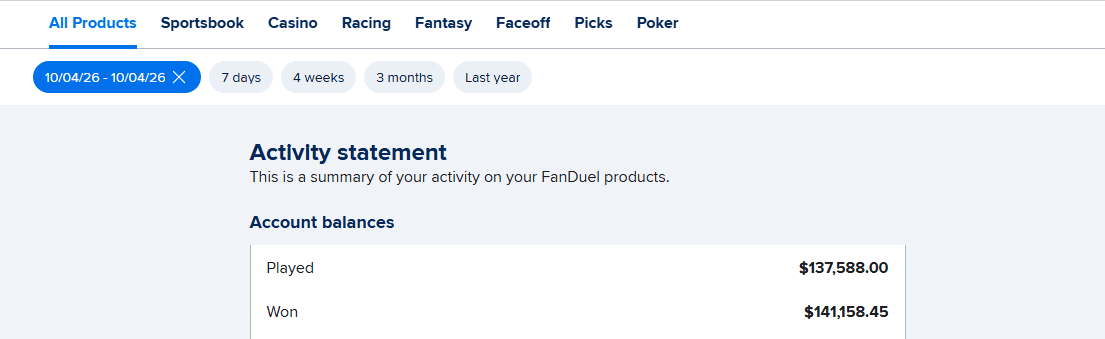
At The Best Bet on Sports, our MLB analysis incorporates all of these variables — starting pitcher metrics, park factors, weather, and lineup quality — into a complete picture that generates documented winning selections. Our team has been limited on all six major sportsbooks for consistent performance, which reflects the real-world viability of this disciplined approach to baseball betting.
---
Related Strategy Reading
For deeper context on the angles covered above, our analysis of mlb divisional rivalry betting strategy and mlb home plate umpire betting strategy totals strikeout props pairs well with this guide; our baseball picks reflect these same principles applied to live games.
Frequently Asked Questions
Why is ERA a bad stat for early-season pitcher betting?
ERA requires over 200 innings pitched to stabilize as a meaningful performance indicator. Through April and May, starters have 20 to 40 innings — far too small a sample for ERA to distinguish luck from skill. A pitcher with a 5.20 ERA through 30 innings may be genuinely excellent but unlucky on balls in play. Using ERA-adjacent metrics like xFIP, strikeout rate, and walk rate gives you a much more accurate picture of a pitcher's true quality.
What is xFIP and how do I use it for betting?
xFIP (Expected Fielding Independent Pitching) is an ERA estimator that removes the influence of team defense, normalizes home run rate to league average, and focuses on the outcomes a pitcher controls: strikeouts, walks, and hit batters. A pitcher whose xFIP is significantly lower than their ERA is being undervalued by the market — their ERA will regress toward their xFIP as sample sizes grow. Target pitchers with xFIP under 3.80 and ERAs above 4.50 in April.
How does BABIP help identify mispriced starting pitcher lines?
BABIP measures what percentage of balls put in play fall for hits. League average is .295 to .300. A pitcher with a .340 or higher BABIP is likely experiencing bad luck — defenders are positioned poorly, or balls are finding gaps that should have been outs. The market treats high BABIP as quality information about a pitcher's ability, which it is not in small samples. A pitcher with high BABIP but strong strikeout and walk rates is almost certainly due for positive ERA regression.
Are park factors already priced into MLB lines?
Partially, but not completely — especially in early April when books are using historical park factor data that may not reflect recent changes to field dimensions, ball storage, or atmospheric conditions. Pitchers at extreme parks (Coors Field, Camden Yards) are well-known enough that the full park factor is priced in. The edge is in mid-tier parks with meaningful but less publicized factors that the market underweights.
Should I bet the moneyline or run line on starting pitcher matchups?
The run line (-1.5) offers better value when targeting a quality starter whose underlying metrics justify an expectation of a dominant outing — especially when the moneyline price is short (under -170). When fading a pitcher running hot ERA luck, the straight moneyline on the opponent often provides better value because you only need a win, not a two-run win, from an offense that may not be built for blowouts.
How do I track early-season pitcher metrics for betting?
Use Baseball Savant (provided by MLB) for Statcast data including barrel rate, hard contact percentage, xFIP, and BABIP for all starters. Fangraphs provides xFIP, K%, BB%, and WHIP in clean searchable formats. Update your tracking after each start — a two-start sample tells you less than a five-start sample, but five starts in April is enough to make informed decisions on pitchers with strong or weak peripheral metrics.
When does early-season MLB pitcher value peak?
The largest gaps between ERA and underlying quality typically occur in the first three to five weeks of the season — roughly Opening Day through mid-May. This is when sample sizes are small enough for ERA to be meaningless but large enough for strikeout rate and walk rate to provide reliable signal. By June, the market has corrected most of the early-season mispricings, and the edge shrinks. Act on these situations in April and early May while the gap persists.
The Best Bet on Sports · 1.5M followers on TikTok
Sports Betting TikTok is the live betting account behind The Best Bet on Sports, covering NFL, NCAAF, NBA, NCAAB, MLB and WNBA markets in real time. The account has been limited on all six major U.S. sportsbooks — FanDuel, DraftKings, Caesars, BetMGM, Fanatics and ESPN BET — for winning on live betting, with $367,520 in verified profit since 2005. View full profile →
Past results do not guarantee future performance. Must be 21 or older to wager.
Related Articles
MLB First Five Innings Betting Guide: F5 Strategy for Expert Baseball Bettors
MLB Run Line Betting Strategy: Complete Expert Guide to Winning at Baseball Spreads
MLB Early Season Betting Trends: What the April 2026 Data Says
MLB Pitcher Matchup Analysis - How to Bet Baseball Using Starting Pitching
MLB Starting Pitcher Betting: How to Handicap Pitching Matchups in April 2026
Baseball Betting Strategy: The Complete Guide to Winning MLB Bets
Get real live betting picks
From $39.95/mo · Cancel anytime · Email + Discord delivery
● Get The Picks
Choose your package
Tap any tier below to select · Subscribe in one tap
👇 Tap any package to select it
✓ You're selecting
25 Units · $99.95/month
25 unit picks per month. Sweet spot for most bettors — plenty of action without going all-in.
- ✓25 live betting selections/month
- ✓Email + Discord delivery
- ✓All sports (NFL, NCAAF, NBA, NCAAB, MLB)
- ✓Mix of 1, 2, 3, 5-unit rated plays
- ✓Cancel anytime
Secure PayPal · Cancel anytime · No hidden fees · 21+ · +$367K verified
+$367,520 verified · Limited on 6 sportsbooks · 20 years documented · See Proof
Join Our Newsletter
Get free expert sports picks and analysis delivered weekly.