Baseball Betting Strategy: The Complete Guide to Winning MLB Bets

Baseball betting strategy centers on exploiting the 162-game MLB season through disciplined analysis of starting pitcher matchups, bullpen depth, park factors, umpire tendencies, and weather conditions. Successful baseball bettors treat each game as a data point rather than a standalone event, grinding out small edges on moneylines, run lines, and totals that compound into meaningful profit over thousands of wagers. This complete guide covers every angle professional baseball handicappers use to gain a sustainable edge.
Baseball betting strategy separates long-term winners from the losing majority because the 162-game MLB season rewards disciplined, edge-driven bettors more than any other major sport. Successful baseball bettors focus on starting pitcher matchups, bullpen management, park factors, umpire tendencies, and strict bankroll discipline to grind out profits over thousands of wagers. The volume is both the opportunity and the trap -- and knowing how to navigate it is everything.
I still remember the 2009 season when I thought I had MLB figured out. I was riding a 22-unit month in May, pressing my bets, feeling invincible. Then June hit like a freight train. I gave back everything and then some because I abandoned the flat-betting discipline that got me there. That was the season that cemented my approach to baseball betting -- the approach I have used every single day since. After more than 20 years handicapping baseball professionally at The Best Bet on Sports, I can tell you that the framework matters far more than any individual pick. Here is the complete guide I wish someone had handed me two decades ago.
Why Is Baseball Betting Fundamentally Different From Football and Basketball?
Baseball stands alone among major American sports for one critical reason: the moneyline dominates the market. In football, you are evaluating point spreads. In basketball, the spread is king. But in baseball, you are making a binary win-loss prediction priced on American odds, and that distinction changes your entire strategic framework. The run line exists at -1.5 and +1.5, but the sharpest action in the MLB market happens on straight moneylines.
This means line shopping is more consequential in baseball than in any other sport. The difference between laying -150 and -140 on a favorite seems small on a single bet, but across 300 or 400 plays over a full season, those dimes compound into thousands of dollars. I have accounts at seven different sportsbooks specifically because getting the best number on every baseball play is a non-negotiable part of my process.
Understanding break-even points is equally essential. At -130, you need to win 56.5 percent of those bets to break even. At -150, that number jumps to 60 percent. At -200, you need 66.7 percent just to stay flat. Most recreational bettors never do this math, which is why they lose money laying heavy chalk on perceived mismatches. Every bet needs to clear its break-even threshold in your projections, or it is not a bet worth making. Our MLB picks start with this math before anything else.
The high volume of games also creates a psychological challenge unique to baseball. You can bet every single day from April through October. That availability tempts bettors into forcing action on slates where they have no real edge. The best baseball bettors I know pass on more games than they play, even when the schedule offers 15 matchups on a given day.
What Are the Most Profitable MLB Betting Angles That Actually Work?
Starting pitcher analysis is the single most important variable in any MLB game, accounting for roughly 40 percent of the outcome. But if your pitching evaluation stops at ERA and win-loss record, you are leaving critical information on the table and probably losing money because of it.
I evaluate starting pitchers using expected ERA, which strips out luck-dependent variables like BABIP and strand rate. A pitcher sitting at a 2.80 ERA with a .250 BABIP and a 85 percent strand rate is likely overperforming. His expected ERA might be closer to 3.50. Conversely, a pitcher at 4.20 ERA getting unlucky with defensive alignment might have an expected ERA near 3.40. The market prices actual ERA, which means the expected ERA gap creates genuine betting value.
Bullpen depth is chronically undervalued by recreational bettors and even some sportsbooks. By the fifth or sixth inning, starters are often done. Teams with deep, rested bullpens perform measurably better in the late innings than teams limping through with a taxed pen. I track bullpen usage over the prior 72 hours for every single game I evaluate. If a team's closer threw 30 pitches last night and their setup man went 25, those arms are significantly less available tonight.
| Pitching Metric | What It Measures | Why It Matters for Betting |
|---|---|---|
| xERA | Expected ERA based on quality of contact | Identifies pitchers due for regression |
| FIP | Fielding Independent Pitching | Strips out defense and luck |
| SIERA | Skill-Interactive ERA | Most predictive future ERA metric |
| K/BB Ratio | Strikeouts per walk | Measures pitcher command |
| WHIP | Walks + Hits per IP | Overall baserunner management |
| Hard Hit % | Percentage of hard-hit balls allowed | Quality of contact indicator |
Home-road splits reveal more truth than overall records. Some teams are dramatically different at home versus on the road due to altitude, grass versus turf, climate, and crowd energy. A team with a .550 overall record that is .480 on the road is a very different proposition than the headline suggests. I always check these splits before betting any moneyline, and I recommend you do the same. Check our baseball betting resources for daily analysis that incorporates all of these angles.
How Should I Manage My Bankroll When Betting Baseball?
This is where most baseball bettors destroy themselves. They find a good angle, win a few days in a row, and start pressing bets with oversized units. Then a bad week hits -- which is inevitable in a 162-game sport -- and they have dug a hole they cannot climb out of. I have seen it happen to smart, analytical people more times than I can count.
My recommendation for baseball betting is flat betting at 1 to 2 percent of your total bankroll per game. Never exceed 3 percent on any single play, no matter how strong the angle looks. I do not care if you have the best starting pitcher matchup you have ever seen combined with a tired bullpen on the other side and wind blowing out at Wrigley. Three percent is the ceiling. The volume of baseball games means you will get every edge back if you stay disciplined through the cold stretches.
The variance in baseball is real and relentless. Even a strong angle loses 40 to 45 percent of the time. A 56 percent moneyline bettor will experience losing weeks, losing fortnights, and occasionally losing months. The bankroll management system needs to absorb all of that without forcing you to change your approach or reduce your bet size out of desperation.
I also recommend keeping your baseball bankroll separate from your football or basketball funds. The daily grind of MLB can create a psychological drain that bleeds into your decision-making in other sports. Compartmentalizing keeps each sport clean. At The Best Bet on Sports, we follow strict unit standards and document our performance transparently on our results page so you can evaluate our historical variance alongside our win rate.
What Is the Best Time During the MLB Season to Place Bets?
The baseball season is not one long monolith. Different stretches offer dramatically different betting value, and the best handicappers adjust their volume accordingly. I have tracked my own seasonal performance for 15 years, and the patterns are remarkably consistent.
April and early May are danger zones. Small sample sizes, unsettled rotations, cold weather in northern cities, and roster uncertainty make projections unreliable. I bet lighter volume in April and treat it as a data-gathering phase. The teams and pitchers are still establishing themselves, and the market has not had enough games to calibrate properly. I typically reduce my unit count by 30 to 40 percent during the first month.
June through August is prime time for baseball betting. Rotations are settled, bullpen roles are defined, and you have meaningful sample sizes on pitchers, lineups, and umpires. The totals market becomes especially exploitable during summer months as warm-weather parks see increased run scoring that the market adjusts to slowly. This is when I ramp up to full volume and take my most aggressive positions.
September creates a different kind of edge entirely. Playoff race motivation becomes the dominant factor. Teams fighting for postseason spots play with maximum intensity, while eliminated teams start resting starters and giving looks to September call-ups. Betting a team fighting for a wild card spot against a team that has been mathematically eliminated for three weeks is one of the most consistent September angles I have used throughout my career. The motivation gap is tangible and persistent.
The football picks page covers our NFL analysis, but MLB remains my favorite sport to bet specifically because the seasonal structure creates these distinct value windows.
How Do MLB Run Lines Work and When Should I Use Them?
The run line is baseball's version of a point spread, typically set at -1.5 for favorites and +1.5 for underdogs. Understanding when to use the run line versus the straight moneyline is one of the most important decisions a baseball bettor makes, and getting it right consistently separates experienced handicappers from beginners.
Heavy moneyline favorites are often the right candidates for run line conversion. When a team is -220 on the moneyline, buying them down to -1.5 at -130 gives you a significantly better price in exchange for needing them to win by two or more runs. But this only makes sense if you genuinely expect a multi-run victory. Dominant starting pitchers against weak lineups, combined with strong bullpen advantages, create run-line-worthy situations.
Run line underdogs at +1.5 are one of the most underutilized bets in all of baseball. A quality underdog that you project to win 42 percent of the time outright might cover +1.5 at 58 percent or better. That safety net of needing to lose by two or more to lose the bet creates genuine value that moneyline dogs cannot offer. I use +1.5 run line dogs frequently when I like an underdog's pitching matchup but am not confident enough to take them on the moneyline.
Avoid run line bets on projected pitching duels. Close, low-scoring games rarely produce two-run winning margins reliably. If both starting pitchers are elite and the total is posted at 7 or below, the moneyline is almost always the cleaner play. Our MLB handicappers evaluate run lines daily alongside moneylines, and you can check our results to see exactly how we perform in each market.
How Do Umpire Assignments Affect MLB Totals Betting?
Umpire tendencies are one of the most consistent and underutilized edges in baseball betting, particularly in the totals market. Home plate umpires call dramatically different strike zones, and those differences directly impact run scoring in measurable, predictable ways.
Umpires with tight strike zones -- those who call fewer strikes on borderline pitches -- force pitchers to throw more hittable pitches. This leads to higher walk rates, more baserunners, and ultimately more runs scored. When I see a tight-zone umpire assigned to a game between two offensively capable teams, the over becomes significantly more attractive than the posted number suggests.
Conversely, umpires known for expanding the zone give pitchers free strikes on the corners. This suppresses offense, reduces walks, and pushes games under the posted total. Combining a wide-zone umpire with two quality starting pitchers creates under situations that the market consistently underprices.
Umpire assignments are typically released the morning of each game. I check them as part of my daily routine before finalizing any totals plays. Over the course of a full season, this single data point has been worth more to my bottom line than almost any other situational factor. It is free, publicly available information that the majority of bettors simply ignore. This is one of the most consistent baseball betting strategies I return to throughout every season.
What Role Does Weather Play in Smart Baseball Betting?
Weather is more impactful in baseball than in any other major sport, and it affects both totals and sides in ways that casual bettors routinely miss. Temperature, wind direction, wind speed, and humidity all influence how the ball travels, how pitchers grip the ball, and how comfortable players are on the field.
Temperature is the biggest environmental factor. Baseballs carry significantly farther in warm air than in cold air. Games played in 90-degree heat produce measurably more runs than games played in 55-degree April conditions, even at the same ballpark. I adjust my totals projections upward by roughly half a run for every 15 degrees above the seasonal average at a given park.
Wind direction at open-air stadiums is the second most important weather variable. A 15 mph wind blowing out to center field at Wrigley can turn a 7.5 total into a 9-run expectation. Wind blowing in has the opposite effect, suppressing fly balls and turning potential home runs into routine outs. I check weather forecasts within two hours of first pitch for every totals play I consider.
Humidity is counterintuitive for most people. Humid air is actually less dense than dry air, which means balls carry slightly farther in humid conditions. The effect is small on its own but compounds meaningfully when combined with heat and wind. Learning to stack these environmental factors is what separates sharp totals bettors from the crowd. Visit our baseball picks page for analysis that accounts for all of these environmental factors.
How Do I Spot Value in the MLB Futures Market?
The MLB futures market offers some of the best value in all of sports betting if you know when and how to attack it. Division winners, pennant winners, and World Series champions are all available for wagering from spring training through the stretch run, and the prices shift dramatically based on early-season performance.
The most exploitable futures window is late May through mid-June, when teams that started slowly but have underlying quality are available at inflated prices. A team projected to win 88 games that starts 20-25 sees its World Series odds balloon from 12-1 to 30-1 or higher. If your analysis says the slow start is a sample-size fluke rather than a genuine talent issue, that price represents enormous value.
I also target division futures when a contending team suffers a key injury that the market overreacts to. A team losing their number-two starter for six weeks might see their division odds shift dramatically, even though the six-week absence barely dents their projected win total over a 162-game season. The market consistently overweights recent bad news in futures pricing.
Avoid futures on heavy favorites early in the season. A team priced at +350 to win the World Series before Opening Day has very little room for the price to improve. You are better off waiting for a mid-season dip and buying at a better number. Patience in futures betting is worth more than conviction.
If this is your entry point, pair it with our guide to MLB All-Star Game betting preview.
For a closer look at this angle, our breakdown of 2026 NL MVP odds and the Ohtani betting market picks up where this leaves off.
Related Strategy Reading
For deeper context on the angles covered above, our analysis of mlb run line betting strategy guide and mlb run line betting strategy pairs well with this guide; our baseball picks reflect these same principles applied to live games.
Frequently Asked Questions
What is the most profitable baseball betting strategy overall?
The most profitable baseball betting strategy combines starting pitcher analysis using advanced metrics like FIP and xERA, disciplined bankroll management at 1 to 2 percent per play, and situational awareness of bullpen usage, umpire tendencies, and weather conditions. Line shopping across multiple sportsbooks to squeeze five to ten cents per bet adds up enormously over the 1,000-plus plays a serious baseball bettor makes annually. There is no single magic angle -- it is the combination of edges applied consistently over massive volume that produces profits.
Should I bet favorites or underdogs in MLB?
Both have merit depending on the specific situation. Heavy favorites at -200 or steeper are risky because you need an extremely high win rate just to break even. The sweet spot for favorites is the -120 to -160 range where the price reflects a genuine but not overwhelming edge. Underdogs in the +120 to +150 range offer the best risk-reward profile if you can identify spots where the public has overreacted to recent struggles or where a quality pitcher is being overlooked in a less glamorous matchup.
How important is the first five innings bet in MLB?
First five innings bets isolate the starting pitching matchup and remove bullpen variance from the equation entirely. They are particularly useful when you have a strong opinion on the starting pitchers but are uncertain about one or both bullpens. Many professional MLB bettors use F5 bets as their primary vehicle because the starting pitcher analysis is more reliable than full-game projections that depend on bullpen and bench performance.
How does bullpen management create betting edges?
Modern starting pitchers average barely five innings per start, which means three to four innings of every game are determined by reliever performance. Tracking daily bullpen usage -- who pitched, how many pitches they threw, and whether high-leverage arms are available -- gives you information that most recreational bettors and even some market-makers underweight. A team with a fully rested elite bullpen facing a team with a taxed pen is a genuine handicapping edge.
What bankroll do I need to start betting baseball seriously?
A serious baseball betting bankroll should be large enough to sustain at least 100 flat units at your chosen bet size. If you are betting 50 dollars per unit, that means a starting bankroll of 5,000 dollars. This cushion allows you to absorb the inevitable losing streaks without being forced to reduce your bet size or abandon your strategy. Our sports handicappers page discusses bankroll management in more detail.
How do park factors affect run totals in MLB?
Park factors vary dramatically across MLB. Coors Field inflates runs by roughly 30 percent compared to a neutral environment, while Oracle Park suppresses them by about 10 percent. These adjustments need to be applied to your pitching and lineup projections before comparing to the posted total. Ignoring park factors is one of the most common mistakes I see in totals betting, and it costs bettors real money over the course of a season.
When should I avoid betting MLB games entirely?
Avoid betting on games where both starting pitchers are unknown or recently called up with minimal track records, games in early April before sample sizes stabilize, and any game where you cannot get a price that clears your break-even threshold after line shopping. Discipline to pass on marginal spots is the single most underrated skill in baseball betting. Check our results page to see how selective play translates to documented performance over full seasons.
The Best Bet on Sports · 1.5M followers on TikTok
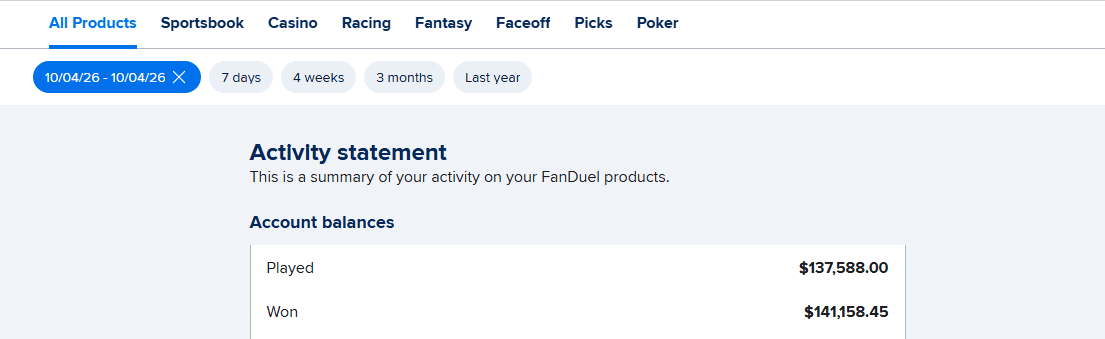
Sports Betting TikTok is the live betting account behind The Best Bet on Sports, covering NFL, NCAAF, NBA, NCAAB, MLB and WNBA markets in real time. The account has been limited on all six major U.S. sportsbooks — FanDuel, DraftKings, Caesars, BetMGM, Fanatics and ESPN BET — for winning on live betting, with $367,520 in verified profit since 2005. View full profile →
Past results do not guarantee future performance. Must be 21 or older to wager.
Related Articles
MLB Bullpen Betting Strategy: How Relievers Win or Lose Your Bets
MLB Park Factors and Weather Betting: How Environment Affects Baseball Wagers
MLB Bullpen Betting Strategy: Targeting Vulnerable Relievers in April 2026
Fading the Public in MLB Betting: Contrarian Strategy Guide
MLB Batting Order Betting Strategy: How Lineups Shift Your Edge
MLB Handicapping Tips for Winning: Baseball Betting Strategies That Work
Get real live betting picks
From $39.95/mo · Cancel anytime · Email + Discord delivery
● Get The Picks
Choose your package
Tap any tier below to select · Subscribe in one tap
👇 Tap any package to select it
✓ You're selecting
25 Units · $99.95/month
25 unit picks per month. Sweet spot for most bettors — plenty of action without going all-in.
- ✓25 live betting selections/month
- ✓Email + Discord delivery
- ✓All sports (NFL, NCAAF, NBA, NCAAB, MLB)
- ✓Mix of 1, 2, 3, 5-unit rated plays
- ✓Cancel anytime
Secure PayPal · Cancel anytime · No hidden fees · 21+ · +$367K verified
+$367,520 verified · Limited on 6 sportsbooks · 20 years documented · See Proof
Join Our Newsletter
Get free expert sports picks and analysis delivered weekly.