MLB Handicapping Tips for Winning: Baseball Betting Strategies That Work

MLB handicapping tips for winning center on starting pitcher analysis beyond surface-level ERA, bullpen evaluation that accounts for reliever workload and fatigue cycles, run line value identification in specific game situations, and seasonal trend awareness that separates real performance signals from small-sample noise. Professional baseball handicappers who sustain profitability across full seasons focus on these analytical pillars while maintaining disciplined bankroll management through the inevitable cold stretches that the 162-game schedule produces for every bettor.
# MLB Handicapping Tips for Winning: Baseball Betting Strategies That Work
The most effective MLB handicapping tips center on starting pitching matchup analysis using FIP and xFIP rather than ERA, bullpen depth evaluation through workload tracking, platoon advantage exploitation, and understanding where the public creates value on run lines and totals markets. Baseball is the most data-rich sport for handicappers, and the bettors who win consistently dig deeper into the numbers than the general market does.
I remember a game in 2019 where the public was hammering a -180 favorite because their ace was on the mound. What they did not know was that ace had thrown 118 pitches four days earlier, his fastball velocity had dropped two miles per hour in his last three starts, and the opposing lineup was stacked with left-handed bats against a pitcher whose platoon splits showed a .340 wOBA against lefties. I put out the underdog at +155 and watched it cruise to a 6-2 win. That is what MLB handicapping looks like when you go beyond the name on the back of the jersey. I have been breaking down baseball at The Best Bet on Sports for over twenty years, and the edge in this sport belongs to the patient and the prepared.
Why Is Starting Pitching the Foundation of MLB Handicapping?
Starting pitching drives the MLB betting market more than any other single factor, and for good reason. The starter typically handles five to seven innings, directly controlling the outcome for the majority of the game. A dominant starting pitcher can suppress an elite lineup for six innings and hand the game to the bullpen with a lead. A struggling starter can dig his team into a hole before the third inning.
But the market's intense focus on starting pitching also creates opportunity for sharp handicappers. Casual bettors see a big name on the mound and bet accordingly, inflating the line beyond what the matchup genuinely deserves. The public sees an ace and assumes dominance. Sharp handicappers see an ace who has thrown 220 innings already, whose spin rate has declined 150 RPM since August, and whose upcoming opponent has the third-highest wOBA against right-handed fastball-dominant pitchers in the league.
Recent form matters more than season-long statistics for daily handicapping. A pitcher's ERA and win-loss record over an entire season can mask what is happening right now. Look at the last four to six starts specifically. Examine strikeout rate, walk rate, home runs allowed, and hard-hit percentage in those recent outings. A pitcher whose seasonal ERA is 3.20 but has given up 14 earned runs in his last three starts is a different proposition than the season line suggests. His arm might be fatigued, his command might be slipping, or opposing lineups might have figured out his sequencing.
Matchup-specific data gives you an edge the public ignores entirely. How does the starter perform against this specific lineup's handedness composition? Some pitchers dominate left-handed heavy lineups but struggle against right-handed power. Platoon splits at the pitcher level are among the most underutilized data points in baseball handicapping. A right-handed pitcher with a devastating slider might post a .200 batting average against same-side hitters but get torched by lefties who can lay off that breaking ball.
Home-road splits add another dimension. Some pitchers are dramatically different at home versus on the road. Park factors compound this effect because a fly-ball pitcher in Coors Field is a fundamentally different bet than the same pitcher in a pitcher-friendly park like Oracle Park or Petco. Track these splits over multiple seasons to separate real tendencies from noise.
How Do Bullpen Dynamics Affect Your MLB Bets?
The bullpen is where casual bettors stop paying attention and sharp bettors start finding their biggest edges. Starting pitching gets all the headlines, but the bullpen determines the outcome of close games, and close games represent the majority of the MLB schedule.
Workload tracking is the single most valuable piece of publicly available bullpen data. A team's late-inning relievers who have pitched three of the last four days are significantly less effective. Their velocity drops, their command suffers, and their out-rate declines measurably. This information is available to anyone willing to look at the boxscores from the past few days, yet the betting market consistently fails to price it in fully. When a team's closer and primary setup man have each thrown 25 or more pitches in two of the last three days, that bullpen is compromised regardless of its season-long statistics.
Bullpen depth versus top-end talent creates different risk profiles that matter for different bet types. Some teams have one elite closer and a shaky setup crew. Others have four reliable arms in the pen but no dominant closer. Understanding the structure of each bullpen helps you evaluate how a game plays out from the sixth inning forward. A team with a dominant closer but weak middle relief is a different bet on the moneyline than on the first-five-innings line.
Leverage situations separate sophisticated bullpen analysis from surface-level evaluation. A reliever entering with runners on base in a one-run game faces a fundamentally different challenge than one starting a clean seventh inning with a four-run lead. Handicappers who project bullpen usage in context outperform those who just look at bullpen ERA. The inherited runner conversion rate is one of the most underused statistics in baseball handicapping.
| Bullpen Factor | What to Track | Where to Find It | Impact Level |
|---|---|---|---|
| Recent Workload | Pitches thrown last 3 days | Box scores | High |
| Closer Availability | Last outing date and pitch count | Bullpen usage charts | High |
| Setup Man Quality | ERA/WHIP in high-leverage situations | Advanced stats sites | Medium |
| Inherited Runner Rate | % of inherited runners who score | Team stats pages | Medium |
| Left-Right Matchup | Handedness of upcoming batters | Lineup cards | Medium |
Evaluating these factors consistently is what separates profitable MLB picks from casual guesswork. Our daily analysis at The Best Bet on Sports incorporates bullpen workload data into every recommendation.
What Run Line and Totals Strategies Work in Baseball?
The moneyline dominates MLB betting, but the run line and totals markets offer some of the best value in baseball for handicappers who understand the pricing dynamics.
Run line value with heavy favorites is one of the most consistent edges I have found in two decades of baseball handicapping. When a team is -200 or higher on the moneyline, the run line at -1.5 often provides significantly better odds with a reasonable expectation of covering. Teams that win frequently tend to win by multiple runs. The data shows that teams winning at a 65% clip win by two or more runs in approximately 55% of those victories. The run line captures that margin at a fraction of the moneyline price, turning a -200 moneyline into something closer to -130 on the run line.
Totals and park factors create edges that persist all season. Totals betting in baseball is heavily influenced by park dimensions, altitude, weather, and wind direction. A game at Wrigley Field with the wind blowing out to center plays completely differently than the same matchup at Petco Park. Handicappers who incorporate real-time weather data into their totals analysis find consistent edges because the market sets totals based on average conditions and adjusts slowly when conditions deviate.
First five innings lines deserve more attention than they get. The F5 line isolates starting pitching matchups and removes bullpen variance entirely. If your edge on a game is driven by the starting pitcher comparison, the F5 line is often the sharper play because it strips out the variable you have the least confidence in. I use F5 lines on roughly 30% of my daily baseball plays, particularly when I love one starter but have concerns about that team's bullpen situation.
For a complete breakdown of F5 strategy and when to use it, see our MLB first five innings betting guide.
What Seasonal Trends Should MLB Handicappers Track?
Baseball's 162-game season creates predictable patterns that inform smart handicapping at different points of the calendar. Ignoring these patterns costs bettors money every year.
Early season variance in April and early May produces the most unpredictable results of any stretch in the baseball calendar. Small sample sizes on current-year statistics make projections unreliable. Cold weather in northern cities suppresses hitting. Bullpen roles are still being sorted out, and managers are experimenting with lineup construction. Successful handicappers bet smaller and more selectively in April, treating the first two to three weeks as a calibration period rather than a profit period.
The dog days of July and August are when fatigue sets in and motivation can wane for non-contenders. Teams out of the playoff race become unpredictable because some play loose and outperform expectations while others mail it in. Reading the clubhouse temperature during this stretch matters because a team that has quit on the season is a fundamentally different bet than a team still fighting for a wild card spot. Watch for fire sales at the trade deadline, because a team that just traded its two best relievers has a completely different bullpen profile than it did a week earlier.
September roster dynamics evolve with rule changes, but teams still make strategic decisions about playing time for young players versus veterans down the stretch. Teams already eliminated from contention often rest veterans and give prospects extended playing time, which changes the team's expected performance level. These decisions create handicapping value, particularly in games involving eliminated teams facing contenders who need every win.
Check our baseball picks throughout the season for analysis that accounts for these seasonal dynamics in every selection we release.
How Important Is Bankroll Management in MLB Betting?
Baseball demands disciplined bankroll management more than any other sport because the moneyline structure means you are frequently laying or taking variable odds. This creates a dynamic where your risk-to-reward ratio changes with every bet, making consistent position sizing essential.
Flat betting in terms of dollars risked, not dollars to win, keeps your exposure consistent. Risking one unit on a -150 favorite and one unit on a +130 underdog means your actual potential payout differs, but your risk stays the same. This consistency is essential over a 162-game season where the cumulative impact of bet sizing errors compounds rapidly.
The daily volume of MLB games creates a temptation that does not exist in football. With 15 games on the slate most days, a handicapper can find reasons to bet 8 or 10 of them. Resist this urge aggressively. The Best Bet on Sports recommends playing no more than two to four percent of your bankroll per game, with a maximum of three to five plays per day. This discipline preserves capital during the inevitable losing stretches and ensures you are still in action when the hot streaks arrive.
Track your results by bet type separately. Your moneyline plays, run line plays, totals plays, and F5 plays may perform at very different rates. If you discover that your totals analysis is producing 58% winners but your run line plays are break-even, adjust your volume accordingly. Lean into your strength and reduce action in the areas where your edge is thinnest. Our money management tips apply across all sports and provide a comprehensive framework for protecting your bankroll. For daily professionally researched MLB picks that incorporate all these factors, explore our baseball picks service.
How Do Weather and Park Factors Change MLB Betting Value?
Weather and park factors are two of the most powerful variables in baseball handicapping and two of the most frequently ignored by casual bettors. Understanding their impact gives you an immediate edge in the totals market and a secondary edge on moneylines and run lines.
Wind direction at Wrigley Field is the classic example. A 15 mile-per-hour wind blowing out to center field adds 1.5 to 2 runs of expected scoring based on historical data. A 15 mile-per-hour wind blowing in from center suppresses scoring by a similar margin. That swing of 3 to 4 runs in expected total makes wind direction at Wrigley the single most impactful weather factor in daily MLB handicapping.
Temperature matters across all outdoor parks. Games played in sub-55-degree weather show measurably lower offensive output because cold conditions reduce ball carry and affect hitter bat speed. April games in northern markets like Chicago, Cleveland, Minneapolis, and New York consistently produce lower scoring than the same matchups would in July. Sportsbooks adjust for this, but the adjustment is often insufficient because they cannot perfectly model the interaction between temperature, wind, humidity, and altitude.
Park dimensions create persistent edges that last the entire season. Coors Field in Denver is the most extreme example where the high altitude produces dramatically more runs than any other park. But every ballpark has a run-factor rating that matters. Parks with short porches in left or right field inflate totals for pull hitters with the corresponding handedness. Knowing which park you are betting in and how it interacts with the specific lineup construction of both teams is non-negotiable for serious totals handicapping.
That same logic carries over to Home Run Derby betting angles, which covers the adjacent setup in detail.
How Do Platoon Splits Create MLB Betting Edges?
Platoon splits are the hidden goldmine of MLB handicapping. The advantage that left-handed batters have against right-handed pitchers, and vice versa, is one of the most well-established statistical facts in baseball. But the betting market often fails to price platoon dynamics correctly, particularly when lineup cards reveal unexpected lineup construction.
When a lineup card drops and shows a team stacking five left-handed bats against a right-handed starter who has a .330 wOBA against lefties versus a .240 wOBA against righties, that is actionable information. The moneyline was likely set before the lineup card was released, and the adjustment may not fully account for the platoon mismatch.
Switch hitters complicate platoon analysis but also create opportunities. A team with multiple switch hitters in the lineup has natural platoon protection that reduces the opposing pitcher's handedness advantage. This depth shows up in their season-long splits and is worth tracking when evaluating matchup-specific value.
The first five innings line is particularly sensitive to platoon dynamics because you are isolating the starter's performance against a specific lineup construction. If a starter's platoon splits show dramatic differences and the opposing lineup is heavily weighted to his weak side, the F5 line offers a clean way to exploit that mismatch without worrying about what happens when the bullpen comes in. Check our MLB pitcher matchup analysis guide for the full breakdown of how we use pitching data in our daily process. Explore our MLB betting hub for additional strategy content and current picks.
Frequently Asked Questions
What is the most important stat for MLB handicapping?
There is no single stat that covers everything, but starting pitcher strikeout-to-walk ratio is one of the most reliable indicators of a pitcher's true ability. It strips out defense and luck, isolating what the pitcher directly controls. Pair it with hard-hit rate against for a strong baseline evaluation. For a more advanced approach, FIP provides the cleanest single-number assessment of pitcher quality because it removes defensive performance and batted ball luck from the equation.
Should I bet more MLB moneylines or run lines?
It depends on the matchup. Moneylines are preferable for close matchups where the margin of victory is uncertain. Run lines offer better value on heavy favorites expected to win by multiple runs because you get significantly better odds in exchange for requiring a two-run margin. Successful handicappers use both markets strategically based on the specific game rather than defaulting to one bet type for every play.
How many MLB games should I bet per day?
Limit yourself to two to five plays per day regardless of how many games are on the slate. The temptation with a 15-game schedule is to bet heavily, but selectivity is one of the strongest predictors of long-term profitability. Only play the games where your analysis identifies a meaningful edge. Forcing action on marginal spots is how bankrolls erode over the course of a long baseball season.
Is it better to bet MLB favorites or underdogs?
Long-term data strongly favors selective underdog moneyline betting as a strategy. Heavy favorites at -200 or worse are historically the worst bets in baseball by expected value because you risk too much to win too little. Even great teams lose 35% to 40% of their games. Targeting quality underdogs between +100 and +160 is the most historically profitable range in MLB moneyline betting.
How do injuries affect MLB handicapping?
Injuries to position players matter less in baseball than in basketball or football because no single position player has the same impact as a starting pitcher. However, losing a team's best hitter does reduce expected run output, and the market sometimes overreacts to marquee player injuries. Starting pitcher injuries are far more impactful because they directly change the line and can create value if the replacement starter is better than the market assumes.
What is the best time of year to bet MLB?
April offers the widest market inefficiencies because sportsbooks are working from projection systems rather than real performance data. June through August offers the most reliable data for handicapping because sample sizes are large and teams have established their true performance levels. September presents unique opportunities when eliminated teams change their lineup construction and motivation dynamics shift dramatically.
How do I use the first five innings line effectively?
The F5 line is most effective when your edge is concentrated in the starting pitcher matchup and you have limited confidence in one or both bullpens. It isolates exactly the variable you have analyzed most carefully and removes the late-game variance that can turn a well-analyzed play into a loss. Use F5 lines when the starter comparison strongly favors one side but the bullpen situation is uncertain or unfavorable. Track your F5 results separately from full-game results to measure where your analysis is sharpest.
The Best Bet on Sports · 1.5M followers on TikTok
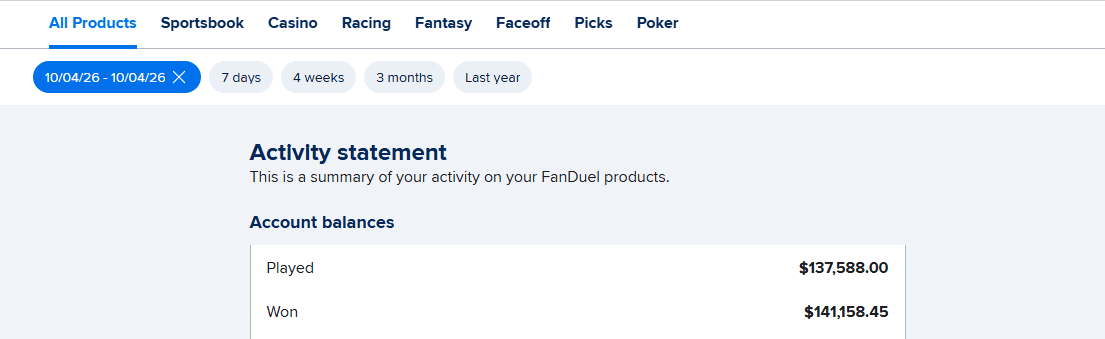
Sports Betting TikTok is the live betting account behind The Best Bet on Sports, covering NFL, NCAAF, NBA, NCAAB, MLB and WNBA markets in real time. The account has been limited on all six major U.S. sportsbooks — FanDuel, DraftKings, Caesars, BetMGM, Fanatics and ESPN BET — for winning on live betting, with $367,520 in verified profit since 2005. View full profile →
Past results do not guarantee future performance. Must be 21 or older to wager.
Related Articles
MLB Bullpen Betting Strategy: How Relievers Win or Lose Your Bets
Baseball Picks: How to Win at MLB Betting With Proven Strategy
MLB All-Star Game 2026: How the Betting Lines Move
Fading the Public in MLB Betting: Contrarian Strategy Guide
MLB Divisional Rivalry Betting Strategy: Win More Games
MLB Park Factors and Weather Betting: How Environment Affects Baseball Wagers
Get real live betting picks
From $39.95/mo · Cancel anytime · Email + Discord delivery
● Get The Picks
Choose your package
Tap any tier below to select · Subscribe in one tap
👇 Tap any package to select it
✓ You're selecting
25 Units · $99.95/month
25 unit picks per month. Sweet spot for most bettors — plenty of action without going all-in.
- ✓25 live betting selections/month
- ✓Email + Discord delivery
- ✓All sports (NFL, NCAAF, NBA, NCAAB, MLB)
- ✓Mix of 1, 2, 3, 5-unit rated plays
- ✓Cancel anytime
Secure PayPal · Cancel anytime · No hidden fees · 21+ · +$367K verified
+$367,520 verified · Limited on 6 sportsbooks · 20 years documented · See Proof
Join Our Newsletter
Get free expert sports picks and analysis delivered weekly.