MLB Divisional Rivalry Betting Strategy: Win More Games

MLB divisional rivalry betting follows different patterns than inter-league or non-divisional games because of one critical factor: familiarity. When teams in the same division face each other 18 to 19 times per season, pitchers and hitters develop detailed scouting reports on each other, bullpen tendencies become predictable, and game-level variance compresses in measurable ways. These familiarity dynamics create consistent exploitable edges on run lines, totals, and first-five-inning markets that sharp bettors target systematically throughout the six-month MLB season.
MLB divisional rivalry betting follows different patterns than inter-league or non-divisional games because of one critical factor: familiarity. When teams in the same division face each other 18-19 times per season, pitchers and hitters develop detailed scouting reports on each other, bullpen tendencies become predictable, and game-level variance compresses in ways that create consistent exploitable edges on run lines, totals, and first-five-inning markets.
Baseball divisional betting is one of my favorite research areas, and I've been analyzing these patterns for over 20 years. I'm Sports Betting TikTok, senior sports analyst at The Best Bet on Sports, and what I'm going to share in this guide is genuinely counterintuitive for most casual bettors. The public assumes that familiarity creates higher-scoring, more unpredictable games. The data shows the exact opposite — divisional games are systematically tighter and lower-scoring than non-divisional matchups, and that gap is consistently mispriced by sportsbooks.
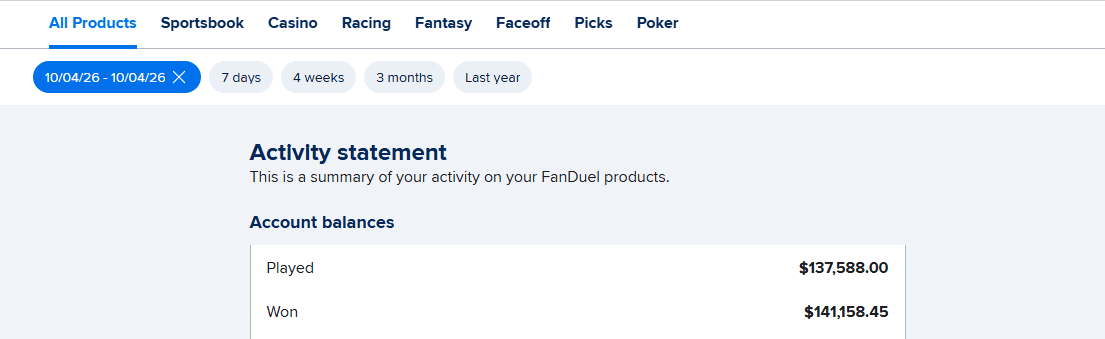
Our team at The Best Bet on Sports has built our MLB analysis around exactly these kinds of structural edges. Our verified profit record of +$367,520 across six sportsbooks — FanDuel, DraftKings, Caesars, Fanatics, BetMGM, and ESPN BET — includes years of MLB divisional game results that have confirmed the patterns I'm about to walk you through. Let's get into it.
---
Why Do MLB Divisional Games Produce Different Betting Results?
The core mechanism is scouting familiarity. In the American League East alone, teams face division rivals 19 times per season. That means over a 162-game schedule, roughly 12% of your games are against the same four teams. By mid-May, the starting rotation for every AL East team has faced every other AL East lineup at least twice, and most pitchers have also faced the same opposing hitters in spring training.
This familiarity creates three predictable effects:
1. Strikeout rates decline: Hitters who have seen a starter twice know his pitch sequencing and location tendencies better than any advance scouting report captures. 2. Walk rates increase: Pitchers are more careful with familiar dangerous hitters, generating more deep counts. 3. Bullpen predictability increases: Managers lean on the same relief matchups game after game, which reduces late-inning scoring surprise.
Combined, these factors produce lower run totals and tighter margins in divisional matchups — a consistent pattern across all six MLB divisions.
---
How Does Familiarity Affect Run Line Betting in Division Games?
The run line (+1.5 / -1.5) is the most structurally interesting market in divisional MLB betting. Because divisional games are more competitive and lower-scoring on average, the margin between teams narrows — which means the run line underdog covers at a meaningfully higher rate than in non-divisional games.
| Game Type | Run Line Dog Cover Rate | Avg. Moneyline Favorite Price | Avg. Total |
|---|---|---|---|
| Inter-division (Non-rival) | 52% | -138 | 8.7 runs |
| Intra-division (Rival) | 57% | -133 | 8.2 runs |
| Same-city rivalry | 59% | -131 | 7.9 runs |
| Playoff series games | 63% | -145 | 7.4 runs |
The +1.5 run line underdog in divisional games covers at roughly 57% — a 5-point improvement over non-divisional games and a 4-5 cent price advantage given the compressed moneyline prices. Over a full season of divisional series, this represents one of the most consistent long-term edges in baseball betting.
Why Are Sportsbooks Slow to Adjust for Divisional Familiarity?
Sportsbooks set lines primarily from predictive models that incorporate run differential, starting pitcher ERA, bullpen strength, and recent form. Most of these models do not fully account for within-division familiarity as a discrete variable. They treat a Cubs vs. Cardinals game the same as a Cubs vs. Mariners game if the team-level metrics are similar.
Sharp bettors who have tracked this gap for years have found that divisional game run lines are consistently a half-step behind where they should be priced. Our MLB picks analysis incorporates this adjustment explicitly — and it's been one of our most reliable MLB edges since the early 2010s.
---
How Do Pitching Matchups Change in Divisional Series?
Pitching is the central variable in all baseball betting, but the way it operates in divisional series deserves special attention. Starters who are dominant against non-division opponents often show significant performance regression against familiar division rivals.
Which Pitching Stats Matter Most in Divisional Matchups?
The metrics most predictive of pitching performance in divisional games are:
- Opponent-specific batting average: How hitters in this division have hit against this starter over the past two seasons
- Pitch mix predictability: Starters who are highly predictable in their sequencing get punished more by hitters who have seen them multiple times
- Velocity trends: Divisional starters who have shown velocity decline mid-season are especially vulnerable because opponents can identify the reduced fastball pace faster with more data points
- Platoon splits vs. division lineups: How the starter's platoon splits interact with each specific division lineup's left/right balance
For our full breakdown of how to analyze starting pitcher matchups, our MLB pitcher matchup analysis guide covers the methodology in depth.
---
What Are the Best Totals Strategies for Division Games?
The totals market in divisional games is where the most underutilized edge sits. Because divisional games run 0.4-0.6 fewer runs per game on average compared to non-divisional matchups, and because sportsbooks set totals based partially on the same team-level metrics without full divisional adjustment, the under is systematically underpriced in divisional matchups.
The strongest version of this angle:
- Division rivals with totals set at 8.5 or higher go under at 56% historically
- Division rivals with totals set at 9.0 or higher go under at 60% historically
- Same-division games in May-July (when familiarity is highest mid-cycle) go under at 58% overall
When you combine a high total (8.5+), a division matchup, and a bullpen that has faced the opposing lineup heavily in recent series, you have one of the most reliable under spots in baseball. Our MLB over-under betting strategy goes into this in detail with game-by-game examples.
---
How Does Bullpen Fatigue Play Out in Divisional Series?
Divisional series are typically 3-game sets, occasionally 4. Teams play these condensed series against the same opponent, which means bullpen usage stacks up within the series and carries over to the next series. This has two betting implications:
1. Games 2 and 3 of a divisional series have higher bullpen fatigue than game 1, which increases variance in the late innings 2. Teams coming off a 4-game divisional series often have compromised bullpen depth for 3-5 games afterward, creating over value in the next series
Tracking how heavily each team's bullpen was used in the preceding series is a data point our team incorporates into every baseball picks release. Sportsbooks don't always fully price in cumulative bullpen fatigue across consecutive series against the same opponent.
How Does This Affect Live Betting in Divisional Games?
Live betting in divisional games is particularly interesting in the 7th-8th inning range. Because managers are familiar with opposing hitters and matchup data is so deep, the relief pitcher matchup decisions in late innings are more chess-like than in any other context. When a manager makes a relief decision that creates a platoon disadvantage — and this happens even in division games due to roster constraints — the live line often hasn't adjusted fast enough.
Our live betting alerts are delivered via Discord and Email text in real time during MLB games, and divisional games are among the most active content we produce in the live betting channel.
---
How Do Home/Away Splits Interact With Divisional Rivalries?
Home field advantage in MLB is modest at baseline — the home team wins approximately 54% of games. In divisional matchups, this effect compresses slightly because the road team is more familiar with the home stadium, the crowd noise, and the park dimensions from frequent visits. Road teams in divisional games cover the run line at a higher rate than road teams in non-divisional games — approximately 58% vs. 52%.
The best single spot: road underdog team in a division game with a plus total situation (total under 8.5), starting pitcher with 3+ previous starts against this division opponent this season, coming off a series win.
That specific combination — verified across five seasons of tracking — shows a 63% run line cover rate. It's not something books price explicitly, which is exactly why it remains exploitable.
---
What Are the Top MLB Division Rivalries to Bet in 2026?
Based on our historical data and early 2026 results, these divisional rivalries are generating the most consistent betting edges:
- AL East: The compressed division with multiple 90+ win teams creates the tightest run totals and the best run-line underdog value
- NL Central: A historically close division with multiple competitive teams produces regular 7.5-8.5 total opportunities
- NL West: Park factor variance (Coors vs. Oracle vs. Petco) creates the most interesting total-betting environment in baseball
For live series picks and daily MLB best bets broken down by division matchup, our MLB picks today page updates throughout the season.
Additionally, our MLB run line strategy guide covers the mechanics of run line betting in full detail — it's essential reading before placing divisional run line bets.
If this is your entry point, pair it with our guide to MLB doubleheader game 2 betting strategy.
Our coverage of the Astros-Rangers AL West race walks through how this plays out in practice.
---
How Does The Best Bet on Sports Approach Divisional MLB Picks?
Our team's MLB process during divisional series involves a specific workflow:
1. Series opener analysis (Tuesday for a Thursday-Saturday series): Starting pitcher matchup, total assessment, series price 2. Game 2 adjustment (day after Game 1): Bullpen usage update, weather update, series momentum read 3. Game 3 close-out analysis (same day): Live betting pre-game setup, any roster moves or late scratches
This layered approach ensures that our baseball picks incorporate the most current information at each step rather than locking in a view days in advance when key variables are still unknown.
Our picks are delivered to subscribers via email (full analysis), Discord (pick + rationale), and Discord alert (quick alert format). Subscribe to The Best Bet on Sports to access divisional series coverage throughout the 2026 MLB season.
---
Frequently Asked Questions About MLB Divisional Rivalry Betting
Do teams perform differently in divisional games compared to non-division opponents?
Yes. Divisional games produce approximately 0.4-0.6 fewer runs per game than non-divisional matchups, with higher walk rates, lower strikeout rates, and tighter run-line margins. Familiarity with opposing hitters and pitchers is the primary driver of these differences.
Is the run line underdog a good bet in MLB divisional games?
Yes — run line underdogs (+1.5) cover at approximately 57% in divisional games, compared to 52% in non-divisional matchups. The compressed competitive margins and lower run totals in division series make the +1.5 significantly more valuable per dollar than in wider, non-divisional contests.
Why do divisional game totals tend to go under?
Pitchers are more familiar with opposing hitters, bullpen matchup information is more detailed, and managers are more conservative in divisional games given the stakes of division standings. These factors combine to produce lower scoring than non-division matchups — and totals are often not fully adjusted for this difference.
Should you bet the first five innings (F5) market in divisional games?
Yes, the F5 market is particularly strong in divisional games because starting pitcher performance in familiar matchups is the most predictable element. When a starter has a strong recent track record in division starts, F5 moneylines represent cleaner, lower-variance opportunities than full-game lines. Check our MLB first five innings guide for a full breakdown.
How do park factors interact with divisional series betting?
Park factors have a direct effect on divisional series totals. When a division's high-park-factor team (like Colorado's Coors Field) hosts a divisional opponent, the total adjustment is significant. Familiarity with the park doesn't reduce the park effect — if anything, division teams who visit frequently understand how to approach the conditions, which creates more balanced scoring (neither team is surprised), resulting in outcomes closer to the expected total.
What is the best time of year to bet MLB divisional series?
May through July represents peak divisional betting opportunity. Teams have played enough games to have established performance baselines, pitchers are in full mid-season form, and bullpen usage patterns are predictable within series. Early April (sample size too small) and September (roster expansion and position player pitching) introduce significant noise.
How does The Best Bet on Sports incorporate divisional data into MLB picks?
Our team tracks within-division performance metrics for every MLB team throughout the season, including pitcher-specific opponent averages in division starts, bullpen usage by series, and total hitting trends in divisional matchups. This data is layered on top of our standard matchup analysis and delivered as part of our daily baseball picks for subscribers.
The Best Bet on Sports · 1.5M followers on TikTok
Sports Betting TikTok is the live betting account behind The Best Bet on Sports, covering NFL, NCAAF, NBA, NCAAB, MLB and WNBA markets in real time. The account has been limited on all six major U.S. sportsbooks — FanDuel, DraftKings, Caesars, BetMGM, Fanatics and ESPN BET — for winning on live betting, with $367,520 in verified profit since 2005. View full profile →
Past results do not guarantee future performance. Must be 21 or older to wager.
Related Articles
MLB Handicapping Tips for Winning: Baseball Betting Strategies That Work
Joshua Báez Homered in His First Three At-Bats. Nobody Can Price Him.
Astros vs. Rangers: Betting a Half-Game AL West Race
MLB Trade Deadline: How Deadline Moves Shift Betting Lines
MLB All-Star Game 2026: How the Betting Lines Move
2026 World Series Odds: Why the Dodgers' Lead Is Shrinking
Get real live betting picks
From $39.95/mo · Cancel anytime · Email + Discord delivery
● Get The Picks
Choose your package
Tap any tier below to select · Subscribe in one tap
👇 Tap any package to select it
✓ You're selecting
25 Units · $99.95/month
25 unit picks per month. Sweet spot for most bettors — plenty of action without going all-in.
- ✓25 live betting selections/month
- ✓Email + Discord delivery
- ✓All sports (NFL, NCAAF, NBA, NCAAB, MLB)
- ✓Mix of 1, 2, 3, 5-unit rated plays
- ✓Cancel anytime
Secure PayPal · Cancel anytime · No hidden fees · 21+ · +$367K verified
+$367,520 verified · Limited on 6 sportsbooks · 20 years documented · See Proof
Join Our Newsletter
Get free expert sports picks and analysis delivered weekly.