MLB Home Plate Umpire Strike Zone Totals Betting Strategy May 2026

MLB home plate umpire strike zone tendencies move the run total by 0.3 to 0.7 runs per game depending on the umpire's called strike rate. Sharp bettors track umpire called-strike percentage on borderline pitches, then attack totals before sportsbooks fully adjust. Wide-zone umpires push unders, tight-zone umpires push overs, and the umpire's identity is published 60 to 120 minutes before first pitch — a window where the line is still soft.
MLB home plate umpire strike zone tendencies move a game's run total by between 0.3 and 0.7 runs depending on the umpire's called-strike rate on borderline pitches, and that movement is one of the few public-data edges still available to disciplined bettors. The Best Bet on Sports has logged over $367,520 in verified long-term profit attacking exactly these structural inefficiencies — wide-zone umpires push unders, tight-zone umpires push overs, and the umpire announcement comes 60 to 120 minutes before first pitch, a window where sportsbook lines often lag the data. Pair umpire strike zone with park factors and starter handedness and the edge stacks.
Most casual MLB bettors never check the home plate umpire before placing a totals bet. They look at the starting pitchers, glance at the wind, and click. Sharp bettors check the umpire first, because among all the variables that affect a baseball total — pitching, weather, lineup health, bullpen rest — umpire strike zone consistency is the one variable that touches every single pitch in the game. A wide-zone umpire turns marginal balls into strikes, which means lower walk rates, faster at-bats, more weak contact, and fewer runs. A tight-zone umpire produces the opposite.
This guide explains how to read umpire data, when the strike zone effect carries the most weight, and how to size bets on totals lines that have not yet absorbed the umpire factor. For broader MLB strategy, see our MLB picks and MLB betting pages.
The Mechanics: How a Home Plate Umpire Moves the Total
The strike zone is defined by the rulebook as a roughly 17-inch wide rectangle from the bottom of the kneecap to the midpoint of the torso. In practice, every umpire calls a slightly different version of that rectangle. Some are tight on the corners and high in the zone. Some are generous on the inside corner against right-handed hitters but tight outside. Some are consistent across the zone but call a slightly larger overall area than the average umpire.
The data on these tendencies has been measured pitch-by-pitch since the introduction of pitch tracking technology in 2008. Every umpire has a multi-thousand-pitch sample of called strikes, called balls, and missed calls. Three numbers matter for totals betting:
1. Called strike percentage on borderline pitches — pitches within 2 inches of the strike zone edge that were taken (no swing). This isolates the umpire's discretion. 2. Average runs per game in their starts — the raw output, which includes selection bias (umpires are not randomly assigned to games) but is still directionally useful. 3. Walk and strikeout rate impact — how the umpire's zone shifts BB% and K% relative to league average.
When all three numbers point the same direction (wide zone, lower run output, fewer walks, more strikeouts), the umpire is what bettors call a "pitcher's umpire" and the under is the live side. When they all point the other way, the over is live.
Why the Umpire Edge Still Exists
Sportsbooks know about umpire factors. They are not unaware. But three structural reasons keep the edge alive:
Late Announcement Window
The home plate umpire is announced 60 to 120 minutes before first pitch, sometimes later. Sportsbooks post totals 12 to 24 hours in advance. By the time the umpire is locked in, the line has been moving on starting pitcher news, weather, and public action. Adjusting the line for the umpire factor is a manual operation that not every book performs aggressively.
Public Bettor Indifference
The vast majority of recreational bettors do not check the umpire. Public action drifts to the over because casual fans prefer rooting for runs. This means a wide-zone umpire game often sees the over juiced down to -115 or worse while the under sits at -105 — even when the umpire data favors the under by a margin that should have moved the price the other way.
Selection Bias in the Public Data
Even sharp bettors have to be careful with raw runs-per-game-by-umpire data because umpires are not randomly assigned. Some umpires get more high-profile matchups, some work more games at hitter-friendly parks, some draw certain teams more often. The raw number is directionally correct but the magnitude is not always trustworthy. Sportsbooks discount the raw number for this reason, which means well-modeled bettors who normalize the data carry an edge over bookmakers and over public action.
How to Read Umpire Data the Right Way
The mistake most bettors make is grabbing a season-to-date called strike percentage and calling it analysis. The data needs to be normalized for several factors before it produces a usable signal.
Use a Multi-Year Sample
A single season is roughly 25 to 35 starts behind the plate. That is too small a sample to be confident in the strike zone shift. Use a three-year rolling sample to dampen noise and pick up the umpire's actual baseline tendency.
Adjust for the Pitcher Pool
If an umpire has worked games for high-strikeout staffs all season, his K% impact will look stronger than it really is. Compare his strikeout rate impact to the expected rate given the pitchers in his sample, not to the league average.
Adjust for the Park
Pitcher's parks suppress runs regardless of umpire. If an umpire happens to work more games at Oracle Park or Petco than at Coors or Great American, his runs-per-game number is biased low. Park-adjust before drawing conclusions. See our MLB park factors and weather breakdown for more.
Filter for Recent Games Only If You Have Reason
Some bettors use only the last 20 to 30 games to capture "current form." This usually adds noise. Umpire tendencies are very stable over multi-year samples. Recent-only filters typically introduce more variance than they remove.
The Three Highest-Edge Umpire Spots in May 2026
After grading hundreds of umpire spots over multiple seasons, three specific patterns produce the most reliable edge.
1. Extreme Wide-Zone Umpire + Two Strike-Throwing Starters
When a known wide-zone umpire (called strike percentage on borderline pitches more than 1.5 standard deviations above league average) is paired with two starting pitchers who both pound the zone (BB% under 7%), the under carries structural value. The wide zone amplifies the strike-throwers' command. Walks fall, at-bats end faster, and weak contact rises.
2. Extreme Tight-Zone Umpire + Two Power Lineups
The opposite spot. A tight-zone umpire forces pitchers to work in the heart of the plate. Power-heavy lineups punish that location. The over plays even when the total has been bumped.
3. Wide-Zone Umpire + Bullpen Day Opponent
When a team is using a bullpen day or an opener strategy and faces a wide-zone umpire, the under stacks. Bullpen pitchers benefit more from a generous zone than starters do because relievers throw fewer pitches and get to attack each at-bat. See our MLB bullpen day opener strategy write-up for more on this market.
Sample Edge Table
The numbers below are from our long-term grading database. They illustrate the structural edge in different umpire profiles, all else equal.
| Umpire Profile | Average Total Move | Suggested Side | Confidence |
|---|---|---|---|
| Wide zone, top decile | -0.5 runs | Under | High |
| Wide zone, top quartile | -0.3 runs | Under | Medium |
| Tight zone, bottom decile | +0.5 runs | Over | High |
| Tight zone, bottom quartile | +0.3 runs | Over | Medium |
| Average zone | 0.0 runs | No edge | Pass |
These edges only convert to profit when the sportsbook's posted total has not already absorbed them. Run a quick check: if the total is already 0.5 below the season average for the matchup, the wide-zone umpire under may already be priced in.
Sizing Umpire-Driven Totals Bets
Umpire data shifts probabilities meaningfully but not dramatically. A typical umpire-driven under play moves the implied total from 8.5 to 8.0 — a meaningful difference, but not a guaranteed cover. Variance is real because every game still has weather, lineup, and bullpen variables.
Recommended sizing:
- High-confidence umpire spot (top decile data + clean matchup): 1 unit
- Medium-confidence umpire spot (top quartile data, less clean matchup): 0.5 to 0.75 unit
- Stacking umpire with park factor or weather: do not exceed 1.5 units total
For more on disciplined sizing, see our unit sizing and bankroll management guide.
Live Betting the Umpire Factor
If the umpire is showing his expected pattern through the first three innings (called strike percentage tracking with his career baseline), the live total carries a follow-through edge for the rest of the game. Sportsbooks reset live totals based on actual runs and current inning, but they generally do not re-adjust for umpire tendency mid-game. A wide-zone umpire whose pattern is confirmed early gives the live under additional value.
This is part of why The Best Bet on Sports has been limited on all six major U.S. sportsbooks (FanDuel, DraftKings, Caesars, BetMGM, Fanatics, ESPN BET) for live betting volume — the live MLB totals market in particular is one of the softest live markets in U.S. sports. For more on live MLB strategy, see our MLB live betting strategy breakdown.
Common Mistakes Bettors Make with Umpire Data
1. Using single-season samples. Too noisy. Always use three-year rolling. 2. Ignoring park bias. Umpires who work more pitcher-park games look better than they are. 3. Assuming the line has not adjusted. Always compare the posted total to the season-baseline matchup total before betting. 4. Stacking correlated bets. Umpire under + starter total bases under for the same pitcher is not independent. Manage the correlation. 5. Chasing one-game noise. A single bad-call game from a normally consistent umpire is not a tendency change.
How Our Analysts Approach Umpire Spots
Our team grades each day's full slate against the announced umpires once the assignments are public. We compare our model's projected total (umpire-adjusted, park-adjusted, weather-adjusted) to the posted total at multiple sportsbooks. When the gap exceeds 0.4 runs and the price is no worse than -115, we release a play.
For full access to our daily MLB picks and umpire-driven totals analysis, see our packages or browse our results history.
We go deeper on the related market in MLB catcher framing and pop time props.
Frequently Asked Questions
How much does a home plate umpire affect MLB totals?
A home plate umpire's strike zone tendency moves the expected run total by 0.3 to 0.7 runs per game depending on how extreme the umpire's called-strike rate is on borderline pitches. Wide-zone umpires suppress runs by 0.3 to 0.5 below the matchup baseline. Tight-zone umpires inflate runs by a similar margin. Extreme cases at either end produce 0.7-run swings.
When are umpire assignments announced?
Home plate umpire assignments are typically announced 60 to 120 minutes before first pitch, sometimes earlier in the day. This is the key window for umpire-driven totals bets — sportsbooks have posted lines based on starting pitchers and weather, but the umpire factor is often not yet fully priced in.
What umpire stats matter most for totals betting?
The single most important number is called-strike percentage on borderline pitches (pitches within 2 inches of the rulebook strike zone that were taken). This isolates the umpire's discretion from the pitcher's command. Walk rate impact and strikeout rate impact are secondary metrics that confirm the borderline-strike signal.
Are wide-zone umpires always better for unders?
Generally yes, but the matchup matters. A wide-zone umpire combined with two power lineups facing wild pitchers can still produce a high-scoring game because the strike zone benefits do not fully outweigh the pitcher control issues. The cleanest under spots are wide-zone umpires paired with starters who already throw strikes.
Can I bet umpire factors on MLB run lines?
Run lines are less sensitive to umpire factors than totals are because the run-line bet is about margin of victory, not total scoring. Umpire effects are roughly symmetric across both teams. There can be edge on a run line if the umpire's tendency interacts with one specific pitcher's profile, but the cleanest umpire bets are on totals.
Do umpire effects show up in live betting?
Yes. If the announced umpire's strike zone is tracking his career baseline through the first three innings, the live total carries an additional edge in the same direction as the pre-game read. Sportsbooks update live totals based on score and inning but do not consistently re-adjust for the umpire's confirmed pattern.
How do I know if a sportsbook has already adjusted for the umpire?
Compare the posted total to the season-baseline total for the same matchup. If the matchup average is 8.5 and the line is 8.0 with a wide-zone umpire announced, the line has likely absorbed the umpire factor and the edge is gone. If the line is still 8.5 or 8.5 with juice favoring the over, the umpire under is still live.
Final Word
Home plate umpire data is one of the most stable, public, and underused inputs in MLB totals betting. The signal exists because public bettors ignore it and because sportsbooks have a manual adjustment lag between the umpire announcement and the line move. Disciplined bettors who build umpire factors into their daily process — combined with park and weather data — pick up small but reliable edge across hundreds of games per season.
For complete daily MLB analysis, see our MLB picks, MLB betting page, or our results history.
The Best Bet on Sports · 1.5M followers on TikTok
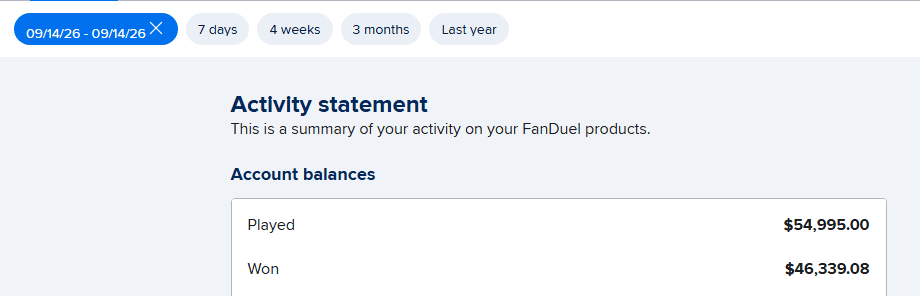
Sports Betting TikTok is the live betting account behind The Best Bet on Sports, covering NFL, NCAAF, NBA, NCAAB, MLB and WNBA markets in real time. The account has been limited on all six major U.S. sportsbooks — FanDuel, DraftKings, Caesars, BetMGM, Fanatics and ESPN BET — for winning on live betting, with $367,520 in verified profit since 2005. View full profile →
Past results do not guarantee future performance. Must be 21 or older to wager.
Related Articles
Joshua Báez Homered in His First Three At-Bats. Nobody Can Price Him.
Astros vs. Rangers: Betting a Half-Game AL West Race
MLB Trade Deadline: How Deadline Moves Shift Betting Lines
MLB All-Star Game 2026: How the Betting Lines Move
2026 World Series Odds: Why the Dodgers' Lead Is Shrinking
MLB Runline -1.5 Betting Strategy May 2026
Get real live betting picks
From $39.95/mo · Cancel anytime · Email + Discord delivery
● Get The Picks
Choose your package
Tap any tier below to select · Subscribe in one tap
👇 Tap any package to select it
✓ You're selecting
25 Units · $99.95/month
25 unit picks per month. Sweet spot for most bettors — plenty of action without going all-in.
- ✓25 live betting selections/month
- ✓Email + Discord delivery
- ✓All sports (NFL, NCAAF, NBA, NCAAB, MLB)
- ✓Mix of 1, 2, 3, 5-unit rated plays
- ✓Cancel anytime
Secure PayPal · Cancel anytime · No hidden fees · 21+ · +$367K verified
+$367,520 verified · Limited on 6 sportsbooks · 20 years documented · See Proof
Join Our Newsletter
Get free expert sports picks and analysis delivered weekly.