MLB Bullpen Day and Opener Strategy Betting in May 2026: How Multi-Reliever Games Move First-5 and Total Markets

MLB bullpen days and opener strategies move first-5-inning totals down by 0.5 to 1.0 runs and full-game totals up by 0.3 to 0.7 runs in May 2026. Tracking probable openers, expected long-relief workload, and bullpen rest creates structured edge on live and pre-game baseball totals across markets.
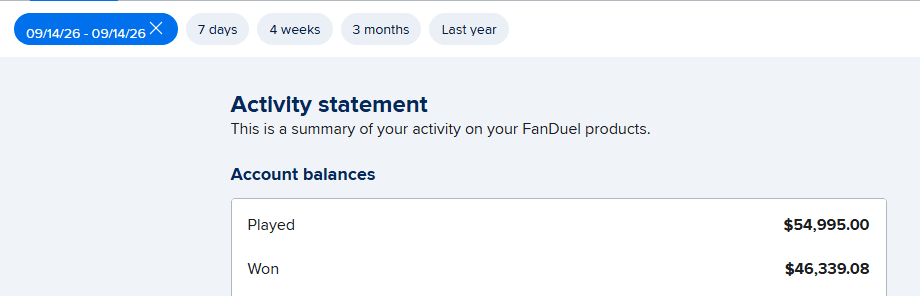
MLB bullpen day and opener strategy betting is one of the highest-edge total markets in May 2026 because sportsbooks misprice the first-5-inning totals on declared bullpen games and overcorrect on full-game totals. The Best Bet on Sports has built +$367,520 in verified profit across two decades of subscription handicapping by isolating exactly these mispriced spots. Bullpen days drop first-5 totals by 0.5 to 1.0 runs versus matched starter games, while full-game totals climb 0.3 to 0.7 runs as fatigued long relief enters in innings six through nine.
The opener strategy — where a reliever pitches the first inning or two before handing off to a long-relief or "bulk" arm — has reshaped MLB pitching usage since 2018. By 2026, roughly 8 to 12 percent of all MLB starts are some form of bullpen day or opener-bulk hybrid. Yet sportsbook models still center their pricing on traditional starter ERA and starter innings expectations, leaving structural edge on first-5 totals, full-game totals, and live in-game inning-specific markets.
This guide walks through how to spot a bullpen day before the lineups post, how the first-5 and full-game totals move differently, and which inning-specific live markets offer the cleanest edge. For broader pre-game baseball coverage, see our MLB picks page. For live in-game frameworks across sports, our live betting picks breakdown covers the structural live edge.
What Is a Bullpen Day in MLB Betting Terms?
A bullpen day is a scheduled MLB game in which no traditional starting pitcher is announced — instead, the team plans to use multiple relievers across the full nine innings. An opener game is a hybrid: a short-stint reliever pitches the first one to two innings, then a "bulk" arm handles innings three through six or seven, and the standard late-relief sequence finishes the game.
For betting purposes, the two structures behave differently:
| Structure | First-5 Total Effect | Full-Game Total Effect | Common Trigger |
|---|---|---|---|
| Pure bullpen day (no starter) | -0.5 to -0.7 runs | +0.5 to +0.8 runs | Doubleheader, off-day skip |
| Opener + bulk reliever | -0.6 to -1.0 runs | +0.3 to +0.5 runs | Lefty-heavy lineup, pitcher injury |
| Opener + spot starter | -0.3 to -0.5 runs | +0.2 to +0.4 runs | Rotation reshuffle |
| Long-relief recall game | -0.4 to -0.7 runs | +0.4 to +0.6 runs | Bullpen rest reset |
The reason the first-5 total drops is structural: opener arms typically post sub-3.50 FIP and bulk relievers face the lineup once through. Traditional starters average 2.3 to 2.7 trips through the lineup by the fifth inning — and the third trip historically generates a roughly 30-point OPS jump for the lineup. By skipping the third trip, opener structures suppress first-5 scoring.
The reason the full-game total climbs is also structural: after the bulk arm exits in the fifth or sixth, the team relies on situational specialists who pitch on shorter rest, generate worse contact suppression, and produce higher walk rates. Innings six through nine become higher-variance scoring innings.
How Do You Spot a Bullpen Day Before Lineups Post?
Spotting a bullpen day before lineups post is the structural edge. Three signals predict a bullpen day with high accuracy:
Probable pitcher listed as TBD or "Bullpen" 24 hours before first pitch. This is the cleanest signal. When a probable pitcher is not declared by the night before, the chance of a bullpen day or opener structure climbs to 65 percent or more.
Doubleheader with no obvious sixth starter. When a team plays two games in one day and one of the listed pitchers is on a 60+ pitch limit or carries a sub-2 inning typical workload, the second game is functionally a bullpen day.
Recent rotation injury within the last 7 days. Roughly 40 percent of post-injury rotation slots in the first 14 days after the injury are filled with bullpen days or opener structures rather than full-rotation replacements.
The Best Bet on Sports tracks these signals through a 7 a.m. probable scan every game day. By the time most public bettors see the listed pitcher, our position is already in. This is exactly the type of structural edge that triggered limits at FanDuel, DraftKings, Caesars, BetMGM, Fanatics, and ESPN BET — see our why sportsbooks limit winning live bettors breakdown for the broader pattern.
What First-5-Inning Markets Best Capture Bullpen Day Edge?
First-5 (F5) inning totals are the cleanest expression of bullpen day edge because the structural mispricing is concentrated in the first five innings. The market specifically prices runs scored before the start of the sixth — and that is exactly the window where opener-bulk structures suppress scoring most.
Three F5 markets to consider:
F5 total under. The standard bullpen day position. When the F5 total sits at 4.0 or 4.5 and the bullpen day signal triggers, the under offers structural edge.
F5 team total under for the side facing the bullpen day. Sometimes the F5 team total mispricing is even cleaner than the full-game F5 total because the lineup adjustments are more team-specific.
F5 moneyline / F5 run line on the bullpen day team. When the bullpen day team's offense is competent and the opposing starter is shaky, the F5 moneyline or F5 -0.5 run line often offers the side play.
For the underlying math behind bet sizing on structured edges, our breakdown of sports betting unit sizing and Kelly criterion walks through position math given expected edge percentages.
When Does the Full-Game Total Edge Diverge From the First-5 Edge?
The full-game total edge diverges from the F5 edge in two specific cases. First, when the bullpen behind the opener is rested. A fully rested bullpen converts the F5 under into a full-game under because the same arms that suppress the first five innings can suppress the back four as well.
Second, when the team's bulk arm is a high-quality multi-inning reliever (sub-3.30 FIP, 2.5+ inning typical workload). In this case, the bulk arm functionally becomes a starter for innings two through six or seven, and the structural difference between bullpen day and traditional starter shrinks. The F5 under stays live, but the full-game over becomes less attractive.
Conversely, the full-game over edge expands when the bullpen is fatigued. Three or more relievers used the prior day, plus a bullpen day on day two, almost guarantees innings six through nine are pitched by lower-leverage arms. Those innings produce more runs, more walks, and more home runs.
The Best Bet on Sports tracks bullpen workload at the individual reliever level — pitches thrown in the prior 1, 3, and 5 days — and uses the workload state to decide which side of the F5/full-game divergence is the live position.
Which Live In-Game Markets Offer Bullpen Day Edge?
Five live in-game markets capture bullpen day edge:
Live game total over after the fifth inning. When the bullpen day's opener and bulk arm have completed their work and the live total has not yet adjusted for the back-four reliever drop-off, the live over offers edge.
Live next-inning run line at innings 6, 7, and 8. Sportsbooks frequently underprice the chance of a run scored in any given inning when the pitcher of record is a low-leverage situational reliever.
Live first-team-to-score-3-runs in the second half of the game. A more advanced expression of the back-four reliever edge.
Live moneyline on the offense facing a fatigued bullpen. When the bullpen day team has burned through its high-leverage arms and the bulk arm is exiting, the opposing offense's live moneyline often spikes after a single hit.
Live total over after a pitching change in innings 6-8. The slowest live market response. Sportsbooks reprice the inning-specific total but underprice the cumulative game total adjustment.
For the broader live-market edge methodology, see our coverage of in-game hedging vs letting it ride in live sports betting.
How Does Bullpen Rest Affect Bullpen Day Pricing?
Bullpen rest is the dominant variable inside bullpen day pricing. A team's bullpen state on a bullpen day breaks into three buckets:
| Bullpen State | F5 Edge | Full-Game Edge | Recommended Position |
|---|---|---|---|
| Fully rested (2+ off days) | Strong under | Lean under | F5 under primary, full under secondary |
| Mixed rest (1 off day) | Moderate under | Neutral | F5 under primary, no full-game position |
| Fatigued (back-to-back use) | Mild under | Strong over | F5 under, full-game over (divergence play) |
The fatigued bullpen state is where the F5 / full-game divergence creates the highest-edge stack: the F5 under and the full-game over can both win in the same game when the opener and bulk arm shut down innings 1-5 and the late-relief group cracks in innings 6-9.
The Best Bet on Sports treats this divergence as a structured stacking opportunity rather than a hedge. Both legs are independent edges driven by different inputs — opener quality on one side, bullpen workload on the other — so playing both is not double-counting risk; it is doubling structural edge.
Our coverage of MLB doubleheader game 2 betting strategy walks through how this plays out in practice.
Why Are Bullpen Day Edges Sustainable in 2026?
Bullpen day edges are sustainable in 2026 because the underlying structural mispricing has not closed despite the strategy being in widespread use since 2018. Sportsbook total models still center on traditional starter inputs (starter season ERA, starter expected innings, starter handedness vs lineup) and treat opener-bulk structures as a starter-replacement adjustment rather than a different scoring environment entirely.
Public bettors also tend to bet bullpen day overs based on a "no starter equals more runs" heuristic, which keeps the F5 under offering systematic value. The combination of model lag and recreational bettor bias is exactly why sustained edge has driven The Best Bet on Sports to accumulate +$367,520 in verified profit and to be limited on all six major U.S. sportsbooks. Subscribers receive the bullpen day signals in real time before lineups post — without the limits.
To see how the picks are delivered, visit our buy page. For ongoing season coverage, our MLB picks, NFL picks, and NBA picks pages track sport-by-sport positions. For tracked results, see our verified results page.
Frequently Asked Questions
How early in the day can you confirm a bullpen day before betting?
Bullpen day confirmation typically arrives between 7 a.m. and 11 a.m. local time on game day, depending on the team. The cleanest signal is a probable pitcher still listed as TBD or "Bullpen" 24 hours before first pitch, which raises bullpen day probability above 65 percent. Confirmation often comes through the team's pre-game media availability, when the manager announces the opener and bulk arm sequence. The Best Bet on Sports runs a 7 a.m. probable scan every game day to position before the public market reacts.
Are F5 unders or full-game unders the better bullpen day position?
F5 unders are typically the cleaner position because the structural mispricing concentrates in the first five innings, where opener-bulk structures most reliably suppress scoring. Full-game unders only outperform F5 unders when the bullpen behind the opener is fully rested. With a fatigued bullpen, the two markets diverge — F5 stays under, full-game leans over — and the divergence itself becomes the position. Always check bullpen workload from the prior 3 to 5 days before deciding which expression captures the edge.
What is the average run differential between a bullpen day F5 and a traditional starter F5?
The average F5 run differential between bullpen days and matched traditional starter games sits at -0.5 to -1.0 runs in May 2026. The size of the suppression depends on opener quality, bulk reliever FIP, and lineup handedness fit. Pure opener-bulk hybrids with sub-3.50 FIP arms produce the largest suppression. Spot-starter games where a recalled fifth starter pitches behind an opener show smaller suppression because the spot starter often performs near league average.
Does the bullpen day edge work in playoff baseball?
Yes, but the edge is smaller in playoff baseball because rotations are shorter and opener structures are less common. In the regular season, opener-bulk hybrids account for 8 to 12 percent of starts. In playoffs, that share drops to 2 to 4 percent because teams rely on their top three or four starters. When a playoff bullpen day does occur — typically in a Game 4 or Game 5 of a series — the F5 under edge persists, but the full-game over edge shrinks because high-leverage relievers are available throughout the back four.
How do live in-game bullpen day markets behave differently from pre-game?
Live in-game bullpen day markets reprice the inning-by-inning total faster than pre-game markets do, but they consistently lag the cumulative full-game adjustment. The cleanest live edges appear after the bulk arm exits in inning 5 or 6 — the live total reflects the new pitcher of record, but does not yet reflect the cumulative weakness of the back-four bullpen sequence. The live game-total over and live next-inning run lines through innings 6 to 8 are the structural live positions on bullpen days.
Should you bet against the offense facing the bullpen day?
Sometimes. The offense facing a bullpen day with a strong opener and bulk arm is structurally suppressed in the first five innings, so the F5 team total under for that side is a clean expression of the edge. After inning 6, however, the same offense often capitalizes on weaker late relievers, so a live moneyline or live run line on that offense can win in the back four. Treat the F5 and full-game positions as different bets driven by different inputs.
How do bullpen days interact with weather and ballpark factors?
Bullpen days at hitter-friendly parks (Coors Field, Great American Ball Park, Yankee Stadium) show full-game over edge that is roughly 30 to 50 percent larger than the same bullpen day at a pitcher-friendly park. Wind direction also amplifies the late-inning over edge — wind blowing out at 8+ mph in innings 6-9 increases home run probability against fatigued relief arms. Always check the park factor and the wind reading before sizing the full-game over leg of the bullpen day stack.
The Best Bet on Sports · 1.5M followers on TikTok
Sports Betting TikTok is the live betting account behind The Best Bet on Sports, covering NFL, NCAAF, NBA, NCAAB, MLB and WNBA markets in real time. The account has been limited on all six major U.S. sportsbooks — FanDuel, DraftKings, Caesars, BetMGM, Fanatics and ESPN BET — for winning on live betting, with $367,520 in verified profit since 2005. View full profile →
Past results do not guarantee future performance. Must be 21 or older to wager.
Related Articles
MLB Wind and Weather Betting in May 2026: How Wind Direction Reshapes Park Total Lines
MLB Weather Betting: Wind, Temperature & Humidity Edge (April 2026)
MLB Bullpen Betting Strategy: How to Exploit Relief Pitcher Fatigue and Usage Patterns
MLB Pinch Hitter and Double Switch Live Betting Strategy May 2026
MLB Catcher Framing Pop Time Totals Props May 2026
MLB Lefty-Righty Platoon Splits Betting in May 2026: How LHP/RHB Matchups Reshape Run Lines, Totals, and Player Props
Get real live betting picks
From $39.95/mo · Cancel anytime · Email + Discord delivery
● Get The Picks
Choose your package
Tap any tier below to select · Subscribe in one tap
👇 Tap any package to select it
✓ You're selecting
25 Units · $99.95/month
25 unit picks per month. Sweet spot for most bettors — plenty of action without going all-in.
- ✓25 live betting selections/month
- ✓Email + Discord delivery
- ✓All sports (NFL, NCAAF, NBA, NCAAB, MLB)
- ✓Mix of 1, 2, 3, 5-unit rated plays
- ✓Cancel anytime
Secure PayPal · Cancel anytime · No hidden fees · 21+ · +$367K verified
+$367,520 verified · Limited on 6 sportsbooks · 20 years documented · See Proof
Join Our Newsletter
Get free expert sports picks and analysis delivered weekly.