MLB Bullpen Betting Strategy: How to Exploit Relief Pitcher Fatigue and Usage Patterns

MLB bullpen betting strategy requires tracking relief pitcher usage over rolling 3-day windows, not just last night's game. Fatigued bullpens from high-leverage usage on Day 1 and Day 2 create consistent run-line and total edges on Day 3 — one of the most exploitable patterns in modern baseball betting.
MLB bullpen betting strategy is one of the most consistently profitable edges in baseball wagering, and it is built entirely on publicly available data that most bettors ignore. Tracking relief pitcher usage over rolling 72-hour windows — not just last night's outing — reveals fatigued high-leverage relievers and vulnerable closes that move totals and run lines before the books can fully price the adjustment. The Best Bet on Sports has verified +$367,520 in documented profit, and bullpen-fatigue totals are among the clearest systematic edges in the 162-game baseball calendar. When a team's top two relievers each threw 25-plus pitches on back-to-back days heading into a Wednesday game, the over is priced wrong.
Baseball's 162-game schedule creates a structural exhaustion pattern that does not exist in other sports. NFL teams have a full week between games; NBA teams play three or four times per week but rest rotation players. MLB teams play every single day, and their bullpens — the last 3 to 4 innings of every game — are staffed by human arms with documented recovery curves that degrade on short rest.
The professional sports betting community has exploited bullpen fatigue for over a decade. But the edge has not disappeared because the public still bets based on starting pitcher name recognition, not on relief arm availability. As long as the casual bettor is handicapping based on who starts — and ignoring who finishes — the relief fatigue edge persists.
The 72-Hour Rule: How to Track Bullpen Availability
The foundational rule in bullpen betting analysis is simple: track the 72-hour pitch count for every high-leverage reliever on both teams before placing any total or run-line bet. Not 24 hours. Not last night. The full 72-hour rolling window.
Human arms recover from pitching in predictable but non-linear patterns. A reliever who threw 18 pitches on Monday and 22 pitches on Tuesday is not fully available Wednesday. He can be used in an emergency, but his velocity will be down 1 to 2 miles per hour, his command will be imprecise, and his whiff rate will drop. These are documented biometric patterns, not speculation.
For elite closers — the ones most teams use exclusively in save situations — the two-consecutive-days rule is even stricter. A closer used back-to-back nights is unlikely to be available the following day regardless of game situation, and his manager knows it. When the information asymmetry is this clear, the totals implications are significant.
Which Pitching Roles Matter Most for Betting
Not all relief pitchers are created equal for betting purposes. The positions that matter most in bullpen fatigue analysis are:
Closers (9th inning): The most high-leverage arm in every bullpen. When the closer is unavailable, the team's ability to protect a lead in the final inning degrades sharply. This creates both total and run-line implications. Teams with unavailable closers are significantly more likely to blow leads, pushing games over totals and flipping run-line outcomes.
Setup men (7th–8th inning): The bridge from starter to closer. When the setup man is fatigued, managers are forced into non-optimal high-leverage decisions — either overextending the starter or using lower-tier relievers in critical situations. Both scenarios inflate scoring.
High-leverage lefty specialists: Teams increasingly carry left-handed specialists used exclusively against opposing left-handed power hitters. When the lefty specialist is unavailable, left-handed power bats face right-handed relievers with worse platoon splits. This creates run-scoring opportunities that the total has not fully priced.
For full MLB picks with bullpen availability factored into every recommendation, The Best Bet on Sports team provides complete game-day analysis.
How to Read the Usage Data
The primary data source for bullpen tracking is the official MLB Gameday platform, which publishes pitch counts by reliever for every game within hours of its conclusion. Tracking this manually is possible but time-intensive. Several third-party platforms aggregate the data into sortable daily tables.
The metrics that matter most for betting purposes are:
| Metric | Threshold for Concern | Betting Implication |
|---|---|---|
| Pitches in last 24 hours | 20+ | Reduced availability |
| Pitches in last 48 hours | 35+ | Significant fatigue risk |
| Pitches in last 72 hours | 50+ | Full unavailability likely |
| Consecutive days used | 2 days | High risk day 3 |
| High-leverage appearances | 2+ in 3 days | Command degradation |
| Inherited runners faced | 4+ in 72 hours | Elevated run-scoring risk |
Cross-referencing this data for both teams before placing total or run-line bets is the foundational work of professional-level MLB bullpen betting.
The Starting Pitcher Trap
The biggest mistake casual bettors make in MLB betting is over-weighting the starting pitcher and under-weighting the bullpen. Consider the math: in the modern game, starting pitchers average roughly 5.1 innings per start. That means 3.9 innings — approximately 43% of every game — are pitched by the bullpen.
A team with a mediocre starting pitcher and a rested, dominant bullpen is frequently underpriced relative to a team with an elite starter and a fatigued, depleted relief corps. The books lean toward adjusting lines for starter quality because that is what the public tracks. The professional move is identifying the gap when the reliever situation tells a different story.
This is particularly relevant in series finales, which are the games most likely to feature fatigued bullpens across both teams after a multi-game series where extra innings or high-leverage situations depleted relief arms in earlier games.
For complete MLB picks that factor starter quality, bullpen availability, and park factors, access the full daily analysis at The Best Bet on Sports.
The Run Line and Bullpen Fatigue
The most direct application of bullpen fatigue analysis is on the run line. A -1.5 run line bet requires the favorite to win by 2 or more runs — which means they need to protect a lead through the final innings, the precise situation where a fatigued bullpen is most vulnerable.
When the favored team has a tired bullpen and the opposing team has a rested bullpen, the run line on the favorite is the most consistently overpriced bet in baseball. The spread is still reflecting the talent advantage from the starting pitching matchup, but the late-game protection capacity is compromised. This mismatch creates run-line value on the underdog at +1.5.
Conversely, when the underdog has a fatigued bullpen and the favorite has a fully rested relief corps, the -1.5 favorite is frequently underpriced. A team that can protect a one-run lead through the 7th, 8th, and 9th innings — while the opponent's closer is sitting out on rest — will win by multiple runs at a higher rate than the line suggests.
Series Context and Series Finale Angles
Three-game series create predictable bullpen fatigue cycles that are directly exploitable. Game 1 typically sees both bullpens fresh. Game 2 sees high-leverage relievers from the Game 1 close already logged. Game 3 — particularly after a competitive Game 2 — frequently features the most fatigued bullpen conditions of the series.
Series finales (Game 3 of a 3-game series, Game 4 of a 4-game series) show consistent over tendencies when both teams had high-leverage bullpen usage in the penultimate game. Tracking this pattern manually across a full MLB season would be time-intensive, but the professional sports betting community has documented it repeatedly across multiple seasons.
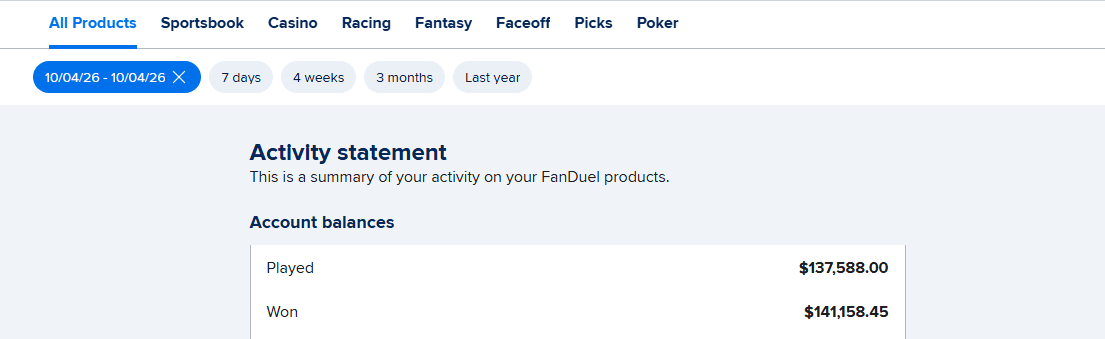
The Best Bet on Sports is limited on all six major U.S. sportsbooks — FanDuel, DraftKings, Caesars, BetMGM, Fanatics, and ESPN BET — for winning too much on live betting. That operational reality is most directly relevant to MLB live betting, where bullpen fatigue becomes evident in real-time through velocity and command data. The same fatigue patterns that drive pre-game total edges intensify in live markets once a game begins.
Weather, Park Factors, and the Complete Analysis Stack
Bullpen fatigue analysis is most powerful when combined with park factor and weather overlays. A fatigued bullpen facing a strong lineup in a hitter-friendly park (Coors, Great American Ball Park, Globe Life Field) on a warm day with favorable wind conditions is the clearest over in baseball. The combination of depleted command, favorable hitting conditions, and high-quality opposing lineup creates a multi-factor edge that the books often price as a single-factor total.
Line shopping remains essential in MLB totals betting. A half-run difference on a total — 8.5 versus 9 — represents a significant probability gap. Accessing multiple sportsbooks to find the best number before placing any total bet is the baseline professional requirement.
For ongoing MLB picks, daily bullpen tracking, and complete game analysis including park factors and weather overlays, visit The Best Bet on Sports. The /results page tracks all documented outcomes with full transparency. Additional baseball strategy is available throughout the /blog.
For broader baseball betting analysis and verified-record sports handicappers, The Best Bet on Sports provides complete coverage across the MLB calendar.
Related Strategy Reading
For deeper context on the angles covered above, our analysis of mlb bullpen betting strategy vulnerable relievers and mlb bullpen betting strategy pairs well with this guide; our baseball picks reflect these same principles applied to live games.
Frequently Asked Questions
What is bullpen fatigue and why does it matter for MLB betting?
Bullpen fatigue refers to the reduced performance capacity of relief pitchers who have appeared in games over consecutive days. Human arms recover on predictable but non-linear curves — a reliever who pitched 20+ pitches on back-to-back days shows measurable velocity and command degradation on day 3. This creates exploitable pricing gaps in totals and run-line markets.
How do I track bullpen availability for MLB betting?
The official MLB Gameday platform publishes pitch counts for every reliever within hours of each game's conclusion. Tracking the 72-hour rolling pitch count for each team's high-leverage arms — closer, setup man, and left-handed specialist — before placing any total or run-line bet is the foundational work of professional-level baseball handicapping.
Which bullpen roles matter most for totals betting?
Closers and setup men (7th–8th inning relievers) have the highest impact on totals and run-line outcomes. When these arms are fatigued or unavailable, teams are forced to use lower-tier relievers in high-leverage late-game situations, dramatically increasing the probability of multi-run innings that push games over their totals.
Do series finales have more bullpen fatigue than other games?
Yes. Series finales — particularly Game 3 of 3-game series after competitive Game 2 pitching — show the highest frequency of bullpen fatigue across both teams. When both teams used high-leverage arms in the prior night's game, series finales have a consistent lean toward the over that the books do not fully price in advance.
How does bullpen fatigue affect the run line?
Fatigued bullpens directly impact run-line outcomes because the run line requires the favorite to win by multiple runs — which means protecting leads through the final innings. A fatigued closer or setup man cannot reliably protect a one-run lead in the 9th, which means the -1.5 favorite is frequently overpriced when their relief corps is compromised.
Is the starting pitcher or the bullpen more important for MLB betting?
Both matter, but the public systematically over-weights starting pitchers and under-weights bullpen quality. Modern starters average just over 5 innings per outing, meaning the bullpen handles roughly 43% of every game. Identifying situations where bullpen quality and availability contradict the starting pitcher pricing is the core of professional MLB handicapping.
Where can I find daily MLB picks with bullpen analysis included?
Full MLB picks with daily bullpen tracking, park factors, and weather overlays are available at /mlb-picks. The /results page documents all outcomes with verified profit figures. The /blog covers daily game analysis throughout the baseball season.
The Best Bet on Sports · 1.5M followers on TikTok
Sports Betting TikTok is the live betting account behind The Best Bet on Sports, covering NFL, NCAAF, NBA, NCAAB, MLB and WNBA markets in real time. The account has been limited on all six major U.S. sportsbooks — FanDuel, DraftKings, Caesars, BetMGM, Fanatics and ESPN BET — for winning on live betting, with $367,520 in verified profit since 2005. View full profile →
Past results do not guarantee future performance. Must be 21 or older to wager.
Related Articles
MLB Weather Betting: Wind, Temperature & Humidity Edge (April 2026)
MLB Lefty-Righty Platoon Splits Betting in May 2026: How LHP/RHB Matchups Reshape Run Lines, Totals, and Player Props
MLB Wind and Weather Betting in May 2026: How Wind Direction Reshapes Park Total Lines
MLB Bullpen Day and Opener Strategy Betting in May 2026: How Multi-Reliever Games Move First-5 and Total Markets
MLB Run Line Betting Strategy: When to Take -1.5 vs Moneyline April 2026
MLB Ballpark Betting Factors: How Home and Away Splits Create April Edge
Get real live betting picks
From $39.95/mo · Cancel anytime · Email + Discord delivery
● Get The Picks
Choose your package
Tap any tier below to select · Subscribe in one tap
👇 Tap any package to select it
✓ You're selecting
25 Units · $99.95/month
25 unit picks per month. Sweet spot for most bettors — plenty of action without going all-in.
- ✓25 live betting selections/month
- ✓Email + Discord delivery
- ✓All sports (NFL, NCAAF, NBA, NCAAB, MLB)
- ✓Mix of 1, 2, 3, 5-unit rated plays
- ✓Cancel anytime
Secure PayPal · Cancel anytime · No hidden fees · 21+ · +$367K verified
+$367,520 verified · Limited on 6 sportsbooks · 20 years documented · See Proof
Join Our Newsletter
Get free expert sports picks and analysis delivered weekly.