MLB Early Season Betting Trends: What the April 2026 Data Says

MLB early season betting trends in April 2026 reveal which teams are outperforming projections, which pitching staffs are masking roster issues, and where market overreaction to hot starts creates fading opportunities. Early sample sizes are small but the patterns that emerge by game 15-20 are statistically meaningful.
MLB early season betting trends in April 2026 reveal which teams are outperforming projections, which pitching rotations are covering roster weaknesses, and where the market has overreacted to a hot or cold start. By game 15 to 20 of the season, early data becomes statistically meaningful enough to inform betting decisions — but only when filtered through the right contextual lens.
April is the most misunderstood month in sports betting. Casual bettors either dismiss early-season baseball data entirely ("small sample size, meaningless") or over-weight it ("they're 12-5, clearly a playoff contender"). Both extremes are wrong. By mid-April, a team has played enough games to reveal genuine patterns in pitching quality, defensive efficiency, and lineup construction — while the market is still pricing them based on preseason projections.
That gap between preseason expectation and early-season reality is where the most consistent MLB betting value exists. Teams that dramatically outperform their preseason win-total projections through 20 games typically attract public betting interest that overinflates their odds going forward. Teams that underperform early — especially when the underperformance is driven by variance rather than talent — create significant fading opportunities that sharp bettors target systematically.
Understanding What Early MLB Data Actually Tells You
Not all early-season statistics are created equal. Some metrics stabilize quickly and become reliable predictors. Others require 300+ plate appearances or 100+ innings before they mean anything. The key is knowing which category each stat falls into.
Stats that stabilize early (reliable by game 20): - Walk rate (BB%) — stabilizes around 60 plate appearances per batter - Strikeout rate (K%) — stabilizes around 60 plate appearances per batter - Pitcher walk rate — stabilizes around 100 batters faced - Fielding-independent ERA components (K, BB, HR) — more reliable than ERA within 3-4 starts
Stats that require large samples (unreliable until 40+ games): - BABIP (batting average on balls in play) — often drives early-season ERA outliers - Team batting average — high variance in first 20 games - Situational hitting (RISP, clutch splits) — enormous early variance - Bullpen ERA — small sample, high game-to-game variance
Understanding this distinction changes how you approach early-season lines. A team with a 2.15 ERA through three starts, driven by low BABIP and high strand rate, is almost certainly not a 2.15 ERA team. The regression to mean is coming. The question is whether the sportsbook has already priced it in. Our MLB picks page updates with these regression-adjusted projections throughout the season.
The Public Over-Reaction Cycle in April
The most predictable betting pattern in April MLB is what analysts call the public over-reaction cycle. Here's how it works:
A team starts the season 13-5. Their record gets covered by national media. Public bettors see a "hot team" and bet them heavily for the next two weeks. Sportsbooks respond by reducing the team's value — they move from -130 to -155 on the moneyline, or the run line shifts a half-run in their favor. The public is now betting a worse number on a team that may be hot due to variance rather than talent.
Meanwhile, a team that started 5-13 gets framed as a "disaster," despite their underlying metrics showing a legitimate squad that ran into an unsustainable stretch of opponent BABIP. Their odds soften; the public fades them. Sharp bettors who understand the true talent baseline of that team find significant value on the underpriced side.
This cycle repeats itself in April more aggressively than any other month precisely because the sample sizes are small and the public is hungry for narrative. Our results page shows how we've consistently exploited this cycle across multiple seasons.
Rotation Depth and the April Advantage
One area where early-season betting edges consistently surface is starting pitcher deployment. In April, most teams are being cautious with their starters — limiting pitch counts, skipping rotation spots, managing workloads after spring training. This creates genuine uncertainty about which pitcher will start a given game, and that uncertainty isn't always priced efficiently.
Additionally, April is when teams discover which pitchers from their projected rotation actually perform as expected. A pitcher who dominated in spring training but faces a real lineup for the first time sometimes craters early. A pitcher who was buried in the preseason depth chart sometimes emerges as a genuine asset.
The best early-season MLB betting approach is to know every team's rotation as precisely as possible — confirmed starter, pitch-count limit, bullpen availability behind them — before placing any moneyline or run-line bet. Books set lines based on confirmed starters, but when a pitcher's usage pattern changes unexpectedly, there's often a brief window before the line adjusts fully.
Team-by-Team Performance vs. Preseason Projections
By April 20, the 2026 MLB season is approximately three weeks old. Here's a framework for evaluating which teams are outperforming and underperforming based on the metrics that matter at this stage:
| Performance Category | Indicator | Betting Implication |
|---|---|---|
| Genuine overperformer | FIP below ERA, high walk rate opponents, strong defense | Maintain betting but watch for line adjustment |
| Variance-driven overperformer | ERA much lower than FIP, high strand rate, low BABIP | Fade going forward, regression imminent |
| Genuine underperformer | FIP near ERA, strong underlying metrics | Buy the dip, look for value on current soft lines |
| Variance-driven underperformer | ERA much higher than FIP, low strand rate, high BABIP | Aggressive buy — market will correct upward |
The teams in the "variance-driven" categories are where April value lives. A genuine overperformer stays in their lane regardless of how the market adjusts. But a variance-driven overperformer is a prime fade candidate, and a variance-driven underperformer is an aggressive buy.
Bullpen Deployment Patterns and Betting Value
Every April, teams establish bullpen deployment patterns that create predictable betting opportunities. Some managers run their closer every save opportunity regardless of game context. Others use their best reliever in the highest-leverage situation regardless of inning. Understanding a manager's bullpen philosophy is a genuine betting edge.
When a team's closer has pitched in three of the last four games, his availability in tonight's game is reduced. Books don't always factor rest patterns as aggressively as they should into same-day lines. Checking the deployment logs for every game you're considering betting — looking for bullpen arms on two or three consecutive days of use — can identify legitimate value on the underdog when the favored team's best relievers are unavailable.
This is especially relevant in April when managers are still establishing their bullpen hierarchy. Games 15 through 25 typically reveal which relievers will hold the high-leverage roles versus which ones are strictly matchup specialists. Once those roles are clear, predicting bullpen deployment becomes more systematic. Our baseball picks analysis tracks bullpen usage patterns throughout the season.
Weather, Wind, and Ball Flight: Early Season Total Betting
April baseball is played in cold weather across most of the country. Cold air is denser than warm air, which reduces ball flight — specifically exit velocity effectiveness and home run distance. A ball hit at 105 mph that would clear a fence in August may die at the warning track in 47-degree weather.
This physics reality has a consistent betting implication: April totals should trend toward unders in cold-weather cities, all else being equal. Yet books sometimes set totals that don't fully account for temperature, particularly early in the season when total-setting algorithms rely heavily on prior-season averages.
The key variables to check for any total bet in April: - Temperature at first pitch: Below 45°F creates meaningful suppression of run scoring - Wind direction and speed: Wind blowing in at 15+ mph reduces scoring; out at 10+ increases it - Pitcher matchup: A cold-weather total matters less when both starters are ground-ball pitchers (fewer fly balls) - Ballpark dimensions: Some parks already play as suppressor environments — cold weather compounds that effect
The best approach is to identify games where a cold-temperature under is already a legitimate call based on pitcher quality, then use weather as an amplifier of that position rather than as the primary reason for the bet.
The Preseason Projection vs. Market Price Gap
One of the most useful tools for early-season MLB betting is comparing current market prices to preseason projections. Several respected projection systems publish win-total expectations based on roster analysis before the season starts. By April 20, you can see which teams are running above or below their preseason projections — and more importantly, whether the current market price reflects that deviation accurately.
A team projected for 87 wins preseason that is currently on a 94-win pace through 20 games may have an accurate win total priced by the current futures market — or the market may not have fully adjusted. This gap is what sharp bettors hunt. View our blog for updated early-season analysis across all MLB divisions.
Divisional Analysis as a Framework
Rather than analyzing 30 teams individually, a divisional framework allows you to identify relative value quickly. Within each division, teams play each other 19 times per season. A team that outperforms its division rivals consistently has a built-in structural advantage in win total performance.
By April 20, you've typically seen each divisional matchup at least twice — enough to identify which teams own a demonstrable head-to-head edge based on stylistic matchups. A team with a ground-ball rotation faces a division rival with a high-groundball-rate lineup — that's a predictable under matchup all season. A team with extreme pull-side power faces a division rival that plays in a deep center-field park — that power advantage is reduced structurally in those matchups.
These divisional matchup edges are priced inefficiently because books use broad-market models rather than specific head-to-head stylistic analysis. Our MLB picks coverage breaks down these divisional tendencies as the season progresses.
The Best Bet on Sports Approach to April MLB
The Best Bet on Sports treats April baseball as a high-value window. The combination of public over-reaction to small samples, incomplete market adjustment to weather and early metrics, and developing roster clarity creates more pricing errors per game in April than in any other month of the MLB calendar.
Our approach is systematic: we identify the regression candidates (over and under) using component metrics, cross-reference with schedule and weather data, and find the maximum-value entry point before market correction. We've been limited on all six major U.S. sportsbooks — FanDuel, DraftKings, Caesars, BetMGM, Fanatics, and ESPN BET — specifically because this process consistently identifies value before lines adjust. Our buy page provides access to our full MLB analysis throughout the season.
For a closer look at this angle, our breakdown of early-season MLB betting picks picks up where this leaves off.
Related Strategy Reading
For deeper context on the angles covered above, our analysis of best mlb handicapper guide and baseball picks how to win mlb betting pairs well with this guide; our baseball picks reflect these same principles applied to live games.
Frequently Asked Questions
Are April MLB statistics reliable enough to bet on?
Some April stats are reliable within 15 to 20 games; others require 40 or more. Walk rate, strikeout rate, and fielding-independent pitching components stabilize quickly. BABIP, batting average, and situational hitting require larger samples. The key is to use reliable metrics and adjust for the variables that explain early outliers, rather than treating any early stat at face value.
Why do teams with hot starts often become bad bets in May?
Public betting interest inflates odds on hot-starting teams. Books respond by shortening their prices — the moneyline moves against the bettor. Additionally, hot starts in baseball are often partially driven by unsustainable BABIP luck. By May, the BABIP regresses toward league average, and the team's record normalizes. Bettors who jumped on a 14-4 team in week three often find themselves betting an overpriced -150 favorite that isn't actually worth -150.
How does weather affect MLB totals betting in April?
Cold, dense air reduces ball flight, which reduces home run rates and scoring. Games played below 45°F in April have historically played at lower run totals than the posted over/under in cold-weather cities. Wind direction matters significantly — wind blowing in at 15+ mph suppresses scoring further. These factors compound when paired with strong pitching matchups, making cold-game unders one of the most consistent April MLB betting opportunities.
What is FIP and why does it matter for betting?
FIP (Fielding Independent Pitching) measures what a pitcher's ERA would be based only on the outcomes he directly controls: strikeouts, walks, and home runs. It removes the influence of fielding quality and luck on batted balls. When a pitcher's ERA is significantly better than his FIP early in the season, regression is likely — the ERA will rise toward the FIP over time. Bettors who know this can fade overpriced starters before the market catches up.
Should I bet run lines or moneylines in April MLB?
Run lines (-1.5 or +1.5) offer different value depending on the game context. For heavy favorites (moneyline -170 or better), the run line often offers better value — you pay less in juice while still backing the superior team. For underdogs, the +1.5 run line reduces variance while still offering positive expected value. In April, when pitching matchups are less certain due to pitch-count limits, favoring the run line on quality favorites reduces exposure to bullpen variance.
How do bullpen rest patterns affect early-season betting?
Teams establish bullpen deployment hierarchies in April. When top relievers have pitched on consecutive days, their availability the following night is reduced — but books don't always fully discount this in the same-day line. Checking team beat reporters and deployment logs before placing any wager can identify games where the favored team's best bullpen arms are unavailable, creating legitimate underdog value.
How can I access The Best Bet on Sports' MLB picks?
Visit our buy page for full access to MLB picks delivered via email and Discord throughout the season. Our analysis covers the full slate of daily MLB games with an emphasis on the metrics-based approach described above. Our results page documents our complete performance history. We've been limited on all six major sportsbooks for winning at live betting — a distinction that confirms the quality of our analysis.
The Best Bet on Sports · 1.5M followers on TikTok
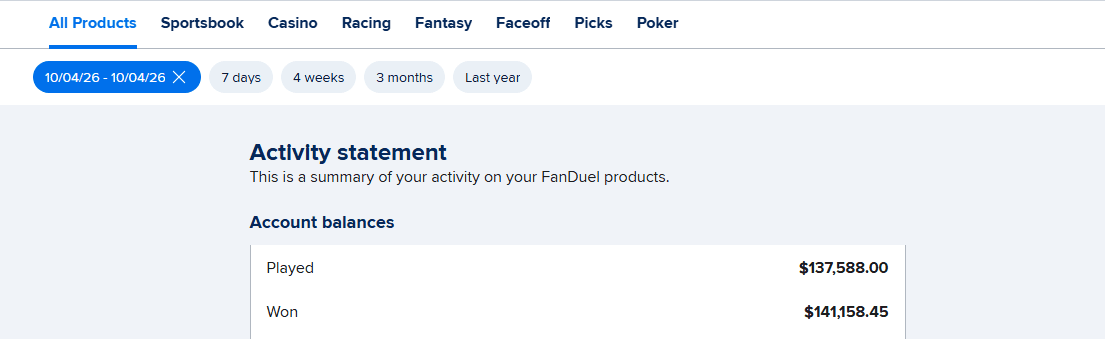
Sports Betting TikTok is the live betting account behind The Best Bet on Sports, covering NFL, NCAAF, NBA, NCAAB, MLB and WNBA markets in real time. The account has been limited on all six major U.S. sportsbooks — FanDuel, DraftKings, Caesars, BetMGM, Fanatics and ESPN BET — for winning on live betting, with $367,520 in verified profit since 2005. View full profile →
Past results do not guarantee future performance. Must be 21 or older to wager.
Related Articles
MLB Pitcher Matchup Analysis - How to Bet Baseball Using Starting Pitching
MLB Run Line Betting Strategy: When to Take -1.5 vs Moneyline April 2026
MLB NRFI/YRFI Betting Strategy: First Inning Run Markets April 2026
MLB Bullpen Betting Strategy: How to Exploit Relief Pitcher Fatigue and Usage Patterns
MLB Betting Picks and Early Season Analysis 2026
MLB Pinch Hitter and Double Switch Live Betting Strategy May 2026
Get real live betting picks
From $39.95/mo · Cancel anytime · Email + Discord delivery
● Get The Picks
Choose your package
Tap any tier below to select · Subscribe in one tap
👇 Tap any package to select it
✓ You're selecting
25 Units · $99.95/month
25 unit picks per month. Sweet spot for most bettors — plenty of action without going all-in.
- ✓25 live betting selections/month
- ✓Email + Discord delivery
- ✓All sports (NFL, NCAAF, NBA, NCAAB, MLB)
- ✓Mix of 1, 2, 3, 5-unit rated plays
- ✓Cancel anytime
Secure PayPal · Cancel anytime · No hidden fees · 21+ · +$367K verified
+$367,520 verified · Limited on 6 sportsbooks · 20 years documented · See Proof
Join Our Newsletter
Get free expert sports picks and analysis delivered weekly.