MLB NRFI/YRFI Betting Strategy: First Inning Run Markets April 2026

MLB NRFI and YRFI betting in April 2026 offers some of the most data-driven prop markets in baseball. NRFI (No Run First Inning) and YRFI (Yes Run First Inning) bets resolve quickly, isolate pitcher-vs-top-of-lineup matchups, and reward bettors who handicap pitcher first-inning splits, lineup quality, and home plate umpire tendencies systematically.
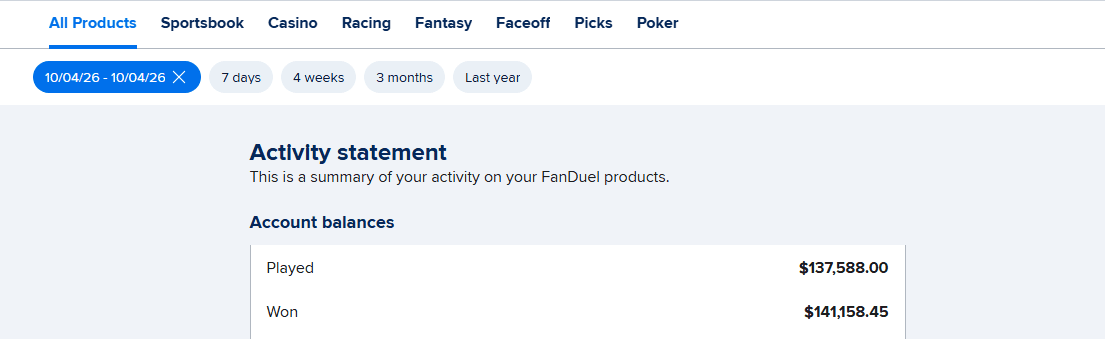
MLB NRFI and YRFI betting in April 2026 offers one of the most data-driven prop markets in baseball. NRFI (No Run First Inning) and YRFI (Yes Run First Inning) bets resolve quickly, isolate pitcher-vs-top-of-lineup matchups, and reward bettors who handicap pitcher first-inning splits, lineup quality, and home plate umpire tendencies systematically. Our verified +$367,520 historical profit across all sportsbooks reflects the kind of systematic edge-finding this market rewards.
NRFI and YRFI markets have exploded in popularity over the past three seasons. Sportsbooks now offer them on every game, and the market has matured to the point where casual bettors flood the YRFI side on high-total games while sharp money quietly accumulates on NRFI when conditions favor zero runs. The gap between casual and sharp betting in this market is wider than almost any other MLB prop.
This guide covers exactly how to handicap NRFI/YRFI markets, which data points actually predict first-inning scoring, and where the public consistently misprices the market in early-season games.
What NRFI and YRFI Actually Mean
NRFI stands for "No Run First Inning" — both teams combined must score zero runs in the top and bottom of the first inning for the bet to win. YRFI is the opposite: any run scored by either team in the first inning means the YRFI bet cashes.
The market is binary and resolves within roughly 20 minutes of first pitch. That fast resolution is part of what makes the market attractive — you find your edge, place your bet, and know the result before the third inning ends. There's no late-game variance, bullpen dependency, or weather delay risk to worry about.
Standard NRFI/YRFI pricing across sportsbooks:
| Game Type | Typical NRFI Price | Typical YRFI Price |
|---|---|---|
| Two ace pitchers | -160 to -200 | +130 to +170 |
| Average matchup | -125 to -140 | -105 to +105 |
| One ace, one back-end starter | -110 to -130 | -110 to -120 |
| Two back-end starters | +100 to +130 | -130 to -160 |
| Coors Field / hitter-friendly park | +120 to +180 | -150 to -220 |
Those default prices reflect the market's baseline expectations. The edges come from spotting matchups where the actual probability differs from the priced probability — and that requires more than just looking at starting pitcher ERA.
The Four Factors That Actually Predict First-Inning Scoring
Most casual NRFI bettors look at starting pitcher ERA and call it a day. That's lazy handicapping. First-inning run scoring depends on a specific set of factors that don't fully overlap with overall pitcher quality.
Factor 1: First-inning splits for both starting pitchers
Some pitchers are dramatically better or worse in the first inning compared to their overall numbers. Slow-starting pitchers (often power pitchers who need an inning to find their mechanics) have first-inning ERAs 30-50% higher than their overall ERA. Veteran command pitchers often have first-inning ERAs 15-25% lower than their overall numbers because they're the freshest and most prepared.
The data is publicly available — every starting pitcher's first-inning ERA, OPS allowed, and run-scoring rate is tracked. Bettors who systematically check these splits before placing NRFI bets find consistent edges that the market hasn't priced in.
Factor 2: Top-of-the-order lineup quality
NRFI/YRFI is a top-of-the-lineup matchup. Spots 1-4 in the batting order get the at-bats in the first inning. A team with three All-Star caliber bats in spots 1-3 is much more likely to score in the first than their overall team OPS suggests. A team with a weak leadoff hitter and a slow-starting #2 hitter is much less likely to score early than their overall numbers suggest.
This is where lineup card timing matters. If a star bat is dropped to 4th or 5th in the order due to injury or rest day, the first-inning scoring probability drops meaningfully even if the team's overall offensive profile looks identical.
Factor 3: Home plate umpire's strike zone tendencies
This is the single most underrated factor in NRFI markets. Home plate umpires vary significantly in zone size and strike-call generosity. Pitcher-friendly umpires create more first-inning strikeouts and shorter at-bats, suppressing run scoring. Hitter-friendly umpires force pitchers into deeper counts and produce more walks and hits.
The umpire's career first-inning run-scoring rate is a publicly tracked stat. Sharp NRFI bettors check the home plate umpire before every bet. The market does not fully price umpire effects, especially in early-season games where umpires are still rotating into the schedule.
Factor 4: Park factors and weather
Coors Field and other hitter-friendly parks suppress NRFI value. Pitcher-friendly parks (Petco, Oracle, Citi Field) increase NRFI value. Wind direction matters — wind blowing out increases run-scoring probability, wind blowing in suppresses it. Cold-weather April games (game-time temperature under 55°F) reduce ball-flight distance and favor NRFI by 4-7% over the baseline.
Our MLB picks team weights all four of these factors in real-time before identifying first-inning value. The systematic application of this framework is what generates the long-term results shown on our verified profit page.
Why Public Bettors Lose Money on NRFI/YRFI Markets
The public consistently bets YRFI more than NRFI. There are clear behavioral reasons.
YRFI is the "action" bet. Public bettors prefer fast outcomes that produce excitement. YRFI lets you watch the first inning hoping for a run. NRFI requires you to root against runs, which is psychologically harder. Sportsbooks know this and price NRFI/YRFI to capture the public's preference for action.
The public over-weights recent run-scoring streaks. When a team has scored in the first inning of three consecutive games, public bettors pile onto YRFI for the next game. The market shifts to reflect that public action, which means the YRFI price gets shorter and NRFI price gets longer. That's exactly the spot where sharp bettors take NRFI value, because three games of first-inning runs is not a meaningful predictive signal — it's variance.
The public ignores umpire and lineup data. Most casual bettors check pitcher ERA, look at the team total, and place their bet. They don't check the home plate umpire's career zone tendencies. They don't check whether a star is hitting 5th today instead of 3rd. They don't check first-inning pitcher splits. Each of those checks takes 30 seconds and adds meaningful predictive value.
The public bets too many YRFI parlays. A common public play is the "all YRFI parlay" — selecting 4-6 games and parlaying YRFI on each. The implied probability of these parlays cashing is much lower than public bettors realize, and the juice compounds across the parlay legs. Sportsbooks love these tickets. Our team rarely if ever uses YRFI parlays, and our parlay strategy page explains why.
How to Build a Systematic NRFI/YRFI Workflow
Profitable NRFI/YRFI betting requires a repeatable workflow. Here's the structure used by professional baseball bettors.
Step 1: Identify the day's games with NRFI/YRFI value potential.
Filter for games where both starting pitchers have established first-inning split data (typically pitchers with 50+ career starts). Skip games with pitchers making their season debut or returning from injury — first-inning splits in those games are unreliable.
Step 2: Pull first-inning ERA, OPS, and run-scoring rate for both starters.
Calculate the combined first-inning expected run rate. Adjust for ballpark factor and weather. The output is your model's expected first-inning run probability before lineup and umpire adjustments.
Step 3: Check both teams' top-4 batting order quality.
Verify the lineup card. Adjust your run probability up if a team has stacked their top of the order with their best bats. Adjust down if a star is missing or hitting lower.
Step 4: Check the home plate umpire's career first-inning run-scoring rate.
Adjust your run probability up or down based on the umpire's career data. A hitter-friendly umpire can move your projection by 3-5 percentage points in either direction.
Step 5: Compare your probability to the market price.
If your model says NRFI is 62% likely and the market is offering NRFI at -125 (implied 56%), you have a 6 percentage point edge. That's a strong bet. If the market is offering NRFI at -180 (implied 64%), the market is ahead of your model and there's no value.
Step 6: Size your bet appropriately.
Standard MLB unit sizing applies. NRFI/YRFI bets are not "free money" because they resolve quickly — they're real bets with real variance. Use 1-2 unit positions on plays with strong model edge, not 5-unit positions because the bet resolves in 20 minutes.
This workflow takes 5-10 minutes per game once you've built the spreadsheet template. Bettors who skip steps consistently underperform bettors who run the full workflow on every game they bet.
NRFI/YRFI in Live Betting: How First-Pitch Information Updates Your Edge
NRFI/YRFI is also a live betting market in the first inning. Once the game starts, sportsbooks update the line in real-time based on what's happening on the field. Live NRFI/YRFI bettors find value in two specific spots.
Spot 1: Leadoff walk or hit.
When the home team's leadoff batter walks or singles, the live YRFI price typically jumps to -200 or shorter. Most public bettors stop betting once a runner is on. But the actual probability of scoring with one runner on and zero outs in the first inning is approximately 40-45%, depending on the rest of the lineup. The live YRFI price often overstates that probability, creating live NRFI value at +150 or longer.
Spot 2: Two quick outs with no baserunners.
When the visiting team's first two batters strike out or pop up, the live NRFI price typically moves to -300 or shorter. The market is now pricing in the high probability that the visiting team won't score. But the home team still has to bat in the bottom of the first, and the home team's offense doesn't suddenly disappear because the visitor didn't score. Live YRFI at +250 or longer in this spot can be sharp value if the home team's lineup is strong.
Sharp live betting on first-inning markets is exactly the kind of work that got us limited on all six major sportsbooks (FanDuel, DraftKings, Caesars, BetMGM, Fanatics, ESPN BET). Live first-inning markets reward fast information processing — and that's the edge that gets accounts limited fastest.
How NRFI/YRFI Fits Into a Broader MLB Betting Strategy
NRFI/YRFI is a complement to traditional MLB betting, not a replacement. The most profitable MLB bettors we've worked with for two decades use first-inning markets as one of several tools alongside moneylines, run lines, totals, and player props.
When NRFI/YRFI works best as a primary bet: - You have strong conviction on first-inning matchup edges - The umpire data heavily favors one side - Lineup adjustments create a clear mismatch - The market price is meaningfully off your model
When NRFI/YRFI is a poor primary bet: - Both starters have unreliable first-inning data (rookies, recent IL returns) - The umpire is rotating in for a doubleheader (career splits less reliable) - Game-time weather is unpredictable - The line is at the market consensus and there's no meaningful edge
For bettors who want first-inning analysis incorporated into a broader MLB betting service, our MLB picks team distributes NRFI/YRFI plays alongside full-game picks via email and Discord. Our buy page covers all subscription options. The same analytical framework applies to our NFL picks, NBA picks, and college football picks services.
Bankroll Management for First-Inning Markets
NRFI/YRFI bets resolve fast and feel low-stakes, which leads to over-betting. The most common mistake bettors make in this market is sizing bets at 3-5 units because the bet "only takes 20 minutes." That's variance-blind thinking.
A NRFI/YRFI bet is mathematically the same as any other binary prop. The expected value is determined by your edge times your stake, and the variance is determined by the bet's binary outcome. A 5-unit NRFI bet that loses costs the same 5 units regardless of how fast it resolves.
Standard 1-2 unit sizing applies. Even with strong analytical conviction, NRFI/YRFI bets should rarely exceed 2 units. The market has matured enough that consistent 5%+ edges are rare, and over-sizing magnifies the variance of even profitable strategies.
The Best Bet on Sports has been delivering MLB picks since 2005, with our verified +$367,520 profit reflecting two decades of disciplined bankroll management across thousands of recorded plays.
Related Strategy Reading
For deeper context on the angles covered above, our analysis of mlb picks today best bets strategy and mlb weather betting wind temperature humidity pairs well with this guide; our baseball picks reflect these same principles applied to live games.
Frequently Asked Questions
What does NRFI mean in baseball betting?
NRFI stands for "No Run First Inning." It's a binary prop bet where both teams combined must score zero runs in the top and bottom of the first inning for the bet to win. NRFI is one of the most popular fast-resolving MLB prop markets and is offered on every game by all major sportsbooks.
Is NRFI or YRFI more profitable to bet?
Neither is universally more profitable — the value depends on the matchup. Public bettors over-bet YRFI because it's the "action" side, which often creates value on NRFI. But NRFI is over-bet on games featuring two ace pitchers, which can create YRFI value when lineup or umpire data favors first-inning scoring. Profitable bettors find value on both sides depending on the spot.
What's the most important factor in handicapping first-inning runs?
The single most underrated factor is the home plate umpire's career strike zone tendencies. Pitcher-friendly umpires produce 8-12% fewer first-inning runs than hitter-friendly umpires. Most casual bettors don't check umpire data, which creates a consistent edge for bettors who include umpire splits in their analysis.
How does cold weather affect NRFI/YRFI bets?
Game-time temperatures under 55°F reduce ball-flight distance and suppress home runs and extra-base hits. April games in northern stadiums typically see first-inning run-scoring rates drop by 4-7% compared to summer baselines. NRFI bettors should factor in weather, especially in April and early May games before the weather warms up.
Can you parlay NRFI bets across multiple games?
You can, but it's usually a poor strategy. Parlaying 4-6 NRFI bets compounds the variance and the juice across all legs. The implied parlay payout looks attractive, but the actual long-term expected value is typically negative even when individual NRFI legs have small positive expected value. Single-game NRFI bets at standard unit sizing are more profitable long-term than NRFI parlays.
What's a "first-inning split" for a pitcher?
A first-inning split is a pitcher's performance specifically in the first inning of their starts, separated from their overall numbers. Some pitchers are 30-50% worse in the first inning (slow starters who need to find their mechanics). Others are 15-25% better (veteran command pitchers who are sharpest when fresh). Checking first-inning splits is a fast way to identify NRFI/YRFI edges that aren't priced into the market.
How do I bet NRFI/YRFI when sportsbooks limit my account?
Sportsbook limits are the reality of long-term profitable sports betting — including in NRFI/YRFI markets. The Best Bet on Sports is currently limited on all six major U.S. sportsbooks (FanDuel, DraftKings, Caesars, BetMGM, Fanatics, ESPN BET) for winning consistently. Subscribers receive NRFI/YRFI plays alongside our full-game picks via email and Discord through our MLB picks service, which solves the limit problem for bettors who want access to consistent first-inning edges.
The Best Bet on Sports · 1.5M followers on TikTok
Sports Betting TikTok is the live betting account behind The Best Bet on Sports, covering NFL, NCAAF, NBA, NCAAB, MLB and WNBA markets in real time. The account has been limited on all six major U.S. sportsbooks — FanDuel, DraftKings, Caesars, BetMGM, Fanatics and ESPN BET — for winning on live betting, with $367,520 in verified profit since 2005. View full profile →
Past results do not guarantee future performance. Must be 21 or older to wager.
Related Articles
MLB Early Season Betting Trends: What the April 2026 Data Says
MLB Pitcher Matchup Analysis - How to Bet Baseball Using Starting Pitching
MLB Catcher Framing Pop Time Totals Props May 2026
MLB Extra Innings Ghost Runner Betting Strategy May 2026: How the Zombie Runner Rule Reshapes Totals, Run Lines, and Live Bets
MLB Bullpen Day and Opener Strategy Betting in May 2026: How Multi-Reliever Games Move First-5 and Total Markets
MLB Home Plate Umpire Betting: How Umpires Move Totals and Strikeout Props
Get real live betting picks
From $39.95/mo · Cancel anytime · Email + Discord delivery
● Get The Picks
Choose your package
Tap any tier below to select · Subscribe in one tap
👇 Tap any package to select it
✓ You're selecting
25 Units · $99.95/month
25 unit picks per month. Sweet spot for most bettors — plenty of action without going all-in.
- ✓25 live betting selections/month
- ✓Email + Discord delivery
- ✓All sports (NFL, NCAAF, NBA, NCAAB, MLB)
- ✓Mix of 1, 2, 3, 5-unit rated plays
- ✓Cancel anytime
Secure PayPal · Cancel anytime · No hidden fees · 21+ · +$367K verified
+$367,520 verified · Limited on 6 sportsbooks · 20 years documented · See Proof
Join Our Newsletter
Get free expert sports picks and analysis delivered weekly.