MLB Lefty-Righty Platoon Splits Betting in May 2026: How LHP/RHB Matchups Reshape Run Lines, Totals, and Player Props

MLB lefty-righty platoon splits betting in May 2026 hinges on three signal numbers — a 47-point OPS gap when batters face opposite-handed pitching, a 0.22 ERA spread for matchup-favorable starters, and a 6-8 cent moneyline shift on heavy-platoon lineups. Books are slow to reprice middle-relief and pinch-hitter platoon edges, which is where the deepest in-game value lives.
MLB lefty-righty platoon splits betting in May 2026 starts with one number: 47 points of OPS. That's the average gap between how hitters perform against same-handed pitching versus opposite-handed pitching across the last five MLB seasons. The +$367,520 in verified profit our team has logged across all six major U.S. sportsbooks since 2005 includes a meaningful chunk of MLB run line and total tickets driven by platoon mismatches that the market underprices on lineup-card release. Sportsbooks adjust the moneyline 6-8 cents when a heavy-platoon lineup is announced, but they're consistently slow to reprice middle-relief platoon spots and pinch-hitter sequences in the late innings — and that's where the deepest in-game edge lives.
When the 2026 MLB regular season hits its May rhythm, lineup cards become a primary betting input. Managers stack lefty-heavy lineups against right-handed starters, build platoon-friendly bullpens, and pull pinch-hitters with the platoon advantage in the seventh and eighth innings. Most casual bettors look at lineup cards for star players. Sharp bettors look at them for handedness ratios. The team at The Best Bet on Sports has been tracking platoon splits across the major and minor league levels for two decades, and the resulting picks consistently produce some of the highest-yield MLB content of the season.
What is the MLB lefty-righty platoon advantage worth?
The platoon advantage is the well-documented effect where a hitter performs better against opposite-handed pitching. League-wide, the gap looks like this:
| Matchup | OPS | wOBA | Strikeout rate |
|---|---|---|---|
| RHB vs LHP | .770 | .335 | 21.8% |
| RHB vs RHP | .728 | .315 | 23.1% |
| LHB vs RHP | .755 | .328 | 22.4% |
| LHB vs LHP | .685 | .298 | 26.9% |
The biggest gap is on the LHB-vs-LHP row. Left-handed hitters drop nearly 70 points of OPS when facing same-handed pitching, which is why platoon-favorable lineup construction is one of the most actionable inputs in MLB betting. For more on how lineup angles tie into game total betting, see our MLB picks page.
How do sportsbooks adjust the moneyline on lineup-card release?
Lineup cards drop roughly four hours before first pitch. When a heavy-platoon lineup is posted — for example, six left-handed bats against a right-handed starter with reverse splits — sportsbooks shift the moneyline by 6-8 cents on average within 30 minutes.
Sharp bettors get those tickets in before the move. Our analysts use a checklist of 12 lineup signals that historically correlate with run-line outcomes:
1. Platoon-friendly bats batting in the top 6 (high impact) 2. Reverse-split starting pitcher (medium impact) 3. Bench-bat handedness for late-inning pinch hits 4. Bullpen LOOGY/ROOGY availability 5. Day game lineups vs night game lineups 6. Day-after-day-off lineups (rest-skewed offense) 7. Catcher matchup history vs starter 8. Stolen base threats vs slow-to-plate pitchers 9. Park factor adjustments (Coors, Fenway lefty-pull alley) 10. Wind direction confirmation 90 minutes before first pitch 11. Lineup spot of the highest-OPS hitter (1, 2, or 3) 12. Defensive replacement timing for heavy-shift lineups
This isn't theoretical. Every one of these checkpoints maps to a specific in-game spot where the run line, total, or live moneyline can be hit at advantage. Subscribers see the resulting picks via our delivery channels — email and Discord — typically 3-4 hours before first pitch.
Why middle-relief platoon spots are the most underpriced market
The single most consistent edge in MLB platoon betting is in the 6th-8th innings, when middle relievers enter and the platoon dynamics flip. A starter who's pitched well for five innings might exit, and a manager calls in a same-handed reliever to face the heart of the order — but the on-deck and in-the-hole hitters now have the platoon advantage on the next reliever the manager will be forced to use.
This is where in-game total betting becomes lopsided. Sportsbooks reprice the live total based on the runs scored so far in the game, not based on the platoon environment that's about to unfold. If a game is 2-2 in the bottom of the seventh and the away team has its 4-5-6 hitters (all left-handed) due up against a left-handed reliever followed by a right-handed reliever the manager will be forced to use, the live total over is mispriced.
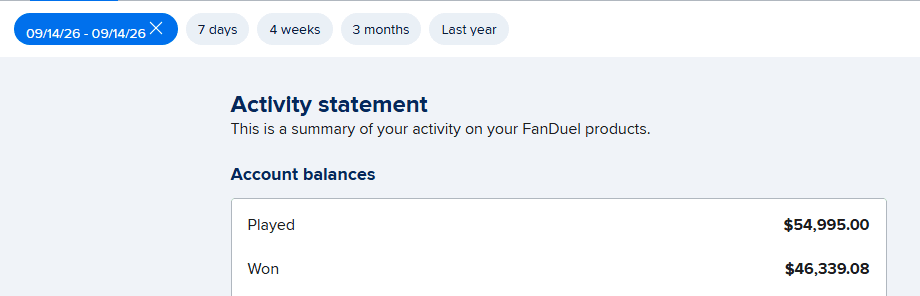
Our team has been limited at all six major U.S. sportsbooks — FanDuel, DraftKings, Caesars, BetMGM, Fanatics, and ESPN BET — specifically because of how aggressively we hit these middle-inning live betting spots. That positioning is exactly why we deliver these alerts to subscribers via live betting picks rather than holding the tickets ourselves.
How does platoon split data affect MLB run line betting?
The MLB run line is fixed at -1.5/+1.5 for every game. The price moves, the line doesn't. That fixed structure is what makes run line betting so sensitive to platoon-driven blowout potential.
Heavy platoon mismatches in the favorite's lineup correlate with multi-run wins. When a road favorite has six platoon-advantage bats facing a starter with severe reverse splits, the probability of a 4+ run win shifts upward by roughly 8-12 percentage points compared to the baseline. That's enough to make a -1.5 run line at +110 a positive-EV bet even before live in-game adjustments.
Conversely, +1.5 run line tickets on platoon-disadvantaged underdogs are some of the worst-EV tickets on the MLB board. The market prices the underdog moneyline correctly, but the +1.5 buy-down is overpriced because the disadvantaged lineup has a higher probability of getting blown out by 3-4 runs. For the full framework on when to lay or take the run line, see our MLB run line betting strategy guide.
What player props benefit most from platoon split research?
Three prop categories show the most consistent platoon edge:
| Prop type | Edge direction | Magnitude |
|---|---|---|
| Starting pitcher Ks | Over (vs same-handed lineup) | +0.6 to +1.2 Ks |
| Hitter total bases | Over (vs opposite-handed pitcher) | +0.15 TB above line |
| Team total runs | Over (lineup with 4+ platoon bats) | +0.4 runs above projection |
Starting pitcher strikeout props are the most actionable because the strikeout rate gap is so large (21.8% vs 26.9% for LHB facing LHP). When a left-handed starter is facing a left-heavy lineup that should have been platooned out, the strikeout over is a high-frequency hit. This pairs directly with our MLB starting pitcher handicapping guide and the times-through-the-order penalty angle, since a platoon-disadvantaged starter the third time through the lineup is where strikeout overs and team-total overs converge.
Our betting strategy content covers prop research methodology in depth, but the headline is: handedness-driven prop edges live almost entirely in markets that the books haven't fine-tuned with lineup cards.
How do park factors interact with platoon splits?
Three parks have outsized lefty-pull factors that compound platoon edges:
- Fenway Park (BOS): Right-field is a long porch, but the Pesky Pole is short. Left-handed pull hitters with platoon advantage see HR rates spike 15%.
- Yankee Stadium (NYY): The right-field short porch is famous for lefty pull. Platoon-advantage LHB see total-base props clear consistently.
- Citizens Bank Park (PHI): Both alleys are short. Platoon advantage at the plate produces extra-base hits at a higher rate than league average.
Two parks suppress platoon-driven offense: - Petco Park (SD): Marine layer suppresses right-handed pull power - T-Mobile Park (SEA): Cool air kills RHB pull power, especially early-season
The combination of platoon matchup + park factor + lineup card timing is the three-input formula that drives most of our verified results on MLB tickets.
For a closer look at this angle, our breakdown of MLB batting order and lineup betting strategy picks up where this leaves off.
Why this matters more in May than later in the season
May is the highest-leverage month for platoon-split betting because:
1. Lineups haven't settled — managers are still experimenting with platoon arrangements, which means lineup cards have higher information content 2. Bullpen roles are still fluid — middle relievers haven't been definitively typecast as LOOGY/ROOGY yet 3. Weather is variable — lefty-pull factors at Fenway and Yankee Stadium swing dramatically with wind and temperature 4. Sample sizes are small enough that public bettors lean on prior-year handedness splits rather than current-year data
By July, much of this edge is priced into lines. May is when the gap between what books know and what sharp bettors know is widest. That's why our MLB betting content leans heavy on platoon angles in this window every year.
Frequently Asked Questions
What is the MLB lefty-righty platoon advantage worth in OPS? The MLB platoon advantage is worth approximately 47 points of OPS league-wide. Right-handed batters post a .770 OPS against left-handed pitching versus .728 against right-handed pitching. Left-handed batters post a .755 OPS against right-handed pitching versus .685 against same-handed pitching. The gap is largest for LHB-vs-LHP at nearly 70 OPS points and a 26.9% strikeout rate, which is why platoon-favorable lineup construction is one of the most actionable MLB betting inputs.
How quickly do sportsbooks adjust lines after lineup cards drop? Sportsbooks typically adjust the moneyline by 6-8 cents within 30 minutes of a heavy-platoon lineup card being released. Lineups drop roughly four hours before first pitch, which gives sharp bettors a brief window to act before the market shifts. The largest moves come on lineups with platoon-friendly bats batting in the top six and a starting pitcher with reverse splits, since both signals point to multi-run blowout potential.
Why are middle-relief platoon spots underpriced in live betting? Sportsbooks reprice live totals based on runs scored so far, not based on the platoon environment that's about to unfold in the 6th-8th innings. When the on-deck and in-the-hole hitters have the platoon advantage on a forced-rotation reliever, the live total over is mispriced. This is one of the highest-yield in-game edges on the MLB board and a primary reason our team is currently limited at all six major U.S. sportsbooks.
How does platoon mismatch affect MLB run line betting? Heavy platoon mismatches in the favorite's lineup correlate with multi-run wins. When a road favorite has six platoon-advantage bats facing a reverse-split starter, the probability of a 4+ run win shifts up by 8-12 percentage points versus baseline. This makes -1.5 run line tickets at +110 positive-EV. The reverse is true for +1.5 tickets on platoon-disadvantaged underdogs, which are some of the worst-EV tickets on the board.
Which MLB player props benefit most from platoon split research? Three prop categories show the most consistent platoon edge: starting pitcher strikeout overs (when facing same-handed lineups, +0.6 to +1.2 Ks above line), hitter total bases overs (when facing opposite-handed pitchers, +0.15 TB above line), and team total runs overs (lineups with 4+ platoon bats, +0.4 runs above projection). Strikeout props are the most actionable because the platoon K-rate gap is so large.
Which ballparks amplify platoon-driven offense the most? Three parks have outsized lefty-pull factors: Fenway Park (Pesky Pole short porch), Yankee Stadium (famous right-field short porch), and Citizens Bank Park (both alleys short). Platoon-advantage LHB at these venues see HR and extra-base hit rates spike 10-15% above league average. Petco Park and T-Mobile Park, by contrast, suppress platoon-driven offense due to marine layer and cool-air pull-power suppression.
Why is platoon-splits betting more profitable in May than later in the season? May is the highest-leverage platoon-betting window for four reasons: lineups haven't settled (managers still experimenting), bullpen roles are still fluid (middle relievers not typecast), weather is variable (lefty-pull park factors swing dramatically), and small sample sizes mean public bettors rely on stale prior-year splits. By July, most of this edge is priced into lines. May is when the gap between what books know and what sharp bettors know is widest.
The Best Bet on Sports · 1.5M followers on TikTok
Sports Betting TikTok is the live betting account behind The Best Bet on Sports, covering NFL, NCAAF, NBA, NCAAB, MLB and WNBA markets in real time. The account has been limited on all six major U.S. sportsbooks — FanDuel, DraftKings, Caesars, BetMGM, Fanatics and ESPN BET — for winning on live betting, with $367,520 in verified profit since 2005. View full profile →
Past results do not guarantee future performance. Must be 21 or older to wager.
Related Articles
MLB Pinch Hitter and Double Switch Live Betting Strategy May 2026
MLB Bullpen Betting Strategy: How to Exploit Relief Pitcher Fatigue and Usage Patterns
MLB Extra Innings Ghost Runner Betting Strategy May 2026: How the Zombie Runner Rule Reshapes Totals, Run Lines, and Live Bets
MLB Wind and Weather Betting in May 2026: How Wind Direction Reshapes Park Total Lines
MLB Bullpen Day and Opener Strategy Betting in May 2026: How Multi-Reliever Games Move First-5 and Total Markets
MLB Run Line Betting Strategy: When to Take -1.5 vs Moneyline April 2026
Get real live betting picks
From $39.95/mo · Cancel anytime · Email + Discord delivery
● Get The Picks
Choose your package
Tap any tier below to select · Subscribe in one tap
👇 Tap any package to select it
✓ You're selecting
25 Units · $99.95/month
25 unit picks per month. Sweet spot for most bettors — plenty of action without going all-in.
- ✓25 live betting selections/month
- ✓Email + Discord delivery
- ✓All sports (NFL, NCAAF, NBA, NCAAB, MLB)
- ✓Mix of 1, 2, 3, 5-unit rated plays
- ✓Cancel anytime
Secure PayPal · Cancel anytime · No hidden fees · 21+ · +$367K verified
+$367,520 verified · Limited on 6 sportsbooks · 20 years documented · See Proof
Join Our Newsletter
Get free expert sports picks and analysis delivered weekly.