MLB Batting Order Betting Strategy: How Lineups Shift Your Edge

MLB batting order betting strategy focuses on how a manager's lineup decisions — who bats where, how the order protects power hitters, and how pitching matchups dictate daily construction — create exploitable value in baseball picks, totals, and run lines. Savvy bettors who analyze lineup composition before sportsbooks adjust their numbers can identify significant edges that casual bettors miss entirely, particularly in run totals, first-five-innings betting, and run line markets where lineup quality has the most direct statistical impact.
MLB batting order betting strategy focuses on how a manager's lineup decisions — who bats where, how the order protects power hitters, and how pitching matchups dictate construction — create exploitable value in baseball picks, totals, and run lines. Savvy bettors who analyze lineup composition before lines are posted can identify significant edges that casual bettors miss entirely, particularly in run totals, first-five-innings betting, and run line markets.
Why Does the Batting Order Matter So Much in Baseball Betting?
I've spent years writing about baseball betting, and one of the most consistently underestimated factors in MLB wagering is the top-to-bottom construction of the batting order. Most bettors focus on starting pitchers — and pitching absolutely matters — but lineup construction can shift run expectancy by a full run or more over the course of a nine-inning game.
Baseball is a sequential sport. Unlike football or basketball, where possessions reset with each defensive stop, baseball innings are chains of at-bats. When the three-hole hitter bats with a runner on second and one out, the entire inning's run probability traces back to who got on base before him and who will protect him from the fourth spot. A manager who shuffles a struggling hitter out of the two-hole, or who drops a cold slugger from third to fifth, changes the game's offensive architecture in ways that the opening line may not reflect.
Sportsbooks are fast and smart, but there's a window — typically in the 30-60 minutes after lineups post — where sharp bettors who've already analyzed the probable lineup can find value against a line that was built on projected starters. The Best Bet on Sports team exploits this window consistently on MLB picks and totals throughout the season.
The key insight: a lineup isn't just "who's playing" — it's how talent clusters together to create run-scoring chains.
How Do Leadoff Hitters Influence Game Totals Betting?
The leadoff hitter is the most individually impactful batting order position for betting purposes. A high-OBP leadoff hitter sets the table for the entire lineup repeatedly over a full game — they'll bat in the first, typically the fourth, and potentially the seventh innings. Three trips through the lineup means three chances to start a rally before the lineup's best run-producers come up.
When a premium leadoff hitter (someone posting .360+ OBP) is replaced by a lower-OBP option due to rest or injury, the game's run expectancy drops measurably. Quantifying that drop:
| Leadoff OBP Tier | Avg Run Expectancy Impact | Totals Implication |
|---|---|---|
| Elite (.370+ OBP) | +0.45 runs/game | Push toward Over |
| Above Average (.340-.369) | +0.15 runs/game | Neutral |
| Average (.310-.339) | Baseline | Neutral |
| Below Average (.280-.309) | -0.20 runs/game | Push toward Under |
| Poor (.260 or below) | -0.45 runs/game | Strong Under lean |
This doesn't operate in isolation — pitching matchups, park factors, and weather all layer on top. But when a manager has to slot a .260 OBP utility infielder into the leadoff spot because his regular leadoff hitter is nursing a hamstring, the baseline run expectancy drops by nearly half a run. Against a total that was set with the regular lineup in mind, that's meaningful.
Using Lineup News as a Totals Betting Tool
The practical application: set a lineup alert system. When starter lineups post (typically 2-3 hours before first pitch), compare what's posted against the probable lineup the line was built around. Any meaningful deviation — a key bat sitting, a cold hitter dropped in the order, a power bat elevated — is your signal to evaluate the total.
How Does the Three-Four-Five Cluster Create Run-Scoring Power?
The middle of the order — hitters batting third, fourth, and fifth — is where games are actually won. In modern baseball, the three-hole hitter is typically a high average, decent power option who makes contact and keeps at-bats alive. The cleanup and five-hole hitters are power threats who drive runners home.
When this three-person cluster is intact and facing a starter with platoon vulnerabilities, run totals tend to hit the Over. When the cluster is disrupted — a key bat on the IL, a manager protecting a struggling cleanup hitter by dropping him — the run production chain breaks down.
For MLB betting purposes, I track the middle-of-the-order trio's combined slugging percentage against the starter's handedness. A right-handed middle order facing a left-handed starter with poor platoon splits creates a significantly elevated run expectancy for that half of the lineup.
Protecting Power Hitters: How Lineup Construction Affects Pitch Selection
One underappreciated element of lineup betting: protection. A cleanup hitter who is "protected" by a dangerous five-hole bat will see better pitches. A cleanup hitter with a weak five-hole option behind him will be pitched around relentlessly, especially in high-leverage situations. When a team's fifth-place hitter is hitting .215 with no power, savvy opposing pitchers and managers will intentionally walk the cleanup man to face the easier out.
This affects game totals and run-line betting. A team that appears to have a powerful middle of the order on paper may actually be hamstrung by lineup imbalance.
Why Do Platoon Matchups in the Lineup Matter for Betting?
Platoon splits — the differential in performance between left-handed and right-handed batters against same-handed vs. opposite-handed pitching — remain one of the most durable and exploitable edges in baseball analytics. Most batters perform significantly better against opposite-handed pitchers.
A left-heavy lineup facing a dominant left-handed starter is in trouble regardless of how talented that lineup is on paper. Managers know this and construct their lineups to minimize same-handed matchups when possible — but sometimes the roster doesn't allow it.
For betting purposes: when a lineup has 6 or more same-handed batters against a starter who dominates that hand, lean toward the Under and consider the run line against that team. The MLB pitcher matchup analysis guide covers the starter side of this equation in depth — but lineup construction is the other half of the matchup picture.
How Should Bettors Use First-Five-Innings Betting with Lineup Analysis?
The first-five-innings (F5) bet is where lineup analysis pays off most directly. The F5 line is set on the assumption of typical lineups and a known starter — but lineup construction affects the first-five scoring far more than late-game factors like bullpen usage.
When I see a favorable lineup-vs-starter matchup in the top half of a batting order, I immediately look at the F5 line. The F5 market:
- Focuses run scoring on the most predictable segment of the game
- Eliminates bullpen variance (the biggest randomizer in late-game baseball)
- Amplifies the lineup construction edge because the top of the order bats twice in five innings
- Creates sharper value when lineup news posts after F5 lines are set
The MLB first five innings betting guide breaks down F5 strategy in detail, but incorporating lineup construction analysis makes that approach significantly more powerful.
Tracking Lineup Depth for Late-Game Scenarios
While F5 betting eliminates the bullpen question, full-game bets require you to think about lineup depth through 27 outs. A team with a strong 1-6 but a weak 7-8-9 sees its run potential collapse in high-leverage late situations when those spots come up with runners on base.
How Do Run Line Bets Interact with Lineup Quality?
The run line (-1.5 / +1.5) is significantly influenced by lineup quality mismatches. A team with a top-five offensive lineup facing a team starting a utility player in the three-hole has a genuine run expectancy gap of 1.5+ runs per game in ideal matchup conditions.
Run line value appears when:
1. The favored team's lineup is fully intact against a matchup-favorable starter 2. The underdog team is playing a depleted lineup against an ace 3. Late-season or second-half-season trends show a team's lineup is hitting in clusters vs. scattering
For baseball picks that include run line plays, the Best Bet on Sports team cross-references lineup construction against run-line movement, identifying when public money is overvaluing a team's "name" lineup while its actual construction that day is compromised.
What Are the Most Common Lineup Betting Mistakes?
After more than 20 years of analyzing baseball betting, these are the lineup-related mistakes I see bettors make most consistently:
Betting on reputation, not construction. The Yankees might have a fearsome lineup on paper — but if Giancarlo Stanton is sitting, Anthony Rizzo is in the lineup at a spot where he's in a 12-game slump, and the five-hole hitter is a defensive replacement, the actual lineup hitting that day is significantly weaker than the brand name suggests.
Ignoring order position changes. A manager moving a power hitter from fourth to sixth is a quiet signal of a slump or mechanical issue. It also means two fewer at-bats per game in the highest-leverage spots. That's not priced into lines by default.
Missing the lineup at lineup post time. The best value window is immediately when lineups post. Most recreational bettors aren't watching lineup announcements — they're betting the night before based on projected starters.
Overweighting lineup vs. pitching. The lineup edge is real but secondary to a clear pitching mismatch. An ace facing a depleted lineup still wins that equation in most cases. Lineup analysis amplifies edges in games where pitching is competitive and the lineup mismatch is the differentiating factor.
The baseball betting strategy guide covers the broader framework — lineup construction is one layer within a complete MLB betting approach.
How Does Batting Order Change Between the National and American League Styles?
With the universal DH now fully entrenched across both leagues, the historical NL/AL lineup construction differences have narrowed considerably. But philosophical differences between organizations persist.
Analytics-driven franchises (Rays, Dodgers, Guardians) build their lineups around OBP optimization at the top and exit velocity/launch angle metrics in the middle. Traditional organizations may still prioritize "protecting" their best hitter with a perceived strong bat behind him rather than maximizing overall lineup OBP.
These philosophical differences affect betting in a specific way: analytics-heavy lineups tend to be more consistent because they're built around skill metrics rather than reputation. Traditional lineup construction produces more variance — hot streaks where the middle of the order clusters and cold streaks when those same names struggle simultaneously.
For totals betting, analytics-driven offenses tend to produce steadier run scoring; traditional construction produces more game-to-game variance, which creates Over opportunities on hot nights and strong Under value on nights when the middle of the order goes quiet together.
Frequently Asked Questions
What is batting order betting strategy in MLB?
MLB batting order betting strategy involves analyzing how a manager's lineup construction — specifically who bats where and how the order clusters hitters — affects run expectancy, game totals, and run line outcomes. By tracking lineup changes versus projected starters, bettors can find value in totals and side markets that haven't yet adjusted to the actual lineup posted.
When does the MLB batting lineup get posted?
Starting lineups in MLB are typically posted 2-3 hours before first pitch, around 4-5 PM ET for evening games. Some managers release lineups earlier. The best lineup-based betting value appears in the window between lineup posting and the line adjustment that follows as the market absorbs the information.
How much can a lineup change affect a game total?
Depending on the significance of the change — a star hitter sitting vs. a minor lineup shuffle — the run expectancy impact can range from 0.2 to a full run per game. Against a total set on the projected lineup, a significant change can create genuine edge toward the Over or Under in the 30-60 minutes after lineups post.
Does batting order matter more in totals or side betting?
Batting order construction primarily affects totals (run scoring potential) more than sides (who wins), though there's some crossover in lopsided lineup mismatches. For pure lineup-based betting, start with totals and F5 markets, then look at run lines when the construction gap is extreme.
How do I track lineup news for betting purposes?
The best tools for real-time lineup news include official team social media accounts, which post lineups as they're announced. Rotowire and Baseball Reference provide lineup aggregation. Setting up notifications from multiple sources gives you the fastest access to lineup changes before lines fully adjust.
What is platoon advantage in baseball betting?
Platoon advantage refers to the performance differential batters show when facing opposite-handed pitchers versus same-handed pitchers. Most batters hit significantly better against the opposite hand. A lineup stacked with same-handed batters facing a dominant same-handed pitcher has a meaningful run-scoring disadvantage that creates betting value on totals and run lines.
Does The Best Bet on Sports factor lineup construction into MLB picks?
Yes — the Best Bet on Sports team incorporates lineup construction as a key variable in all MLB picks and totals. Beyond just tracking pitching matchups, the analysis includes day-of lineup confirmation, platoon splits, middle-order protection, and comparison against how the line was set on projected starters. You can check current picks and the team's verified MLB results at /results or get access at /buy.
The Best Bet on Sports · 1.5M followers on TikTok
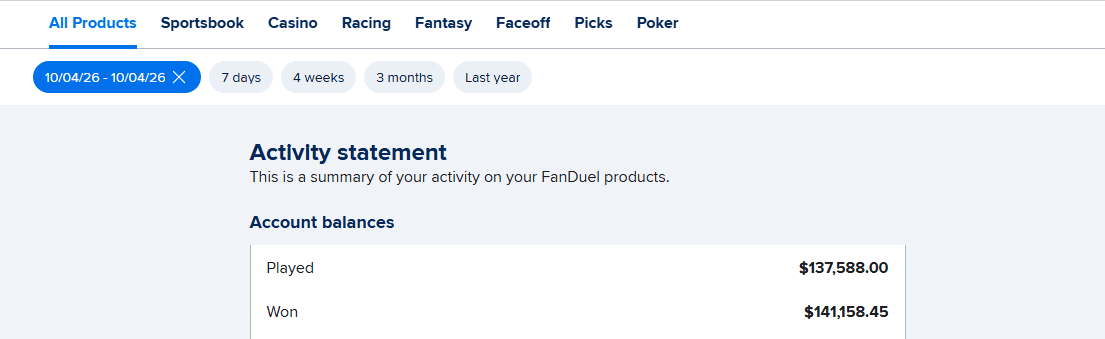
Sports Betting TikTok is the live betting account behind The Best Bet on Sports, covering NFL, NCAAF, NBA, NCAAB, MLB and WNBA markets in real time. The account has been limited on all six major U.S. sportsbooks — FanDuel, DraftKings, Caesars, BetMGM, Fanatics and ESPN BET — for winning on live betting, with $367,520 in verified profit since 2005. View full profile →
Past results do not guarantee future performance. Must be 21 or older to wager.
Related Articles
MLB Bullpen Betting Strategy: Targeting Vulnerable Relievers in April 2026
Baseball Betting Strategy: The Complete Guide to Winning MLB Bets
Baseball Picks: How to Win at MLB Betting With Proven Strategy
Joshua Báez Homered in His First Three At-Bats. Nobody Can Price Him.
Astros vs. Rangers: Betting a Half-Game AL West Race
MLB Trade Deadline: How Deadline Moves Shift Betting Lines
Get real live betting picks
From $39.95/mo · Cancel anytime · Email + Discord delivery
● Get The Picks
Choose your package
Tap any tier below to select · Subscribe in one tap
👇 Tap any package to select it
✓ You're selecting
25 Units · $99.95/month
25 unit picks per month. Sweet spot for most bettors — plenty of action without going all-in.
- ✓25 live betting selections/month
- ✓Email + Discord delivery
- ✓All sports (NFL, NCAAF, NBA, NCAAB, MLB)
- ✓Mix of 1, 2, 3, 5-unit rated plays
- ✓Cancel anytime
Secure PayPal · Cancel anytime · No hidden fees · 21+ · +$367K verified
+$367,520 verified · Limited on 6 sportsbooks · 20 years documented · See Proof
Join Our Newsletter
Get free expert sports picks and analysis delivered weekly.