MLB Bullpen Betting Strategy: Targeting Vulnerable Relievers in April 2026

MLB bullpen betting strategy targets games where a starting pitcher's ERA and the opposing bullpen's vulnerability create run-scoring opportunities that moneylines and totals markets have not fully priced. Overworked closers, shaky setup men, and bullpen-heavy teams coming off high-leverage series are the most reliable targets. April data provides enough sample to identify structural bullpen weakness before oddsmakers fully adjust.
MLB bullpen betting strategy targets games where the opposing bullpen's structural vulnerability creates run-scoring opportunities that totals markets have not fully priced. Overworked closers, high-ERA setup men in high-leverage roles, and bullpen-heavy teams coming off consecutive days of heavy use are the most reliable targets. By mid-April, there is sufficient performance data to identify structural bullpen weakness — and the market is slowest to price those weaknesses in daily totals and first-five-inning lines.
No element of baseball game planning creates more betting edge in the totals market than bullpen vulnerability. The starting pitcher gets the spotlight — his ERA, his strikeout rate, his recent form — and both public bettors and initial line-setting processes weight him heavily in constructing the total. The bullpen receives secondary attention despite accounting for 3–4 innings of the typical game.
For bettors who track bullpen usage, ERA, leverage indices, and rest patterns, that asymmetry creates consistent opportunities, particularly in the first two months of the season when roster decisions, spring training usage, and early injury patterns have created bullpen situations that have not yet fully resolved.
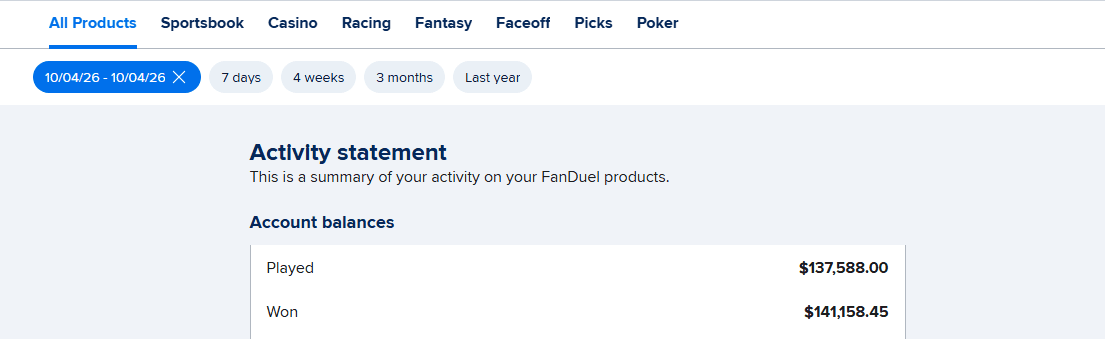
At The Best Bet on Sports, MLB bullpen analysis has been a core component of our analytical process since 2005, contributing to a verified +$367,520 in documented sportsbook profits across all markets.
Understanding Bullpen Construction and Its Betting Implications
Modern MLB teams use 6–8 different relievers in a typical game. The construction of that bullpen — who pitches in which leverage situations, who is available on which days, and who carries the highest run prevention probability in critical moments — determines the actual run-scoring environment for the innings after the starter exits.
Key roles and their betting significance:
The Closer: Typically the team's best reliever, deployed in save situations in the 9th inning. A closer with an ERA above 4.00 or a WHIP above 1.40 in April is a significant liability — these numbers indicate fundamental execution problems rather than small-sample variance. When a vulnerable closer is facing a lineup that gets on base consistently, the totals market frequently fails to price the increased scoring risk appropriately.
The 7th and 8th Inning Bridge: These roles — often the second- and third-best relievers — are critical in close games. If a team has unreliable bridge relievers, leads evaporate in the middle innings. Teams that consistently face late-inning deficits due to bridge bullpen failures play more high-scoring games than their ERA-weighted totals reflect.
The Long Reliever and Bulk Role: Teams that deploy openers or limit starters to 4–5 innings lean heavily on long relievers. A long reliever entering in the 3rd inning at ERA 5.50 effectively converts a good starter's game into a moderate-quality pitching performance for the entire contest. Totals bettors who ignore the opening starter scenario miss a significant portion of the total run environment.
For the foundational framework, our MLB bullpen betting strategy guide explains how reliever ERA, leverage usage, and roster construction translate directly into totals edge — this article applies that framework specifically to April-2026 fatigue patterns.
For daily MLB picks with explicit unit recommendations, see The Best Bet on Sports MLB picks.
The Usage Fatigue Signal: Most Reliable Indicator in Bullpen Betting
The single most reliable bullpen betting signal is usage fatigue — identifying when key relievers have been heavily deployed in consecutive games and are unavailable or compromised for the current contest.
MLB teams are required to make lineup submissions before each game, but they are not required to disclose specific reliever availability or fatigue status. However, usage data is publicly available in real time, and bettors who track pitch counts across multiple consecutive days for each team's key relievers can construct a reliable fatigue probability for tonight's game.
The general threshold: a reliever who has pitched on two of the last three days, or accumulated 45+ pitches across the last three days, has a meaningfully elevated ERA and decreased swing-and-miss rate in the subsequent appearance. This is not a theory — it is documented across decades of pitch tracking data.
Practical application: 1. Identify teams whose 7th/8th inning relievers pitched yesterday and the day before 2. Cross-reference those teams against opponents with high on-base percentage 3. Evaluate whether the posted total reflects an elevated run-scoring environment
A game where both closers and bridge relievers are fatigued on one side, facing a lineup in the top quartile for walks and extra-base hits, is a strong over candidate even if the starting pitcher matchup looks like a low-scoring game.
| Fatigue Level | Games Pitched in Last 3 Days | Pitches in Last 3 Days | ERA Impact |
|---|---|---|---|
| Fresh | 0 | 0 | Baseline |
| Light use | 1 | 1–25 | Minimal |
| Moderate use | 1–2 | 25–40 | +0.40 ERA |
| Heavy use | 2 | 40–55 | +0.85 ERA |
| Over-taxed | 3 | 55+ | +1.50+ ERA |
Early Season Reliever Data: What April Numbers Reveal
April is the highest-value month for MLB bullpen betting because roster decisions made during spring training create mismatches between available talent and assigned roles that have not yet been corrected. Teams with relievers promoted from AAA in late March, veterans on reduced velocity due to spring loading, and new-role transitions (starters moved to bullpen roles) all carry early-season usage patterns that have not fully normalized.
The market reacts to ERA but lags on the underlying mechanics. A reliever posting a 5.80 ERA in April on strikeout rate, walk rate, and hard-contact rate metrics that all indicate sustainable performance regression has not yet caught the oddsmaker's attention as effectively as a reliever whose 3.50 ERA masks underlying peripherals suggesting collapse.
Focus on:
K/BB ratio below 1.5: Relievers who are not missing bats and are walking batters at high rates are candidates for ERA collapse. A 1.5 K/BB ratio for a reliever is the baseball equivalent of a weak poker hand — the cards will turn eventually.
Hard-contact rate above 40%: Relievers who are getting hit hard and surviving via low BABIP (batting average on balls in play) are living on borrowed time. Hard-contact surrendering is a sustainable leading indicator; BABIP is not.
Velocity decline of 2+ mph: A reliever posting 90 mph average fastball velocity down from 92 mph the prior year has measurably less swing-and-miss potential. These velocity declines often precede ERA spikes by 2–4 weeks in market adjustment time.
Bullpen analysis pairs naturally with starter handicapping — our MLB starting pitcher betting guide for April 2026 covers the swinging-strike rate and barrel-percentage signals that determine when a strong starter masks a fragile bullpen behind him. For deeper matchup-level analysis, see the MLB pitcher matchup analysis betting guide.
The blog at The Best Bet on Sports covers pitcher and reliever analysis with regular in-season updates throughout the MLB calendar.
Targeting Totals on Bullpen-Vulnerable Nights
The totals market is the primary beneficiary of bullpen analysis, but moneyline betting is also relevant in specific scenarios. Here is the framework for each:
Totals (Over): Best applied when both teams have elevated bullpen fatigue levels or structural bullpen weakness. The starting pitchers may both be quality arms, but the back-end relievers elevate the actual run environment above what the total reflects. The most profitable totals overs involve games where the market has anchored on the quality of the starting pitchers while ignoring both bullpens.
First Five Innings (F5) Under: The inverse strategy — when both starting pitchers are quality arms and neither team has a structural bullpen issue, the F5 bet captures the low-variance first five innings at favorable prices while avoiding the higher-variance bullpen innings. This is a risk reduction strategy, not an edge identification strategy.
Moneyline value on run-scoring favorites: When a strong offensive team faces a vulnerable bullpen, their moneyline value extends beyond a single-game bet. Heavy favorites who will face a deteriorating bullpen after the third or fourth inning should be priced more favorably than the starting pitcher matchup alone suggests.
For access to daily MLB picks including totals analysis and specific game-by-game recommendations, visit The Best Bet on Sports sports handicappers.
Manager Decision-Making and Its Betting Consequences
Bullpen deployment decisions are made by the manager in real time, but betting on those decisions requires predictive modeling from game data patterns. Managers develop reliable tendencies around:
- Pitch count thresholds: Most managers pull starters between 85–105 pitches, regardless of performance
- Leverage index preferences: Some managers use their best relievers only in positive leverage (team leading) situations; others deploy them regardless of game state
- Left-right matchup overrides: Some managers will sacrifice bullpen efficiency to get favorable handedness matchups against specific hitters
Understanding a specific manager's tendencies — which are visible in their full-season usage patterns — allows bettors to predict bullpen decisions in specific game scenarios with better-than-market accuracy.
For full-season MLB betting support and daily pick delivery, subscribe at The Best Bet on Sports to receive game-by-game analysis with explicit unit sizing and reasoning.
Frequently Asked Questions
How does bullpen ERA affect MLB game totals?
Bullpen ERA directly affects the actual run-scoring environment in innings 6–9 of an MLB game. If a team's bullpen carries a collective ERA of 4.80 compared to a league average of 3.60, every bullpen inning elevates run expectancy by roughly 0.15 runs per half-inning. Across 3–4 bullpen innings per team, this compounds to a meaningful over-the-total edge. Oddsmakers price totals primarily on the starting pitchers and then apply a league-average adjustment for the bullpen. Identifying teams with above-average bullpen ERA provides consistent totals betting edge.
What is bullpen usage fatigue and how do I track it?
Bullpen usage fatigue occurs when key relievers have pitched on consecutive days and have accumulated elevated pitch counts, reducing their effectiveness in the current game. Track it by reviewing public game logs for each team's top 3–4 relievers and counting appearances and pitches in the prior three days. Any reliever with appearances on two of the last three days and 45+ total pitches across that span is operating at meaningfully reduced effectiveness.
Why do MLB totals markets undervalue bullpen performance?
MLB totals markets anchor on starting pitcher quality because starters generate more media coverage, analytics discourse, and public attention than relievers. The total is typically constructed with precise starting pitcher ERA and then a league-average adjustment for the bullpen. Bettors who generate team-specific bullpen performance metrics — ERA, K/BB rate, hard-contact rate, and fatigue level — can identify significant deviations from the league-average assumption that create persistent totals betting edge.
Are there specific game situations where bullpen betting value is highest?
Yes. The highest-value bullpen betting situations occur in: (1) games following a high-leverage series where both teams' closers and setup men have pitched three of the last four days; (2) games where a heavy-usage bullpen faces a lineup in the top quartile for walks and extra-base hits; and (3) games where the public is focused on a marquee starting pitcher matchup while ignoring the severe bullpen asymmetry behind one team's starter.
How does the first-five-innings bet differ from full-game totals?
The first-five-innings (F5) bet settles after 5 innings and isolates the starting pitcher performance period from the bullpen-influenced middle and late innings. This makes F5 bets appropriate when you have high confidence in starting pitcher performance but want to avoid bullpen variance. Conversely, when bullpen vulnerability is the primary edge, the full-game total captures that edge while the F5 does not. Using both bet types strategically — full-game totals for bullpen edges, F5 totals for starter edges — improves the precision of MLB betting.
Can reliever analytics be tracked in real time during a game?
Yes, real-time pitch tracking data is available at Baseball Savant and FanGraphs during live games. For live betting purposes, tracking current pitch velocity versus seasonal average, checking a reliever's prior-game pitch count before he enters in the 7th inning, and identifying fastball command breakdowns within a game all provide live betting signals that pre-game totals prices do not incorporate. MLB live betting is one of the highest-edge markets in sports betting for analytically informed bettors.
How do early April numbers differ from full-season reliability?
Early April reliever data has smaller sample sizes, which increases false positive and false negative rates. However, specific metrics stabilize faster than others: walk rate and hard-contact rate are meaningful at 15–20 innings; ERA and WHIP require 30–40 innings for reliable signal. In April, prioritize leading indicators (K rate, walk rate, hard-contact rate, velocity) over outcome-based metrics (ERA, WHIP, saves) when evaluating bullpen quality. Outcome metrics will catch up to the underlying performance by late May.
The Best Bet on Sports · 1.5M followers on TikTok
Sports Betting TikTok is the live betting account behind The Best Bet on Sports, covering NFL, NCAAF, NBA, NCAAB, MLB and WNBA markets in real time. The account has been limited on all six major U.S. sportsbooks — FanDuel, DraftKings, Caesars, BetMGM, Fanatics and ESPN BET — for winning on live betting, with $367,520 in verified profit since 2005. View full profile →
Past results do not guarantee future performance. Must be 21 or older to wager.
Related Articles
MLB Batting Order Betting Strategy: How Lineups Shift Your Edge
Fading the Public in MLB Betting: Contrarian Strategy Guide
Baseball Betting Strategy: The Complete Guide to Winning MLB Bets
Joshua Báez Homered in His First Three At-Bats. Nobody Can Price Him.
Astros vs. Rangers: Betting a Half-Game AL West Race
MLB Trade Deadline: How Deadline Moves Shift Betting Lines
Get real live betting picks
From $39.95/mo · Cancel anytime · Email + Discord delivery
● Get The Picks
Choose your package
Tap any tier below to select · Subscribe in one tap
👇 Tap any package to select it
✓ You're selecting
25 Units · $99.95/month
25 unit picks per month. Sweet spot for most bettors — plenty of action without going all-in.
- ✓25 live betting selections/month
- ✓Email + Discord delivery
- ✓All sports (NFL, NCAAF, NBA, NCAAB, MLB)
- ✓Mix of 1, 2, 3, 5-unit rated plays
- ✓Cancel anytime
Secure PayPal · Cancel anytime · No hidden fees · 21+ · +$367K verified
+$367,520 verified · Limited on 6 sportsbooks · 20 years documented · See Proof
Join Our Newsletter
Get free expert sports picks and analysis delivered weekly.