Brock Bowers Is Out: What a Tight End Loss Really Moves

Brock Bowers had a meniscus trim on Tuesday in Dallas and is expected to miss a game or two, starting with Sunday's 4:25 p.m. ET opener against Miami. A tight end absence moves a spread less than any other skill-position loss because tight end value concentrates in the red zone and on third down, not in yardage. Here is where the number actually changes and why the evidence arrives after kickoff.
Brock Bowers underwent a meniscus trim on Tuesday in Dallas and is expected to miss a game or two, which puts Las Vegas in its 4:25 p.m. ET opener against Miami without the most productive tight end in football. The betting mistake is assuming that loss shows up in the spread the way a quarterback's would. It does not, and the reason is structural: tight end value concentrates in the red zone and on third down rather than in raw yardage, so the number that should move is the team total and the scoring-method market, not the side. The Best Bet on Sports has run live in-game betting for more than twenty years with a verified $367,520+ in profit across every major U.S. sportsbook, and injuries like this one are the clearest case we know of where the pregame number is a guess and the in-game number is a price.
The sequence matters here, because it explains why the market had so little time to work with. Bowers was hurt during camp. The injury was not diagnosed until last week. The procedure happened Tuesday in Dallas. That is a compressed timeline for a market that normally gets three weeks of practice reports on a knee before it has to commit to a number, and it means the opening line on this game was built while the participation question was still open.
What follows is not a recommendation on the game. It is a description of where a tight end absence actually lands on a betting board, what the market usually gets wrong about it, and which observations after kickoff are worth more than everything written before it.
What actually happened to Brock Bowers
A meniscus trim is the smaller of the two meniscus procedures. The torn portion is removed rather than repaired, which is why the recovery is measured in weeks instead of months and why the reported expectation is a game or two rather than a season-altering absence. The tradeoff is long-term rather than short-term, and it is not a betting question this week.
The relevant context is that this is the second straight season Bowers has dealt with a knee. He missed three games in October 2025 with a knee injury that, by most accounts, followed him through the rest of that year. That history is why "a game or two" deserves to be read as a floor rather than a ceiling. Las Vegas plays a division game in Week 2, and a team that has already watched a knee linger once has an obvious institutional reason to be conservative in September.
Reports have Michael Mayer sliding into the starting role while Bowers recovers. Mayer is a fourth-year tight end and a real NFL player, which is precisely what makes this a subtle handicapping problem rather than a simple one. The drop is not from a star to a replacement-level body. It is from a target monopolist to a competent starter, and those two things do very different things to an offense without doing very different things to a yardage projection.
Why a tight end injury barely moves a spread
Here is the part that gets handicapped badly almost every week of the season.
A spread is a forecast of margin. Margin is driven by possessions, efficiency per possession, and the conversion of drives into points. When a quarterback is downgraded, all three of those inputs move at once, which is why quarterback news produces the largest line moves on the board. When a running back is downgraded, one input moves modestly, because rushing production is the most replaceable production in the sport.
A tight end sits in a strange third category. Elite tight end production is not primarily yardage — it is leverage. It shows up as a reliable third-down conversion against a linebacker, as a red zone mismatch that turns a field goal into a touchdown, and as the piece that lets an offense stay in one personnel grouping while the defense has to choose between two bad answers. Yardage models capture almost none of that, and spreads are built on yardage models.
So the spread moves a little, and the market feels like it has priced the news. It has priced the least important part of it.
| Position downgraded | Typical spread impact | Where the real impact lands |
|---|---|---|
| Starting quarterback | Large, immediate | Side, total, and team total all at once |
| Starting running back | Small | Rushing props, game script late |
| No. 1 receiver | Moderate | Team total, passing props, deep-shot rate |
| Elite tight end | Small | Red zone conversion, third-down rate, scoring-method markets |
| Starting offensive tackle | Small and slow | Sack and pressure markets, drive survival |
Read that table as a map of where to look, not as a set of instructions. The point is that the market's attention and the actual effect are in different places on a tight end, which is the condition that creates a mispriced number.
The market that should move instead
If you want to know whether a board has respected this news, do not look at the side. Look at three other things.
The team total. An offense losing its red zone mismatch does not necessarily gain or lose field position — it loses conversion. Fewer red zone trips ending in seven and more ending in three is a team total effect, not a spread effect, and it is worth more points than it looks like because the difference compounds across a game.
Touchdown-scorer pricing across the rest of the roster. When a target monopolist is removed, his share does not evaporate. It redistributes, and the redistribution is rarely even. Some of it goes to the replacement tight end, some to the slot, some to the backs on checkdowns. Books price the vacated player instantly and price the beneficiaries slowly, because the beneficiaries require a judgment about scheme rather than a subtraction.
Third-down and drive-length markets where they exist. This is where a tight end absence is most legible and least priced. An offense that converts at a lower rate on third down runs fewer plays, which pulls down its own total and, less obviously, hands more possessions back to the opponent.
None of that is unique to Las Vegas. It is the general shape of a tight end absence, and it holds whether the name is Bowers or anyone else occupying the same role.
What the compressed timeline changes
Normally the betting market gets a full week of practice reports before it has to be right about an injury. Limited on Wednesday, limited on Thursday, a game designation on Friday. That cadence gives the number time to find its level, and it means by Sunday morning the price usually reflects the information.
This one did not follow that cadence. The injury dated to camp, the diagnosis came late, and the procedure happened Tuesday. A market that learns about a surgery two days after it happens is a market that repriced in one motion rather than across a week, and one-motion repricings tend to overshoot or undershoot rather than land.
That is a statement about variance, not about direction. It does not tell you which way the number is wrong. It tells you the probability that it is wrong at all is higher than usual, which is exactly the condition under which waiting for evidence beats guessing before kickoff.
Where the evidence actually arrives
This is the honest limit of everything above: you cannot know how much an offense misses a tight end until you watch it try to play without him, and neither can the sportsbook.
The evidence is legible inside the first quarter, and it is specific. Whether the replacement tight end is on the field in the same personnel groupings or whether the offense has quietly become an eleven-personnel team. Whether the first third-and-medium produces a tight end target or a checkdown. Whether the first red zone trip runs the same route concepts or a visibly simplified set. Whether a linebacker who would have been in conflict all afternoon is now free to sit in the throwing lane.
Those four observations answer the question that no injury report answers, and they are all available before the live market has finished adjusting, because live models react to score and clock far faster than they react to how an offense looks. That gap is the entire reason we take positions during games rather than before them, which is laid out on the live betting picks page.
We covered the in-game version of this problem earlier in the week when Sam Darnold was hurt five snaps into the opener, and the telegraphed version when Tua Tagovailoa's oblique turned a Thursday practice into a three-day story. Bowers is a third variety: fully known, fully announced, and still badly priced, because the thing he does is not the thing the model measures.
What to watch Sunday
Opening personnel. The first offensive series tells you whether the coaching staff believes in the replacement or is scheming around the absence. Those are different games.
The first red zone trip. One possession is a small sample, but red zone play-calling is the most deliberate play-calling in football. What an offense runs there on its first trip is a statement of intent.
Third-and-four through third-and-seven. The exact range where an elite tight end is worth the most and where his absence is most visible.
Whether the total moves before the side. If the live total drops faster than the live spread, the market is repricing conversion rather than outcome. That is the more informed move, and it usually arrives second.
Get Tonight's Live Picks
Want tonight's live in-game picks delivered during the game via Email and Discord?
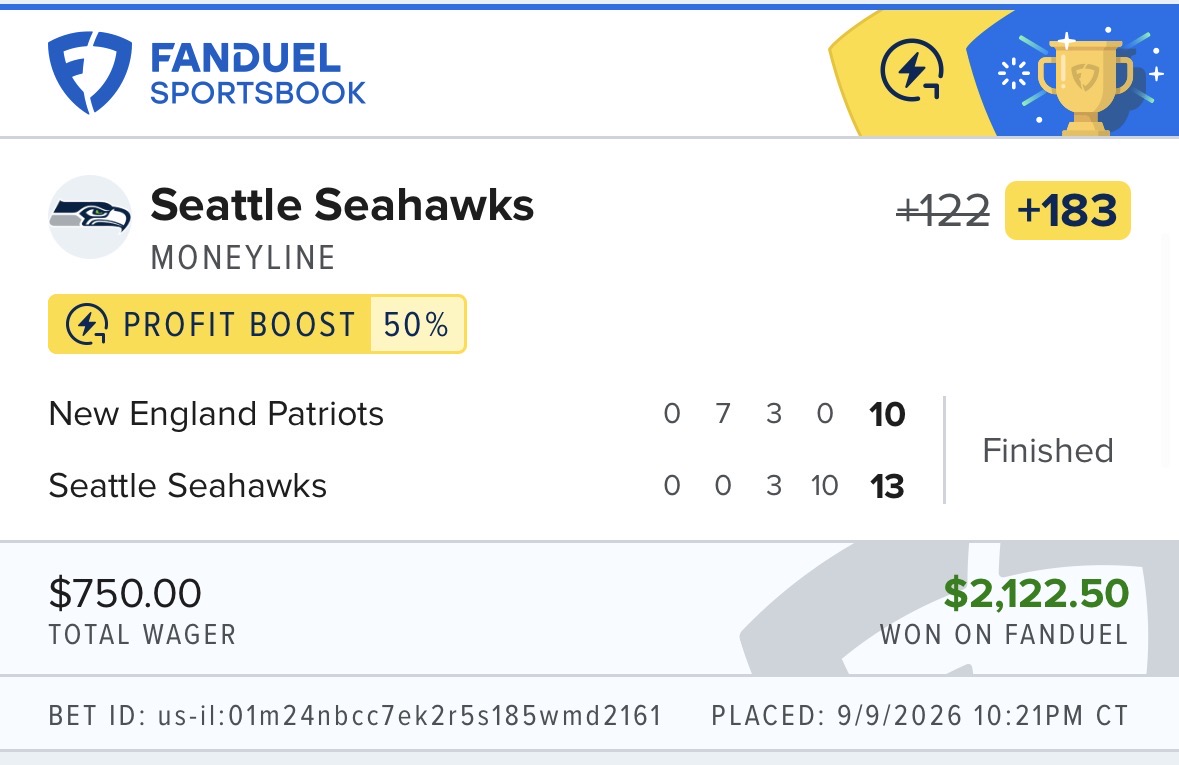
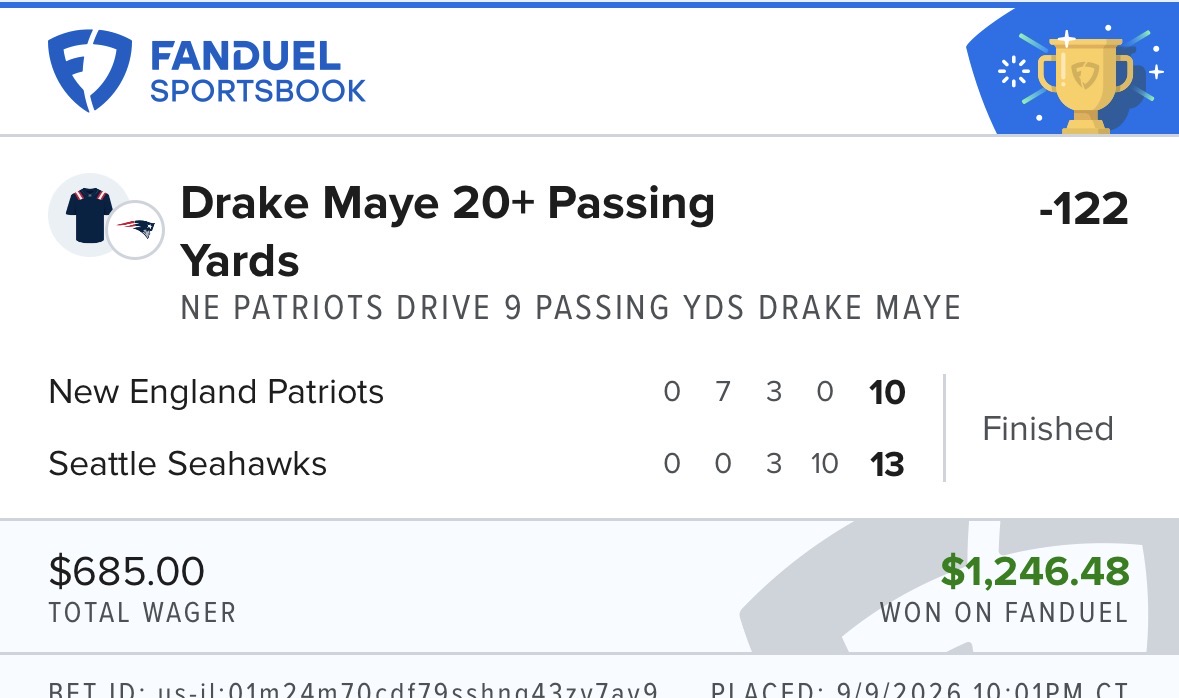
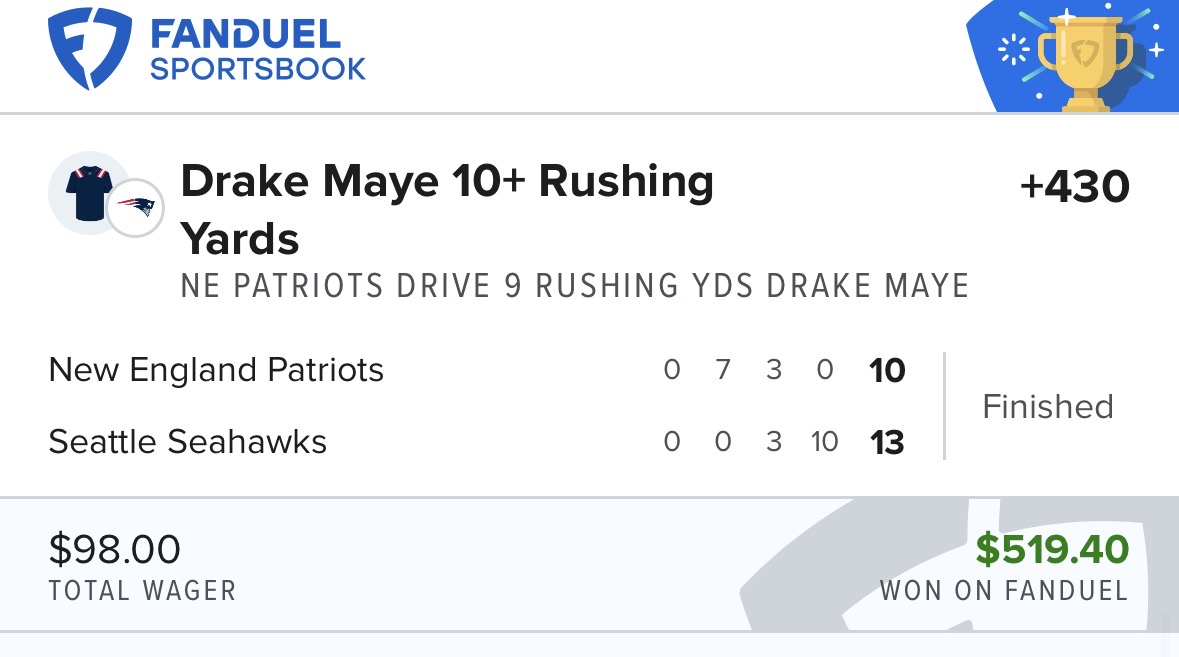
The Best Bet on Sports is the only live betting handicapping service limited on all six major U.S. sportsbooks (FanDuel, DraftKings, Caesars, BetMGM, Fanatics, ESPN BET) for winning too much during in-game action. Verified profit: $367,520+. Picks delivered via Email and Discord during games.
→ Get tonight's live picks: $199 first month — 1-Unit package, full live betting access → Try a free live pick first — reserve your spot for tonight's pick
If you arrived from a search for expert sports picks or daily sports betting picks, those pages explain what gets sent and when. Packages are compared on buy sports picks, buyer questions are answered on pay for sports picks, and coverage and delivery are described on the sports handicapping service page. For football specifically, see football betting picks, football handicappers, NFL picks and NFL spread picks. The running ledger, losses included, is on results.
Frequently Asked Questions
What happened to Brock Bowers?
Bowers underwent a meniscus trim on Tuesday in Dallas. The injury occurred during training camp but was not diagnosed until the prior week, which is why the procedure came so close to the opener. He is expected to miss a game or two, beginning with Las Vegas hosting Miami at 4:25 p.m. ET on Sunday.
How long will Brock Bowers be out?
The reported expectation is a game or two. A meniscus trim removes the damaged tissue rather than repairing it, which is why recovery is measured in weeks. The caution is that this is the second straight season Bowers has dealt with a knee — he missed three games in October 2025 — so the reported timeline is better treated as a floor than a ceiling, especially with a division game in Week 2.
Who replaces Brock Bowers at tight end for the Raiders?
Michael Mayer is reported as the player stepping into the starting role while Bowers recovers. Mayer is a fourth-year tight end and an established NFL starter, which makes this a downgrade in leverage rather than a collapse in competence — and that distinction is exactly why the handicapping problem is subtle.
How much does a tight end injury move an NFL spread?
Less than almost any bettor expects. A spread forecasts margin, and margin models are built primarily on yardage and efficiency. Elite tight end production is concentrated in red zone conversion and third-down leverage, neither of which yardage models capture well. The result is a small spread move that feels like the news has been priced when the actual effect sits elsewhere on the board.
Which betting markets does a tight end absence actually affect?
Team totals, touchdown-scorer pricing across the rest of the roster, and third-down or drive-length markets where they are offered. An offense that loses its red zone mismatch tends to trade touchdowns for field goals, which is a scoring-efficiency effect rather than a margin effect, and it compounds across a game more than a one-point spread adjustment suggests.
Why does the compressed timeline of this injury matter for betting?
Because the market normally gets a full week of practice reports to find the right number, and here it learned about a surgery two days after it happened. A price that adjusts in one motion is more likely to overshoot or undershoot than one that adjusts across several days. That raises the probability the number is wrong without telling you which direction it is wrong in — which argues for waiting on evidence rather than guessing before kickoff.
What should you watch in the game to know whether the absence matters?
Four things, all visible in the first quarter: whether the replacement tight end appears in the same personnel groupings, what the offense calls on its first third-and-medium, how the first red zone trip is schemed, and whether an opposing linebacker who would normally be in coverage conflict is now free to sit in a throwing lane. Those observations answer the question no injury report answers, and they are available before the live market has fully adjusted.
The Best Bet on Sports · 1.5M followers on TikTok
Sports Betting TikTok is the live betting account behind The Best Bet on Sports, covering NFL, NCAAF, NBA, NCAAB, MLB and WNBA markets in real time. The account has been limited on all six major U.S. sportsbooks — FanDuel, DraftKings, Caesars, BetMGM, Fanatics and ESPN BET — for winning on live betting, with $367,520 in verified profit since 2005. View full profile →
Past results do not guarantee future performance. Must be 21 or older to wager.
Related Articles
Patriots at Seahawks: What a Super Bowl Rematch Opener Actually Tells the Market
791 Points and 10 Games Under the Average: Inside NFL Week 1's Scoring Record
The Cardinals' Win Total Moved Two Games Overnight
Vikings 39, Packers 22: The Alternate Line Nobody Was Watching
NFL Week 1 Overreaction Index: Ten Early-Season Traps Ranked
Tua Tagovailoa's Oblique: The Injury a Spread Can't Price
Get real live betting picks
From $39.95/mo · Cancel anytime · Email + Discord delivery
● Get The Picks
Choose your package
Tap any tier below to select · Subscribe in one tap
👇 Tap any package to select it
✓ You're selecting
25 Units · $99.95/month
25 unit picks per month. Sweet spot for most bettors — plenty of action without going all-in.
- ✓25 live betting selections/month
- ✓Email + Discord delivery
- ✓All sports (NFL, NCAAF, NBA, NCAAB, MLB)
- ✓Mix of 1, 2, 3, 5-unit rated plays
- ✓Cancel anytime
Secure PayPal · Cancel anytime · No hidden fees · 21+ · +$367K verified
+$367,520 verified · Limited on 6 sportsbooks · 20 years documented · See Proof
Join Our Newsletter
Get free expert sports picks and analysis delivered weekly.