NBA Finals MVP Futures Betting Strategy May 2026: Reading Usage, Matchups, and Live Odds Before Game 1

NBA Finals MVP futures betting in May 2026 rewards bettors who track conference finals usage rates, defensive matchups, and live odds shifts before Game 1.
NBA Finals MVP futures betting in May 2026 starts with one structural rule: the award has gone to a player on the winning team in 26 of the last 27 Finals. That single fact means your MVP ticket is functionally a series-winner ticket plus a usage-rate ticket. Across the +$367,520 in verified profit our team at The Best Bet on Sports has booked across all six major U.S. sportsbooks since 2005, the most repeatable Finals MVP edge has come from finding players who lead their team in usage rate AND project for at least 27 minutes of road-game floor time. Those names typically sit in the +400 to +900 range and are underpriced relative to their win-conditional probability. The +200 favorite is rarely where the value is. The third or fourth name on the board, paired with a series price that gives you an honest path, almost always is.
When the 2026 NBA Finals tip in early June, oddsmakers will reset MVP futures within 48 hours of the conference finals closing out. Markets typically post 8 to 12 named players at first, then shorten to four or five real options once the matchup is locked. The team at The Best Bet on Sports has tracked Finals MVP futures every spring since 2005, and the cleanest edge has consistently been buying the second or third-shortest priced player on the eventual series winner — not the chalk.
What is NBA Finals MVP futures betting?
NBA Finals MVP futures are wagers placed before or during the championship series on which player will be named series MVP. The award is voted on by an 11-member media panel and announced after the championship-clinching game. Sportsbooks open futures markets the moment both Finals teams are locked in, with 8 to 12 names listed and odds ranging from +180 on a clear favorite to +5000 or higher on long shots.
Two structural facts dominate this market:
1. Winning team bias — The Finals MVP has gone to a player on the winning team in 26 of the last 27 series. Jerry West in 1969 is the only exception in the modern award era. That means your MVP ticket is, in practical terms, conditional on the series-win outcome. 2. Usage rate concentration — Since 2010, every Finals MVP has been their team's leader OR co-leader in usage rate during the Finals. Fourth and fifth options have not won the award in modern voting history.
Combine those two facts and the market simplifies fast. You are picking the highest-usage player on the team you already think wins the series.
How do sportsbooks price Finals MVP markets?
Sportsbook MVP pricing is built on three inputs: the implied series price, the player's projected Finals usage rate, and recency bias from conference finals voting. Writers who covered a player's run through the East or West tend to vote consistently with that narrative through the Finals.
Here is the structural math sportsbooks run when posting a Finals MVP price:
| Player profile | Series price weight | Usage rate weight | Recency bias weight |
|---|---|---|---|
| Series favorite, top usage | 55-60% | 30% | 10% |
| Series favorite, #2 usage | 55-60% | 25% | 15% |
| Series underdog, top usage | 35-40% | 40% | 20% |
| Series underdog, #2 usage | 35-40% | 30% | 25% |
The numbers above are illustrative, but the structural point is real: sportsbooks weight series-win probability the heaviest, but they do not always weight usage as much as the historical record suggests they should. That is where the third-name-on-the-board edge comes from. When a series favorite has two players within three percentage points of usage on the team, the second name often opens at +500 to +700 — too long given the 26-of-27 winning-team bias. (Verified Finals work shows up on our results page, where every futures ticket gets logged win or lose.)
Why winning-team bias is the only rule that matters
Many bettors get distracted by narrative — the lifetime achievement angle, the first-ring storyline, the prop bets on which player scores the most points in the closeout game. None of those override the structural fact that Finals MVP voters cast their ballots after the series ends, which means they are voting on the winning team's performance.
Practical implication: never take a Finals MVP futures ticket on a player whose team you would not back at the same series price. If you cannot project the team to win the series, the MVP futures ticket is dead the moment you write it. Conference Finals MVPs from losing-conference-finalist teams almost always get scrubbed off the board.
How to identify usage-rate edges in May
Usage rate is the percentage of team possessions a player ends — by shot, free throw, or turnover — while on the floor. The May 2026 conference finals window is where you build your usage forecast for the Finals. The number you want is not a season-long figure. You want conference-finals-only usage, because that is the number that will carry into the championship series.
Three tells to watch for in the conference finals games still ahead this month:
1. Late-game offensive sets in clutch minutes — Whoever runs the final 4 minutes of close playoff games is your highest-usage candidate. 2. Free throw rate — A high free throw rate spikes Finals MVP probability because volume scoring is the single biggest input to media MVP voting. 3. Closeout game scoring — Players who go for 30+ in a series-clinching game vault into the public's MVP narrative, which the futures market reprices fast.
The closer you get to the Finals tip, the smaller the price moves get. Anyone who has been positioned on a player since the second round is locked in at the open. For real-time alerts on price movement during the conference finals, our live betting service sends mid-series futures repricing notes when sportsbooks move 50+ basis points on a name.
What live odds shifts to track during the conference finals
The biggest Finals MVP price moves happen in three windows:
- Conference finals Game 4-5 — When series outcomes start to clarify, MVP markets reprice 30-50% of names.
- 48 hours after the conference finals end — Books cut the board from 12 names to 5-6 and reset prices.
- Game 1 halftime of the Finals — The first in-game move. A 25-point first half from a favorite can shorten his MVP price from +250 to +140.
Smart Finals MVP bettors take their first position before the conference finals end. The price you get on day one of the Finals is almost always the worst price of the entire futures window, because the public floods the market once Game 1 is locked. For the broader read on the matchup, our 2026 NBA Finals preview and best bets breakdown covers series price, total, and player prop angles in the same framework.
Hedging strategy: pairing MVP futures with series prices
The structural relationship between Finals MVP futures and series prices creates a hedging opportunity. If you have already taken a series price on the underdog at +180, a hedge ticket on the favorite's top-usage player at +200 covers the MVP outcome on both series outcomes.
Example math: - Series price on underdog at +180 with $100 stake → $280 return on win - MVP futures on favorite's top-usage player at +200 with $50 stake → $150 return if favorite wins AND that player wins MVP - Combined position: profitable on either outcome, with risk concentrated on the favorite winning the series but their #2 usage player taking MVP
This is where bankroll discipline matters. Hedges should be sized to lock a guaranteed profit margin, not to flip the original ticket. Our hedging futures bets sports betting strategy guide walks through the full sizing math, and we cover the in-series live math at length on our free live pick page.
Common mistakes Finals MVP bettors make
The five mistakes that wreck Finals MVP futures records:
1. Taking the +200 favorite blind — Implied probability of 33% is below the actual win-conditional probability of most top-usage players, so the price has no edge. 2. Backing a player from the underdog series team — Defies the 26-of-27 winning-team bias. 3. Taking long shots after Game 1 — The market reprices fast; the +5000 you wanted is now +1500 and the value is gone. 4. Hedging too late — A Game 6 hedge on a series tied 3-2 is not a hedge, it is a panic trade. 5. Ignoring recency bias — Conference Finals MVPs carry voting momentum; not weighting that gives up 100-200 basis points.
The bettors who outperform are the ones who do their work in May during the conference finals — not the ones who scramble in June.
Readers working through this should also see our companion piece on the Knicks title run and Brunson Finals MVP.
How to size Finals MVP futures within a full playoff bankroll
Finals MVP is a long-shot market by nature. Even a +400 ticket has implied probability of just 20%, and the realistic edge over the market is rarely more than 5-7 percentage points on the best ticket. That means stake sizing should be smaller than your standard NBA series unit.
Our analysts use a simple rule: Finals MVP futures stake = 0.5 to 1 unit max, never more. If your unit is 1% of bankroll, a Finals MVP ticket is 0.5% of bankroll. The longer the price, the smaller the stake — the variance does not justify scaling up just because the payoff looks attractive on paper. Subscribers to our paid live betting packages get exact unit recommendations on every futures position our team takes during May and June.
For more on how we approach NBA postseason markets across the conference finals and Finals, see our broader NBA picks page.
Frequently Asked Questions
How are NBA Finals MVP futures priced after the conference finals end?
Sportsbooks reset Finals MVP markets within 48 hours of the conference finals closing out. The board shortens from 8-12 names to 5-6 names. Pricing is based on three inputs: implied series-win probability, projected usage rate during the Finals, and recency bias from conference finals voting. Series-win weight typically accounts for 55-60% of the price for favored teams and 35-40% for underdog teams.
What is the historical winning team bias for Finals MVP?
The Finals MVP has gone to a player on the winning team in 26 of the last 27 series. Jerry West in 1969 is the only exception in the modern award era. This means a Finals MVP futures ticket is functionally conditional on the series outcome — if the team loses, the ticket dies, regardless of individual stats produced during the series.
Should I bet the Finals MVP favorite or look for value lower on the board?
The favorite at +180 to +250 is rarely where the value is. The historical edge has come from the second-shortest priced player on the projected series winner, typically priced +400 to +700. When two players on the winning team are within three percentage points of usage rate, the lower-priced second name often offers a five to seven percentage point edge over implied probability.
When is the best time to place an NBA Finals MVP futures ticket?
The best price typically opens during the conference finals — specifically after Game 4 or Game 5 of either conference series, before the Finals matchup is officially locked. Once the conference finals end and the Finals matchup is set, the market reprices and value evaporates. Game 1 of the Finals is the worst time to take a position; halftime of Game 1 is even worse.
How does usage rate affect Finals MVP probability?
Every Finals MVP since 2010 has been their team's leader or co-leader in usage rate during the Finals. Usage rate measures the percentage of team possessions a player ends by shot, free throw, or turnover while on the floor. The Finals usage figure matters more than the regular-season figure — playoff usage compresses to top stars, and Finals usage compresses further still.
Is hedging an NBA Finals MVP futures ticket profitable?
Hedging Finals MVP futures with series prices can lock guaranteed profit when the original ticket is on the series underdog at long odds and the favorite wins Game 1 or Game 2. Hedges should be sized to secure a profit margin, not to fully flip the original position. Late-series hedges (after Game 4) typically have negative expected value because the market has already priced in the outcome.
How much of my bankroll should I stake on a Finals MVP futures ticket?
Finals MVP futures are long-variance positions and should be sized smaller than standard NBA series units. The general rule is 0.5 to 1 unit maximum per ticket, with longer-priced tickets sized smaller within that range. If your standard unit is 1% of bankroll, a Finals MVP futures ticket should be 0.5% of bankroll. Sizing up just because the payoff looks attractive on paper is the most common bankroll mistake in the Finals window.
The Best Bet on Sports · 1.5M followers on TikTok
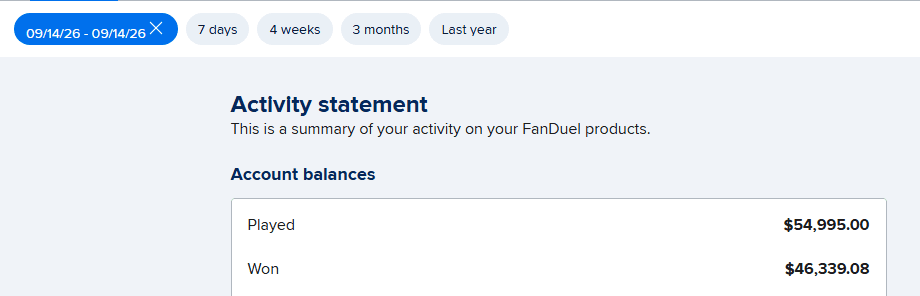
Sports Betting TikTok is the live betting account behind The Best Bet on Sports, covering NFL, NCAAF, NBA, NCAAB, MLB and WNBA markets in real time. The account has been limited on all six major U.S. sportsbooks — FanDuel, DraftKings, Caesars, BetMGM, Fanatics and ESPN BET — for winning on live betting, with $367,520 in verified profit since 2005. View full profile →
Past results do not guarantee future performance. Must be 21 or older to wager.
Related Articles
NBA Finals Game 3 Bench Rotation Live Betting Strategy May 2026
NBA Finals Home Court Advantage Betting in May 2026: How HCA Actually Moves Series Prices and Game Lines
Knicks End 53-Year Drought: New York Wins 2026 NBA Title, Brunson Named Finals MVP
NBA Finals Game 2 In-Series Live Betting Adjustments May 2026
Cavaliers vs Pistons Game 7 Live Betting Strategy: How to Read Elimination-Game Line Movement
NBA Playoff Foul Trouble Betting in May 2026: How Star Foul Counts Move Live Totals and Spreads
Get real live betting picks
From $39.95/mo · Cancel anytime · Email + Discord delivery
● Get The Picks
Choose your package
Tap any tier below to select · Subscribe in one tap
👇 Tap any package to select it
✓ You're selecting
25 Units · $99.95/month
25 unit picks per month. Sweet spot for most bettors — plenty of action without going all-in.
- ✓25 live betting selections/month
- ✓Email + Discord delivery
- ✓All sports (NFL, NCAAF, NBA, NCAAB, MLB)
- ✓Mix of 1, 2, 3, 5-unit rated plays
- ✓Cancel anytime
Secure PayPal · Cancel anytime · No hidden fees · 21+ · +$367K verified
+$367,520 verified · Limited on 6 sportsbooks · 20 years documented · See Proof
Join Our Newsletter
Get free expert sports picks and analysis delivered weekly.