Responsible Sports Betting Guide: How to Bet Smart and Stay in Control

Responsible sports betting means establishing firm financial boundaries before placing a single wager, maintaining strict bankroll discipline throughout your betting career, and developing the self-awareness to recognize when your gambling habits are no longer healthy. The line between recreational enjoyment and destructive behavior is crossed gradually rather than suddenly, and the bettors who protect themselves are the ones who set guardrails — deposit limits, loss limits, and time restrictions — before they need them rather than after the damage is done.
Responsible sports betting means establishing firm financial boundaries before placing a single wager, maintaining strict bankroll discipline throughout your betting career, and developing the self-awareness to recognize when your gambling habits are no longer healthy — because the line between recreational enjoyment and destructive behavior is crossed gradually, not suddenly, and the bettors who protect themselves are the ones who set guardrails before they need them.
My name is Sports Betting TikTok, and I have spent over 20 years in the sports betting industry. In that time, I have seen every possible outcome — disciplined bettors who turned a hobby into a rewarding, sustainable pursuit that they enjoyed for decades, and others who spiraled into serious financial and personal trouble because they ignored the warning signs until it was too late. At The Best Bet on Sports, promoting responsible gambling is not a marketing checkbox or a legal requirement we grudgingly comply with. It is a core value that shapes how we interact with every subscriber and every piece of content we produce. The reality is that profitable sports betting is impossible without discipline, and discipline starts with the principles in this guide. Whether you are a complete beginner placing your first wager or a veteran bettor looking to reinforce good habits, these fundamentals will protect both your bankroll and your quality of life.
How Do You Set a Sports Betting Budget?
The foundation of responsible betting is establishing a bankroll that is completely separate from your living expenses. This is money you can afford to lose entirely — in its totality, down to zero — without it affecting your rent, mortgage, bills, groceries, savings, or any financial obligation. If losing your entire bankroll would create hardship in your life, the bankroll is too large.
Here is the framework I recommend to every bettor who asks me how to start responsibly.
First, determine your disposable entertainment budget. What do you currently spend on other forms of entertainment each month — dining out, movies, concerts, streaming subscriptions, hobbies? Your betting bankroll should come from this discretionary category, not from essential funds. Betting is entertainment, and pricing it accordingly keeps the activity in its proper place.
Second, set a specific dollar amount and commit to it with the same firmness you would apply to any financial commitment. Whether the number is $200 or $2,000, define it clearly and write it down. Ambiguity breeds overspending.
Third, establish unit sizes within that bankroll. Most professionals recommend risking 1-3% of your total bankroll per individual bet. On a $1,000 bankroll, that translates to $10-$30 per wager. This unit sizing ensures that no single loss — or even a string of losses — can eliminate your bankroll in a short period.
| Bankroll Size | Conservative Unit (1%) | Standard Unit (2%) | Aggressive Unit (3%) | Max Daily Loss Limit |
|---|---|---|---|---|
| $500 | $5 | $10 | $15 | $30-$50 |
| $1,000 | $10 | $20 | $30 | $60-$100 |
| $2,500 | $25 | $50 | $75 | $150-$250 |
| $5,000 | $50 | $100 | $150 | $300-$500 |
Fourth, set explicit loss limits. Decide in advance the maximum amount you are willing to lose in a single day, a single week, and a single month. When you hit that number, you stop. No exceptions, no rationalizations, no chasing.
These are not suggestions. They are rules you must follow without exception, and the moment you start bending them is the moment your relationship with betting becomes dangerous.
What Are the Warning Signs of Problem Gambling?
Recognizing the early signs of problem gambling is critical because the transition from recreational bettor to problem gambler is almost always gradual. It does not happen overnight. It happens through a series of small boundary violations that each feel minor in isolation but compound into a serious problem over weeks and months.
Ask yourself these questions with complete honesty. Are you betting with money you cannot afford to lose — money that should go toward bills, savings, or essential expenses? Do you find yourself chasing losses by increasing bet sizes after a bad day, telling yourself you will get it back with one good play? Is sports betting causing stress, arguments, or distance in your personal relationships? Do you lie to friends, family, or your partner about how much you bet or how much you have lost?
Additional warning signs include feeling anxious or restless when you are not betting, finding it difficult to stop betting even when you planned to take a break, borrowing money or using credit cards to fund your betting account, neglecting work or personal responsibilities because of time spent researching or placing bets, and continuing to bet when it no longer feels enjoyable but instead feels compulsive.
If you recognize even one of these patterns in your behavior, it is time to step back and seriously evaluate your relationship with sports betting. I have watched people I care about go through this, and the universal regret is not acting sooner. There is no shame in acknowledging the problem, and it takes genuine strength and self-awareness to address it honestly.
Where Can You Get Help for Problem Gambling?
Multiple professional resources exist for anyone who needs support, and reaching out is the smartest decision you can make.
The National Council on Problem Gambling operates a confidential helpline at 1-800-522-4700, available 24 hours a day, 7 days a week, by phone, text, or online chat. They provide referrals to local treatment providers and support services tailored to your situation.
Gamblers Anonymous offers free peer support groups both in-person and online, providing a community of people who understand what you are going through because they have experienced it themselves. The meetings are anonymous and non-judgmental.
Self-exclusion programs are available through every legal sportsbook, allowing you to voluntarily ban yourself from the platform for a set period or permanently. This is not a sign of weakness — it is a proactive tool that removes temptation while you work on your relationship with gambling.
State-level resources vary but most states with legal sports betting have dedicated problem gambling hotlines, counseling services, and treatment programs funded by gambling revenue. Your state's gambling commission website will have links to local resources.
Professional counseling from a therapist who specializes in gambling addiction provides the most comprehensive support for serious cases. Cognitive behavioral therapy has shown strong results in treating gambling-related issues, and many therapists offer both in-person and telehealth options.
Reaching out for help is not an admission of failure. It is the single best bet you will ever make.
How Do You Keep Betting Fun and Sustainable Long-Term?
The bettors who enjoy this activity for years and decades without negative consequences share common habits that I have observed consistently across my 20 years in the industry.
They never bet under emotional stress. A bad day at work, a fight with a partner, a frustrating losing streak, or any situation that elevates your emotional state beyond calm, rational thinking is a trigger for reckless decisions. The rule is simple: if you are not in a clear headspace, you do not place a bet. Walk away, come back tomorrow, and the games will still be there.
They take regular breaks from betting. The sports calendar runs year-round, but that does not mean your betting calendar should. Taking a week, a month, or even an entire sport's offseason away from wagering resets your perspective, prevents burnout, and ensures that when you return, you are doing so from a place of genuine interest rather than compulsion.
They celebrate the analytical process, not just the financial results. The research, the matchup analysis, the model-building, and the strategic thinking are inherently enjoyable activities. If you only experience satisfaction when you cash a ticket, your relationship with betting is fragile and dependent on outcomes you cannot fully control. The bettors who derive genuine pleasure from the intellectual challenge are the ones who sustain healthy habits indefinitely.
They are brutally honest about their results. Track every single bet — wins, losses, and pushes — without exception. The bettors who hide their losses, even from themselves, are the ones most at risk for escalation. Working with transparent sports handicappers who document their real records, including losing periods, reinforces this culture of accountability and reminds you that even the best professionals have losing stretches.
Should You Ever Increase Your Betting Stakes?
Scaling up your bankroll should only happen when two conditions are simultaneously met: your bankroll has genuinely grown through consistent profits earned over a meaningful period, and your unit size as a percentage of the new bankroll remains the same.
If you started with $1,000 and grew it to $2,000 through disciplined betting over several months of documented, profitable wagering, it is reasonable to increase your unit size from $20 to $40 — maintaining the same 2% per-bet allocation. What is absolutely not acceptable is depositing additional money to chase bigger action, increasing your unit size during a losing streak to accelerate recovery, or jumping your unit percentage from 2% to 5% because you feel overdue for a winning run.
The temptation to press during winning streaks is almost as dangerous as chasing during losing streaks. A bettor who wins 60% of their plays over a two-week stretch might feel invincible and dramatically increase their unit size, only to regress to their true win rate and give back all the profits — and more — at the inflated unit size.
The best approach in football betting and every other sport is steady, patient, incremental growth. Think of your bankroll like a business, because that is exactly what it is. Businesses that grow sustainably outperform businesses that overextend during boom periods and collapse during contractions.
What Role Does a Betting Community Play in Responsible Gambling?
Being part of a community of like-minded, disciplined bettors provides accountability that solo bettors often lack. When your peer group treats betting as a serious analytical pursuit — discussing strategy, sharing research, and being transparent about results — it reinforces the habits that keep betting healthy and enjoyable.
The wrong community does the opposite. Groups that celebrate reckless parlays, encourage chasing losses, or glorify massive single-game bets normalize the exact behaviors that lead to problems. Choose your betting community carefully, and evaluate whether the people you discuss betting with are modeling the habits you want to develop.
At The Best Bet on Sports, our community values transparency, discipline, and realistic expectations. We do not promise get-rich-quick results because that mentality is precisely what drives irresponsible behavior. Our sports handicappers present honest expectations backed by documented long-term results, and we encourage every subscriber to maintain their own tracking records alongside ours.
The social aspect of sports betting can be one of its most enjoyable elements — discussing picks with friends, tracking results together, and sharing the analytical challenge. When that social element is grounded in discipline and accountability, it makes the experience better. When it devolves into peer pressure to bet more or bigger, it becomes a risk factor.
How Do Sportsbooks Promote Responsible Gambling?
Reputable, licensed sportsbooks offer several tools designed to help bettors maintain control, and using these tools proactively is a sign of maturity, not weakness.
Deposit limits allow you to cap how much money you can add to your account in a given day, week, or month. Set these limits when you create your account — before you have a reason to exceed them — and resist the urge to increase them when you want to deposit more during a losing streak.
Wager limits restrict individual bet sizes, preventing impulsive large bets placed in moments of frustration or overconfidence. Time-out periods allow temporary self-exclusion for days, weeks, or months, giving you a cooling-off period without permanently closing your account.
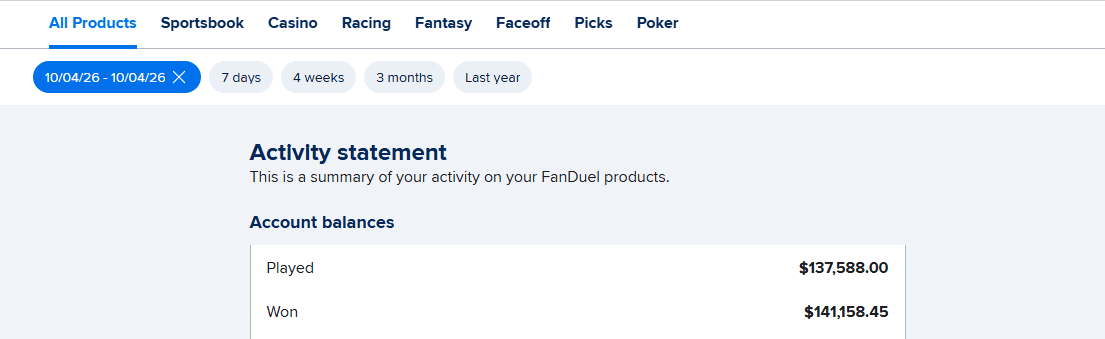
Reality check notifications alert you to how long you have been actively betting in a session. These notifications interrupt the hypnotic state that extended betting sessions can create and prompt you to evaluate whether you want to continue. Account activity statements provide a complete record of your betting history, including deposits, withdrawals, wins, and losses, giving you an objective view of your financial relationship with the sportsbook.
Use every one of these tools that your sportsbook offers. They exist because the gambling industry has learned, sometimes through painful experience, that responsible gambling protections benefit everyone — the bettor, the sportsbook, and the broader industry. There is zero downside to having guardrails in place, and the bettors who set them proactively are the ones least likely to ever need them.
Check our results page for an example of what transparent, accountable betting looks like in practice, and visit our NFL picks page to see how disciplined handicapping produces sustainable results over time.
That same logic carries over to the Kalshi and Polymarket tribal lawsuit, which covers the adjacent setup in detail.
Related Strategy Reading
For deeper context on the angles covered above, our analysis of sports betting mistakes to avoid and magic pistons 8 seed upset pairs well with this guide; our sports picks reflect these same principles applied to live games.
Frequently Asked Questions
Is Sports Betting Addictive?
Sports betting can be addictive for a percentage of participants, similar to alcohol, shopping, or other activities that involve risk, reward, and neurochemical stimulation. The key factors that influence susceptibility are genetic predisposition, environmental exposure, stress levels, and the presence or absence of disciplined boundaries. Setting firm financial and behavioral guardrails before you begin betting significantly reduces the risk of developing problematic patterns. Most sports bettors enjoy wagering responsibly without issues, but awareness of the potential for addiction is an essential part of making an informed decision about whether and how to participate.
What Percentage of Sports Bettors Develop Gambling Problems?
Research suggests that approximately 1-3% of the general population experiences some form of problem gambling, with rates among active sports bettors potentially somewhat higher due to the frequency and accessibility of modern wagering. The important context is that problem gambling exists on a spectrum — from mild issues with impulse control to severe addiction — and that early intervention produces significantly better outcomes than waiting until the problem becomes severe. If you notice early warning signs in your own behavior, addressing them immediately is far more effective than hoping they resolve on their own.
Can I Enjoy Sports Betting Responsibly on a Tight Budget?
Absolutely. Responsible betting has nothing to do with the size of your bankroll and everything to do with the discipline you bring to managing it. A bettor wagering $5 per game from a $250 bankroll can have a perfectly enjoyable, sustainable, and responsible experience — arguably more enjoyable than a bettor wagering $500 per game from a $5,000 bankroll without proper discipline. The percentage-based approach to unit sizing scales to any budget, and the analytical enjoyment of researching matchups and tracking results is identical regardless of the dollar amounts involved.
How Often Should I Take Breaks from Sports Betting?
I recommend taking at least one extended break of 2-4 weeks during each calendar year, ideally during a period when your primary betting sport is in its offseason. Additionally, any time you notice frustration, stress, or compulsive urges creeping into your betting behavior, take an immediate break until those feelings subside. Short breaks of 3-5 days after significant losing streaks are also healthy — they prevent the chase-loss impulse from taking hold and allow you to return with a clear analytical perspective. The sports will always be there when you come back.
What Should I Do If a Friend or Family Member Has a Gambling Problem?
Approach the conversation with empathy rather than judgment. Express specific concerns about behaviors you have observed rather than making broad accusations. Provide information about professional resources like the National Council on Problem Gambling helpline at 1-800-522-4700. Avoid enabling the behavior by lending money or covering debts related to gambling. And understand that recovery is a personal journey — you can offer support and resources, but the individual must ultimately make the decision to seek help. Your role is to be honest, caring, and consistent in your concern.
Does Following a Professional Handicapping Service Help with Responsible Betting?
A legitimate handicapping service can support responsible betting by providing structure, discipline, and accountability that solo bettors often struggle to maintain on their own. A good service like The Best Bet on Sports publishes consistent unit sizes, recommends conservative bankroll management, and presents transparent results that set realistic expectations. However, no service can substitute for personal discipline — you must still adhere to your own bankroll limits, loss caps, and behavioral guidelines regardless of how confident you are in the service's picks.
How Do I Know If My Betting Is Still Recreational and Healthy?
Your betting is healthy if you are wagering only money you can afford to lose, maintaining consistent unit sizes without chasing losses, enjoying the analytical process regardless of outcomes, not lying about or hiding your betting activity, not neglecting relationships or responsibilities because of betting, and able to take extended breaks without anxiety or compulsion. If all of those statements are true, you are engaging in responsible recreational betting. If any of them are no longer true, it is time to reassess your approach and consider whether adjustments or a break are needed.
The Best Bet on Sports · 1.5M followers on TikTok
Sports Betting TikTok is the live betting account behind The Best Bet on Sports, covering NFL, NCAAF, NBA, NCAAB, MLB and WNBA markets in real time. The account has been limited on all six major U.S. sportsbooks — FanDuel, DraftKings, Caesars, BetMGM, Fanatics and ESPN BET — for winning on live betting, with $367,520 in verified profit since 2005. View full profile →
Past results do not guarantee future performance. Must be 21 or older to wager.
Related Articles
Does a Picks Service Still Pay After Taxes?
First-Month Pricing on Picks Services: What You Should Actually Compare
Why NFL Spreads Are Harder to Beat Than College Spreads
What 'Vegas NFL Picks' Actually Means, and Who Is Really Selling Them
What Is a Good ATS Record in College Football? The Honest Math
Computer Picks vs. Expert Picks: What You're Buying
Get real live betting picks
From $39.95/mo · Cancel anytime · Email + Discord delivery
● Get The Picks
Choose your package
Tap any tier below to select · Subscribe in one tap
👇 Tap any package to select it
✓ You're selecting
25 Units · $99.95/month
25 unit picks per month. Sweet spot for most bettors — plenty of action without going all-in.
- ✓25 live betting selections/month
- ✓Email + Discord delivery
- ✓All sports (NFL, NCAAF, NBA, NCAAB, MLB)
- ✓Mix of 1, 2, 3, 5-unit rated plays
- ✓Cancel anytime
Secure PayPal · Cancel anytime · No hidden fees · 21+ · +$367K verified
+$367,520 verified · Limited on 6 sportsbooks · 20 years documented · See Proof
Join Our Newsletter
Get free expert sports picks and analysis delivered weekly.