Sports Betting Mistakes to Avoid: 12 Costly Errors That Drain Your Bankroll

Sports betting mistakes cost recreational bettors thousands of dollars every year, and the most damaging errors are not bad picks but bad process — betting without a bankroll plan, chasing losses after a tough day, letting emotional bias override analytical judgment, and spreading action across too many games without genuine edge on any of them. These structural mistakes account for the majority of money lost by recreational bettors, and every single one is completely preventable with discipline, awareness, and a commitment to systematic wagering principles.
Sports betting mistakes cost recreational bettors thousands of dollars every year, and the most damaging errors are not bad picks but bad process — betting without a bankroll plan, chasing losses after a tough day, letting emotional bias override analytical judgment, and spreading action across too many games without genuine edge on any of them. These structural mistakes account for the majority of money lost by recreational bettors, and every single one is completely preventable with discipline and awareness.
My name is Sports Betting TikTok, and after two decades of analyzing sports betting markets and working with bettors at every skill level, I have watched thousands of people repeat the same costly mistakes season after season. The frustrating part is that most of these bettors are intelligent, knowledgeable sports fans who understand their sport well enough to pick winners at a reasonable rate. They lose money not because their picks are terrible, but because their process around those picks is fundamentally broken. At The Best Bet on Sports, we believe that understanding what not to do is just as important as knowing what to do — and for beginners, it might be even more important. Here are the 12 most common and most costly sports betting mistakes, why they destroy bankrolls, and exactly how to fix them.
What Is the Biggest Mistake Sports Bettors Make?
The single most damaging mistake is betting without a defined bankroll and consistent unit sizing. If you do not set aside a specific amount of money exclusively for sports betting and commit to a fixed percentage per wager, you are gambling blindly — making decisions with no financial framework to protect you from the inevitable losing streaks that every bettor, regardless of skill level, will experience.
A solid rule is never risking more than 1-3% of your total bankroll on a single wager. On a $1,000 bankroll, each bet should be between $10 and $30. This sizing ensures that even a brutal losing streak of 10 consecutive losses — which happens more often than most bettors expect — costs you only 10-30% of your bankroll rather than wiping you out entirely.
Without this discipline, the math works against you relentlessly. A bettor who starts the weekend with $500 in their account and bets $100 per game needs only five losses — which can happen in a single afternoon — to be completely broke. That same bettor with a $500 bankroll betting $15 per game (3%) needs 33 consecutive losses to go broke. The difference between these two approaches is not skill or knowledge — it is pure process discipline.
Why Is Chasing Losses So Dangerous to Your Bankroll?
Chasing losses is the act of increasing your bet sizes after losing in an attempt to recover money quickly. This behavior is driven by a powerful psychological impulse — the desire to return to breakeven — but it is one of the most destructive patterns in all of sports betting.
The math is unforgiving and it works against the chaser with compounding force. If you lose a $50 bet and then bet $100 to get even, you have now doubled your exposure on what is almost certainly a less-researched, more impulsive play than the original bet. If that second bet loses, you are down $150 instead of $50, and the impulse to bet $200 on the next game becomes even stronger. This escalation cycle can turn a manageable $50 loss into a $500 or $1,000 disaster in a single day.
| Scenario | Bet 1 Loss | Chase Bet 2 | Chase Bet 3 | Total Exposure | Worst Case Loss |
|---|---|---|---|---|---|
| No chasing | $50 | $50 (standard) | $50 (standard) | $150 | $150 |
| Mild chase | $50 | $100 | $150 | $300 | $300 |
| Aggressive chase | $50 | $100 | $250 | $400 | $400 |
| Tilt chase | $50 | $200 | $500 | $750 | $750 |
Smart bettors at The Best Bet on Sports understand that losing streaks happen to every bettor, including the best professionals in the world. A handicapper hitting at 57% — an excellent long-term rate — will experience runs of 5-7 consecutive losses multiple times per season. The key is keeping your unit size consistent through those inevitable cold stretches. The edge materializes over hundreds of bets, not over an afternoon of escalating desperation.
Are You Betting with Your Heart Instead of Your Head?
Fan bias is one of the most pervasive and most difficult-to-eliminate leaks in a bettor's strategy. Betting on your favorite team because you want them to win, rather than because your analysis supports the bet, is entertainment, not investing. The two are fundamentally different activities, and conflating them is a fast track to losing money on the games where your judgment is most compromised.
I have been a lifelong football fan, and early in my career I had to learn this lesson the hard way. I was betting on my favorite team in situations where the data clearly said the other side was the better play, because I could not separate my emotional investment from my analytical assessment. The day I started either passing on my team's games entirely or betting against them when the numbers supported it was the day my results improved meaningfully.
If you cannot honestly and objectively evaluate your team's weaknesses — their offensive line deficiencies, their coaching limitations, their situational tendencies — you should skip those games entirely. There are 200-plus NFL games per season and thousands of NBA and MLB games. Missing the 16-17 games involving your favorite team is a tiny sacrifice that protects your bankroll from your worst analytical blind spot.
How Many Games Should You Bet Per Day?
Overbetting volume is a sneaky mistake because it feels productive. Bettors who research 14 NFL games and bet 12 of them feel like they did the work and earned their action. In reality, they diluted whatever edge they had on their 3-4 strongest plays by adding 8-9 marginal plays that carry little or no edge.
Professional handicappers, myself included, typically focus on 2-5 strong plays per day in our primary sport. These are games where we have identified genuine analytical value — a line we believe is wrong by a meaningful margin based on specific factors we can articulate clearly. The other games are passes, not because we do not have opinions on them, but because our opinions do not rise to the level of confidence that justifies risking money.
Quality always beats quantity in football betting and every other sport. A bettor who bets 3 games per week at 58% will dramatically outperform a bettor who bets 15 games per week at 53%, even though both are technically profitable in isolation. The first bettor's results are driven by genuine edge; the second bettor's results are driven by noise that could easily flip to negative.
What Role Does Line Shopping Play in Avoiding Mistakes?
Failing to shop for the best line is like paying full retail price when the store next door has the same product on sale. The difference between -110 and -105 juice, or between -3 and -2.5 on a key number, might seem trivial on any individual bet. But over hundreds of bets across a season, those small differences compound into thousands of dollars of impact on your bottom line.
A bettor placing 200 bets per season at -110 needs to win 52.4% to break even. That same bettor at -105 needs only 51.2%. Over 200 bets at $100 per wager, the difference in breakeven threshold translates to approximately $2,400 in annual value. That is significant money earned simply by taking 60 seconds to check an additional sportsbook before placing your bet.
You should maintain accounts at a minimum of 3-4 sportsbooks and ideally 6-8. Before placing any bet, check all of them and take the best available number. This habit alone, applied consistently, will improve your annual results more than any other single adjustment you can make.
Do Parlays Really Hurt Your Bottom Line?
Parlays are the single most popular bet type among recreational bettors and simultaneously the single most profitable bet type for sportsbooks. That correlation should tell you everything you need to know about whether parlays are good for your bankroll.
The mathematical problem with parlays is compounding probability decay. Each leg you add to a parlay multiplies the probability that you lose, while the payout increase does not adequately compensate for the added risk. A two-team parlay at standard odds pays roughly 2.6-to-1, but the true fair odds for two 50/50 propositions would be 3-to-1. That 0.4 units of built-in house edge on every two-team parlay compounds dramatically as you add legs.
The sportsbook's margin on a standard single bet is approximately 4.5%. On a two-team parlay, it is approximately 10%. On a four-team parlay, it is approximately 25%. You are paying exponentially more juice for the privilege of combining bets, and unless you have a substantial edge on every individual leg, the math destroys you over time.
Stick to straight bets for the vast majority of your action. If you enjoy the excitement of parlays, treat them as entertainment with a separate, small budget — not as a core component of your betting strategy.
Are You Ignoring Your Betting Records?
If you are not tracking every bet you place, you have no idea whether your approach is actually profitable. You might feel like you are winning based on selective memory — the big hits stand out while the grinding losses fade — but feelings are not data.
Keep a detailed log that includes the date, sport, league, bet type, specific selection, odds at time of bet, closing line, stake, and result. Use a spreadsheet, a dedicated tracking app, or even a physical notebook — the format matters far less than the consistency.
After a few months of diligent tracking, patterns emerge that are invisible without data. You might discover that you crush NFL totals but lose consistently on NBA spreads. You might find that your Thursday Night Football plays are significantly more profitable than your Sunday afternoon plays. You might realize that your player prop bets are your strongest category while your game spreads are breakeven. That data is genuinely invaluable because it tells you where to concentrate your action and where to reduce or eliminate it.
Check how professional services track their results and transparency to see what rigorous record-keeping looks like in practice.
Should You Follow Public Betting Trends Blindly?
Blindly following where the public money is flowing rarely produces long-term profits, but blindly fading the public is equally unproductive. Both approaches treat public betting data as a standalone indicator when it is actually just one input in a broader analytical framework.
Sportsbooks adjust lines to balance their exposure, which means popular sides often see their lines move to less favorable positions by game time. A team attracting 75% of public bets has had its line adjusted by the sportsbook to account for that one-sided volume. By the time you bet that same side, the value has been squeezed out of the number.
The useful signal from public betting data is the discrepancy between public betting percentage and line movement. When a team attracts heavy public money but the line moves in the opposite direction, sharp professional money is on the other side in sufficient volume to counteract the public weight. This reverse line movement is a meaningful handicapping signal — not because the public is always wrong, but because it tells you where the professional market disagrees with recreational perception.
What Other Costly Mistakes Should You Watch For?
Ignoring key numbers in football is a mistake that costs bettors meaningful value every season. The numbers 3 and 7 occur as winning margins far more frequently than any other final-score differentials in the NFL, because of the scoring structure of football. Understanding when a line sits on or near these key numbers — and how that affects the probability of covering — is essential for evaluating football spreads and constructing teasers. A half-point of line movement through the number 3 changes the cover probability by roughly 4-5%, far more than a half-point move through other numbers.
Betting under the influence of alcohol is a mistake that sounds obvious but traps bettors routinely, particularly during Sunday NFL sessions that coincide with social gatherings. Alcohol impairs judgment, reduces impulse control, and encourages exactly the kind of emotional, reckless decision-making that drains bankrolls. Place your bets when you are sharp and focused, not when you are drinking with friends.
Overreacting to one game is a form of recency bias that destroys analytical discipline. A team losing badly in Week 1 does not mean they are a 4-win team. A quarterback throwing four touchdowns on Monday Night Football does not mean he is suddenly elite. Small sample sizes are inherently misleading, and adjusting your future bets dramatically based on a single data point is statistically indefensible.
Not understanding bet types before wagering real money is a beginner mistake that is entirely avoidable. Learn the mechanics, payouts, and break-even rates of moneylines, spreads, totals, props, and parlays before risking a single dollar. The time investment is minimal and the protection it provides is substantial.
How Can You Start Fixing These Mistakes Today?
The first step is honesty. Review your betting history — or start tracking it now if you have not been — and identify which of these 12 mistakes apply to your approach. Most bettors will recognize at least 3-4 patterns from this list in their own behavior. The awareness itself is valuable because it transforms unconscious habits into conscious decisions that you can change.
Then commit to a structured approach: set a bankroll, define your unit size, track every single wager, shop for the best lines at multiple sportsbooks, and only bet on games where your research has identified genuine value that you can articulate clearly. Pass on everything else.
Working with experienced sports handicappers can accelerate your learning curve by giving you a model of disciplined, analytical betting to learn from. The Best Bet on Sports has spent 20 years refining data-driven approaches that help bettors avoid exactly these pitfalls. Visit our results page to see what consistent, disciplined handicapping produces over multiple seasons, and check our NFL picks page to experience our analytical approach firsthand.
Our coverage of whether a pick service can fix bad betting habits walks through how this plays out in practice.
Related Strategy Reading
For deeper context on the angles covered above, our analysis of responsible sports betting guide and magic pistons 8 seed upset pairs well with this guide; our sports picks reflect these same principles applied to live games.
Frequently Asked Questions
What Is the Number One Mistake New Sports Bettors Make?
The number one mistake is betting without a bankroll management plan. Without predetermined unit sizes, a defined total bankroll, and explicit loss limits, bettors make inconsistent wagering decisions driven by emotion rather than strategy. This single structural error — lacking a financial framework — leads to most of the other mistakes on this list: chasing losses, overbetting volume, increasing unit sizes impulsively, and wagering money that should go toward essential expenses. Fix this one mistake and many of the others become significantly less likely.
How Many Bets Should a Beginner Place Per Day?
Beginners should start with 1-3 bets per day at absolute most, focusing exclusively on sports and bet types they understand well. Place wagers only when you have identified specific, articulable value in the line — not when you simply have an opinion about who will win. As your tracking data accumulates and you can identify which bet types and sports produce your best results, you can selectively increase your volume in your strongest areas. But even experienced professionals rarely exceed 5-7 plays per day, and most operate in the 2-5 range.
Can Tracking My Bets Really Improve My Results?
Tracking every bet is one of the highest-impact habits in all of sports betting, and the improvement it drives is both measurable and substantial. Without tracking, you are operating on selective memory and gut feeling — both of which are unreliable and systematically biased toward overestimating your success. With tracking, you gain objective data that reveals your true strengths and weaknesses across different sports, bet types, bet sizes, and time periods. After 200-300 tracked bets, you will have enough data to make statistically meaningful observations about your process, and those observations will directly inform adjustments that improve your bottom line.
Is It Really That Bad to Bet on My Favorite Team?
It is not inherently bad if you can be completely objective about your team's strengths and weaknesses. But most bettors cannot. Research in behavioral psychology consistently shows that emotional attachment creates systematic bias in judgment — fans overestimate their team's probability of winning and underestimate risk factors that would be obvious if they were evaluating a neutral team. If you are going to bet on your favorite team, treat those bets with extra scrutiny: require a higher confidence threshold, compare your assessment against neutral analytical sources, and track your favorite-team bets separately to see whether your results in those games match your results on other teams.
How Do I Know If I Am Chasing Losses?
The clearest indicator of chasing is any time your bet size increases after a loss for the explicit purpose of recovering the lost money rather than because your analytical confidence on the next play justifies a larger position. Other signs include betting on games you did not originally plan to bet, shortening your research process to get action placed faster, and feeling urgency or desperation rather than calm analytical confidence. If you catch yourself thinking any variation of "I just need one good hit to get back to even," you are chasing, and the correct response is to stop betting for the day and return tomorrow with a clear head and your standard unit size.
What Is the Fastest Way to Improve as a Sports Bettor?
The fastest single improvement most bettors can make is eliminating their weakest habit from this list. For most people, that means implementing proper bankroll management with fixed unit sizes, which immediately reduces variance and protects against catastrophic losses. The second fastest improvement is reducing bet volume to only your highest-confidence plays, which concentrates your action on your genuine edge and eliminates the noise from marginal bets. These two adjustments, applied consistently, will improve most recreational bettors' results within their first month.
Should I Use a Betting System or Strategy?
Systems that claim to guarantee profits through specific staking patterns — like the Martingale system of doubling after losses — are mathematically proven to fail over time. No staking system can overcome a negative edge on the underlying picks. However, a structured analytical strategy — a repeatable process for evaluating games, identifying value, managing your bankroll, and tracking results — is essential for long-term success. The distinction is between a mechanical betting formula, which does not work, and a disciplined analytical process, which does. Professional sports handicappers succeed through process, not through magic formulas.
The Best Bet on Sports · 1.5M followers on TikTok
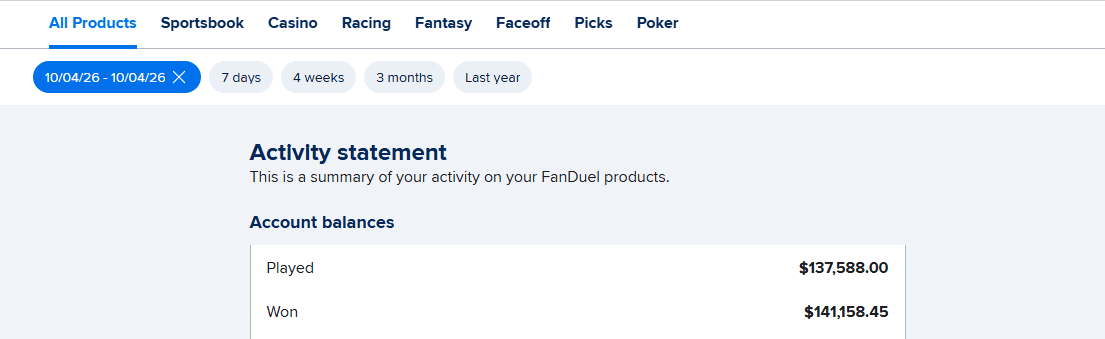
Sports Betting TikTok is the live betting account behind The Best Bet on Sports, covering NFL, NCAAF, NBA, NCAAB, MLB and WNBA markets in real time. The account has been limited on all six major U.S. sportsbooks — FanDuel, DraftKings, Caesars, BetMGM, Fanatics and ESPN BET — for winning on live betting, with $367,520 in verified profit since 2005. View full profile →
Past results do not guarantee future performance. Must be 21 or older to wager.
Related Articles
Sports Picks Service vs Doing It Yourself: Which Approach Wins?
Why Live Betting Services Cost More Than Pregame Pick Services
Closing Line Value in Sports Betting: Why CLV Matters Most
Sports Betting Juice and Vig Explained: What It Costs You
Can You Make a Living Sports Betting? A Realistic Look
Should You Bet Every Pick the Same Size?
Get real live betting picks
From $39.95/mo · Cancel anytime · Email + Discord delivery
● Get The Picks
Choose your package
Tap any tier below to select · Subscribe in one tap
👇 Tap any package to select it
✓ You're selecting
25 Units · $99.95/month
25 unit picks per month. Sweet spot for most bettors — plenty of action without going all-in.
- ✓25 live betting selections/month
- ✓Email + Discord delivery
- ✓All sports (NFL, NCAAF, NBA, NCAAB, MLB)
- ✓Mix of 1, 2, 3, 5-unit rated plays
- ✓Cancel anytime
Secure PayPal · Cancel anytime · No hidden fees · 21+ · +$367K verified
+$367,520 verified · Limited on 6 sportsbooks · 20 years documented · See Proof
Join Our Newsletter
Get free expert sports picks and analysis delivered weekly.