Arbitrage Betting Strategy and Sportsbook Account Limits May 2026: Why Arb Windows Get Smaller Every Year

Arbitrage betting locks profit by exploiting price gaps between sportsbooks. In May 2026, account limits cut arb windows fast for any player who actually wins.
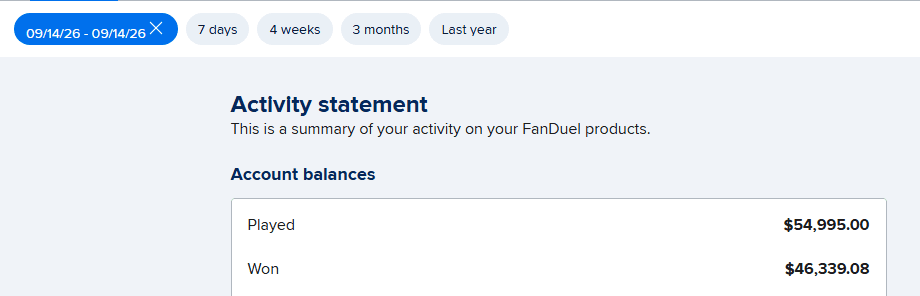
Arbitrage betting in May 2026 is a math game with a shrinking edge — the math is simple, but the operational risk is the entire story. An arb is a position taken across two or more sportsbooks where the combined implied probabilities sum to less than 100%, locking a guaranteed profit margin no matter which side wins. The math takes 30 seconds. The operational reality takes years to absorb, because every U.S. sportsbook flags arbitrage activity and limits or closes accounts within weeks. Across the +$367,520 in verified profit our team at The Best Bet on Sports has booked across all six major U.S. sportsbooks (FanDuel, DraftKings, Caesars, BetMGM, Fanatics, ESPN BET) since 2005, every one of those books has limited us — some severely — for winning at live betting. That is the public, verifiable proof of how books treat sustained edge: they price you out, they cap you, then they close you. Arbitrage accelerates that timeline, which is why the long-term winners we work with at The Best Bet on Sports treat arb as a short-term tactic, not a strategy.
The popular story about arbitrage betting is that it is a "free" guaranteed profit. The actual story is that the U.S. retail sportsbook environment in 2026 has fully matured account-monitoring infrastructure that flags arbers within weeks. The math edge is real. The operational runway is short. Both facts have to be in the room before any bettor commits capital.
What is arbitrage betting?
Arbitrage betting (often shortened to arbing or sure betting) is placing wagers across two or more sportsbooks on opposite sides of the same event, sized so that the combined positions guarantee a profit regardless of outcome. The opportunity exists whenever two books price the same market with implied probabilities that sum to less than 100%.
The simplest example is a tennis match where Book A has Player 1 at +110 (47.6% implied) and Book B has Player 2 at +110 (47.6% implied). Combined implied: 95.2%. The 4.8% gap is the arbitrage margin. Stake the position correctly across both books and you lock that 4.8% as profit no matter who wins.
Most U.S. arbs in 2026 are smaller than that — typically 0.5% to 2% margins, occasionally 3-4% on illiquid markets like WNBA props or college basketball alternates.
How do you calculate arbitrage stakes correctly?
Arbitrage staking math is straightforward but unforgiving. The formula:
Stake on Side A = (Total Bankroll × Decimal Odds B) / (Decimal Odds A + Decimal Odds B)
A worked example. You want to risk $1,000 total on a two-way arb:
- Book A: Side A at +110 (decimal 2.10)
- Book B: Side B at +105 (decimal 2.05)
Stake on Side A: (1,000 × 2.05) / (2.10 + 2.05) = $493.98 Stake on Side B: (1,000 × 2.10) / (2.10 + 2.05) = $506.02
Side A wins → $493.98 × 2.10 = $1,037.36 (profit $37.36) Side B wins → $506.02 × 2.05 = $1,037.34 (profit $37.34)
The lock is roughly 3.7% on this position. The math does not care which side wins. The risk is operational, not mathematical.
Why account limits are the entire story in May 2026
Sportsbooks operate trading desks. Those desks identify and limit winning accounts using a combination of automated detection and manual review. Triggers include:
| Trigger | Typical action | Time to flag |
|---|---|---|
| Stake sizing patterns matching arb formulas | Stake limits or closure | 2-6 weeks |
| Repeated bets within 60 seconds of line moves | CLV monitoring → limits | 4-8 weeks |
| Hedging against same-account positions at second book (shared device fingerprint) | Closure | 1-3 weeks |
| Win rate above 53% over 200+ bets | Automatic limits | 8-16 weeks |
| Manual identification by trader | Closure with funds returned | Immediate to weeks |
Every U.S. sportsbook tracks these patterns. The team at The Best Bet on Sports has been limited on all six major U.S. sportsbooks for sustained edge in live betting — not arbitrage specifically, but the same operational pattern of consistent winning. Books treat any sustained-edge play the same way they treat arbitrage. For the full proof, see our verified results page, where every winning ticket is logged across multiple operators.
What types of arbitrage actually work in 2026?
Five categories of arb opportunities still exist in May 2026, ranked by margin and operational risk:
1. Promotional arbs — Boosted odds, deposit matches, and risk-free bet conversions. Typical margin 5-15%. Operational risk: low (these are intended customer offers). Sustainability: limited to one-time use per book. 2. Live in-game arbs — Sportsbooks update live lines at different speeds. Margins 1-3%, but windows close in seconds. Requires multiple monitors and fast clicks. Operational risk: high; live betting is the most-monitored market. 3. Player prop arbs across books — Different books offer different prop lines (passing yards over/under, points scored over/under). Margins 0.5-2%. Operational risk: medium. 4. Pre-game line shopping arbs — Standard sides and totals where books are slow to follow line moves. Margins 0.5-1.5%. Operational risk: medium. 5. Futures arbs — Long-form season win totals or playoff series prices. Margins 1-3% but capital tied up for months. Operational risk: low to medium.
The math on each category is similar. The viability is entirely a function of how long your accounts stay open at usable stake limits.
What is the difference between arbitrage and middling?
Middling is a related strategy that bets both sides of a moved line, with the goal of winning both sides if the final result lands between the two prices. Arbitrage locks a guaranteed profit no matter the outcome; middling pays a much larger profit if the result lands in the middle, but loses one side if it does not.
Quick comparison:
| Strategy | Outcome if no middle | Outcome if middle hits | Account flag risk |
|---|---|---|---|
| Arbitrage | Small guaranteed profit | Same small profit | High |
| Middling | Small loss (juice on one side) | Large profit | Medium |
| Line shopping | Best price on one side only | Best price on one side only | Low |
For most bettors who want long-term account access, line shopping is the operationally safer alternative — it captures the same price advantage without the patterned staking that triggers arb-detection algorithms. For our take on what works long term, see our sports handicappers page.
What stake sizing patterns flag arbitrage to sportsbooks?
Sportsbook automated detection looks for combinations of:
- Stakes ending in odd dollar amounts (e.g., $493.98 or $506.02 from the worked example above)
- Bet timing within 30-60 seconds of an opening line on the second book
- Round-trip betting patterns where a player bets one side at one book and the other side at a paired book
- Repeated wagering on illiquid markets (WNBA, USFL, lower-tier soccer, niche tennis)
- Account funding patterns matching deposit-match-cycle behavior
The simplest flag is the odd-dollar stake. A bet of $493.98 is mathematically optimal but operationally obvious. Some arbers round to even dollars and accept slightly imperfect arb math to avoid triggering detection. The trade-off is a few basis points of margin in exchange for longer account life.
Is arbitrage betting legal?
Arbitrage betting is legal in every U.S. state where sports betting itself is legal. It is not a form of fraud or deception — you are simply placing wagers across multiple operators. However, every sportsbook reserves the right to limit or close any account at their discretion under their terms of service. Limiting an arber is not illegal on the sportsbook's part; it is enforcement of their commercial right to refuse business.
Practically, arbitrage profits are taxable as gambling income in the U.S. and must be reported on Schedule 1 of the federal tax return. Net loss in any given year cannot exceed gambling winnings unless the bettor qualifies as a professional gambler under IRS rules. Bettors should consult a qualified tax professional rather than relying on online guidance for filing.
If this is your entry point, pair it with our guide to middling and scalping for a locked edge.
What is the operational alternative for long-term winners?
The operational alternative to arbitrage for long-term edge is what our team has done for 20+ years: build positions that are capacity-constrained by markets, not by sportsbook stake limits. Live betting provides this. Markets close in seconds, books cannot fade every position fast enough, and the patterns required to win do not match the automated stake-pattern detection that flags arbers within weeks.
The trade-off is real: live betting requires research, in-game discipline, and fast decision-making. It is not a free arb. But it survives sportsbook limit cycles in a way arbitrage simply does not. The Best Bet on Sports has used live betting as its primary edge across two decades and six operator limits, and the live betting picks service is built around posting positions in real time across that six-book network. For traders who want the package directly, our paid live betting packages post 1, 2-3, and 5-unit positions across the operator stack.
For broader rankings of who actually wins long-term in this space, see our best sports handicappers page.
Related reading: our line shopping sports betting guide, sports betting juice and vig explained, and why sportsbooks limit winning live bettors all walk through adjacent angles on the operational reality behind sustained edge plays.
Frequently Asked Questions
What is arbitrage betting in simple terms?
Arbitrage betting is placing wagers across two or more sportsbooks on opposite sides of the same event, sized so that combined implied probabilities sum to less than 100%. The position locks a guaranteed profit regardless of outcome. Typical U.S. arbitrage margins in 2026 are 0.5% to 2%, occasionally 3-4% on illiquid markets. The math is simple; the operational risk of sportsbook account limits is the entire story.
How long can I arbitrage bet before my accounts get limited?
Most arbers see initial stake limits within 2 to 6 weeks of consistent activity. Full account closure typically follows within 8 to 16 weeks. Time to flag depends on stake sizing patterns, win rate, market choice, and how aggressively the bettor uses promotional offers. Disguising arb behavior — rounding stakes, varying timing, betting non-arb sides occasionally — can extend account life but cannot prevent eventual limits.
Is arbitrage betting legal in the United States?
Arbitrage betting is legal in every U.S. state where sports betting is legal. It is not fraudulent or deceptive activity. However, every sportsbook reserves the right to limit or close any account at their discretion under their terms of service, and they regularly exercise that right against arbitrage activity. Profits are taxable as gambling income and must be reported on the federal tax return.
What is the difference between arbitrage and line shopping?
Line shopping is taking the best available price on one side of a market across multiple sportsbooks. Arbitrage is taking opposing sides of the same market across multiple sportsbooks to lock a guaranteed profit. Line shopping has minimal account-flag risk and is a sustainable long-term edge. Arbitrage has high account-flag risk and is structurally unsustainable past a 2-4 month window per book.
How do sportsbooks detect arbitrage betting?
Sportsbook automated detection looks for stake amounts ending in odd dollar values, bet timing within 30-60 seconds of opposing line moves, round-trip betting patterns across paired books, illiquid-market wagering, and deposit-match-cycle patterns. Manual review by trading desks supplements automated flags. Win rate above 53% over 200+ bets typically triggers limits regardless of strategy.
What arbitrage opportunities still exist in May 2026?
Five categories still produce real opportunities: promotional offers (5-15% margins, one-time per book), live in-game arbs (1-3% margins, seconds-long windows), player prop arbs across books (0.5-2%), pre-game line shopping arbs (0.5-1.5%), and futures arbs (1-3%, with capital tied up for months). Promotional arbs offer the highest margin but cannot be repeated. Live arbs offer recurring opportunities but trigger limits fastest.
Is arbitrage a sustainable long-term betting strategy?
Arbitrage is not sustainable as a primary strategy past a 2-4 month window per sportsbook account. Once an account is limited or closed, the bettor must either fund a new account at the same book (often blocked by ID matching) or move to a new operator. Long-term winning bettors typically migrate from arbitrage to capacity-constrained markets like live betting, where market structure prevents books from fading every position fast enough.
The Best Bet on Sports · 1.5M followers on TikTok
Sports Betting TikTok is the live betting account behind The Best Bet on Sports, covering NFL, NCAAF, NBA, NCAAB, MLB and WNBA markets in real time. The account has been limited on all six major U.S. sportsbooks — FanDuel, DraftKings, Caesars, BetMGM, Fanatics and ESPN BET — for winning on live betting, with $367,520 in verified profit since 2005. View full profile →
Past results do not guarantee future performance. Must be 21 or older to wager.
Related Articles
Round Robin Parlay Strategy: When the Math Actually Works in Your Favor
The Closing Spread Misses by Ten Points
What If a Live Pick Is on the Other Side of Your Bet?
The 300-to-1 Rule: Why Your Parlay Pays Less Than the Slip Says
Your Live Betting Bankroll Is Not Your Bankroll — It's Your App Balance
Same-Game Parlay Blocked? Why Sportsbooks Reject Leg Combinations
Get real live betting picks
From $39.95/mo · Cancel anytime · Email + Discord delivery
● Get The Picks
Choose your package
Tap any tier below to select · Subscribe in one tap
👇 Tap any package to select it
✓ You're selecting
25 Units · $99.95/month
25 unit picks per month. Sweet spot for most bettors — plenty of action without going all-in.
- ✓25 live betting selections/month
- ✓Email + Discord delivery
- ✓All sports (NFL, NCAAF, NBA, NCAAB, MLB)
- ✓Mix of 1, 2, 3, 5-unit rated plays
- ✓Cancel anytime
Secure PayPal · Cancel anytime · No hidden fees · 21+ · +$367K verified
+$367,520 verified · Limited on 6 sportsbooks · 20 years documented · See Proof
Join Our Newsletter
Get free expert sports picks and analysis delivered weekly.