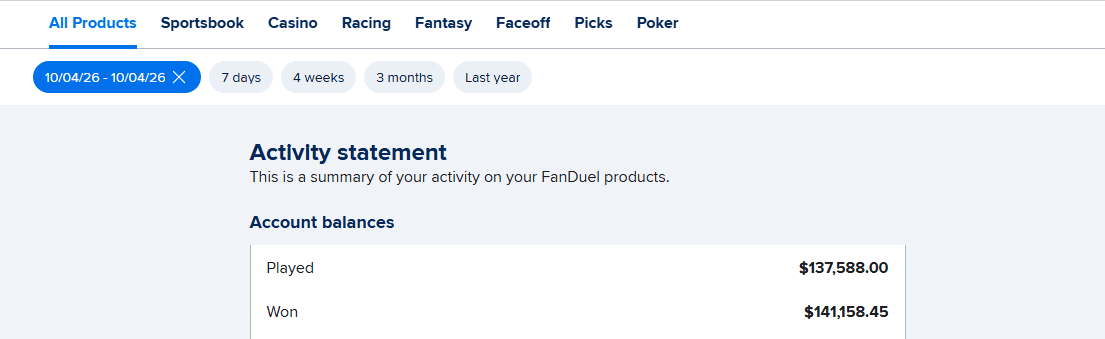
Can You Make a Living Sports Betting? A Realistic Look

Making a living sports betting is mathematically possible but practically achievable for fewer than one percent of all bettors, requiring a sustained win rate above 54 percent on sides and totals, a bankroll large enough to absorb inevitable losing streaks of 15 or more games, and the discipline to treat betting as a full-time analytical profession rather than a recreational hobby. This honest assessment covers the real math, lifestyle demands, risks, and what separates professional bettors from the losing majority.
# Can You Make a Living Sports Betting? A Realistic Look
Yes, it is technically possible to make a living from sports betting, but the honest answer is that fewer than 1% of bettors achieve it consistently. Making a full-time living requires a large bankroll, elite analytical skills, ironclad discipline, and the emotional resilience to endure losing streaks that would break most people. It is far harder and less glamorous than social media would have you believe.
I have spent 20-plus years in the sports handicapping industry, and I can count on two hands the number of people I have personally known who sustained full-time sports betting careers for a decade or more. At The Best Bet on Sports, we always give our readers the unvarnished truth, and this is one topic where honesty matters more than hype.
What Does the Math Actually Look Like?
Let us run the numbers on what professional sports betting requires. Assume you are an excellent handicapper with a 55% win rate on standard -110 sides and totals. That is a genuinely elite rate that only the best in the world sustain long-term.
At 55% with -110 juice, your return on investment is approximately 3.5% per unit wagered. If you bet 5 units per day on average at $500 per unit, your daily expected profit is roughly $87.50. Over a full year of betting, that works out to roughly $32,000 — before the IRS takes its share, which is the step that decides whether a picks service still pays after taxes. It is also worth knowing which skills actually transfer, because being good at fantasy football does not make you good at betting.
That is not nothing, but it also is not the lifestyle that Instagram touts portray. And remember, this assumes a 55% win rate sustained over an entire year, which requires extreme skill and is never guaranteed.
To make $75,000 or more, you would need either a higher win rate (extremely difficult), higher unit sizes (requiring a massive bankroll of $100,000 or more), or significantly more volume. Each of those options introduces additional risk and complexity.
How Large a Bankroll Do You Need?
The general rule is that you need enough bankroll to weather the inevitable downswings without going broke. Professional bettors typically maintain bankrolls equal to 50-100 times their standard unit size. Working with experienced sports handicappers can help you build that discipline faster.
If you are betting $500 per unit, that means keeping $25,000-$50,000 in your betting bankroll at all times. And this is money that cannot serve any other purpose. It cannot be your rent money, emergency fund, or retirement savings. It is working capital for your betting business.
For someone trying to generate a livable income, realistic starting bankrolls are often $50,000 or more. Most people do not have that kind of capital available for a high-risk venture, which is the first major barrier to going professional.
Track how professional services manage their bankrolls and document their results to understand the scale involved.
What Does Daily Life Look Like for a Professional Bettor?
Forget the image of someone casually checking their phone and cashing tickets. The daily reality of professional sports betting is grinding work.
A typical day involves:
- 3-5 hours of research including statistical analysis, injury reports, weather data, and line shopping
- Continuous line monitoring to catch favorable movements and get the best numbers
- Record keeping and model updating to refine your approach based on new data
- Managing accounts at multiple sportsbooks because no single book gives you the best line on every game
- Emotional management to stay disciplined through inevitable losing streaks
It is essentially a full-time analytical job with no benefits, no steady paycheck, and the constant psychological pressure of watching your income fluctuate based on outcomes you cannot control.
What Are the Biggest Risks of Betting Professionally?
Income volatility. Even the best professional bettors have losing months. Imagine going 3-4 weeks without a paycheck while also watching your working capital shrink. The financial stress is real and relentless.
Sportsbook limitations. Books actively identify and limit sharp bettors. If you are consistently winning, your account limits will be reduced, sometimes to trivially small amounts. This forces professionals to maintain dozens of accounts and find creative ways to get their action down.
Tax implications. Sports betting income is taxable, and the record-keeping requirements are significant. Professional bettors need to track every single wager for tax purposes, and the tax burden can significantly reduce your effective income.
Social isolation. Professional betting can be a lonely pursuit. The hours are odd, the work is solitary, and many people outside the industry do not understand or respect it as a legitimate career.
Health of your bankroll. A severe cold streak at the wrong time can threaten your entire operation. Even a 55% bettor has roughly a 5% chance of experiencing a 15-game losing streak over the course of a year. If that streak hits when your bankroll is already down, recovery becomes extremely difficult.
Is There a Middle Ground?
For most people, the most realistic and sustainable approach is treating sports betting as a profitable side pursuit rather than a primary income source. A bettor with a solid edge who bets part-time can generate meaningful supplemental income without the existential pressure of relying on betting to pay the bills.
This approach gives you:
- The freedom to skip games where you do not have a strong opinion
- Reduced emotional pressure since your livelihood does not depend on each bet
- The ability to grow your bankroll gradually without needing to withdraw for living expenses
- A career or primary income that provides stability and benefits
Pairing your own analysis with professional sports picks can help you maximize your part-time betting income by exposing you to edges you might miss on your own.
What Skills Do Professional Bettors Need?
If you are serious about pursuing betting professionally, here is what you need to develop:
- Statistical literacy and the ability to build or at least interpret quantitative models
- Discipline that borders on robotic in your adherence to bankroll rules
- Emotional control to make rational decisions during both winning and losing streaks
- Market awareness understanding how and why lines move
- Specialization in specific sports, leagues, or bet types where you can develop a genuine edge, whether that is NFL picks, NBA picks, or MLB picks
- Business acumen including tax planning, account management, and financial record keeping
The best professional bettors approach football betting and other markets the way a Wall Street trader approaches financial markets: with rigorous analysis, strict risk management, and zero emotional attachment to individual outcomes.
Should You Quit Your Job to Bet on Sports?
Almost certainly not. Even if you have a documented edge over several hundred bets, the variance and challenges of full-time betting make it an extraordinarily risky career move. The Best Bet on Sports consistently advises that sports betting should complement your financial life, not replace your primary income source.
If you are genuinely considering it, keep your day job for at least a full year while documenting your results and building your bankroll. If after 12 months of disciplined, tracked betting you are consistently profitable with a bankroll large enough to sustain your lifestyle through downswings, then you can begin to explore the transition.
Related Strategy Reading
For deeper context on the angles covered above, our analysis of free vs paid sports picks which is worth it and sports betting mistakes to avoid pairs well with this guide; our basketball betting reflect these same principles applied to live games.
Frequently Asked Questions
What percentage of sports bettors are profitable long-term? Estimates vary, but most industry professionals believe fewer than 3-5% of sports bettors show a long-term profit. The percentage who make enough to live on is significantly smaller, likely under 1%.
How long does it take to know if you have an edge? You need a minimum sample size of 500-1,000 tracked bets at consistent unit sizes to have reasonable confidence in your results. That typically means at least one full year of serious, disciplined betting across multiple sports and market conditions.
Can you make a living from sports betting part-time? Making a full living part-time is extremely difficult because you need volume to generate meaningful income. However, earning significant supplemental income through disciplined part-time betting is achievable for skilled bettors with adequate bankrolls and the patience to build results over hundreds of documented plays.
What bankroll do you need to consider betting professionally? Most full-time sports bettors maintain a minimum six-figure bankroll, with serious professionals operating with 00,000 or more. This requirement exists because account limitations force professional bettors to spread action across many books, and because surviving extended cold streaks without income disruption requires substantial capital reserves that the average bettor dramatically underestimates.
How do professional bettors deal with sportsbook limitations? Professional bettors manage limitations by maintaining accounts at dozens of sportsbooks, using betting exchanges, and sometimes working through agents who can place action without triggering individual limits. This operational complexity — maintaining multiple payment methods, tracking balances across accounts, managing withdrawal timing — is a full-time job beyond the handicapping itself that few aspiring professionals anticipate.
What is closing line value and why does it matter for professionals? Closing line value (CLV) measures how much better your bet price was compared to where the line closed at game time. Consistently beating the closing line is the strongest real-time indicator of a genuine edge because sportsbooks move lines based on sharp action. Professional bettors track CLV obsessively — if you regularly bet -3 and the game closes at -4, your process is sound even during losing stretches. Follow [NFL picks coverage](/nfl-picks) to see how line movement applies in practice.
Does following a professional picks service count as making a living betting? Following a picks service is a different activity from professional betting. You are purchasing analysis rather than developing your own edge. A subscriber who consistently profits from a reputable service like [The Best Bet on Sports](/sports-picks) may generate meaningful supplemental income, but they are not professional bettors — they are informed consumers of professional analysis, which is a financially sounder position for most people than attempting to develop an independent professional edge from scratch.
The Best Bet on Sports · 1.5M followers on TikTok
Sports Betting TikTok is the live betting account behind The Best Bet on Sports, covering NFL, NCAAF, NBA, NCAAB, MLB and WNBA markets in real time. The account has been limited on all six major U.S. sportsbooks — FanDuel, DraftKings, Caesars, BetMGM, Fanatics and ESPN BET — for winning on live betting, with $367,520 in verified profit since 2005. View full profile →
Past results do not guarantee future performance. Must be 21 or older to wager.
Related Articles
Why Live Betting Services Cost More Than Pregame Pick Services
Closing Line Value in Sports Betting: Why CLV Matters Most
Sports Betting Juice and Vig Explained: What It Costs You
Sports Betting Mistakes to Avoid: 12 Costly Errors That Drain Your Bankroll
Sports Picks Service vs Doing It Yourself: Which Approach Wins?
Are Early-Season NFL Lines Softer? 11 Seasons Tested
Get real live betting picks
From $39.95/mo · Cancel anytime · Email + Discord delivery
● Get The Picks
Choose your package
Tap any tier below to select · Subscribe in one tap
👇 Tap any package to select it
✓ You're selecting
25 Units · $99.95/month
25 unit picks per month. Sweet spot for most bettors — plenty of action without going all-in.
- ✓25 live betting selections/month
- ✓Email + Discord delivery
- ✓All sports (NFL, NCAAF, NBA, NCAAB, MLB)
- ✓Mix of 1, 2, 3, 5-unit rated plays
- ✓Cancel anytime
Secure PayPal · Cancel anytime · No hidden fees · 21+ · +$367K verified
+$367,520 verified · Limited on 6 sportsbooks · 20 years documented · See Proof
Join Our Newsletter
Get free expert sports picks and analysis delivered weekly.