USC Football Picks 2026: The Big Ten Travel Problem
By Sports Betting TikTok
USC football picks in 2026 hinge on geography. Big Ten membership put the Trojans on 2,500-mile eastbound road trips into noon Eastern kickoffs that land at 9 a.m. on a Pacific body clock, while the Coliseum delivers less home-field advantage than USC's national brand is priced for. The Best Bet on Sports is limited on all six major U.S. sportsbooks. Verified profit: $367,520+.
When USC left the Pac-12 for the Big Ten in 2024, the coverage focused on television money and recruiting footprints. The part that mattered for anyone pricing a Trojans game was simpler and more physical: a program that used to bus to Pasadena and fly ninety minutes to Tempe now flies across the continent for conference games, three time zones in the wrong direction, several times a year.
That is not a talking point. It is a scheduling variable with a measurable footprint on early-window performance, and the market applies a road adjustment far blunter than the actual effect. This page covers the travel and body-clock inputs on a USC number, why the Los Angeles Memorial Coliseum is an overvalued home field, what a late Pacific kickoff does to live betting liquidity, and how a Trojans Saturday runs on our side.
2,500 Miles Is Not the Same as a Road Game
Power ratings handle home field with a single adjustment, typically two to three points in college football, occasionally tuned by venue. What almost none of them do well is distinguish between kinds of road games. A Trojans trip to Palo Alto and a Trojans trip to Piscataway are both "road," and they are not remotely the same event.
The distance is the smaller half of it. Direction is the larger half. Eastbound travel compresses the traveler's day and forces the body clock forward, which is the harder adjustment; westbound travel extends the day and is comparatively benign. USC's Big Ten schedule is structurally eastbound, and the conference plays a nine-game slate across eighteen teams with no divisions, which means the specific trips vary year to year but the direction never does.
The effect also is not uniform across a game. It concentrates early — a flat opening drive, a step slow in coverage, a missed tackle angle in the first quarter — and it fades as adrenaline and the game itself take over. That shape is exactly why travel is a live betting input rather than a full-game one. A first-quarter under and a live Trojans side after the market extrapolates the slow start into a full-game verdict are two positions in the same game, in the same direction of reasoning. The generic version of this framework across the conference sits on the Big Ten football picks 2026 page.
The 9 A.M. Kickoff Nobody Calls a 9 A.M. Kickoff
A noon Eastern kickoff is noon to the broadcast and 9 a.m. to a body that has spent its life in Pacific time. Warmups start around 7 a.m. body time. Research on circadian rhythm and athletic performance is consistent on the shape of the curve: output peaks in the late afternoon and early evening and bottoms out in the early morning, across reaction time, power output, and core temperature.
Football's version of that curve is unglamorous. It looks like a scripted opening drive executed at ninety percent, a defensive back a half-step late on a route he plays correctly every other week, and a fourteen-point hole before the offense wakes up. The market knows West Coast teams start slowly in early Eastern windows. What it prices poorly is how quickly the effect washes out — which is why the second-quarter live number in these games is where the actual value tends to sit.
The Coliseum Is a Landmark. It Is Not Bryant-Denny.
The Los Angeles Memorial Coliseum opened in 1923, hosted the 1932 and 1984 Olympic Games, and will host again in 2028. It is one of the great buildings in American sport. It is also, from a purely acoustic standpoint, a mediocre home-field advantage — a wide open bowl with a track-and-field heritage and a peristyle end that lets sound escape rather than trapping it over the field.
Set that against the venues USC now visits: enclosed, steeply decked Big Ten stadiums built to hold noise on top of a visiting offense. The gap in actual crowd effect is real, and it runs the opposite direction from the gap in brand prestige. USC is a national program, national programs draw public money, and public money buys the reputation rather than the decibels.
The Coliseum edge that does hold up has nothing to do with noise. It is September sunshine on an open bowl with limited shade, against a visitor that flew west from a cooler climate. Like most conditioning variables, it is a fourth-quarter effect, not a first-quarter one — and like most fourth-quarter effects, it shows up in the live market before it shows up in a box score.
USC Kickoff Slots, Body Clocks, and Market Conditions
Kickoff time and travel direction interact, and the interaction determines both how the Trojans are likely to start and how carefully the live number will be managed. This table maps the recurring USC slots to the physical reality and the market condition each one produces.
| Slot | Body Clock | Travel | Typical Read |
|---|---|---|---|
| Noon ET road game (Big Ten East trip) | 9:00 a.m. Pacific; warmups near 7 a.m. body time | 2,300–2,500 miles, three time zones eastbound | First-quarter under; live Trojans side once the market over-extrapolates the slow start |
| 3:30 p.m. ET road game | 12:30 p.m. Pacific — near-neutral | Same trip, materially better window | Travel discount often still priced in; look at the Trojans side |
| Midwest road trip (Big Ten, non-coastal) | Two time zones eastbound | ~1,700–2,000 miles | Weather crossover in November matters more than the flight |
| Coliseum afternoon game (September) | Neutral for USC; visitor on a westbound trip | Visitor travels; direct sun on an open bowl | Visitor conditioning fade late; home edge smaller than the brand suggests |
| 7:30 p.m. PT / 10:30 p.m. ET home game | Optimal for USC; late for an eastern visitor | Last game on the U.S. board | Thin live liquidity; slower correction after real in-game news |
The second row is the one most bettors get backwards. A 3:30 p.m. Eastern kickoff is a 12:30 p.m. Pacific kickoff — a near-neutral window — but the same "West Coast team traveling east" discount frequently gets applied anyway, because the shorthand has replaced the reasoning. That is the cleanest pre-game USC spot on the board.
Membership
Get the picks
Live betting picks across NFL, NCAAF, NBA, NCAAB, MLB and WNBA — delivered by Email and Discord the moment we spot value.
● Get The Picks
Choose your package
Tap any tier to select · Subscribe in one tap
👇 Tap any package to select it
✓ You're selecting
25 Units · $99.95/month
25 unit picks per month. Sweet spot for most bettors — plenty of action without going all-in.
- ✓25 live betting selections/month
- ✓Email + Discord delivery
- ✓All sports (NFL, NCAAF, NBA, NCAAB, MLB)
- ✓Mix of 1, 2, 3, 5-unit rated plays
- ✓Cancel anytime
Secure PayPal · Cancel anytime · No hidden fees · 21+ · +$367K verified
Last Game on the Board: The Late Pacific Live Market
A 7:30 p.m. Pacific kickoff is 10:30 p.m. in New York. By the time the second half starts, every other game in the country has finished. Handle across the board has collapsed, trading desks are thinner, and the live pricing on the one remaining game is leaning harder on automation and less on human oversight than a 3:30 p.m. Eastern showcase game does.
Thin does not mean soft — a thin market can also mean wider spreads and lower limits, which cuts against you. What it reliably means is slower correction. When something genuinely informative happens late in a Pacific-window game — a starting tackle leaving, a script change after an interception, a defensive front getting a second-half adjustment right — the number takes longer to reflect it than it would at 4 p.m. Eastern with the whole industry watching. A longer correction window is not a bigger edge per bet. It is a more accessible one.
Tempo compounds this. Lincoln Riley's offenses have consistently played fast, going back to his Oklahoma tenure, and a fast offense produces more possessions, more scoring events, and more repricings per game. Every reprice is a chance for the model to be wrong. That is the structural reason USC games generate above-average live alert volume for us, and it is documented in full on the live betting picks pillar.
The Live Betting Record That Got the Accounts Limited
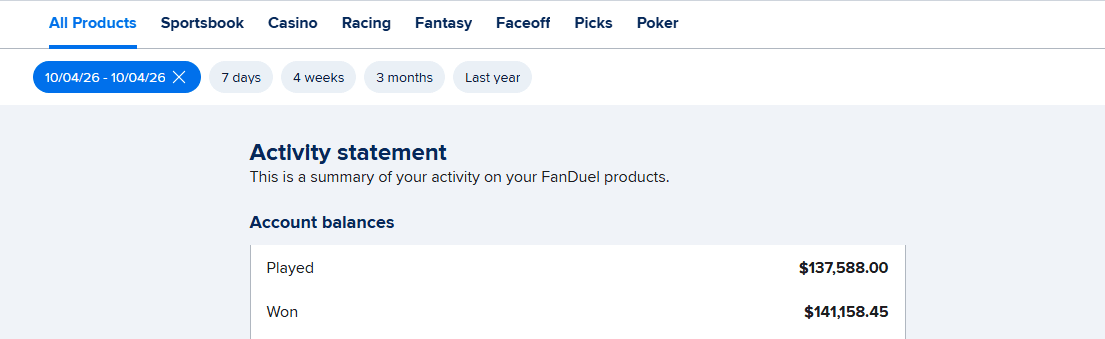
The statements below cover twenty years of operation across every sport we bet. Late Pacific windows are a meaningful line item in them, and for a reason worth stating plainly: a market with fewer eyes on it is a market where a consistently accurate account gets noticed by the risk desk faster than it gets noticed by the public. Sustained accuracy in a thin market is the loudest signal an operator can see.
| Sportsbook | Lifetime Wagered | Net Profit | Account Status |
|---|---|---|---|
| FanDuel | $14,500,000 | +$67,823 | Limited |
| DraftKings | $2,800,000 | +$71,051 | Limited |
| Caesars | $7,600,000 | +$88,645 | Limited |
| 3-Book Subtotal | $24,900,000 | +$227,519 | All limited |
| All 6 Books Combined | $30M+ wagered | +$367,520 | All 6 limited |
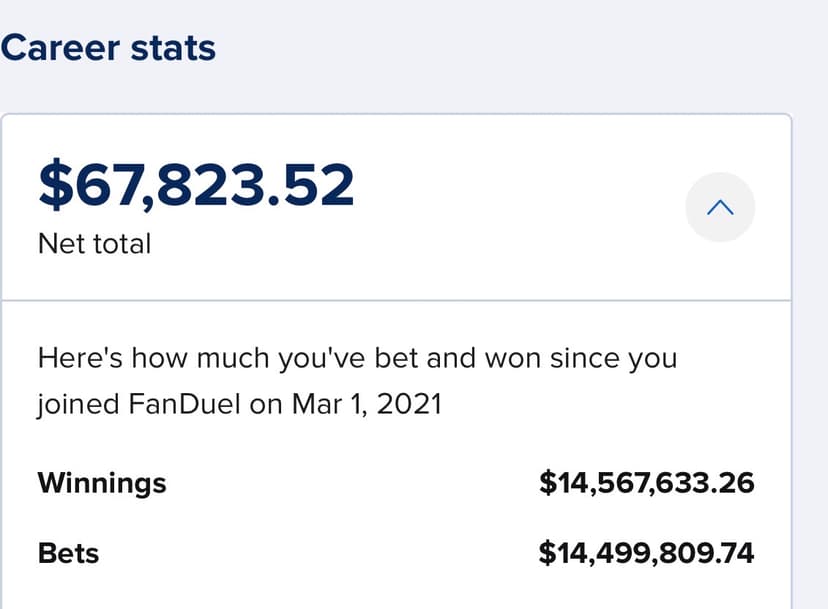
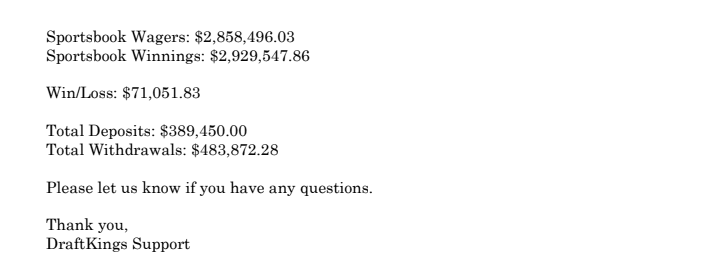
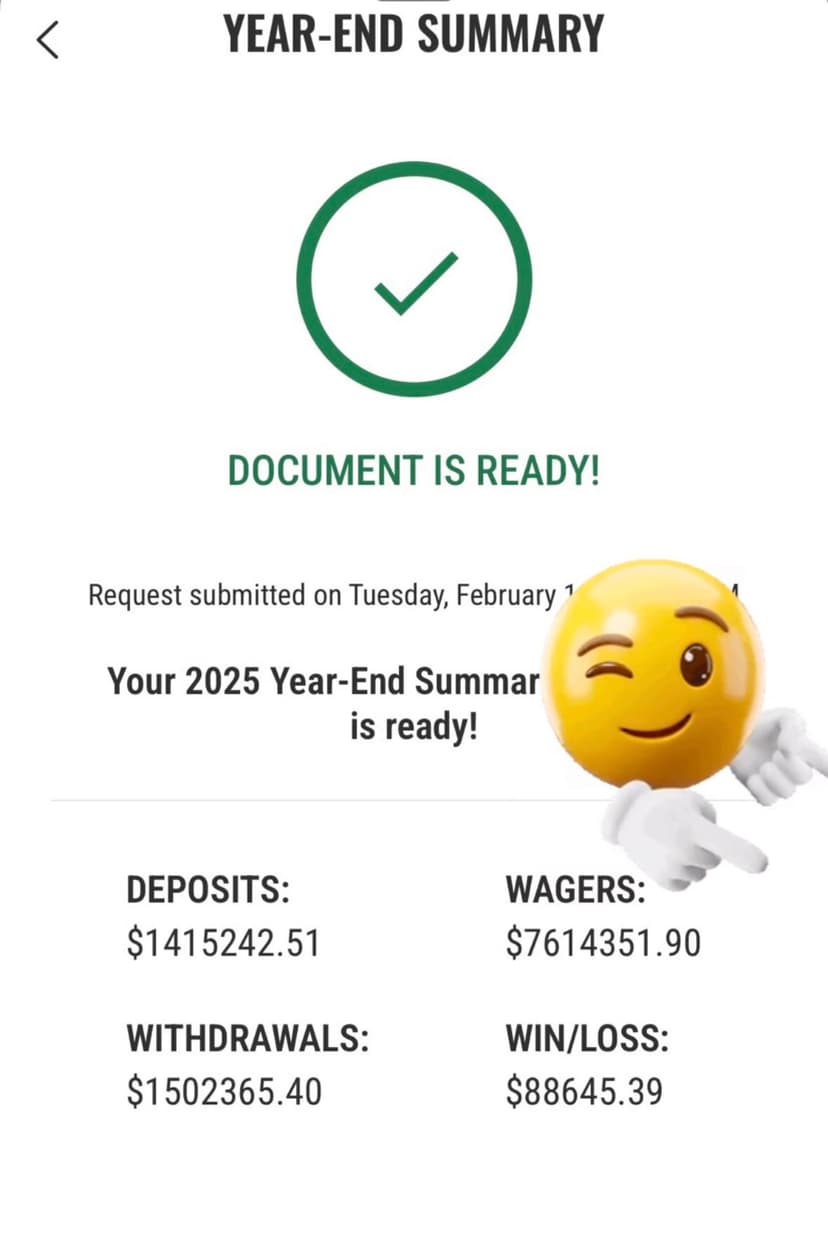
The remaining $140,001 of the $367,520 lifetime figure spans BetMGM, Fanatics, and ESPN BET — the three other operators that issued limitations. Statement screenshots from those books are archived on the sports handicapper results audit page.
Verified Live Betting Tickets From Prior College Seasons
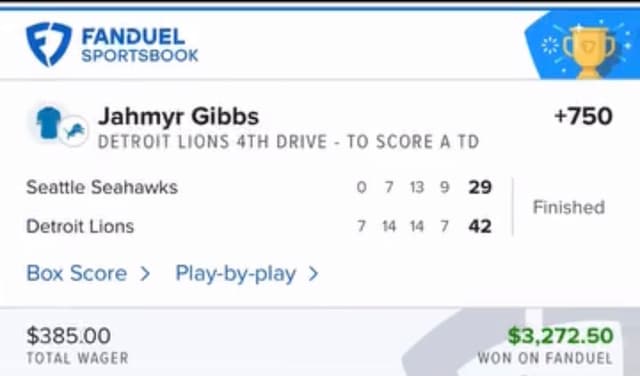
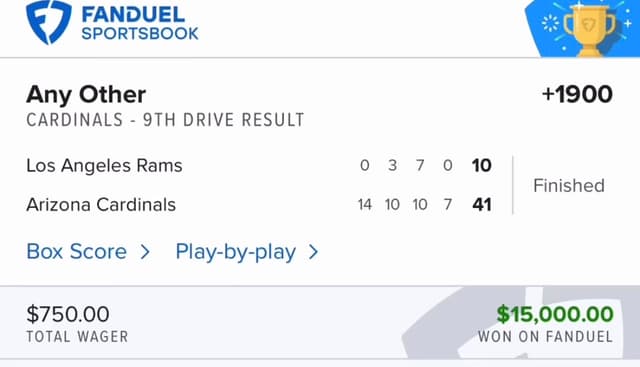
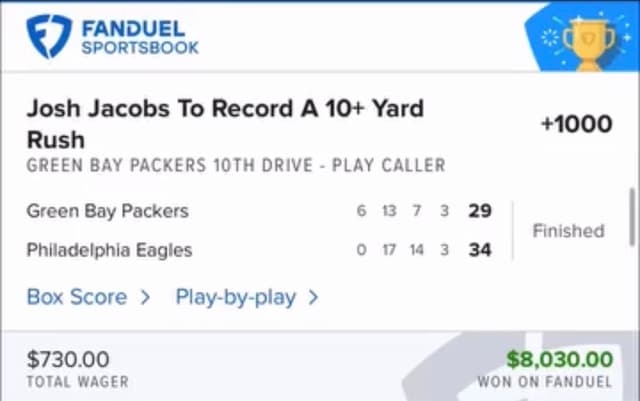
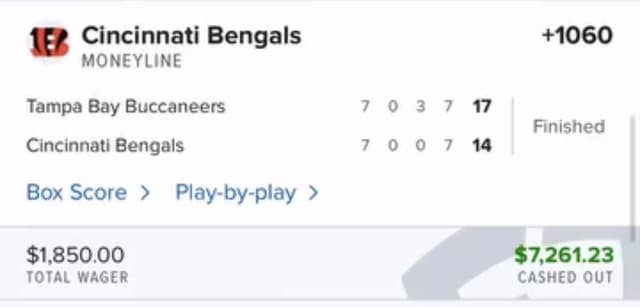
A representative sample of cashed live tickets from prior college football seasons. Each was placed inside the in-game window after an alert dispatched to subscribers on Email and Discord. The full archive — losing plays included — is public on the results page.
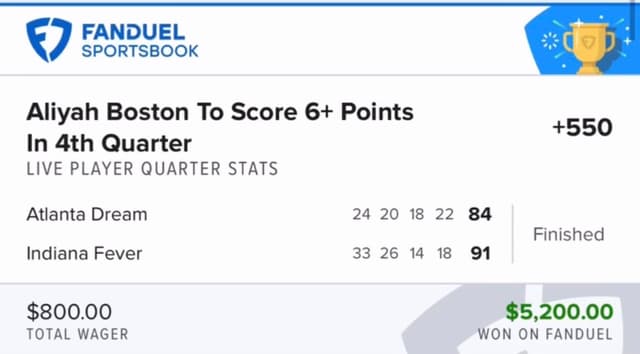
Past results do not guarantee future performance. Must be 21+ to wager.
Read the Margins, Not the Record
USC's first Big Ten season in 2024 ended 7-6, and several of those defeats were decided by a single score. A standings column treats a three-point loss and a twenty-four-point loss identically. A power rating does not, and neither should a bettor. A team that keeps losing narrowly is usually a better team than its record, right up until it is not — and the market's job is to figure out which, while the public simply reads the record.
That divergence cuts in both directions and it is the most reliably tradable thing about a program with a big national profile. After a run of narrow losses, USC becomes an undervalued underdog and the public keeps fading a team that is playing better than it is credited for. After a run of narrow wins, the same mechanism makes the Trojans an overvalued favorite and the number gets shaded by people extrapolating from the wrong column.
Two program-level notes belong alongside that. First, the defense was the clear constraint in 2023 and the hire of D'Anton Lynn as coordinator in January 2024 produced visible improvement — meaning USC's recent totals history is not one continuous data set and should not be modeled as one. Second, the annual rivalry with Notre Dame sits outside conference structure entirely, is nationally bet, and is priced accordingly; it is one of the few Trojans games where the honest pre-game answer is usually a pass. Cross-checks against Notre Dame, Oregon, and Ohio State 2026 pages cover the other side of those matchups.
How a Trojans Saturday Actually Runs
The projection is locked before kickoff. Everything after that is comparison — the live number against the pre-game model, possession by possession. In a tempo game, that comparison runs more often than in an average college football game, and the discipline is refusing to act on most of it.
The specific reads on a USC game are the ones this page has been describing. Is a flat opening quarter a body-clock artifact that will wash out by the second, or is it a matchup problem that will persist? Is a late-window number moving slowly because the market is thin, or because nobody watching thinks the development mattered? Getting those two questions right accounts for most of what a Trojans season produces.
Alerts carry the side, the line and odds at dispatch, a unit size from one to five scaled to bankroll, and the read behind the position. Discord arrives first, Discord next, Email last, and the usable window before the number corrects is often under a minute — wider in the late Pacific slot, which is part of why that slot is worth staying up for. On Saturdays when nothing diverges enough to act on, the card is empty and we say so.
Every USC regular-season, Big Ten Championship, and College Football Playoff game is covered live across all three packages. To see the alert format before subscribing, reserve a free live pick, or read how the analysis is built on the college football handicappers page.
Get Live Betting Picks During Games
Every package delivers live in-game alerts on Email and Discord the moment a number diverges from the projection — including the late Pacific window, when most of the industry has gone to bed. Discounted first month on every plan. No long-term contract.
See Live Betting PackagesPast results do not guarantee future performance. Must be 21 or older to wager.
Frequently Asked Questions
What readers ask about betting USC football in 2026.
Frequently Asked Questions
Does USC's Big Ten travel actually affect the betting number?
It affects the game more than the number reflects. USC's conference road slate now includes trips of roughly 2,300 to 2,500 miles to Rutgers, Maryland, and Penn State, plus trips to the Midwest, all crossing two or three time zones eastbound. Eastbound travel is the harder direction for circadian adjustment, and the effect concentrates in early-window games rather than night games. Markets do apply a road adjustment, but it tends to be a generic one — the same number for a flight to Seattle as for a flight to New Jersey. The distance and the kickoff time interact, and that interaction is the part that stays underpriced.
What is the 9 a.m. body clock problem for USC?
A noon Eastern kickoff is a 9 a.m. Pacific kickoff on the Trojans' internal clock, which means warmups begin around 7 a.m. body time. Sports-science research on circadian rhythm consistently finds that athletic performance peaks in the late afternoon and early evening and troughs in the early morning, and the practical football version is a sluggish opening quarter: slower defensive reaction, worse tackling angles, and a scripted opening drive executed at less than full speed. It rarely lasts the whole game. That is precisely why it is a live betting spot rather than a full-game one — the market often prices the slow start as a full-game trait.
Is the Los Angeles Memorial Coliseum a real home-field advantage?
Less than the brand implies, and that gap is the bet. The Coliseum opened in 1923 and now seats roughly 77,500 after its renovation, but it is a wide, open bowl with a running track heritage and a peristyle end — architecture that disperses sound rather than trapping it. Compare that to the enclosed, steep-decked stadiums USC now visits in the Big Ten. USC is a national brand, and national brands get a home-field premium in the market that reflects reputation rather than decibels. The most consistent Coliseum edge is not noise at all: early-season afternoon games expose a visiting team to sustained direct sun on an open field.
Why are USC's late-window games different for live betting?
A 7:30 p.m. Pacific kickoff is 10:30 p.m. Eastern, which frequently makes USC the last game running on the entire American board. Liquidity thins, fewer traders are watching, and the automated live pricing gets less human oversight than a 3:30 p.m. Eastern marquee game receives. That does not guarantee a soft number, but it does mean the number corrects more slowly after a genuine in-game development — a starter leaving, a script change, a defensive adjustment. A slower correction is a longer window to act in, and the late Pacific window is one of the more productive live slots in the sport.
Why does USC's record often understate how the Trojans performed against the spread?
Because one-score losses count the same as blowouts in the standings and nothing like them in a power rating. USC's first Big Ten season in 2024 finished 7-6 with several defeats decided by a single score, and a team that loses four games by a field goal is a meaningfully better team than a team that loses four by three touchdowns — but the public reads the record, not the margins. That divergence between record perception and underlying performance is where a market overreacts, and it cuts both ways: it makes USC an undervalued underdog after a run of narrow losses and an overvalued favorite after a run of narrow wins.
What does The Best Bet on Sports do during a USC game?
The projection is set before kickoff and the live work is a comparison against it. Under Lincoln Riley, USC plays at genuine tempo, which means more possessions, more scoring events, and more repricings of the live total than an average college game produces — a market that reprices constantly is a market that occasionally reprices wrong. Alerts dispatch to Email and Discord with the side, the line and odds at the moment of dispatch, a unit size from one to five, and the in-game read behind it. Discord is fastest, then Email, then Email. Some Trojans Saturdays produce multiple alerts. Some produce none.
Why was The Best Bet on Sports limited on all six U.S. sportsbooks?
A sportsbook limits an account when it beats the closing line at a rate that threatens hold. The Best Bet on Sports has been limited on FanDuel, DraftKings, Caesars, BetMGM, Fanatics, and ESPN BET after live in-game wagering produced $367,520 in verified lifetime profit — documented statements include FanDuel at $14.5M wagered and $67,823 net, DraftKings at $2.8M wagered and $71,051 net, and Caesars at $7.6M wagered and $88,645 net, with the remaining $140,001 across the other three books. Late Pacific windows were part of that, because a market with fewer eyes on it is a market where sustained accuracy gets noticed by the risk desk before it gets noticed by anyone else.
The Best Bet on Sports · 1.5M followers on TikTok
Sports Betting TikTok is the live betting account behind The Best Bet on Sports, covering NFL, NCAAF, NBA, NCAAB, MLB and WNBA markets in real time. The account has been limited on all six major U.S. sportsbooks — FanDuel, DraftKings, Caesars, BetMGM, Fanatics and ESPN BET — for winning on live betting, with $367,520 in verified profit since 2005. View full profile →
Past results do not guarantee future performance. Must be 21 or older to wager.
Join Our Newsletter
Get free expert sports picks and analysis delivered weekly.