Both NFL Teams to Score 20+: How Often It Hits

Both NFL teams score 20 or more points in about 39.7 percent of regular-season games, a fair price near +152. The rate climbs to 59.6 percent when the total is 50 or higher and falls to 25.4 percent at 40.5 or lower. When both teams get to 20, the game goes over 87 percent of the time, so adding the over to this leg buys almost nothing.
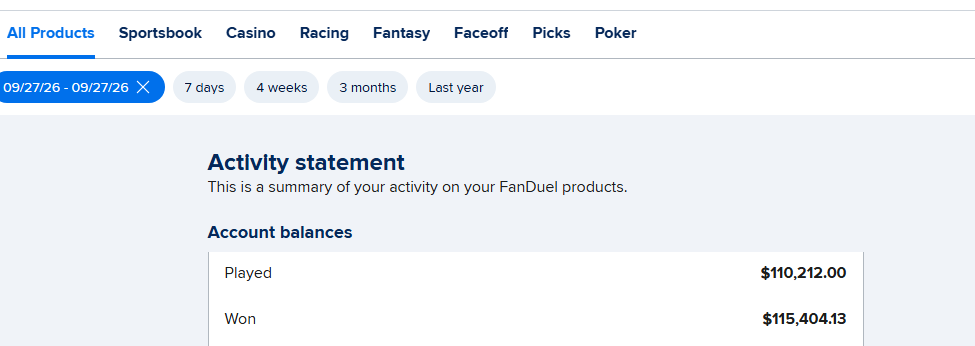
Both NFL teams score 20 or more points in about 39.7 percent of regular-season games. We checked all 2,639 regular-season games from 2016 through 2025, and 1,047 had both teams at 20 or higher, which puts the fair price near +152. The number moves almost entirely with the game total: 59.6 percent of games closing at 50 or higher, but only 25.4 percent of games at 40.5 or lower. And when both teams do reach 20, the game goes over the closing total 87 percent of the time, so stacking the over on top of this leg adds risk without adding much payout. The Best Bet on Sports has built a verified $367,520+ in profit across all sportsbooks over more than twenty years by pricing each leg before it goes on a ticket.
"Both teams 20+" is one of the most common same-game parlay builds in football. Some books list it as a special. Most of the time, bettors build it themselves out of two team-total overs at 19.5. Either way, it's a bet that a game will be competitive and high-scoring at once, and those two things don't always arrive together. Here's how often it actually happens, which games produce it, and what it should cost.
How Often Do Both NFL Teams Score 20 Points?
We used every regular-season game from 1999 through 2025, plus the 2026 season through the Thursday game of Week 9. A game counts if each team finished with at least the threshold, overtime included, since that's how almost every book settles the bet.
Twenty isn't the only line people play, so here's the full ladder over 6,967 games from 1999 through 2025:
| Both teams score at least | Hit rate | Fair odds | Rate if the two teams were independent |
|---|---|---|---|
| 14 | 61.73% | -161 | 61.88% |
| 17 | 49.39% | +102 | 49.45% |
| 20 | 36.47% | +174 | 36.38% |
| 21 | 28.99% | +245 | 28.44% |
| 24 | 19.55% | +412 | 18.85% |
| 27 | 11.94% | +737 | 11.16% |
| 30 | 6.29% | +1491 | 5.61% |
Two things stand out. First, look at the jump from 20 to 21. Moving the threshold by a single point drops the hit rate by 7.5 percentage points, because 20 is one of the most common final scores in the sport (two touchdowns and two field goals). If a book gives you a choice between team totals of 19.5 and 20.5, that one point is worth more than it looks.
Second, the last column. Multiply each team's chance of reaching the number and you land almost exactly on the actual joint rate. At 20 points, 36.47 percent actual against 36.38 percent independent. Two offenses in the same game behave close to independently, which matches what we found when we tested NFL team total parlays against the books' implied numbers. So this isn't a correlated parlay between the two teams. The correlation that matters is with the game total, and we'll get to that.
Has the Rate Changed Over Time?
Yes. Scoring rose through the 2010s, and this bet rose with it.
| Seasons | Games | Both teams 20+ | Fair odds |
|---|---|---|---|
| 1999-2009 | 2,792 | 32.27% | +210 |
| 2010-2015 | 1,536 | 38.61% | +159 |
| 2016-2020 | 1,280 | 41.64% | +140 |
| 2021-2025 | 1,359 | 37.82% | +164 |
| 2016-2025 | 2,639 | 39.67% | +152 |
| 2026 (thru Wk 9 TNF) | 122 | 41.80% | +139 |
The peak was 2020, when 50.39 percent of games had both teams at 20 or more. Then defenses adjusted, and the rate fell to 33.46 percent by 2023 before climbing back to 42.65 percent in 2025. This season sits at 51 of 122 games. That's a little above the ten-year rate, but it's still within the normal range from season to season. We'd use the 2016-25 number as the baseline and treat any single season as noise.
Which Games Produce Both Teams Scoring 20?
The closing total is by far the strongest signal. Here's 2016 through 2025, split by total:
| Closing total | Games | Both teams 20+ | Fair odds |
|---|---|---|---|
| 40.5 or lower | 394 | 25.38% | +294 |
| 41 to 43.5 | 615 | 30.41% | +229 |
| 44 to 46.5 | 695 | 40.14% | +149 |
| 47 to 49.5 | 564 | 46.10% | +117 |
| 50 or higher | 371 | 59.57% | -147 |
The fair price runs from +294 at the bottom to -147 at the top. That's the whole bet in one table. If you're playing "both teams 20+" without looking at the total first, you're paying one price for what are really five different bets.
The spread matters less, but it does matter at the extremes:
| Spread | Games | Both teams 20+ |
|---|---|---|
| 0 to 2.5 | 609 | 39.90% |
| 3 to 4.5 | 846 | 42.91% |
| 5 to 7 | 577 | 38.82% |
| 7.5 to 9.5 | 279 | 44.09% |
| 10 or more | 328 | 28.66% |
Through 9.5 points the rate stays between about 39 and 44 percent, with no clear pattern. At 10 or more, it falls off a cliff. Big favorites usually mean one offense the market doesn't trust, and that offense is the one that has to reach 20.
Put the two together and you get the best and worst spots:
| Total | Spread | Games | Both teams 20+ |
|---|---|---|---|
| 47 or higher | 3.5 or less | 464 | 54.74% |
| 47 or higher | More than 3.5 | 471 | 48.20% |
| Under 47 | 3.5 or less | 794 | 31.74% |
| Under 47 | More than 3.5 | 910 | 34.51% |
A high total with a close spread is the profile this bet was built for: both offenses are expected to score, and neither is expected to be blown out. Even there, it hits only a little more than half the time.
What Usually Breaks the Bet?
The underdog. From 2016 through 2025, favorites reached 20 points in 73.74 percent of games, and underdogs reached 20 in 53.59 percent. When the bet missed, it was the underdog alone who came up short 56.45 percent of the time. The favorite alone missed 23.03 percent of the time, and both teams missed 20.52 percent of the time.
That has one practical use. If you're building this ticket, the leg that decides it is almost always the weaker offense's team total. Price that leg on its own before you combine it with anything else. If you don't believe the underdog gets to 20, you don't believe the parlay.
The bet also hit more often when the underdog won. When the favorite won outright, both teams reached 20 in 37.79 percent of games. When the underdog won, it was 43.45 percent. Paired with a favorite moneyline, it's slightly negatively correlated: the two hit together 25.09 percent of the time, against 26.35 percent if they were independent. That's a small gap, but it runs the wrong way for anyone stacking a favorite with "both teams 20+."
Should You Add the Over to Both Teams Scoring 20?
This is the most common add-on, and the data says it's mostly redundant. When both teams scored 20 or more, the game went over the closing total 87.04 percent of the time. When they didn't, it went over 24.12 percent of the time. Games where both teams reached 20 averaged 57.3 total points. All other games averaged 37.9.
| Combination (2016-2025) | Actual rate | If independent | Fair odds |
|---|---|---|---|
| Both teams 20+ alone | 39.67% | — | +152 |
| Both teams 20+ and the over | 34.38% | 19.34% | +191 |
| Both teams 20+ and the under | 5.12% | 20.15% | +1853 |
Here's how to use that. The fair payout for both teams 20+ alone is +152 (2.52 in decimal odds). The fair payout with the over added is +191 (2.91). Adding the over should raise your payout by about 15 percent and no more. If the book's same-game price goes up by less than that when you add the over, it's charging you for a leg that almost never decides the bet. If it goes up by much more, the book is treating the two legs as more independent than they are, and that's the rare case where the add-on helps you.
The under combination is the mirror image, and it's the one to stay away from. Both teams 20+ with the under happened in about one game in 20, a fair price near +1853. Treat the two legs as independent, at +152 and -110, and you get a payout of about +381. A ticket priced anywhere near that is paying you a fraction of what the real odds require. Unless a book is offering something close to +1800, this pairing is a long shot priced like a reasonable one.
Which Games on Today's Slate Fit the Profile?
Based on this morning's closing-line feed, only one Week 9 Sunday game has both a total of 47 or more and a spread of 3.5 or less: Cincinnati at Atlanta, with the Bengals favored by 3 and a total of 52.5. That's the historical 54.74 percent profile, a fair price around -121. Dallas at Indianapolis (51.5) and Detroit at Miami (50.5) have big totals but spreads of 5.5 and 6.5, which puts them in the 48 percent group.
At the other end, Giants at Eagles (38.5), Cardinals at Seahawks (39.5) and Texans at Chargers (40.5) all sit in the 40.5-or-lower band, where both teams reached 20 just 25.38 percent of the time, a fair price near +294. Seattle is also an 8.5-point favorite, so that game has two warning signs. Lines move during the day, so recheck the total before you build anything.
How Does This Fit a Real Betting Plan?
The data gives five rules:
1. Start with the total. The fair price runs from +294 to -147 depending on the closing total. No other input comes close. 2. Price the underdog's team total first. It causes most of the misses. If that leg doesn't make sense alone, the parlay doesn't either. 3. Know 20 from 21. One point on the threshold is worth about 7.5 percentage points. Take 19.5 over 20.5 whenever the price difference is small. 4. Don't pay for the over. It's already baked into the bet 87 percent of the time. It should add about 15 percent to your payout. 5. Avoid double-digit spreads. At 10 or more, the hit rate drops to 28.66 percent, whatever the total says.
A parlay like this lives or dies on whether each leg is priced right, and a good football handicappers service should show you that math before you bet. Our football betting picks page covers the sides and totals we actually play. Our NFL picks page has the weekly card, and our parlay picks page explains how we build correlated tickets. If you're comparing services, our guide to daily sports betting picks explains what a real daily process looks like. Basketball bettors can use the same approach. Our basketball handicappers page shows how we price game script on the floor.
What This Study Doesn't Cover
This study counts regular-season games only, with overtime points included. It doesn't use historical prices for "both teams 20+" specials, because we couldn't find a reliable archive, so every fair price here comes from actual hit rates. It doesn't test first-half versions of the bet or player-level props. The 2026 numbers run through the Thursday night game of Week 9, and the slate notes use the closing-line feed as of Sunday morning. Totals move, so the band a game falls in can change before kickoff.
Get Tonight's Live Picks
Want live in-game NFL calls, including the spots where one offense is stalling and the market hasn't caught up, sent to your phone during the game?
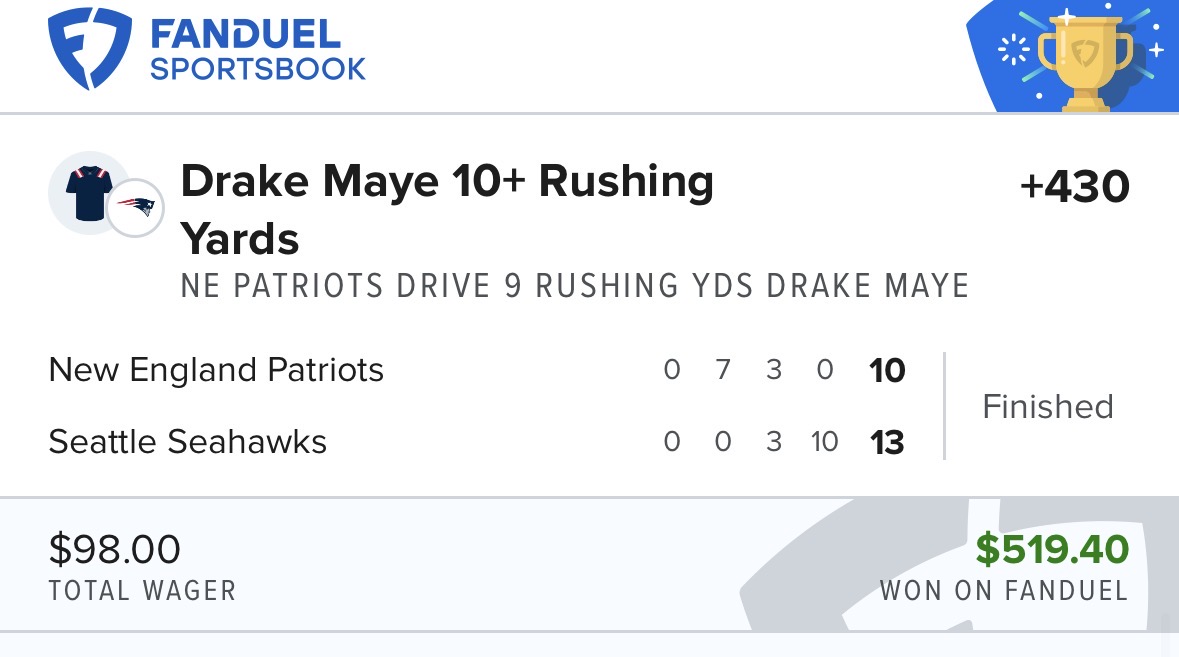
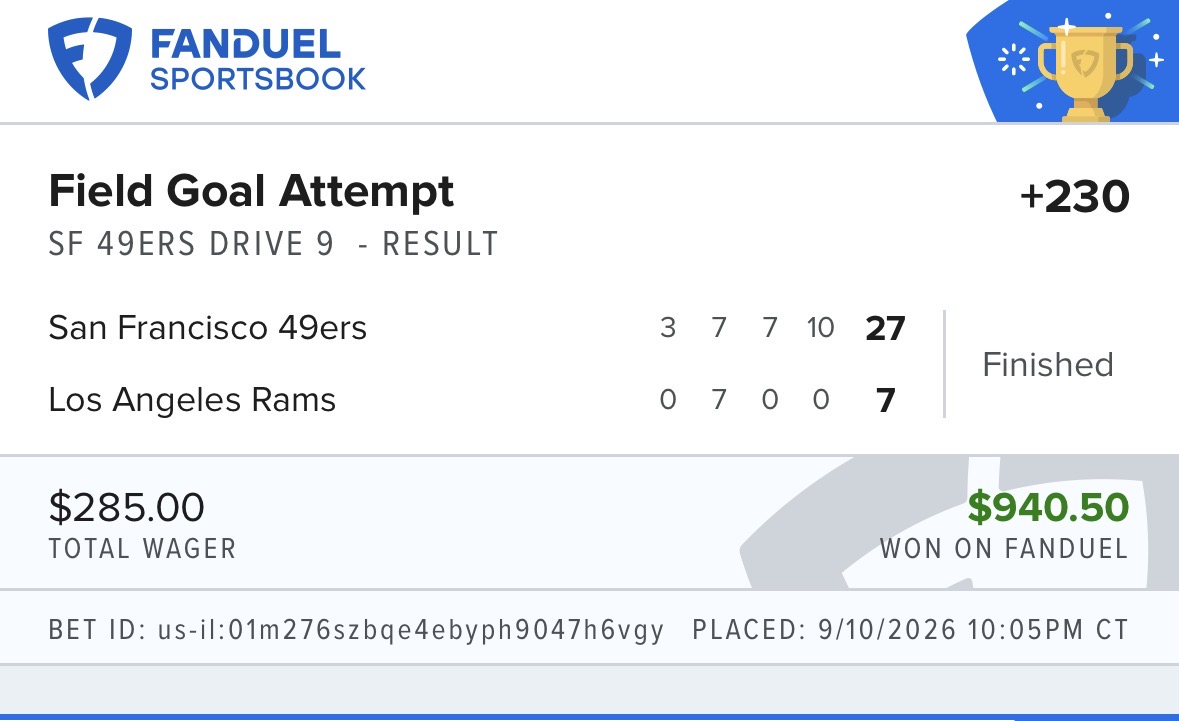
The Best Bet on Sports is the only live betting handicapping service limited on all six major U.S. sportsbooks (FanDuel, DraftKings, Caesars, BetMGM, Fanatics, ESPN BET) for winning too much during in-game action. Verified profit: $367,520+. Live calls go out through Email and Discord during games, and every bet in the $10,000 to $100,000 challenge is posted as it happens.
→ Join The Best Bet on Sports community — newsletter, live stream and Discord → Try a free live pick first — reserve your spot for tonight's pick
Frequently Asked Questions
How often do both NFL teams score 20 points?
In about 39.7 percent of regular-season games. From 2016 through 2025, 1,047 of 2,639 games had both teams at 20 or more, a fair price near +152. Over the longer 1999-2025 sample the rate was 36.47 percent, and through Week 9 of 2026 it's 41.80 percent.
What are fair odds for both teams to score 20+ in the NFL?
About +152 on the 2016-25 rate. It depends heavily on the total: about +294 for games at 40.5 or lower, +149 at 44 to 46.5, and -147 at 50 or higher. Price the bet by the total, not by one league-wide number.
Are the two team totals in an NFL game correlated?
Barely. Both teams reached 20 in 36.47 percent of 1999-2025 games, almost exactly the 36.38 percent you'd get by multiplying each team's chance on its own. The correlation that matters is between "both teams 20+" and the game total.
Should I add the over to a both-teams-20+ parlay?
Usually not at the prices most books offer. When both teams scored 20 or more, the game went over 87.04 percent of the time. Adding the over should raise your payout by about 15 percent, from a fair +152 to a fair +191. If it raises the payout by less, you're paying for a leg that rarely matters.
Which NFL games are most likely to have both teams score 20?
High-total games with close spreads. Games with a total of 47 or more and a spread of 3.5 or less had both teams at 20 in 54.74 percent of cases from 2016 through 2025. Games with a spread of 10 or more dropped to 28.66 percent.
Why do both-teams-20+ bets usually lose?
Most misses come from the underdog. When the bet failed from 2016 through 2025, the underdog alone was short of 20 in 56.45 percent of cases. Favorites reached 20 in 73.74 percent of games, and underdogs in only 53.59 percent.
Is team total 19.5 much better than 20.5?
Yes. Both teams reached 20 in 36.47 percent of 1999-2025 games, but both reached 21 in only 28.99 percent. Twenty is one of the most common final scores in football, so that single point moves the hit rate by about 7.5 percentage points.
The Best Bet on Sports · 1.5M followers on TikTok
Sports Betting TikTok is the live betting account behind The Best Bet on Sports, covering NFL, NCAAF, NBA, NCAAB, MLB and WNBA markets in real time. The account has been limited on all six major U.S. sportsbooks — FanDuel, DraftKings, Caesars, BetMGM, Fanatics and ESPN BET — for winning on live betting, with $367,520 in verified profit since 2005. View full profile →
Past results do not guarantee future performance. Must be 21 or older to wager.
Related Articles
NFL Two-Point Conversion Props, Tested
NFL Safety Props, Tested: The Real Odds
Live Betting Strategy for NFL Games: How Sharps Attack In-Game Lines
NFL Draft 2026 Betting Guide: Best Props, Order Predictions, and Round 1 Value
NFL Over/Under Betting Guide - How to Beat NFL Totals in 2026
NFL Draft 2026: Round 1 Analysis, Team Needs, and Futures Betting Value
Get real live betting picks
From $39.95/mo · Cancel anytime · Email + Discord delivery
● Get The Picks
Choose your package
Tap any tier below to select · Subscribe in one tap
👇 Tap any package to select it
✓ You're selecting
25 Units · $99.95/month
25 unit picks per month. Sweet spot for most bettors — plenty of action without going all-in.
- ✓25 live betting selections/month
- ✓Email + Discord delivery
- ✓All sports (NFL, NCAAF, NBA, NCAAB, MLB)
- ✓Mix of 1, 2, 3, 5-unit rated plays
- ✓Cancel anytime
Secure PayPal · Cancel anytime · No hidden fees · 21+ · +$367K verified
+$367,520 verified · Limited on 6 sportsbooks · 20 years documented · See Proof
Join Our Newsletter
Get free expert sports picks and analysis delivered weekly.