College Football Betting as a Beginner: The Complete Starter Guide

College football betting as a beginner offers more opportunities than any other sport because of the sheer volume of games and massive skill gaps between teams across 130-plus FBS programs. A typical Saturday features 50 to 60 games, and the talent disparity between top-10 programs and bottom-tier schools creates betting value that does not exist in the talent-balanced NFL. Understanding bet types, bankroll management, and conference dynamics before placing your first wager separates beginners who survive from those who bust quickly.
College football betting gives beginners more opportunities than any other sport because of the sheer volume of games and the massive skill gaps between teams. A typical Saturday features 50 to 60 games across every conference, and the talent disparity between top-10 programs and bottom-tier FBS schools creates betting value that simply does not exist in the more talent-balanced NFL. Understanding bet types, bankroll management, and conference dynamics before placing your first wager separates beginners who survive from those who bust in three weeks.
I remember my first college football Saturday as a bettor. I threw money at eight games because I recognized the team names, lost six of them, and spent the next week wondering what went wrong. That was over 20 years ago, and every season I see new bettors make the exact same mistakes I did. At The Best Bet on Sports, I have guided thousands of beginners through their first college football season, and the ones who follow a structured approach consistently outperform the ones who wing it. This guide gives you the foundation I wish someone had handed me back when I started.
What Types of Bets Can You Place on College Football Games?
Before placing your first wager, you need to understand the three core bet types that every sportsbook offers. These are the building blocks of all college football wagering, and mastering them before branching into exotic bets saves you from expensive confusion.
Point spread betting, also called against the spread or ATS, is the most popular form of college football wagering. The sportsbook assigns a margin of victory. If Alabama is favored by 14.5 points over Vanderbilt, Alabama must win by 15 or more for the spread bet to cash. Vanderbilt at plus 14.5 wins the bet if they lose by 14 or fewer or win outright. The spread equalizes the matchup so that both sides attract betting action.
Moneyline betting is a straight-up bet on which team wins regardless of margin. Moneyline odds reflect probability. A heavy favorite might be minus 600, meaning you risk 600 dollars to win 100. The underdog might sit at plus 450, meaning you risk 100 to win 450. Beginners should approach moneyline favorites cautiously because the risk-to-reward ratio deteriorates quickly on big chalk.
Totals betting, or over/under, sets a combined score total for both teams. You bet whether the actual combined score lands over or under that number. A total of 52.5 means you need 53 or more combined points for the over to hit. Totals remove the need to pick a winner and focus entirely on the scoring environment.
| Bet Type | What You're Picking | Risk Level for Beginners | Best Use Case |
|---|---|---|---|
| Point Spread | Margin of victory | Moderate | Conference games with clear matchup edges |
| Moneyline | Straight winner | High on favorites | Small underdogs you believe win outright |
| Totals (O/U) | Combined score | Lower | Weather games, pace-of-play mismatches |
| First Half | First half result | Moderate | Teams with strong or weak starts |
| Player Props | Individual stats | High | When you have deep roster knowledge |
Beyond these basics, you will encounter player props, team props, first-half lines, and live betting options. As a beginner, master the three core bet types before branching out. Adding complexity before you understand the fundamentals is a recipe for confusion and losses.
How Is College Football Betting Different From NFL Betting?
The differences between college and NFL betting are significant, and understanding them is absolutely critical for beginners who might bring NFL assumptions into the college game. These are not minor distinctions. They fundamentally change how you approach each wager.
College football features much larger point spreads. NFL spreads rarely exceed 14 points. College football regularly features spreads of 20, 30, or even 40 points. Betting on or against a 35-point favorite requires a completely different analytical framework than picking a 3-point NFL side. Garbage-time scoring, starters getting pulled in the third quarter, and blowout dynamics create unique cover patterns that do not exist in professional football.
The variance in team quality across college football is enormous. The gap between a top-10 program and a team ranked 80th through 130th creates blowout potential, but it also creates garbage-time scoring that swings covers in unexpected directions. A backup quarterback driving 80 yards in the fourth quarter of a 42-7 game happens regularly and can turn a comfortable cover into a push or loss.
Information availability is another major difference. NFL rosters are well-documented and extensively analyzed. College teams carry 85 scholarship players, experience frequent transfers, and have less transparent injury reporting. This information gap creates edges for bettors willing to dig deeper than box scores. Following our college football picks from verified handicappers accelerates your learning curve during this research-intensive process.
Conference familiarity matters more than most beginners realize. Teams within the same conference play styles influenced by shared recruiting grounds and coaching trees. Understanding SEC tendencies versus Big Ten tendencies gives you contextual knowledge that pure statistical models miss. Start by focusing on one or two conferences rather than trying to handicap the entire FBS landscape.
What Should Beginners Look For When Choosing College Football Picks?
If you are new to college football betting, following experienced handicappers while you learn the craft is the fastest way to develop your skills. But not all pick services are created equal, and choosing the wrong one can cost you more than doing it yourself.
Look for transparent records with documented results, not screenshots or self-reported numbers. Any service showing you a screenshot of a winning bet slip without showing the full season record is hiding losses. Demand a complete win-loss log with dates, lines, and outcomes.
Quality pick services provide written analysis explaining the reasoning behind each selection. A pick that simply says take Team A minus 7 teaches you nothing. A pick that explains the coaching mismatch, the defensive personnel advantage, and the weather factor teaches you how to think about games independently.
Watch for consistent volume of three to eight picks per Saturday. Services pushing 15 or more plays per week are using a shotgun approach, throwing everything at the wall to guarantee some winners they can promote while burying the losses. Selectivity signals genuine analysis. Check our results page to see what disciplined, documented pick performance looks like over a full season.
How Much Money Should a Beginner Risk on College Football Bets?
Start smaller than you think you should. The learning curve in college football betting is steep, and you will make mistakes. Every experienced bettor has stories about the bankroll they burned through during their first season because they bet too aggressively before they understood the market.
A practical starting bankroll is 500 to 1,000 dollars with unit sizes of 5 to 10 dollars. This gives you enough runway to bet through an entire season, learn from your mistakes, and track your results without financial stress. At one percent per unit, a 500 dollar bankroll means 5 dollar bets, which keeps any individual loss completely manageable.
Track every bet you place. Use a spreadsheet or a betting tracker app to log the game, spread, odds, stake, and result. After 100 bets, you will start to see patterns in where you win and where you leak money. Maybe you crush SEC unders but lose consistently on Big Ten sides. That data is more valuable than any handicapping tip because it reveals your personal strengths and blind spots.
The temptation to increase your bet size after a winning week is powerful and dangerous. Stick to your predetermined unit size for at least one full season. If your results justify it, gradually increase your units during the offseason. Never adjust bet sizing mid-season based on emotions.
What Are the Most Common Mistakes Beginners Make in College Football Betting?
After two decades in this industry, I see the same beginner mistakes repeated every single season. Recognizing these traps before you fall into them saves you hundreds or thousands of dollars.
Betting on your favorite team is the number one mistake. Emotional bias clouds judgment and prevents objective analysis. If you cannot look at your alma mater's game and honestly evaluate whether the spread reflects reality, leave those games alone. I stopped betting on my own team years ago, and it immediately improved my bottom line.
Overvaluing rankings is another trap. The AP poll and CFP rankings reflect reputation as much as current performance. A team ranked 12th that has beaten three weak opponents is not the same as an unranked team that lost two games to top-5 opponents by a combined six points. Rankings lag reality, and beginners who bet rankings instead of actual team quality lose money.
New bettors gravitate entirely to sides and ignore totals. Totals betting is often more predictable than picking winners because it removes the binary win-or-lose element and focuses on the scoring environment. Pace of play, defensive strength, and weather conditions are straightforward factors that influence totals without requiring deep roster knowledge. Visit our football-picks page to see how we approach both sides and totals each week.
Chasing steam moves punishes beginners consistently. When a line moves sharply, inexperienced bettors panic and follow the move. By the time you see it on social media, the value is gone. If the number has moved past your handicapping target, pass. There will always be another game.
Playing too many games on a single Saturday is perhaps the most damaging habit. Fifty games on a Saturday does not mean you need action on 20 of them. Discipline in game selection is the single biggest separator between profitable bettors and losing ones.
How Do Conference Dynamics Affect College Football Betting for Beginners?
Understanding conference dynamics gives you a significant edge even as a beginner. Each conference has distinct characteristics that influence how games play out and how lines are set.
The SEC features the deepest overall talent and the most physical style of play. Games tend to be lower scoring than the market expects because defensive talent is elite across the conference. Unders in SEC games have been historically profitable, particularly in divisional matchups where familiarity breeds defensive game plans.
The Big Ten plays a more diverse style since its expansion, but the traditional ground-and-pound identity still shows up in November when weather deteriorates. Big Ten road underdogs in cold-weather November games cover at a higher rate than the market implies because the conditions equalize talent differences.
The Big 12 and ACC feature more offensive variance, higher totals, and less defensive consistency. These conferences produce more outright upsets, making moneyline underdogs at moderate prices an attractive bet type.
Starting with one conference and building deep knowledge before expanding to others is the approach I recommend for every beginner. Depth beats breadth in college football handicapping.
Where Should Beginners Find Reliable College Football Handicappers?
Finding trustworthy college football handicappers is critical for beginners who want expert guidance while developing their own skills. Look for handicappers who specialize in college football specifically rather than generalists who dabble in every sport.
The markers of a legitimate college football handicapper include a documented multi-season track record, detailed game breakdowns that explain reasoning, consistent unit sizing, and a realistic portrayal of results that includes losing streaks alongside winning runs. Any handicapper who only shows you their best weeks is hiding the truth.
The Best Bet on Sports features college football analysts with verified track records and detailed game breakdowns that teach you the thought process behind each pick. Following a strong handicapper while simultaneously developing your own analysis skills is the fastest path to independence. The goal is not to follow picks forever. It is to learn the craft well enough to make your own decisions with confidence.
How Do Weather and Travel Affect College Football Betting?
Weather and travel are two factors that beginners consistently undervalue. In college football, where rosters are younger and less experienced than the NFL, environmental conditions create measurable performance differences.
Wind speeds above 15 mph suppress passing games significantly. Rain and cold temperatures push games toward the under. Heat and humidity in early-season games in the South affect teams differently based on conditioning programs and roster depth. A northern team traveling to play in 95-degree September heat in the SEC is at a real physiological disadvantage that the spread may not fully capture.
Travel distance matters in college football because these are unpaid athletes with class schedules, not professionals with private jets and rest protocols. West Coast teams playing noon Eastern kickoffs, Mountain West teams traveling to the SEC, and any team crossing multiple time zones face a measurable disadvantage that compounds with roster inexperience.
Related Strategy Reading
For deeper context on the angles covered above, our analysis of college football betting guide and college football handicapping expert guide pairs well with this guide; our sports picks reflect these same principles applied to live games.
Frequently Asked Questions
Is college football easier to bet on than the NFL?
College football offers more games and wider skill gaps, which creates more value opportunities. However, it is also harder to handicap because of roster turnover, less available data, and the sheer number of teams. Beginners often find it easier to start with marquee matchups involving well-known programs before branching into mid-major and Group of Five games where information is scarcer.
What is the best bet type for college football beginners?
Totals betting is often the friendliest bet type for beginners. You do not need to pick a winner, just evaluate whether the combined scoring will be high or low. Pace-of-play matchups, defensive strength, and weather conditions are straightforward factors that influence totals without requiring deep roster knowledge or injury tracking.
How many college football games should a beginner bet per week?
Start with no more than three to five games per Saturday. This forces you to be selective and focus your research on the matchups where you have the strongest opinion. As your handicapping skills develop and your bankroll grows, you can gradually increase volume if your results justify it.
What bankroll size do I need to start betting college football?
A minimum bankroll of 500 dollars with 1 percent units, or 5 dollars per bet, gives you enough runway to bet through a full season while learning. This amount limits your downside risk while providing enough games to build meaningful data about your betting patterns and tendencies.
Should I focus on one conference or bet across all of college football?
Focus on one or two conferences as a beginner. Deep knowledge of 14 to 16 teams beats shallow knowledge of 130 teams every time. Once you build a profitable track record in your focus conference, expand gradually. Many successful bettors maintain a core conference focus throughout their entire career.
How important are injury reports in college football betting?
Injuries matter more in college football than the NFL because the talent drop from starter to backup is often enormous. A starting left tackle injury that moves an NFL line by half a point can swing a college game by 3 to 4 points. Following depth chart updates closely, especially at quarterback, offensive line, and cornerback, is essential for informed betting.
When should I start researching college football for betting purposes?
Serious research should begin in February when coaching staffs are finalized and the transfer portal window opens. By June, you should have preliminary evaluations for every team in your focus conference. The summer months refine those evaluations as fall camp reports emerge. Waiting until September means you are already behind the market. Explore football betting fundamentals to build the analytical foundation you need before the season starts.
The Best Bet on Sports · 1.5M followers on TikTok
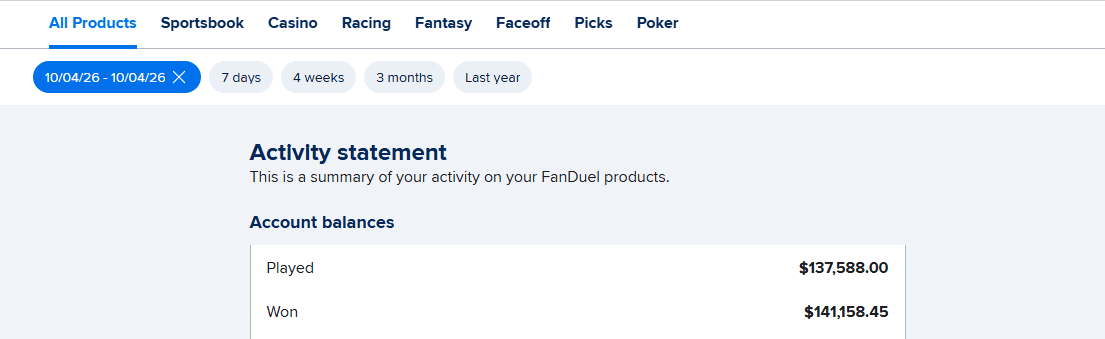
Sports Betting TikTok is the live betting account behind The Best Bet on Sports, covering NFL, NCAAF, NBA, NCAAB, MLB and WNBA markets in real time. The account has been limited on all six major U.S. sportsbooks — FanDuel, DraftKings, Caesars, BetMGM, Fanatics and ESPN BET — for winning on live betting, with $367,520 in verified profit since 2005. View full profile →
Past results do not guarantee future performance. Must be 21 or older to wager.
Related Articles
The Brazil Cancellation Put a Price on Home Field
The Big Ten Just Quadrupled Its Injury Reports. What That Does to the Line.
College Football Handicapping Expert Guide: How the Pros Analyze Games
Georgia-Alabama Line Flip: Week 6 Playoff Stakes Ranked
College Football Picks and Predictions - NCAAF Best Bets Guide for 2026
Week 0 Is the Hardest Saturday of the Year to Price
Get real live betting picks
From $39.95/mo · Cancel anytime · Email + Discord delivery
● Get The Picks
Choose your package
Tap any tier below to select · Subscribe in one tap
👇 Tap any package to select it
✓ You're selecting
25 Units · $99.95/month
25 unit picks per month. Sweet spot for most bettors — plenty of action without going all-in.
- ✓25 live betting selections/month
- ✓Email + Discord delivery
- ✓All sports (NFL, NCAAF, NBA, NCAAB, MLB)
- ✓Mix of 1, 2, 3, 5-unit rated plays
- ✓Cancel anytime
Secure PayPal · Cancel anytime · No hidden fees · 21+ · +$367K verified
+$367,520 verified · Limited on 6 sportsbooks · 20 years documented · See Proof
Join Our Newsletter
Get free expert sports picks and analysis delivered weekly.