College Football Picks and Predictions - NCAAF Best Bets Guide for 2026

College football picks and predictions that consistently win are built on exploiting massive talent disparities across 130-plus FBS teams, identifying lines inflated by public money on brand-name programs, and tracking transfer portal activity that oddsmakers have not fully priced into their numbers. Expert NCAAF picks target 5 to 10 high-value plays per week rather than betting every game, focusing on information edges in coaching mismatches, early-season roster uncertainty, and conference familiarity gaps that create reliable seasonal value.
College football picks that consistently win are built on exploiting the massive talent disparities across 130-plus FBS teams, identifying lines inflated by public money on brand-name programs, and tracking transfer portal activity that oddsmakers have not fully priced. Expert NCAAF picks target 5 to 10 high-value plays per week rather than betting every game, focusing on information edges in coaching mismatches, early-season roster uncertainty, and conference familiarity gaps.
I have been making college football picks professionally since the early 2000s, and every season reminds me why this sport offers more betting value than anything else on the board. Last October, I released a Tuesday night MAC play on a 14-point underdog that most bettors had never heard of. The team won outright. That kind of opportunity does not exist in the NFL, where the sharpest oddsmakers in the world set lines on 32 well-documented teams. At The Best Bet on Sports, our college football framework has been refined through more than two decades of documented results, and this guide covers exactly how we identify our strongest NCAAF best bets each season.
Why Is College Football Easier to Beat Than the NFL?
The sheer volume of college football games, often 50 to 60 per week during the season, means oddsmakers cannot devote the same resources to every line. NFL lines are set by the best in the business with complete roster information, extensive film study, and millions of sharp bettors providing market feedback within minutes. College football lines, particularly for mid-major and Group of Five programs, are frequently set based on public perception rather than rigorous modeling.
Talent gaps in college football are extreme in ways that create predictable mismatches the market sometimes undervalues. Mastering football betting at this level requires exploiting those talent gaps. A top-10 recruiting class program versus one ranked 80th in recruiting produces performance differences of 10 to 20 points on a neutral field, but the spread might only reflect a 7 to 10 point difference because the market anchors on recent records rather than underlying talent.
Coaching and scheme advantages are more durable at the college level than in the pros. College players execute within tight systems, and a superior scheme advantage can persist for an entire season before opponents adjust. In the NFL, coordinators game-plan specific counters each week. In college, some teams face offensive or defensive concepts they have never seen before.
Public action consistently skews toward big brands. Teams like Alabama, Ohio State, Michigan, and Georgia attract massive public betting that inflates their lines regardless of the specific matchup dynamics. When 75 percent of the public money lands on a brand-name favorite, the sportsbook moves the line to manage exposure rather than to reflect true probability. That movement creates value on the opponent.
| Market Inefficiency | Why It Exists | How to Exploit It |
|---|---|---|
| Mid-major line softness | Oddsmaker resource limits | Specialize in 2-3 smaller conferences |
| Public brand-name bias | Casual bettors bet names, not matchups | Fade public favorites with inflated lines |
| Transfer portal lag | Market slow to price roster changes | Track portal daily, bet before adjustment |
| Early-season uncertainty | Limited data on new rosters | Deep offseason research |
| Coaching transition impact | Market underestimates disruption | Fade first-year coaches in early games |
What Are the Best Strategies for Making College Football Picks?
Fading the public on blue-blood programs is the single most consistent strategy I have used over two decades. When 70 percent or more of the betting public hammers a marquee program, the line adjusts to reflect that action rather than the true probability of the outcome. Fading the public on these spots, especially in non-conference games against mid-level opponents, has historically produced positive ROI across every season I have tracked.
Targeting early-season conference road games catches teams in transition. Young players face hostile environments for the first time, coaching staffs are still installing wrinkles, and the execution gap between a veteran home team and a young road team is wider than at any other point in the season. Underdogs in this spot cover at a higher rate than their season-long ATS record suggests because the market has not yet calibrated to the reality of each team's current roster.
Our college football handicappers team monitors portal activity daily. Transfer portal tracking gives you an informational edge that compounds throughout the offseason. A program that lost its starting quarterback and two key offensive linemen in the portal can see a 7 to 10 point drop in real quality, sometimes before oddsmakers fully price it in. Tracking portal transactions throughout the offseason and evaluating each transfer's scheme fit and integration timeline gives you data the market is slow to incorporate.
Depth chart injury analysis matters more in college football than the NFL because the talent dropoff from starter to backup is often enormous. A starting left tackle injury that might move an NFL line by half a point can swing a college game by 3 to 4 points. Follow depth chart updates obsessively, particularly at quarterback, offensive line, and cornerback, where individual player quality has the highest game impact.
How Do Bowl Game Picks Differ from Regular Season Picks?
Bowl games introduce several unique variables that require separate analysis and a different handicapping framework than the regular season. Motivation is the dominant factor. A team going to the Cotton Bowl versus a team going to a minor December bowl shows dramatically different preparation levels, and that motivation gap directly impacts competitive intensity.
Coaching staff changes create instability that the market sometimes underprices. Coordinators frequently leave for new jobs before bowl games, creating offensive or defensive dysfunction. When an offensive coordinator departs for a head coaching job, the team he is leaving suddenly has to install a game plan without its primary play-caller. The impact on game-day execution can be dramatic.
Roster opt-outs have become increasingly common and increasingly impactful. Star players entering the NFL Draft often sit out bowl games to protect their draft stock. The market adjusts for headline opt-outs, but the secondary effects of losing a starting cornerback or an All-Conference guard are often underweighted. Always verify full participation status before placing any bowl pick.
Location advantage creates de facto home-field situations at neutral-site games. A bowl game played in the home state of one team gives that team a crowd advantage, familiarity with the climate, and reduced travel fatigue. These factors add up to 1 to 2 points of edge that the market does not always fully capture.
How Should You Approach Conference Championship Picks?
Conference championship games feature rematches in most major conferences, and the second meeting against a familiar opponent requires a completely different analytical approach than a first-time matchup. The adjustments made between meetings are often decisive. Defensive coordinators who showed a novel scheme in the first game may be countered. Offensive coordinators who struggled in the first meeting often make targeted corrections that completely change the competitive dynamic.
The team with the better coaching staff tends to improve more between meetings, which means that the result of the first game is often a poor predictor of the championship outcome. I have tracked conference championship rematches for 15 years, and the team that won the first meeting covers the championship spread at a rate below 50 percent. The market overweights the first game result.
Motivation asymmetry matters in conference championships. A team that barely survived its semifinal round or struggled through November arrives with different momentum than a team rolling on a seven-game winning streak. Momentum is overrated in most sports betting contexts, but in college football where roster youth and emotional volatility matter, late-season trajectory carries real predictive value.
Our full college football picks, including conference title games and bowl picks, are available at our football picks hub, alongside our documented results.
What Makes Our College Football Predictions Different?
At The Best Bet on Sports, our NCAAF predictions are built on a framework refined over more than 20 years of documented performance. We do not chase volume. A typical Saturday release includes 5 to 10 plays with full written analysis explaining the reasoning behind each selection. Every pick includes the spread or total at the time of release, the recommended unit size, and a detailed breakdown of the key factors driving the selection.
Our process starts with proprietary power ratings that are updated weekly using opponent-adjusted performance metrics, roster changes, and situational factors. We compare our projected line to the market line, and we only release plays where the discrepancy exceeds our threshold for actionable value. Games that fall within the margin get passed, regardless of how interesting the matchup looks.
We publish every play we release on our results page with the date, the line, and the outcome. Transparency is not a marketing buzzword for us. It is the foundation of our business. Any service that hides its losses or cherry-picks its record does not deserve your trust or your money. Learn how to evaluate any service's claims in our free vs. paid sports picks guide, or check our college football handicappers to see the criteria we apply ourselves.
How Do You Build Your Own College Football Prediction Model?
Building your own model starts with establishing power ratings for every team in your focus conferences. Use returning production percentages, recruiting class quality, coaching stability, and opponent-adjusted prior-year performance as your base inputs. Assign each team a numerical rating and adjust weekly based on game results weighted by opponent quality.
The home-field advantage component should be venue-specific rather than a flat league-wide number. Some stadiums generate a 3-point home advantage while others are worth less than 1 point. Track actual home-field performance by venue over multiple seasons to calibrate your numbers.
Weather adjustments matter for outdoor games. Build wind and temperature adjustments into your totals projections. Games with wind speeds above 15 mph consistently see lower scoring than the market total implies. Cold-weather games between warm-climate teams and cold-climate teams produce specific patterns worth modeling.
The comparison framework is where analysis becomes actionable. When your projected line differs from the market line by more than 2 points, you have a potential play. Track every projection versus every market line for an entire season, and your data will reveal which situations your model predicts well and which it struggles with.
How Do Conference Realignment and Scheduling Changes Affect Predictions?
Conference realignment has created new scheduling dynamics that affect predictions in ways the market has not fully absorbed. Programs traveling to unfamiliar venues against unfamiliar opponents face information disadvantages that did not exist under the old conference structures. Coaching staffs with years of film on traditional rivals suddenly face opponents they have limited data on.
Expanded conference schedules mean more travel, more varied competition, and more roster attrition from the physical demands of a longer conference season. Programs with elite depth handle expanded schedules better than those relying on a thin rotation of starters. Track scholarship distribution and two-deep quality to identify which programs are built for the longer conference grind.
The scheduling format itself creates value. Some programs draw a front-loaded schedule with their toughest games in September and October, while others face their biggest challenges in November. The market often anchors on a team's record through the first half of the season without adequately adjusting for schedule difficulty, creating mispricing in the second half.
Related Strategy Reading
For deeper context on the angles covered above, our analysis of college football betting guide and college football handicapping expert guide pairs well with this guide; our college football picks reflect these same principles applied to live games.
Frequently Asked Questions
What makes a good college football bet?
The best college football bets combine a genuine team quality edge with a line that has not fully adjusted for recent developments like injuries, portal moves, coaching changes, or motivational factors. When the public is heavily on one side and your analysis disagrees with the market consensus, that is often where the sharpest value lives.
How do I find value in college football spreads?
Value in NCAAF spreads comes from information asymmetry, knowing something meaningful that the line does not reflect. Track depth charts obsessively, follow the transfer portal from December through August, and pay attention to which teams are playing with full motivation versus going through the motions. The numbers tell the story when you know where to look.
Are college football picks reliable?
Reliable NCAAF picks come from handicappers with documented long-term records, not season-by-season cherry-picking. The Best Bet on Sports publishes our full results history so you can evaluate our track record before subscribing. Look for a transparent win-loss record with ROI figures over multiple seasons, not just recent hot streaks.
How many college football picks should I follow per week?
Following 5 to 10 picks per week from a single trusted source produces better results than following 20 picks from multiple sources. Consider one of our premium picks packages if you want a curated card each Saturday. Quality over quantity applies to pick consumption just as it applies to pick selection. If a handicapper releases fewer plays, each play typically has a higher expected value.
When are college football lines sharpest?
Lines are sharpest in the final 30 minutes before kickoff, after professional bettors have moved the number to its most efficient level. Lines are softest when they first open, particularly for mid-week games and early-season non-conference matchups. Sharp bettors who can bet early in the week consistently get better numbers than those who wait until Saturday morning.
How does the weather affect college football predictions?
Weather impacts college football predictions more than NFL predictions because college players are younger, less experienced, and less practiced in adverse conditions. Wind reduces passing efficiency, rain increases fumble rates, and extreme heat creates fatigue differentials based on team conditioning. Check hourly weather forecasts before finalizing any outdoor game pick.
Should I bet college football futures or weekly games?
Both have a place in a balanced approach. Futures offer the highest potential payoffs but tie up capital and require patience. Weekly game betting provides more frequent action and faster feedback on your handicapping process. I allocate roughly 15 percent of my college football bankroll to futures and 85 percent to weekly games, which balances opportunity with cash flow.
The Best Bet on Sports · 1.5M followers on TikTok
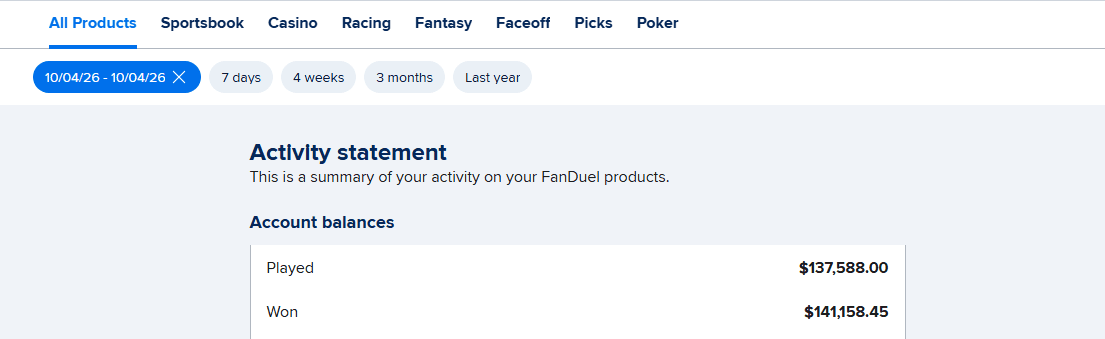
Sports Betting TikTok is the live betting account behind The Best Bet on Sports, covering NFL, NCAAF, NBA, NCAAB, MLB and WNBA markets in real time. The account has been limited on all six major U.S. sportsbooks — FanDuel, DraftKings, Caesars, BetMGM, Fanatics and ESPN BET — for winning on live betting, with $367,520 in verified profit since 2005. View full profile →
Past results do not guarantee future performance. Must be 21 or older to wager.
Related Articles
College Football 2026 Season Preview - Best Futures Bets and Conference Picks
College Football Betting Guide - How to Find Value in NCAAF Lines
Two Top-12 Upsets, Two Opposite Signals
Week 0 Is the Hardest Saturday of the Year to Price
College Football Coaching Carousel 2026: All 34 New Coaches Ranked by Betting Impact
College Football Conference Odds 2026: Power Four Board
Get real live betting picks
From $39.95/mo · Cancel anytime · Email + Discord delivery
● Get The Picks
Choose your package
Tap any tier below to select · Subscribe in one tap
👇 Tap any package to select it
✓ You're selecting
25 Units · $99.95/month
25 unit picks per month. Sweet spot for most bettors — plenty of action without going all-in.
- ✓25 live betting selections/month
- ✓Email + Discord delivery
- ✓All sports (NFL, NCAAF, NBA, NCAAB, MLB)
- ✓Mix of 1, 2, 3, 5-unit rated plays
- ✓Cancel anytime
Secure PayPal · Cancel anytime · No hidden fees · 21+ · +$367K verified
+$367,520 verified · Limited on 6 sportsbooks · 20 years documented · See Proof
Join Our Newsletter
Get free expert sports picks and analysis delivered weekly.