How NIL and the Transfer Portal Changed College Football Betting in 2026

NIL compensation and the transfer portal have fundamentally changed college football handicapping, with rosters now resembling NFL free agency as programs experience 30 to 50 percent annual player turnover through the portal. This roster volatility makes prior-season performance data less predictive than at any point in modern college football history. The sharpest bettors in the current era focus on coaching staff continuity, portal acquisition quality versus quantity, and offensive scheme transferability rather than relying on returning starters metrics that no longer capture the full roster picture.
NIL compensation and the transfer portal have fundamentally changed college football handicapping — rosters now resemble NFL free agency with 30 to 50 percent annual player turnover on some programs, making prior-season performance data less predictive than at any point in modern college football history. The sharpest bettors in the current era focus on coaching staff continuity, portal acquisition quality versus quantity, and offensive scheme transferability rather than relying on returning starters metrics that no longer capture the full roster picture.
Updated June 2026.
I have been handicapping college football since the early 2000s, and the transition to the NIL/transfer portal era is the single biggest structural change to the sport I have ever seen from a betting perspective. What took me several years to fully understand has reshaped every model I use for NCAAF.
The old approach worked like this: count returning starters, check schedule strength, assess head coach tenure, project based on prior season efficiency metrics. That approach still has value, but it misses an entirely new dimension — the quality and integration speed of transfer additions who now comprise a significant portion of every Power Four roster.
If you are still handicapping college football like it is 2018, you are using outdated models. The sharpest college football handicappers have rebuilt their entire analytical frameworks for the portal era. Let me walk you through exactly how I have rebuilt my approach for the current landscape. For expert college football picks that apply portal-era analysis every week, explore our sports picks packages.
How Has the Transfer Portal Changed NCAAF Roster Construction?
The transfer portal has turned roster building into a year-round process. In the pre-portal era, a team's roster was largely stable for 3 to 4 years as recruiting classes developed. Now, the average Power Four program loses 15 to 25 scholarship players to the portal in any given cycle and replaces them with transfers from other programs.
The betting implication: returning starters counts, which were the most reliable predictive metric in college football analytics, now capture only a fraction of roster quality. A team that returns 14 starters but lost its 2nd, 3rd, and 4th wide receivers plus its starting corner and three offensive linemen to the portal is not as strong as the returning starter count suggests.
I have revised my roster continuity metric to include what I call the "roster stability score" — the percentage of the top 44 scholarship players (22 offensive, 22 defensive) returning from the prior year, including portal outflows and inflows. This is more predictive than the conventional returning starters metric.
The table below shows how portal transfer rates affect early-season performance:
| Portal Turnover Rate (Top 44 Scholarship Players) | Expected Performance vs. Prior Season |
|---|---|
| Under 15% turnover | High continuity — prior season metrics strongly predictive |
| 15 to 25% turnover | Moderate continuity — weight prior metrics at 70% |
| 25 to 35% turnover | Significant change — prior metrics at 50%, weight spring reports heavily |
| 35 to 45% turnover | Major rebuild — treat as new team, discount all prior data |
| Over 45% turnover | Complete reset — use coaching staff track record over any player data |
What Does NIL Do to College Football Program Competitiveness?
NIL has redistributed competitive balance in a direction that the betting market has not fully priced. Specifically, programs with large NIL collectives can now acquire portal talent that previously would have gone only to blue-blood programs. This has narrowed the talent gap between the top 15 and top 40 programs in college football.
For bettors, this means: the large-spread assumptions we made about blue-blood programs playing Group of Five opponents or mid-tier Power Four teams are less reliable than they were five years ago. A 17-point spread for a name-brand program against a well-funded mid-tier opponent with an active NIL collective and a smart transfer portal strategy may be too many points.
The two NIL-related factors I track for every team:
Collective Size and Stability. Programs with large, well-organized NIL collectives retain their own talent and attract marquee portal additions. A team whose collective has grown significantly signals better talent retention heading into 2026. A team whose collective has contracted or had organizational issues signals potential talent exodus that the depth chart has not reflected yet.
Portal Quality vs. Portal Quantity. Some programs take 12 to 15 transfers and integrate them into the scheme. Others take 20+ transfers and end up with a roster full of players who do not know their assignments by Week 1. I track portal additions by position need — teams filling specific holes with high-rated portal players are better positioned than teams taking volume to paper over roster deficiencies.
How Should You Adjust Season Win Total Bets in the Portal Era?
Season win totals are my most affected betting market from the NIL/portal era. The predictive models that powered win total betting assumed roster continuity from year to year. With 30 to 40 percent annual roster turnover at some programs, those models need to be rebuilt from the ground up.
Our college football picks analysis reflects these revised models each week. My current win total approach for 2026:
Regress teams toward the mean more aggressively. In the prior era, a team that went 10-2 was likely to repeat in the 9 to 10 win range. Now, a 10-2 team that lost significant portal talent has a wider distribution of outcomes. I apply a wider confidence interval to all win total projections and adjust my sizing down on teams with high portal turnover.
Weight coaching staff continuity heavily. In the portal era, the head coach and coordinators are the true constants. A program that retains its head coach, offensive coordinator, and defensive coordinator across years has more predictability than any roster data can provide. A team with all three returning is a safer win total bet — in either direction — than a team with coordinator turnover.
Identify the portal acquisition that most changes the bet. Every team's win total is predicated on certain assumptions. I look for the one portal addition — usually the starting quarterback, a featured running back, or a cornerstone defensive lineman — that most changes the team's ceiling. If that player is confirmed healthy and enrolled, the win total reflects realistic upside. If that player is listed questionable at spring practice, the over is riskier than the number suggests.
How Do Quarterback Transfers Impact NCAAF Betting Lines?
Quarterback transfers are the single most volatile variable in college football handicapping today. A portal quarterback coming from one program to another brings his statistics, but not his supporting cast, system familiarity, or the comfort of years in the same offense.
The pattern I have seen most clearly: quarterback transfers in Year 1 at a new program are roughly 15 percent less efficient on a per-play basis than their prior year stats suggest. The drop is not because they have suddenly become worse quarterbacks. It is because timing routes take a full offseason and training camp to develop, offensive line communication takes time, and reading coverages in a new system requires accumulated reps.
The betting implication for early-season 2026 games: teams starting a first-year portal quarterback should have their game totals adjusted down by 3 to 4 points in early-season games. Most oddsmakers adjust by 2 to 2.5 points. That 1 to 1.5 point gap is consistent edge in totals betting for teams opening 2026 with a new signal-caller.
The exception: a portal quarterback who played in the same offensive scheme at his previous school. A spread quarterback coming into a spread system has reduced system transition time. His Year 1 performance will be much closer to his prior year numbers than a quarterback switching from a pro-style to an RPO system.
What Does Coaching Staff Turnover Mean for Early-Season Betting?
Head coaching changes are the most extreme version of continuity disruption, but coordinator changes are arguably more impactful on early-season betting lines.
An offensive coordinator change means an entirely new play call vocabulary, different protection schemes for the offensive line, and different route concepts for receivers. The first four games of a new offensive coordinator's season are historically the worst offensive output of his tenure at that school — players are executing the scheme correctly but not instinctively. The difference between executing correctly and executing instinctively is roughly a half-second, and in college football, a half-second is the difference between a big play and a blown assignment.
My coaching change adjustment for early-season games:
- New offensive coordinator: subtract 3 to 4 points from expected offensive output in Games 1 through 4
- New defensive coordinator: add 3 to 4 points to opponent expected scoring in Games 1 through 3
- New head coach from another program: treat entire team as 10 to 15% less predictable early-season, lean to unders
The market underadjusts for coordinator changes specifically because they are lower-profile news. A head coaching change gets massive coverage. An offensive coordinator change at a major program gets one news cycle. But the on-field impact of an OC change is sometimes as large as a head coaching change from a betting perspective.
For the complete framework on evaluating coaching changes in NCAAF betting, read our college football handicapping guide and explore college football picks updated throughout the season.
How Do I Identify which Programs Are Best Positioned in the Portal Era?
The programs that thrive in the NIL/portal era share four characteristics I look for when identifying season-long betting value:
Geographic recruiting hub proximity. Programs near major population centers have recruiting and NIL advantages that compound over time. These programs attract portal talent because players want to return to major metro areas.
Head coach proven in the portal era. Coaches hired before 2021 who have successfully navigated the transition to the portal system are the most valuable assets in college football. They understand how to build chemistry in a high-turnover environment. These programs are better bets in close games because their coaching staff makes better situational decisions.
Offensive system that attracts portal QBs. Quarterback portal movement drives everything. Programs running modern spread or pass-heavy systems attract the best available portal QBs because those players want to improve NFL Draft stock in a showcase offense.
Institutional commitment to NIL. I track which programs have announced multi-year NIL collective commitments versus programs operating without long-term plans. Certainty attracts talent; uncertainty drives it away.
For my complete 2026 NCAAF season preview and picks, visit our college football picks page, where expert college football handicappers break down every matchup with portal-era context. I cover early-season betting strategy in the college football handicapping guide and the 2026 NCAAF season preview. See how a football handicapping system applies to the portal era and check documented results on the Results page.
---
Frequently Asked Questions
How has the transfer portal changed college football betting?
The transfer portal has made prior-season performance metrics less predictive by creating 25 to 40 percent annual roster turnover at many programs. Returning starters counts, which were once the strongest predictive metric, now miss significant portal outflows and inflows. Successful handicappers now track roster stability scores, coaching continuity, and portal addition quality rather than relying purely on prior-year statistics.
Does NIL affect which college football teams to bet on?
Yes, significantly. Programs with strong NIL collectives retain their own portal targets and attract high-quality additions. Teams with NIL infrastructure changes — growth or contraction — often see corresponding roster quality changes that the market has not priced. I track collective size and stability for every team I consider betting in the season win total market.
How should I adjust college football win totals for transfer portal teams?
Apply a wider confidence interval to all win total projections for high-turnover programs. Regress teams toward the mean more aggressively than in the pre-portal era. Weight coaching continuity (head coach, both coordinators retained) as the strongest predictor of performance consistency when roster data is volatile. Teams with 35 percent or more portal turnover should be treated as largely unpredictable in early-season games.
What is the best way to bet teams with new transfer portal quarterbacks?
Fade their totals in early-season games by 3 to 4 points below their prior year offensive output. First-year portal QBs at new programs are consistently 15 percent less efficient than their prior year numbers suggest due to scheme adjustment, new route timing, and offensive line communication learning curve. The exception is QBs moving into a similar offensive system.
Do coaching changes affect early-season NCAAF betting lines enough?
No — especially coordinator changes. New offensive coordinators suppress offensive output in the first four games at a rate the market does not fully reflect. New defensive coordinators allow more scoring in the first three games. These coaching changes get less media coverage than head coaching hires but have comparably large early-season betting implications.
Are point spreads too large in the NIL era for big programs?
Yes, in many cases. NIL has redistributed competitive balance upward toward well-funded mid-tier programs. Large spreads (17+ points) for blue-blood programs against well-managed mid-tier opponents with active NIL collectives are frequently overinflated relative to true probability. I have found consistent value backing funded underdogs in these games.
Where can I find expert college football picks that account for the portal era?
Look for a NCAAF picks service whose handicapper explicitly discusses roster composition, coaching continuity, and portal additions in their analysis rather than relying on prior-season efficiency stats. Services that have updated their models for the current environment will demonstrate awareness of NIL and portal dynamics in their published picks reasoning. See my college football betting guide for a full framework.
The Best Bet on Sports · 1.5M followers on TikTok
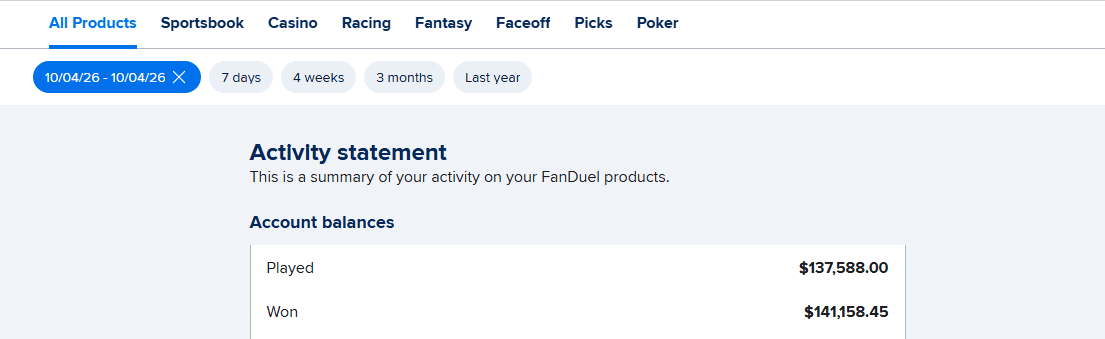
Sports Betting TikTok is the live betting account behind The Best Bet on Sports, covering NFL, NCAAF, NBA, NCAAB, MLB and WNBA markets in real time. The account has been limited on all six major U.S. sportsbooks — FanDuel, DraftKings, Caesars, BetMGM, Fanatics and ESPN BET — for winning on live betting, with $367,520 in verified profit since 2005. View full profile →
Past results do not guarantee future performance. Must be 21 or older to wager.
Related Articles
College Football Picks and Predictions - NCAAF Best Bets Guide for 2026
College Football Betting Guide - How to Find Value in NCAAF Lines
College Football Betting as a Beginner: The Complete Starter Guide
Missouri 45, Florida 17: Our Worst Betting Day Ever
Week 3 Broke the Board: Ole Miss Over LSU, Kentucky at Kyle Field
Texas Tech 28, Houston 26: A Two-Point Try Decided Everything
Get real live betting picks
From $39.95/mo · Cancel anytime · Email + Discord delivery
● Get The Picks
Choose your package
Tap any tier below to select · Subscribe in one tap
👇 Tap any package to select it
✓ You're selecting
25 Units · $99.95/month
25 unit picks per month. Sweet spot for most bettors — plenty of action without going all-in.
- ✓25 live betting selections/month
- ✓Email + Discord delivery
- ✓All sports (NFL, NCAAF, NBA, NCAAB, MLB)
- ✓Mix of 1, 2, 3, 5-unit rated plays
- ✓Cancel anytime
Secure PayPal · Cancel anytime · No hidden fees · 21+ · +$367K verified
+$367,520 verified · Limited on 6 sportsbooks · 20 years documented · See Proof
Join Our Newsletter
Get free expert sports picks and analysis delivered weekly.