Live Betting Field Goals vs Touchdowns: Reading the Red-Zone Edge

The biggest recurring live-total edge in football is the red-zone binary: a drive ending in a touchdown worth seven versus a stalled field goal worth three is a four-point swing, and the live number usually prices in the touchdown before the play happens. When you correctly read a stalling red-zone drive and the market still says seven, the live under on three is the value. Here is how to read the stall, time the trigger, and play the momentum after a settle-for-three.
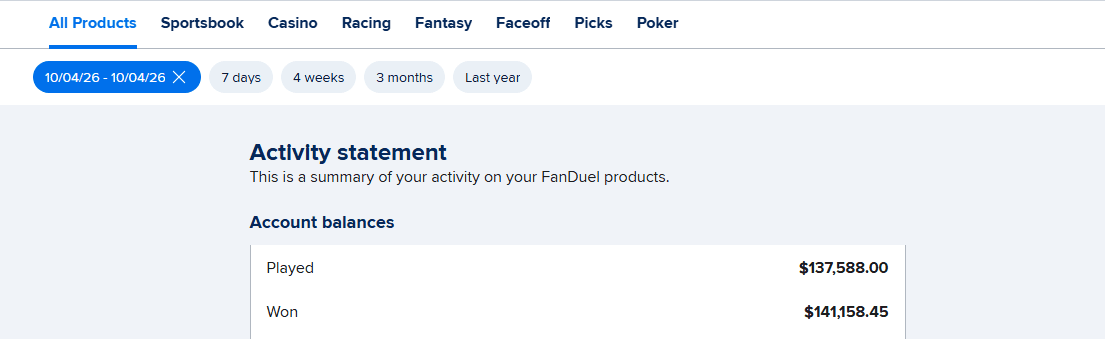
In football, the single most common live-total swing is the red-zone binary: a drive that reaches the red zone either ends in a touchdown worth seven or stalls into a field goal worth three, and that four-point gap is the most frequently repeated scoring decision in the entire game. Here is the edge — the live number almost always prices the touchdown in early. Books and public live money treat a first-and-goal as a near-certain seven, so the moment a defense stuffs the drive and forces a settle-for-three, the live under is briefly worth more than the market says. Reading that stall before the field-goal unit trots out is a seconds-long window, which is exactly why it is so hard to beat alone. The Best Bet on Sports has turned that kind of live read into a documented $367,520+ profit while limited on all six major U.S. sportsbooks (FanDuel, DraftKings, Caesars, BetMGM, Fanatics, ESPN BET) for winning too much on live betting, with the exact trigger sent to your phone via Email and Discord the instant it fires.
Every football game is a chain of scoring decisions, and the biggest one repeats over and over: a team drives into the red zone, and the trip resolves as either a touchdown or a field goal. That is a four-point difference, and it happens more often than any other scoring event in a game. Read which way a red-zone trip is about to break a beat before the market does, and you are betting the most repeatable live-total edge football offers. Here is how the read works.
Why the Touchdown-or-Field-Goal Decision Is the Biggest Live-Total Swing
Start with the arithmetic, because it drives everything. A touchdown with the extra point is worth seven. A field goal is worth three. The gap between the two outcomes is four points — and unlike a two-point safety or a defensive score, this exact four-point fork gets tested on nearly every meaningful drive. Teams reach the red zone several times a game. Each trip forces the same binary. That is why the touchdown-versus-field-goal decision, not the big play downfield, is the true engine of a live total.
Compare it to the other things that move a live number. A scoring drive builds slowly, chunk by chunk, and the total drifts as field position changes — but the drive's resolution in the red zone is where the points actually land, and that is where the number lurches. A punt and the field-position battle that precedes it caps out at a change in where the next drive starts. The red-zone fork is different: it is the moment the scoreboard gets seven or gets three, and that four-point difference is the largest routine swing in the sport. Master that one decision and you are attacking the highest-frequency mispricing on the board.
Why the Live Number Prices In the Touchdown Before the Play
Here is the exploitable part. As a drive crosses the 20 and pushes toward the goal line, the live model and the live money both lean hard toward seven. The book's algorithm sees a team with a first-and-goal and adjusts the live total and team total upward on the assumption the drive is very likely to finish in the end zone. Public live bettors do the same thing, only louder — a team knocking on the door feels like a certain touchdown, and recreational money piles onto the "they're going to score" side. The number inflates toward seven before a single red-zone snap confirms it.
That anticipation is the source of the edge, and it is a core idea in how to win at live football betting: the market prices the expected outcome, not the actual one, and the expected outcome in the red zone is a touchdown. Most of the time the market is right — plenty of red-zone trips do end in six. But the number does not distinguish between a first-and-goal from the two after a defensive collapse and a first-and-goal from the 19 against a defense that just stiffened. It prices them close to the same. When you can tell those two situations apart in real time, you are holding information the live number has not caught up to yet. The value is not in knowing a team is near the end zone. The value is in reading, before the market does, that this particular trip is about to stall.
How to Read a Stalling Red-Zone Drive
Reading a stall is a football-watching skill, not a stat. The field itself is your first tell: the red zone is the hardest place to score a touchdown because it is the most compressed. There is no room behind the defense, so the vertical passing game disappears, safeties squat on everything underneath, and the end line acts like a twelfth defender. An offense that lived on deep shots in the open field now has to earn every yard in a phone booth. When a pass-happy offense gets compressed and goes one-dimensional, the touchdown gets harder even though the number still says it is coming.
Then watch the down-and-distance sequence. A stall usually announces itself early:
- A stuffed first-and-goal. No gain or a loss on first down inside the ten is the loudest tell — it puts the offense behind the chains in the exact spot where they have the least room to recover.
- A sack or a penalty. A holding call or a coverage sack that pushes the offense back out of goal-to-go range quietly turns a likely touchdown into a likely field goal, and the number is slow to react.
- Predictable, condensed play-calling. When the offense becomes obvious — a fade to the corner, a back-shoulder throw, a checkdown on third-and-goal — a good defense sits on it.
- A visible settle. Watch the sideline. When the field-goal unit starts stretching and the kicker is loosening his leg on second down, the coaching staff is already planning for three.
None of these are guarantees, and you should never bet a stall off a single snap. But when two or three of them stack on the same drive, the picture is clear enough to act on. For a broader view of how these in-game reads translate into actual plays, our football picks show the reasoning behind the trigger, not just the number.
The Live-Under Trigger When a Defense Forces a Field Goal
Now the timing. The trigger is the gap between the moment the drive stalls and the moment the market resets to reflect three. That window opens on the stuff — the stopped run on second-and-goal, the incompletion in the end zone on third down, the sack that backs them up — and it closes when the field-goal unit trots out and the live number quietly falls back toward the field-goal outcome. In between, the live total and team total are often still carrying the seven the market priced in on the way down the field. That is your live under.
The vehicle depends on the book. Sometimes it is the game total, sometimes the team total, sometimes a drive-result market that pays the field-goal outcome directly. The principle is the same across all of them: you are buying three at a price the market set expecting seven. This is one of the cleanest expressions of a real live betting edge, because it does not require predicting the future — it requires reading a situation the market has already half-mispriced and acting inside the correction window.
One honest complication you have to price in: modern coaches increasingly go for it on fourth-and-goal. A stalled drive does not always mean a field goal anymore — against an aggressive staff, a stuff on third-and-goal can lead to a fourth-down attempt, which is either a touchdown or zero points on a turnover on downs. That changes the math, and it is why the read has to include which coach is making the call, not just the down and distance. Sometimes the stall points cleanly to three. Sometimes it points to a coin-flip between seven and nothing. Knowing the difference is the whole job.
The Momentum Read After a Settle-for-Three
The four-point swing does not end when the field goal splits the uprights — it changes the tone of the game, and that feeds your next read. A defense that holds an offense to three after a first-and-goal walks off with its confidence up, while the offense that expected seven is deflated and knows it left points on the field. A red-zone stand often precedes a defensive stretch, which is a quiet signal for a rest-of-game under lean if the number does not already reflect it.
But do not run the read one-directional. The counter is just as real: a defense that spent eight physical plays fighting off a goal-line drive can be gassed, and a fresh offense taking over on a short field the next possession can catch it before it substitutes. So a settle-for-three is not automatically an under signal for the rest of the night — it is a data point about which unit has the edge right now, weighed against the pre-game number and the game script. One field goal is never a trend. Handled with discipline, it sharpens the next trigger instead of tempting you into an overreaction bet.
Why This Edge Is So Hard to Capture Alone
Everything above lives inside windows that last seconds. You have to be watching the specific red-zone snap, recognize the stall as it happens, know what the live number should be once three becomes likely, and fire before the field-goal unit resets the market. Miss on any one of those and the read is worthless — you can nail the football and still lose because you were ten seconds too slow, or because you priced three when the coach went for it on fourth down. A solo bettor juggling the broadcast, the bet slip, and real life cannot reliably win that race across a full slate.
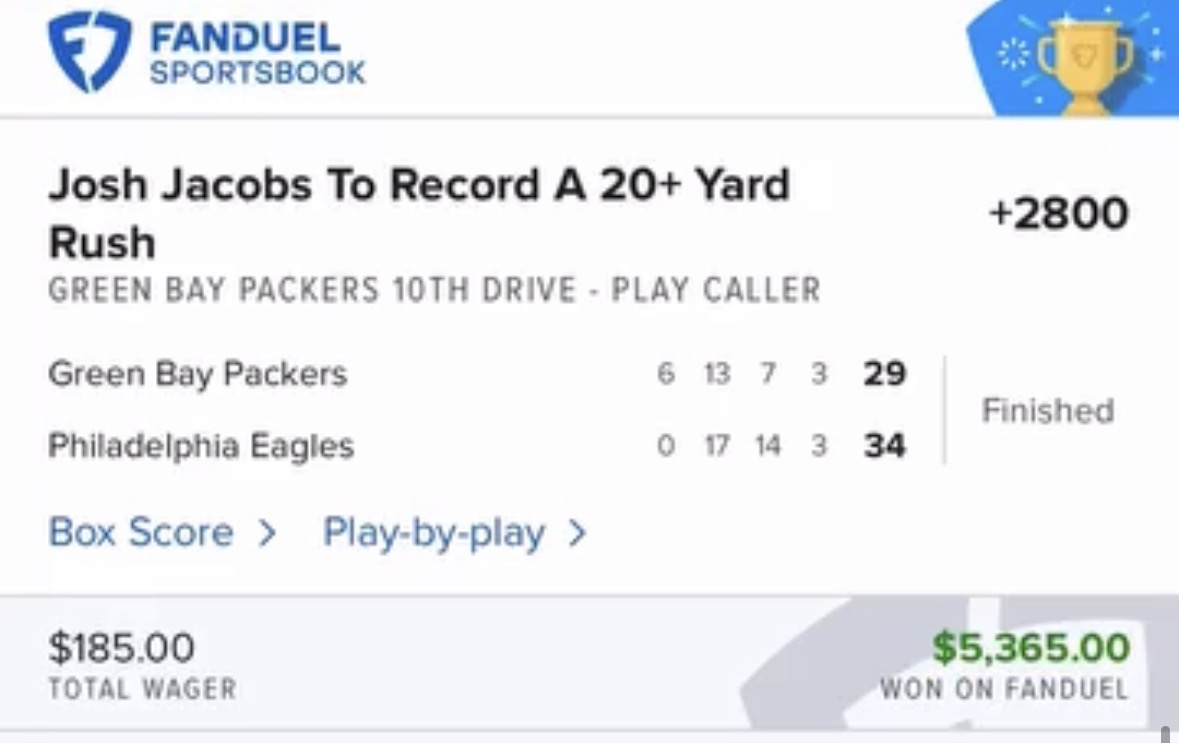
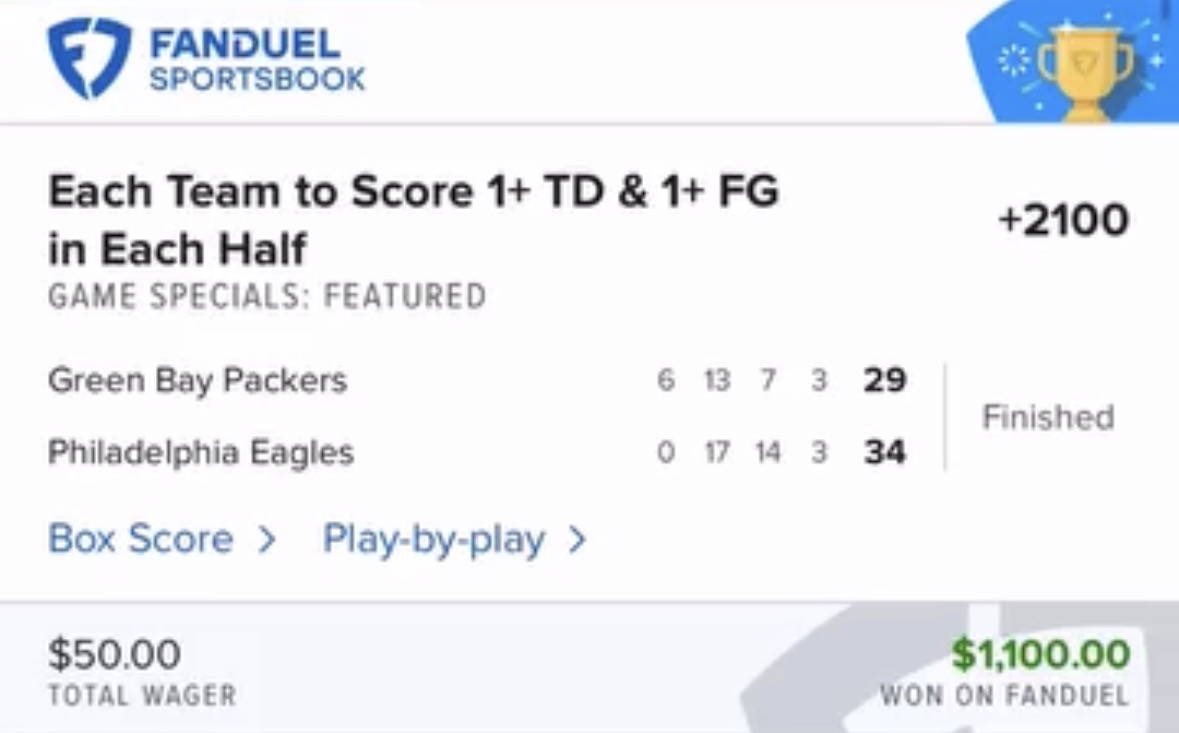
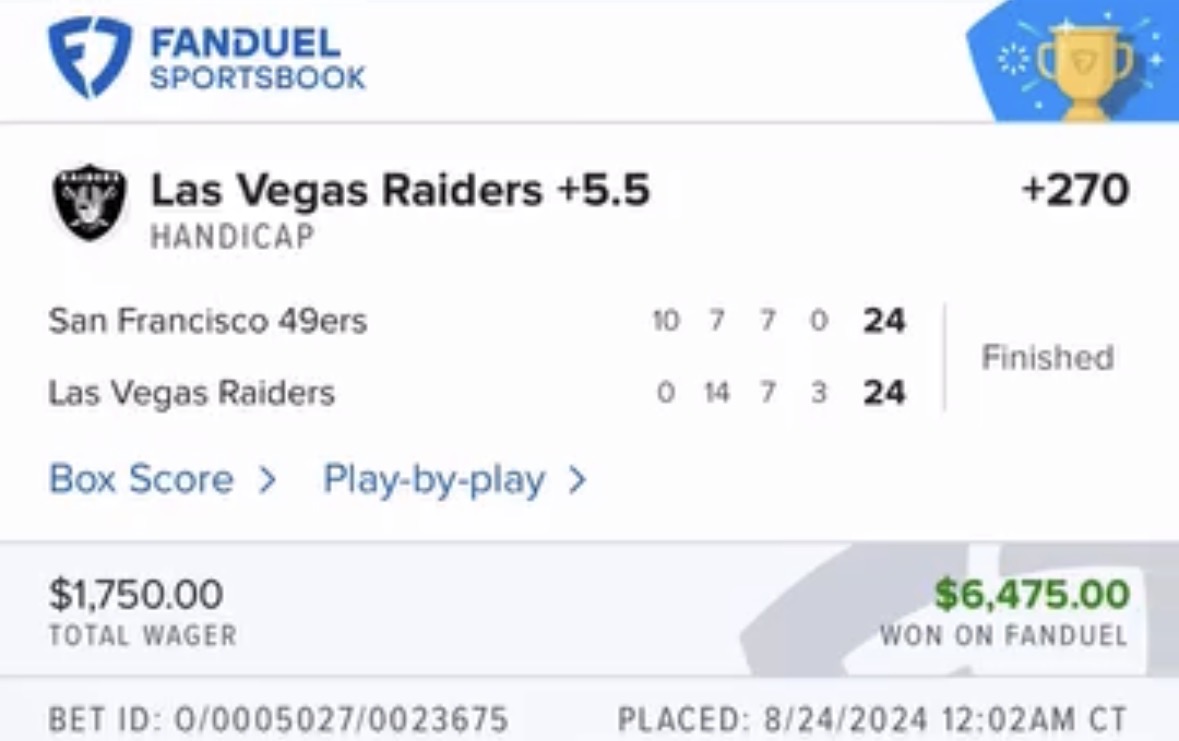
That is the entire reason a live service exists. A team watching every red-zone trip on the board, with the field-goal number already priced, can push the exact trigger to your phone the instant a defense forces the settle — while the live under still carries the touchdown. That is the difference between reading the edge and actually cashing it. The Best Bet on Sports has built a verified $367,520+ profit doing precisely this, and got limited on all six major U.S. sportsbooks for it. You can see the reasoning behind our in-game reads on the NFL picks page and the receipts on the results page.
Get Tonight's Live Picks
Want tonight's live in-game picks delivered to your phone via Email and Discord during the game — the exact red-zone under triggered and priced the moment a defense forces a field goal, while the number still says seven?
The Best Bet on Sports is the only live betting service limited on all six major U.S. sportsbooks (FanDuel, DraftKings, Caesars, BetMGM, Fanatics, ESPN BET) for winning too much during in-game action. Verified profit: $367,520+. Picks delivered via Email and Discord during games.
→ Get tonight's live picks: $199 first month — 1-Unit package, full live betting access → Reserve your spot for tonight's live pick — claim tonight's pick before kickoff
Frequently Asked Questions
Why is a red-zone field goal versus touchdown the biggest live-total swing?
Because it is the most frequently repeated scoring decision in football and it carries a four-point gap. A touchdown with the extra point is worth seven; a field goal is worth three. Teams reach the red zone several times a game, and each trip forces the same binary. Unlike a rare safety or defensive score, this exact fork gets tested over and over, which makes it the highest-frequency mispricing a live total offers. Read which way a red-zone trip breaks a beat before the market does and you are attacking the single most repeatable edge in the sport.
Why does the live number price in the touchdown before the play?
As a drive pushes toward the goal line, both the sportsbook's algorithm and the public live money lean toward seven. The model adjusts the total upward assuming a first-and-goal is very likely to finish in the end zone, and recreational bettors pile onto the team that "feels" like a sure score. The number inflates toward the touchdown before a single red-zone snap confirms it. Most of the time the market is right, but it does not distinguish a first-and-goal from the two against a collapsing defense from a first-and-goal against a defense that just stiffened. That gap is where the value hides.
How do I read a stalling red-zone drive?
Start with the field: the red zone is the hardest place to score because it is compressed, the deep passing game disappears, and the end line acts like an extra defender. Then watch the down-and-distance sequence for tells — a stuffed first-and-goal, a sack or penalty that backs the offense out of goal-to-go range, predictable condensed play-calling, and the field-goal unit warming up on the sideline. Never bet a stall off one snap, but when two or three of those signals stack on the same drive, the touchdown is getting less likely even though the live number still says it is coming.
What is the live-under trigger when a defense forces a field goal?
The trigger is the window between the moment a drive stalls and the moment the market resets to reflect three points. It opens on the stuff — a stopped run on second-and-goal, an incompletion in the end zone, a sack that backs the offense up — and it closes when the field-goal unit trots out and the number falls back toward the field-goal outcome. In between, the live total is often still carrying the seven the market priced on the way down the field. Buying the under in that gap means taking three at a price set for seven.
Does a stalled drive always mean a field goal?
No, and this is a critical nuance. Modern coaches increasingly go for it on fourth-and-goal, so a stall against an aggressive staff can lead to a fourth-down attempt, which resolves as either a touchdown or zero points on a turnover on downs. That changes the math entirely. A clean field-goal read requires knowing which coach is making the call, not just the down and distance. Sometimes a stall points cleanly to three; sometimes it points to a coin-flip between seven and nothing. Reading the coach's tendency is part of the trigger, not an afterthought.
How should I read momentum after a team settles for a field goal?
A defense that holds an offense to three after a first-and-goal gains confidence, while the offense that expected seven is deflated — a red-zone stand often precedes a defensive stretch and can support a rest-of-game under lean. But read it both ways. A defense gassed from a long goal-line stand can be vulnerable if a fresh offense takes over on a short field the next possession. One field goal is never a trend; it is a read on which unit has the edge right now. Weigh it against the pre-game number and the game script rather than overreacting to a single sequence.
Why is this red-zone edge so hard to capture on my own?
Because it lives in windows that last seconds. You have to watch the specific red-zone snap, recognize the stall as it happens, know what the live number should be, and place the bet before the field-goal unit resets the market. Miss on any one of those and the read is worthless — you can be right about the football and still lose to slow execution or a fourth-down decision you did not price. A solo bettor juggling the broadcast, the bet slip, and the rest of a slate cannot reliably win that race, which is exactly why a live service that watches every red-zone trip and delivers the pre-priced trigger to your phone exists.
The Best Bet on Sports · 1.5M followers on TikTok
Sports Betting TikTok is the live betting account behind The Best Bet on Sports, covering NFL, NCAAF, NBA, NCAAB, MLB and WNBA markets in real time. The account has been limited on all six major U.S. sportsbooks — FanDuel, DraftKings, Caesars, BetMGM, Fanatics and ESPN BET — for winning on live betting, with $367,520 in verified profit since 2005. View full profile →
Past results do not guarantee future performance. Must be 21 or older to wager.
Related Articles
Live Betting During Scoring Drives: The In-Game Read
Live Betting Turnovers: Why the Line Overreacts to a Pick-Six
Can You Win at Live Betting on Your Own? An Honest Look
Expert Sports Picks vs. the Nine-Leg Ticket Boom
NCAA Football Picks: The Injury Report You Might Not Get
Your Sportsbook's Bet History Is a Receipt, Not a Record
Get real live betting picks
From $39.95/mo · Cancel anytime · Email + Discord delivery
● Get The Picks
Choose your package
Tap any tier below to select · Subscribe in one tap
👇 Tap any package to select it
✓ You're selecting
25 Units · $99.95/month
25 unit picks per month. Sweet spot for most bettors — plenty of action without going all-in.
- ✓25 live betting selections/month
- ✓Email + Discord delivery
- ✓All sports (NFL, NCAAF, NBA, NCAAB, MLB)
- ✓Mix of 1, 2, 3, 5-unit rated plays
- ✓Cancel anytime
Secure PayPal · Cancel anytime · No hidden fees · 21+ · +$367K verified
+$367,520 verified · Limited on 6 sportsbooks · 20 years documented · See Proof
Join Our Newsletter
Get free expert sports picks and analysis delivered weekly.