Live Betting Punts and Field Position: The Quiet Under Edge

In live betting, a punt — especially a three-and-out — is a quiet under trigger most bettors ignore. When both offenses trade punts early, the live total often still reflects the pre-game pace, even though fewer possessions remain and the real scoring rhythm is slower than the market has priced. Reading the field-position battle before the total catches up is where the live under edge lives, and it vanishes fast once the slow game becomes obvious to everyone watching.
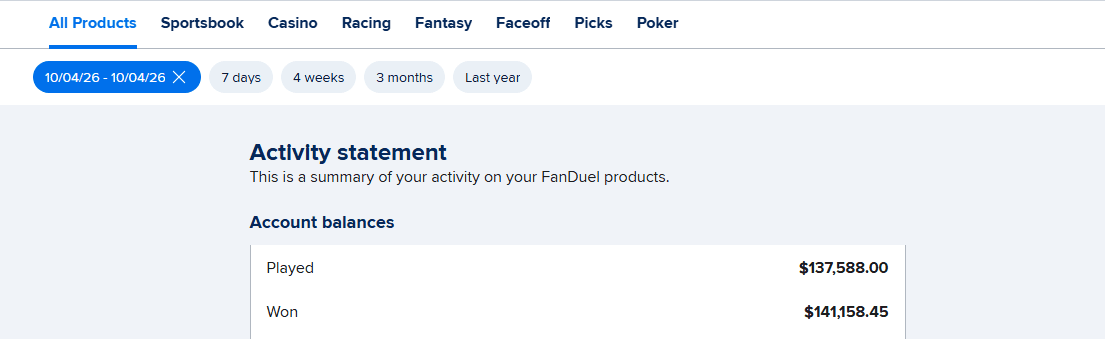
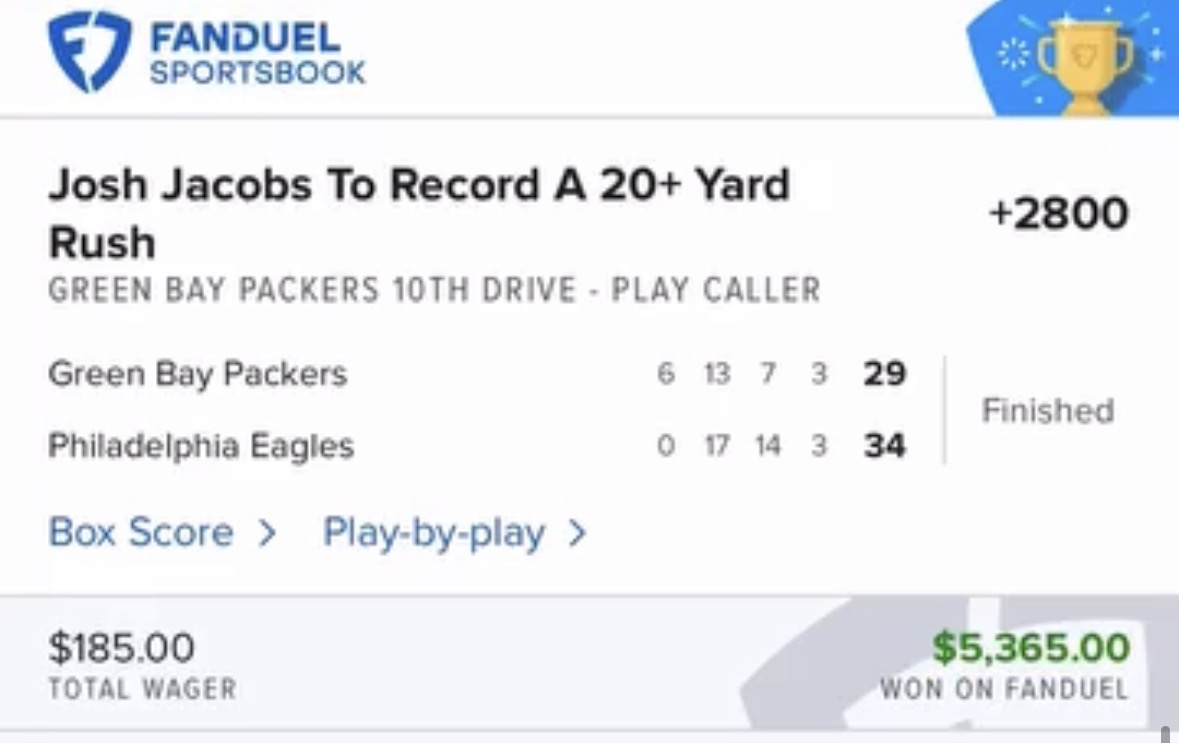
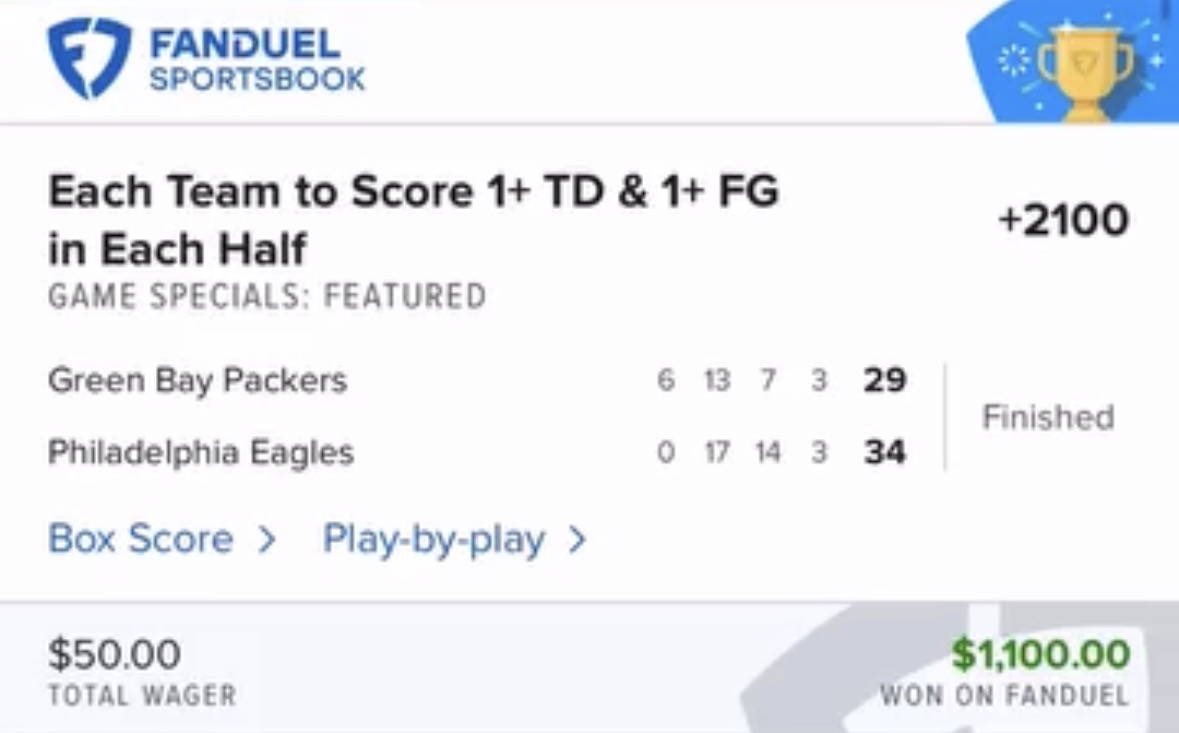
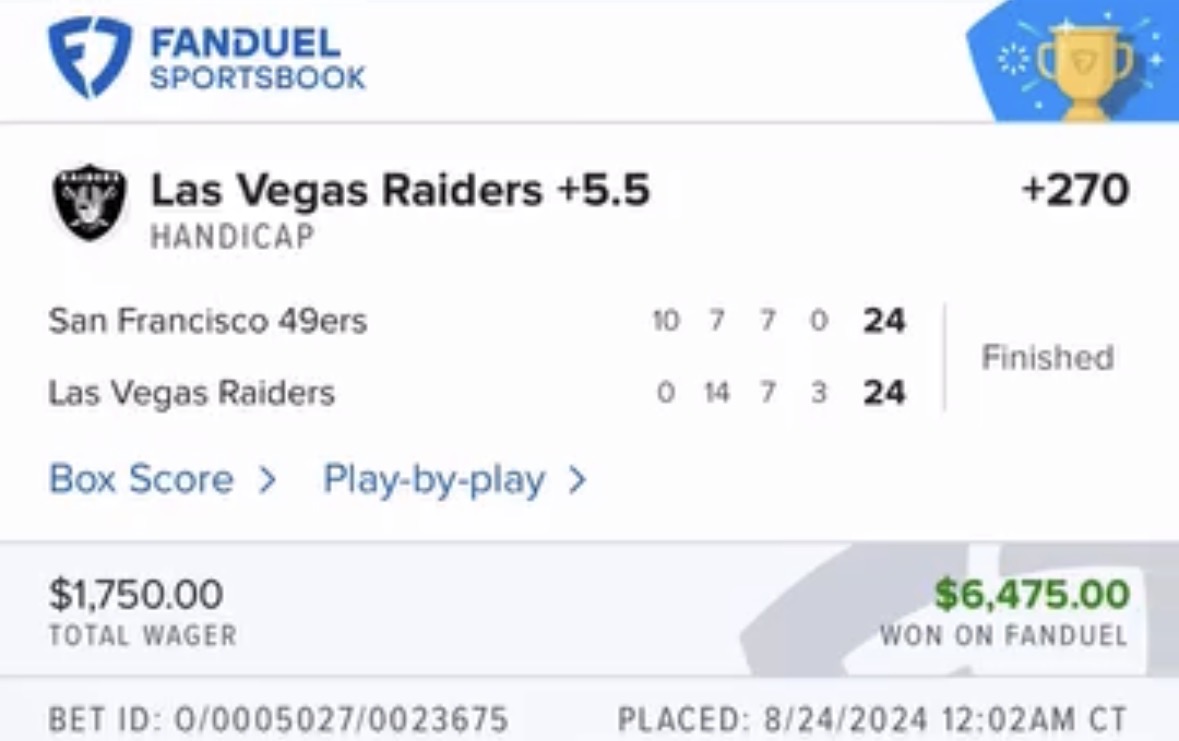
In live betting, a punt is a signal, not a dead play — and a three-and-out is one of the quietest under triggers on the board. When both offenses trade punts early, the live total is often still anchored to the pre-game pace the market expected, even though the game on the field is running slower, burning clock, and leaving fewer possessions for anyone to score. That gap between the priced pace and the real pace is the under edge. It is also brutally hard to capture alone, because the live total marks itself down within a drive or two once the slow game becomes obvious. This is the kind of read The Best Bet on Sports built its record on — a documented $367,520+ profit earned while limited on all six major U.S. sportsbooks (FanDuel, DraftKings, Caesars, BetMGM, Fanatics, ESPN BET) for winning too much during live action, with picks delivered by Email and Discord while the number is still wrong.
Most bettors watch a punt and reach for their phone to scroll, not to bet. That is exactly the mistake. The scoreboard says 0-0 and feels like nothing has happened, but a lot has happened — clock is gone, a possession is gone, and the field-position battle underneath the score is quietly deciding how the rest of the game will be priced. Let's break down why punts and field position create a real live-betting edge, and how to read it before the market does.
Why a Punt Is a Live Under Trigger, Not a Boring Play
Pre-game totals are built on an expectation of pace — how many possessions each team will get, how efficiently they'll move the ball, and how often those drives end in points. When the game kicks off and both teams immediately stall and punt, the actual pace is running below that pre-game expectation. But the live total does not drop nearly as fast as the reality changes, and understanding that lag is the whole game — the same principle behind the live-betting vs. pre-game edge.
The reason is how live pricing models weigh their inputs. Early in a game, the biggest input is still the pre-game prior, because there isn't much elapsed time or scoring data yet to override it. The model sees 0-0 with most of the clock left and keeps projecting forward off the number it opened with. So after two exchanged punts, the live total might sit only a fraction below where it started — even though a careful watcher can already tell both lines are winning at the point of attack and this is shaping up as a grind. That is the window where the live under is priced too high, and it's the same class of read that live in-game football picks are built to exploit.
The trap is that punts are boring, so bettors disengage at the exact moment the value is fattest — one of the most reliable recurring edges in live football betting. The discipline is the opposite: bet the under while the number is still full, not after a 3-0 halftime makes the slow game obvious to everyone.
The Three-and-Out Math: Fewer Possessions, Slower Clock
A three-and-out does two things that both push a total down, and neither of them shows up on the scoreboard.
First, it ends a possession with zero points. Each team only gets so many possessions in a game, and every drive that dies at the 50 instead of in the end zone is a scoring chance that is now gone for good. Trade a few of those early and the realistic ceiling on total points quietly drops, because there simply aren't as many drives left to hit it.
Second, it can bleed real clock. A ground-based three-and-out — three runs that stay inbounds — can burn well over a minute of game time for zero points, with the play clock eating the gaps. An incompletion-heavy three-and-out gives the ball back faster because the clock stops, but the possession still ends scoreless. Either way, the game is shortening and the scoreboard isn't moving. This is the heart of how live scoring-drive math actually works: points come from drives, and punts are drives that produced nothing while spending a resource you can't get back.
Stack two or three exchanged three-and-outs and you have a game that is objectively slower and shorter than its pre-game total assumes — while the market is still catching up.
How Field Position Resets the Scoring-Drive Math
Here is the piece most bettors miss entirely: not all drives are created equal, and field position is what separates them. A drive that starts at your own 10 after a booming punt and good coverage is a 90-yard project. It needs more first downs, more successful plays, and more time — and every extra play is another chance to stall, take a sack, draw a penalty, or turn it over. A drive that starts at midfield needs only a fraction of that to reach field-goal range.
So when a defense and its punt team consistently pin the opponent deep, they aren't just flipping the field — they're raising the price of admission on every one of the opponent's drives. Long fields turn would-be touchdown drives into field-goal attempts, and field-goal drives into punts. That directly lowers points per drive, which is exactly the mechanism behind the difference between live betting field goals vs. touchdowns: field position quietly converts sevens into threes, and threes into zeros.
The "hidden yards" of the punt game are real. A team that wins field position all night is handing its own offense short fields and forcing its opponent to march the length of the grass. When both teams are doing it to each other, the net result is a slow, field-flipping slog that produces far fewer scoring drives than the pre-game total imagined — a textbook live under, if you read it before the number moves.
The Live-Spread Read When a Defense Wins Field Position
Field position isn't only an under story — it's a live-spread tell, too. Picture this concrete sequence: Team A punts and pins Team B at its own 8. Team B goes three-and-out and has to punt from the back of its own end zone, so Team A takes over near midfield. The score is still 0-0, but Team A is winning the game that actually matters — the field.
Short fields convert to points more often than long ones, so a team that keeps stacking field-position wins is usually the better live-spread side going forward, even when the scoreboard hasn't rewarded it yet. The live spread may still be sitting near the pre-game number or close to pick'em because the market is waiting for the scoreboard to confirm what the field already shows. That lag is the edge. Meanwhile, the team that keeps getting pinned deep and punting from its own end zone is living dangerously — a single mistake back there (a safety, a blocked punt, a short-field score for the opponent) can crack the game open against them.
The honest caveat, and the reason I frame this as a read rather than a lock: field position can flip on one explosive play or one turnover. That is why this belongs inside a broader discipline — the full framework for how to win live football betting — and not treated as an automatic bet every time a team punts.
Reading the Punt Battle at a Glance
| What You See | What the Live Market Is Doing | The Read |
|---|---|---|
| Both teams trade early three-and-outs | Total still anchored near the pre-game number | Live under is priced too high — the real pace is slower |
| One defense keeps forcing punts, its offense keeps getting short fields | Spread near pre-game or pick'em despite field dominance | That team's live spread is better than the score suggests |
| A team punts repeatedly from deep in its own end | Market waits for the scoreboard to move | Under pressure builds; a safety or short-field score is live |
| Score reaches 3-0 or 6-3 at halftime | Total has already dropped | Value is gone — the slow game is now obvious to everyone |
Why This Edge Is So Hard to Bet Alone
Every part of this read is correct in the abstract and nearly impossible to execute solo in real time. To bet the punt-and-field-position under, you have to be watching the game closely enough to see both lines winning, know that the live total is lagging the real pace, price what the under should actually be, and get the bet down before the model marks the number down on its own — which happens within a drive or two. That is a race, and the in-game betting window on this pattern is short.
That is the wall solo bettors hit. Not knowledge — execution. By the time you've confirmed the number is good, opened the bet slip, and tapped confirm, the total has already ticked down. This is precisely the gap a live service exists to close: a team watching the full slate, already tracking the field-position battle, already knowing the number, and pushing the exact live live betting picks to your phone the instant the market is wrong — while the value still exists.
And the credential behind those reads isn't a marketing claim. Being limited on all six major U.S. sportsbooks is the books themselves certifying, with their own money, that the operation wins too much during live action. The $367,520+ verified profit was earned inside these exact windows — the quiet ones, before the scoreboard makes the read obvious.
Get Tonight's Live Picks
Want tonight's live in-game picks delivered to your phone by Email and Discord during the game — pre-priced and timed so you bet the under while the number is still fat, instead of racing the total correction alone?
The Best Bet on Sports is the only live betting analysis service limited on all six major U.S. sportsbooks (FanDuel, DraftKings, Caesars, BetMGM, Fanatics, ESPN BET) for winning too much during in-game action. Verified profit: $367,520+. See the track record on the results page.
→ Get tonight's live picks: $199 first month — 1-Unit package, full live betting access → Reserve your spot for tonight's live pick — claim tonight's pick before kickoff
Frequently Asked Questions
Is a punt a good time to bet the live under?
Often, yes — especially early in a game when both offenses are trading punts. A punt ends a possession with zero points and shortens the game, but the live total usually still reflects the pre-game pace the market expected. That gap between the priced pace and the slower real pace is where the live under edge sits. The catch is timing: the value is largest before the slow game is obvious, and it shrinks quickly once the total marks itself down.
Why does the live total stay high when both teams keep punting?
Because early in a game, live pricing leans heavily on the pre-game prior. With the score at 0-0 and most of the clock remaining, the model keeps projecting forward off the number it opened with, since there isn't much elapsed time or scoring yet to override it. So after two or three exchanged punts, the total drops only slightly — even though a careful watcher can already tell the real pace is slower than the market has priced.
How does field position change scoring-drive math in live betting?
Field position sets the price of every drive. A possession starting at the offense's own 10 is a 90-yard march with many more chances to stall, punt, or turn it over, while a drive starting at midfield needs half the work to reach field-goal range. When a defense keeps pinning the opponent deep, long fields turn touchdown drives into field goals and field goals into punts — quietly lowering points per drive and pushing the realistic total down.
Can you read the live spread from the field-position battle?
You can. If one team keeps forcing three-and-outs and getting short fields while the other punts from deep in its own end, the field-position winner is usually the better live-spread side going forward — even at 0-0. Short fields convert to points more often than long ones. The live spread often lags because the market waits for the scoreboard to confirm the field-position edge, and that lag is the opportunity for a bettor watching closely.
When is the best time to bet a live under in a low-scoring game?
Early — typically first quarter into the early second, while both teams are exchanging punts and the total is still anchored near the pre-game number. That is when the priced pace and the real pace are furthest apart. Once the game reaches something like 3-0 or 6-3 at halftime, the total has already collapsed and the value is gone, because the slow game is now obvious to the entire market.
Does a single three-and-out really move the live total?
One three-and-out on its own moves it only a little, but the effect compounds. Each one ends a possession scoreless, removes a scoring chance no one gets back, and can bleed clock. Stack two or three exchanged three-and-outs and the game is objectively slower and shorter than its pre-game total assumed. The live number lags that reality early, which is exactly when a sharp under read is available before the market fully adjusts.
Why is the punt and field-position under edge hard to bet on your own?
Because it's a race you usually lose alone. You have to watch both lines closely, recognize the total is lagging the real pace, price the true under, and place the bet before the model marks the number down — all within a drive or two. Solo bettors have the read right but the execution too slow. The Best Bet on Sports closes that gap: a team watches the slate and pushes the exact bet by Email and Discord while the value still exists — the same edge behind its $367,520+ verified profit and being limited on all six major sportsbooks.
The Best Bet on Sports · 1.5M followers on TikTok
Sports Betting TikTok is the live betting account behind The Best Bet on Sports, covering NFL, NCAAF, NBA, NCAAB, MLB and WNBA markets in real time. The account has been limited on all six major U.S. sportsbooks — FanDuel, DraftKings, Caesars, BetMGM, Fanatics and ESPN BET — for winning on live betting, with $367,520 in verified profit since 2005. View full profile →
Past results do not guarantee future performance. Must be 21 or older to wager.
Related Articles
In-Game Betting Windows: When Live Bets Actually Have an Edge
The Closing Spread Misses by Ten Points
The 1 PM Problem: When Sunday Parlays Actually Die
Key Numbers and Parlays: The Three-Point Problem
Should Pick Service Bets Have Their Own Bankroll?
The 2026 NFL Rule Changes That Move Live Betting Numbers
Get real live betting picks
From $39.95/mo · Cancel anytime · Email + Discord delivery
● Get The Picks
Choose your package
Tap any tier below to select · Subscribe in one tap
👇 Tap any package to select it
✓ You're selecting
25 Units · $99.95/month
25 unit picks per month. Sweet spot for most bettors — plenty of action without going all-in.
- ✓25 live betting selections/month
- ✓Email + Discord delivery
- ✓All sports (NFL, NCAAF, NBA, NCAAB, MLB)
- ✓Mix of 1, 2, 3, 5-unit rated plays
- ✓Cancel anytime
Secure PayPal · Cancel anytime · No hidden fees · 21+ · +$367K verified
+$367,520 verified · Limited on 6 sportsbooks · 20 years documented · See Proof
Join Our Newsletter
Get free expert sports picks and analysis delivered weekly.