Your Sportsbook's Bet History Is a Receipt, Not a Record

A sportsbook stores what you staked and what came back. It does not store the price you could have had, the moment you decided versus the moment you clicked, the stake you intended, or why you bet. Those four missing fields are the only things that separate bad picks from bad execution — two failure modes that produce identical bank statements. Here is the log that tells them apart in fifteen seconds a bet.
Open your sportsbook's bet history and look at what is actually stored: the selection, the price you got, the stake, the result, the payout. Now notice what is missing. There is no field for the price you could have had at another book. No field for when you decided to make the bet versus when you managed to place it. No field for the stake you meant to put down. No field for why. The Best Bet on Sports has run live in-game betting since 2005 with a verified $367,520+ in documented profit across every major U.S. sportsbook, and the most common reason a bettor cannot tell whether a season went badly because of the picks or because of the execution is that the only record they kept was written by a company with no interest in the difference.
This is not a conspiracy. A sportsbook's data model exists to settle wagers and manage risk. It records what it needs for grading and for its own trading desk. Your improvement is simply not one of its design requirements, and there is no reason it should be.
But the consequence is real, and it is expensive. A bettor with a full year of settled tickets and nothing else cannot answer the single most important question about that year: was I wrong, or was I slow? Those two failure modes produce identical bank statements. They call for opposite fixes. And the difference between them is the difference between canceling a service that was working and renewing one that wasn't.
What Does Your Sportsbook Actually Store?
Everything required to prove that a settled bet was settled correctly, and nothing else.
Selection, odds at the moment of acceptance, stake, timestamp of placement, outcome, payout. In some apps you get a filterable history and a rudimentary profit chart. That is a complete audit trail of transactions. It is a nearly useless diagnostic dataset.
Consider what it can and cannot distinguish. Two bettors each place 100 wagers over a month on the same selections. Both finish down. One was picking well and getting bad numbers. The other was getting excellent numbers on bad reads. Their bet histories look the same — same selections, same results column, similar red total at the bottom. The book's record contains no field capable of separating them, because from the book's perspective they were the same customer doing the same thing.
There is a second-order effect worth naming. Because outcome is the only judgment field the book gives you, the mind fills the gap with the only tool it has: memory. And memory about betting is systematically distorted — near-misses feel like unlucky wins, the bet you talked yourself out of gets remembered as the one you'd have won, and a strong week overwrites a bad month. The book's record doesn't lie, but it leaves exactly the space that recall fills badly.
Which Four Fields Actually Change Anything?
Not twenty. Four. Anyone who tells you to track twenty-five fields is describing a system you will abandon inside a week, and an abandoned log is worth less than no log because it produces a partial dataset you will mistakenly trust.
| Field | Time to record | What it isolates |
|---|---|---|
| Decision time vs. placement time | 3 seconds | Latency cost — how much you lose between knowing and doing |
| Price taken vs. best price you saw | 5 seconds | Execution cost — whether you are shopping or accepting |
| Planned stake vs. actual stake | 3 seconds | Discipline leak — chasing, tilt, and size creep |
| One-line reason | 5 seconds | Process quality, independent of the result |
Decision time versus placement time. In pregame betting this is minor. In live betting it is the whole game. If you got an alert at 9:12 and placed at 9:19, you did not make the bet that was recommended — you made a different bet, at a price the market had already adjusted, on a game state that had moved. Log both timestamps and after thirty bets you will know your true average latency instead of your imagined one. Most people who assume they act "right away" are consistently four to eight minutes slower than they believe. We wrote about the mechanics of this in how fast you need to act on a live betting alert; the log is how you find out whether it applies to you personally.
Price taken versus best price visible. Not the theoretical best price in the market — the best price you personally had access to and looked at. If you took −118 while −112 was on the screen of the second app on your phone, that is a six-cent leak with your name on it, and it is invisible in the book's record because the book only knows what you accepted. Thirty of those and the gap between a break-even year and a losing one is fully explained without a single bad opinion being involved.
Planned stake versus actual stake. Write the intended number before you place. The interesting data is not the average — it is the variance, and specifically when the variance appears. Almost everyone's oversized bets cluster in identifiable conditions: late at night, after two losses, on the last game of a Sunday. You will not learn that from a running total. You will learn it in one glance at a column where the deviations are visible next to the timestamps.
One line on why. Ten words. "Live under after both QBs looked off in Q1." The reason field is what makes it possible to grade a decision separately from its result, which is the only honest way to evaluate anything in a high-variance activity. A bad reason that won is still a bad reason, and if it isn't written down you will never once catch yourself repeating it.
How Does a Log Answer the Only Question That Matters?
The renewal decision. Here is the scenario a log resolves and nothing else does.
Two subscribers take the same picks over the same thirty days. Subscriber A finishes up modestly. Subscriber B finishes down. Same selections, same month. B concludes the service does not work and cancels. That conclusion is reached on a feeling, and it might be right — but it is being made with no evidence either way.
Now give both of them a log. B's shows an average of eleven minutes between alert and placement, prices consistently worse than the ones quoted, and four bets at double the planned stake, all of them on the tail end of losing nights. A's shows two-minute latency, prices at or near the quoted number, and no size deviations. Same picks, different execution, and now the difference has a location.
That is a genuinely different conversation than "it didn't work." B's problem is fixable and has nothing to do with the picks. And critically — this is the part that matters — the log could just as easily have shown the opposite. If B's execution was clean and the month still lost, that is real evidence against the product, and it should be acted on.
This is the same divergence we described in why your results differ from the service record. That article explains the causes. The log is how you find out which of them is yours.
What Should You Not Track?
More important than it sounds, because the failure mode of bet tracking is almost never insufficient ambition.
Do not track twenty fields. You will stop. Four fields plus what the book already gives you is enough to diagnose the overwhelming majority of problems a bettor actually has.
Do not use closing line value as your primary metric if you bet live. CLV is a genuinely useful proxy in pregame markets, where a closing number exists. In live betting there is no closing line in the same sense — the market prices continuously and ends at a whistle, so there is no single settled number to measure against. Applying pregame CLV logic to in-play wagers produces a metric that looks rigorous and measures something other than what you think. The full CLV discussion is here, including where it does apply.
Do not grade individual bets by whether they won. A single outcome contains almost no information about the quality of the decision that produced it. This is why the reason field exists — so that in review you can sort by process and see whether the good reasons and the bad reasons are actually separating over a large enough sample to mean anything.
Do not review it nightly. Nightly review of a high-variance dataset is a machine for manufacturing overreaction. Weekly is better. Monthly is better still for anything involving a conclusion, and thirty days is roughly the floor before an execution pattern is even legible.
How Long Before the Log Tells You Anything?
Two different clocks, and conflating them is the most common analytical error bettors make.
Execution patterns show up fast. Latency, price-taking, and stake discipline are properties of your behavior, not of luck, and they stabilize within roughly thirty to fifty bets. If your average delay is nine minutes, that will be obvious almost immediately, because you are the only variable.
Result quality shows up slowly. Whether a set of picks is profitable is a question about a distribution, and thirty bets tells you close to nothing about it. Sixty days of live betting volume is a starting point for an impression, not a verdict. Anyone who reaches a confident conclusion about pick quality from three weeks of data has learned something about variance rather than about picks, which is the substance of why you shouldn't quit a service after a losing week.
The practical asymmetry is useful: your log will tell you whether you are executing well long before it tells you whether the picks are good. Fix the first thing while you are still gathering evidence on the second. That ordering costs nothing and is available to everyone.
What Will the Log Say About Us?
It might say to cancel. That is not a rhetorical flourish — it is the actual reason to keep one.
A service that discourages tracking is telling you something. Any operation confident in its process should want subscribers holding a dataset capable of indicting it, because the same dataset is the only thing that can credibly clear it. We would rather someone cancel on evidence than renew on hope, for a reason that is more commercial than noble: a subscriber who renews on hope cancels three months later anyway, and does it feeling misled.
So here is the honest version of the bridge. Our card is deliberately short, the wagers are placed in-game, and the difference between the number in the alert and the number you get is larger in live betting than it is anywhere else — that is the nature of a market that reprices every few seconds. Which means our product is unusually sensitive to exactly the things the four-field log measures. If you are going to be eleven minutes late to every alert, we would rather you know that before you pay $199, because the picks will not overcome it and neither of us will enjoy the month.
And there is a case against overreading the log, which belongs here too. A clean execution record does not make a losing stretch acceptable, and a messy one does not excuse bad picks. The log narrows the question. It does not answer it for you.
Get Tonight's Live Picks
Want tonight's live in-game picks delivered to your phone via Email and Discord during the game — with the timestamps and prices logged clearly enough that you can measure your own execution against them?
The Best Bet on Sports is the only live betting handicapping service limited on all six major U.S. sportsbooks (FanDuel, DraftKings, Caesars, BetMGM, Fanatics, ESPN BET) for winning too much during in-game action. Verified profit: $367,520+. Picks delivered via Email and Discord during games.
→ Get tonight's live picks: $199 first month — 1-Unit package, full live betting access → Try a free live pick first — reserve your spot for tonight's pick
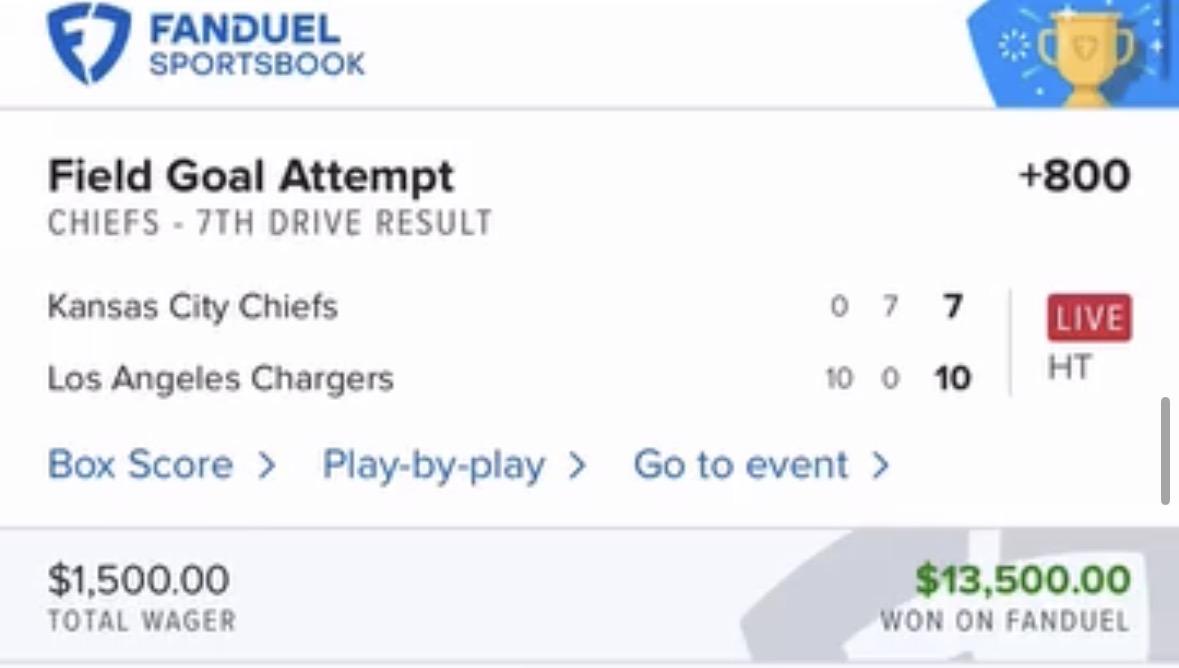
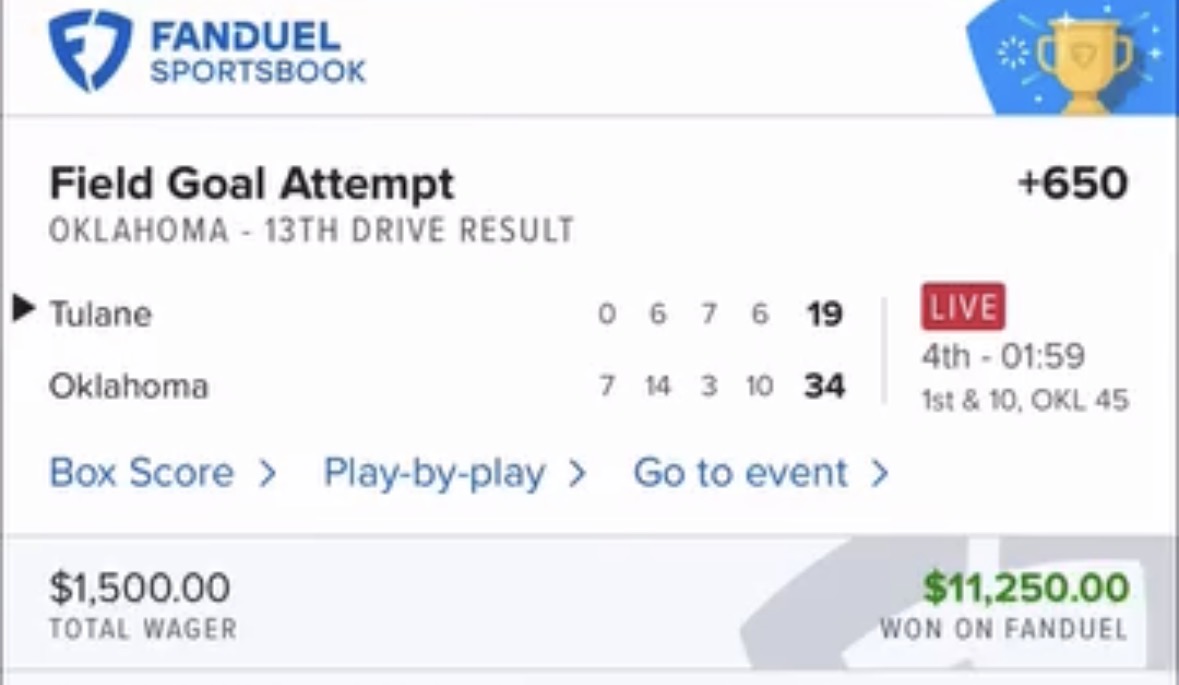
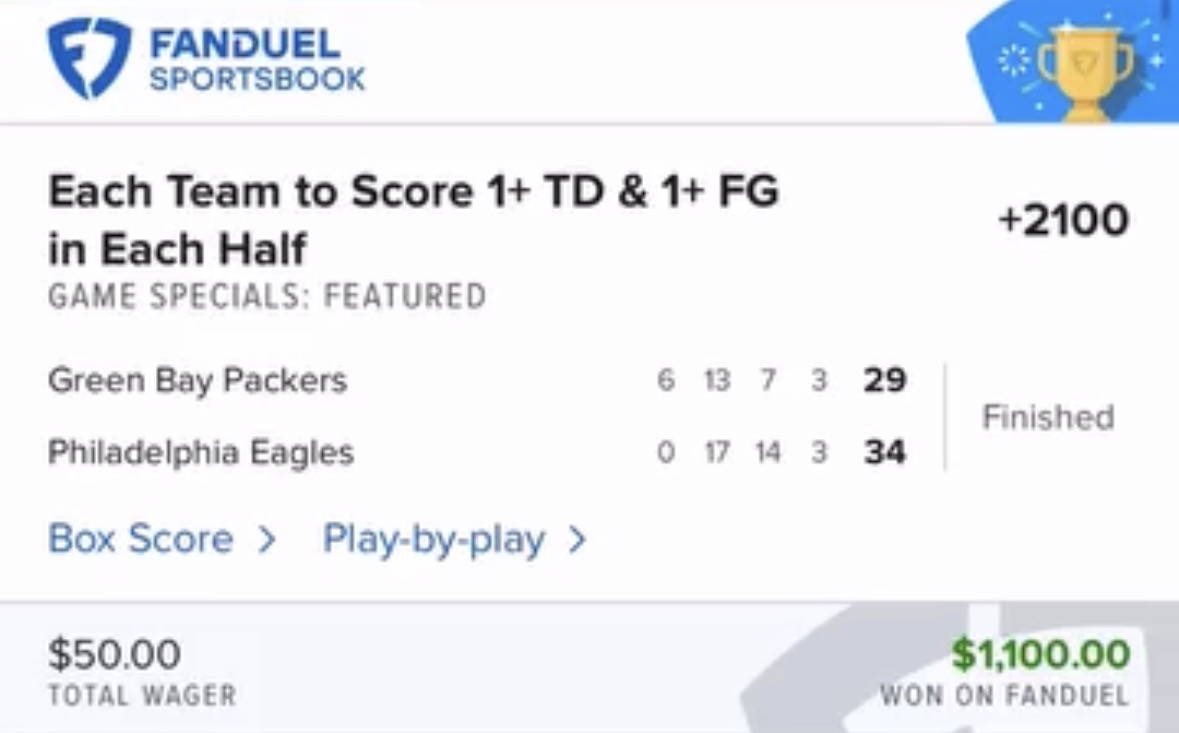
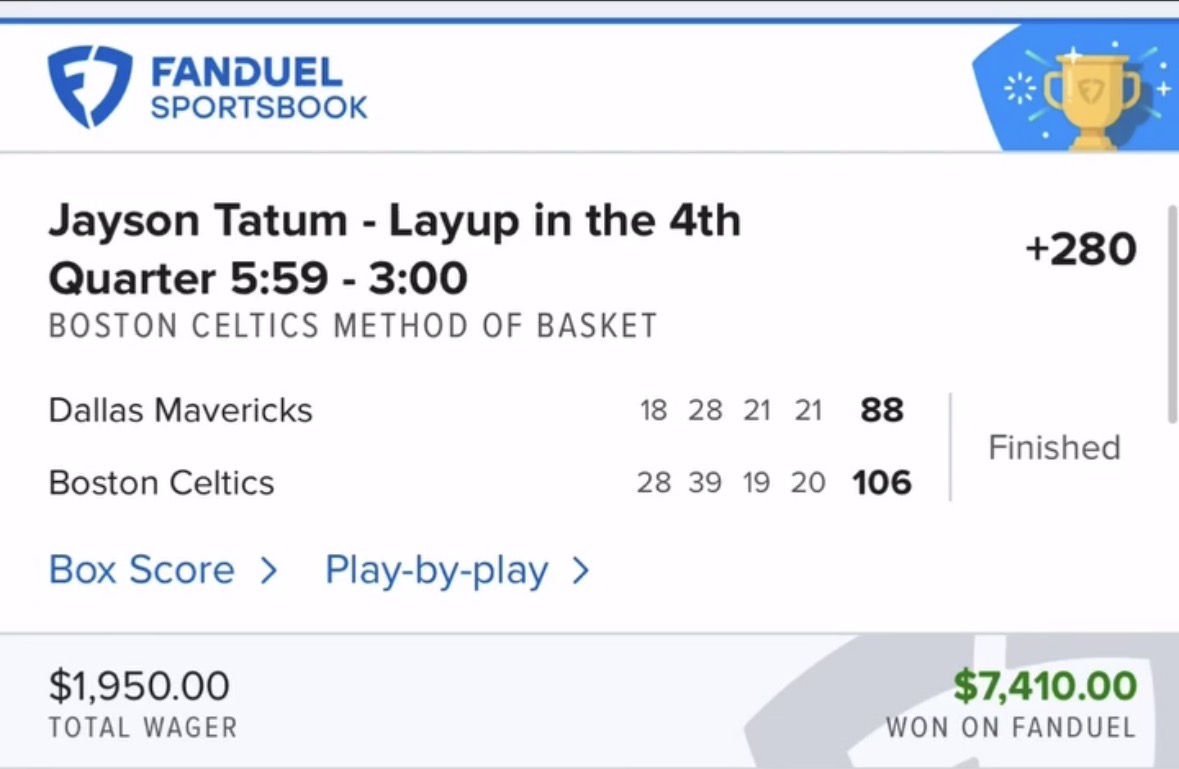
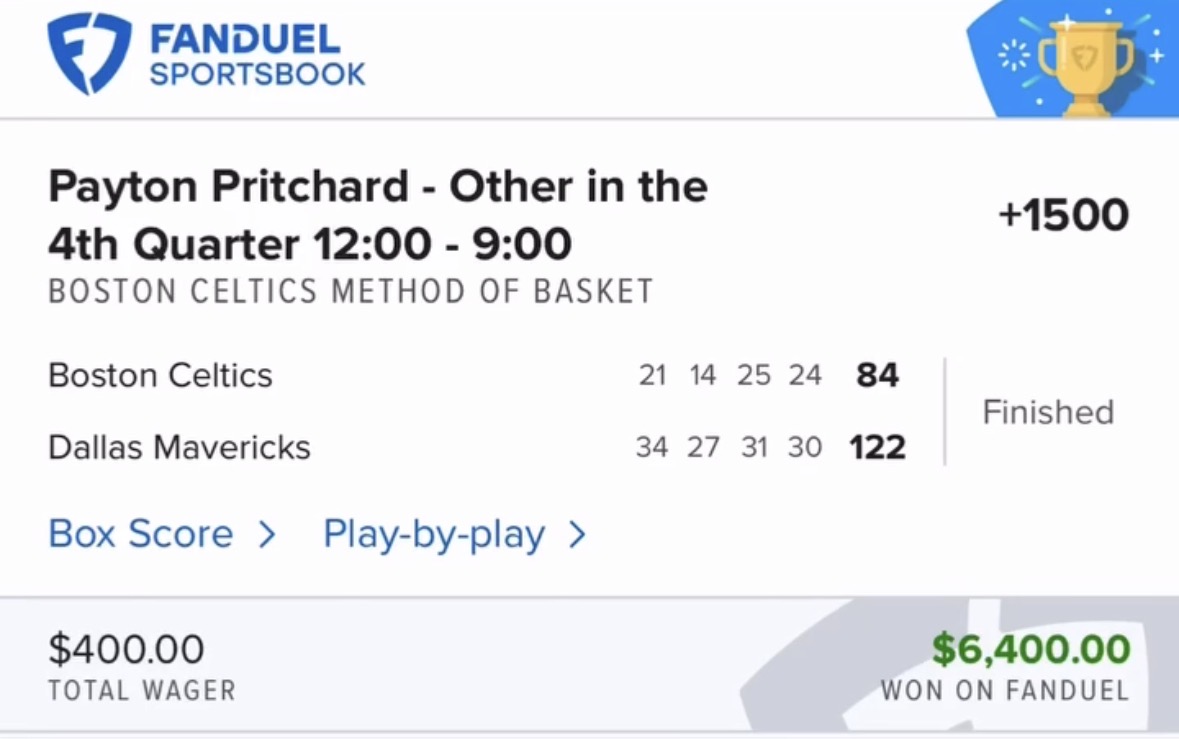
Every wager we post is on the verified results page with the price we actually took. See how the in-play card is built on live betting picks, or start with sport pages for NFL picks, college football picks, and NBA picks. If you are still deciding, what a $199 pick service actually delivers is the straightest answer we have.
Frequently Asked Questions
Why isn't my sportsbook's bet history enough to track my betting?
Because it stores only what is needed to settle a wager: selection, accepted price, stake, result, and payout. It has no field for the price you could have had elsewhere, no field for when you decided versus when you placed, no field for the stake you intended, and no field for your reasoning. Those omissions are exactly the ones that separate poor selections from poor execution, so a full year of that history cannot tell you which problem you have.
What should I track in a sports betting log?
Four fields beyond what the sportsbook already gives you: the time you decided versus the time you actually placed the bet, the price you took versus the best price you personally saw, the stake you planned versus the stake you put down, and one short line explaining why you bet. That takes roughly fifteen seconds per wager. Tracking more than that is how most people end up abandoning the log within a week.
How many bets do I need before a betting log means something?
It depends on what you are asking. Execution patterns — latency, price-taking, stake discipline — stabilize within about thirty to fifty bets, because they measure your own behavior rather than luck. Whether a set of picks is actually profitable is a question about a distribution and requires far more data; sixty days of volume is a starting impression, not a verdict. Your log will tell you whether you are executing well long before it tells you whether the picks are good.
Should I track closing line value on live bets?
Generally no. CLV is a useful proxy in pregame markets because there is a defined closing number to measure against. Live markets price continuously and end at a whistle, so there is no equivalent settled number, and applying pregame CLV logic to in-play wagers produces a metric that looks rigorous while measuring something else. For live betting, latency and the gap between the quoted price and the price you got are far more informative.
Does tracking my bets actually improve results?
Tracking does not make picks better. What it does is make problems locatable, and most bettors' recurring leaks are behavioral rather than analytical — placing late, accepting worse numbers than were available, and sizing up after losses. Those are visible in a four-field log within a month and are essentially invisible in a sportsbook's history. Fixing a nine-minute average delay is worth more to most live bettors than any change in selection.
How do I know if a pick service is working or if I'm the problem?
Compare your log against the service's posted record. If your latency is low, your prices are close to the ones quoted, and your stakes match your plan, then the difference between your results and the published record is small and the picks are being evaluated fairly. If your log shows long delays, worse numbers, and size deviations on losing nights, the gap has a cause that has nothing to do with pick quality. Either finding is useful, and one of them says cancel.
How often should I review my betting log?
Weekly for execution, monthly for anything approaching a conclusion. Reviewing nightly is a reliable way to overreact to variance, because a single evening of results carries almost no information about the quality of the decisions behind it. The point of the log is to give you a basis for judgment that is slower and steadier than your memory, and reviewing it too often reintroduces exactly the recency bias it was built to remove.
The Best Bet on Sports · 1.5M followers on TikTok
Sports Betting TikTok is the live betting account behind The Best Bet on Sports, covering NFL, NCAAF, NBA, NCAAB, MLB and WNBA markets in real time. The account has been limited on all six major U.S. sportsbooks — FanDuel, DraftKings, Caesars, BetMGM, Fanatics and ESPN BET — for winning on live betting, with $367,520 in verified profit since 2005. View full profile →
Past results do not guarantee future performance. Must be 21 or older to wager.
Related Articles
Why Your Results Won't Match a Pick Service's Record
Can a Pick Service Fix Bad Betting Habits? The Honest Answer
Expert Sports Picks vs. the Nine-Leg Ticket Boom
NCAA Football Picks: The Injury Report You Might Not Get
The 2026 Gambling Tax Change Makes Bet Volume Expensive
Live Betting Field Goals vs Touchdowns: Reading the Red-Zone Edge
Get real live betting picks
From $39.95/mo · Cancel anytime · Email + Discord delivery
● Get The Picks
Choose your package
Tap any tier below to select · Subscribe in one tap
👇 Tap any package to select it
✓ You're selecting
25 Units · $99.95/month
25 unit picks per month. Sweet spot for most bettors — plenty of action without going all-in.
- ✓25 live betting selections/month
- ✓Email + Discord delivery
- ✓All sports (NFL, NCAAF, NBA, NCAAB, MLB)
- ✓Mix of 1, 2, 3, 5-unit rated plays
- ✓Cancel anytime
Secure PayPal · Cancel anytime · No hidden fees · 21+ · +$367K verified
+$367,520 verified · Limited on 6 sportsbooks · 20 years documented · See Proof
Join Our Newsletter
Get free expert sports picks and analysis delivered weekly.