MLB Doubleheader Game 2 Betting Strategy May 2026: Bullpen Carryover, Position Player Rest, and Total Mispricing

MLB doubleheader Game 2 markets are systematically mispriced because bullpen depletion, position player rest patterns, and starting lineup adjustments from Game 1 carry forward in ways that pre-game models underweight. The trailing team in Game 1 typically burns four to six relief innings, leaving Game 2 with a depleted late-inning bullpen. Sharp bettors who track Game 1 bullpen usage and identify rest-day position swaps capture three to five points of run line and total value per qualified Game 2.
MLB doubleheader Game 2 markets are some of the most systematically mispriced totals and run lines on the regular-season betting board, because bullpen depletion from Game 1, position player rest swaps, and starting lineup downgrades flow into Game 2 in ways that pre-game models routinely underweight. The Best Bet on Sports has logged over $367,520 in verified profit across two decades by tracking the kind of micro-edges that doubleheader Game 2 spots produce. The trailing team in Game 1 typically burns four to six relief innings, often dipping into the leverage arms; the winning team frequently rests two to three position players in Game 2 to preserve them for the next series. Bettors who track Game 1 bullpen usage and read the Game 2 lineup card before the live market does capture three to five points of run line and total value per qualified Game 2.
The 2026 MLB schedule includes the highest concentration of doubleheaders in over a decade, driven by April-May rainouts and the league's compressed makeup schedule. Each doubleheader produces a Game 2 with a unique handicapping profile that pre-game models, which often treat both games independently, fail to capture cleanly. The result is a recurring class of mispriced spots that disciplined bettors can target.
This guide breaks down what actually drives Game 2 totals and run lines, how to identify the Game 2 mispricing in real time, why pre-game models miss the carryover effects, and how to integrate the strategy with broader MLB live and pre-game betting. For broader MLB context see our MLB picks page and our MLB run line strategy guide.
What Carries Over From Game 1 to Game 2
Three categories of carryover effect:
1. Bullpen depletion. Pitchers who appeared in Game 1 — especially high-leverage arms used in close games — are unavailable or have reduced velocity in Game 2.
2. Position player rest swaps. Managers commonly rest one to three regular position players in Game 2, replacing them with bench bats whose offensive profile changes the lineup's run-scoring expectation.
3. Starting pitcher matchup variance. Doubleheader Game 2 starters often include a "27th-man" callup, an emergency starter, or a swing reliever. These pitchers carry a higher variance and a different walk-rate profile than a normal rotation arm.
Each effect on its own moves the line by half a point to a full point. Combined, the Game 2 line can be off by two to four points from where the model implied total should sit.
Bullpen Depletion: The Largest Single Effect
Game 1 of a doubleheader is usually played as if it were a standalone game. Managers use their normal late-inning sequencing — setup man, closer, lefty specialist as needed. A close, low-scoring Game 1 burns three to five relief appearances. A blowout Game 1 burns one or two long relievers. A close, high-scoring Game 1 can burn six relief appearances and dip into the next-day-leverage arms.
The result for Game 2: the team that played Game 1 close enough to deploy its A bullpen has a degraded bullpen for Game 2. The opposing team — which may have rested more arms in Game 1 if it was the winner — has a fresher bullpen.
The market typically prices Game 2 with a generic adjustment: the winning team is favored slightly more, the total ticks up half a point. But the actual differential between two depleted bullpens versus two fresh bullpens is closer to a full run on the total in tight games.
| Game 1 Bullpen Usage | Game 2 Bullpen Status | Total Adjustment |
|---|---|---|
| 1-2 relievers, blowout | Fresh A bullpen | None to slight under |
| 3-4 relievers, mixed leverage | Mid-leverage tired | +0.5 total |
| 5+ relievers, high leverage | Depleted leverage | +1.0 to +1.5 total |
| Closer used in non-save spot | Closer unavailable Game 2 | +0.5 total |
The most exploitable spot: when one team's Game 1 bullpen usage was heavy and the opposing team's was light, the Game 2 run line on the team with the fresh bullpen often offers value at -110 or better even when the favorite price has not adjusted.
Position Player Rest Swaps
Doubleheaders compress nine hours of baseball into a single day. Catchers, in particular, are almost never asked to start both games — the league average for primary catcher Game 2 starts in a doubleheader is under 15 percent. Backup catchers post offensive numbers that are typically 20 to 30 percent below the primary catcher's wOBA.
Other rest patterns:
- Aging shortstops and middle infielders rest in Game 2 at high rates
- DHs sometimes flip from primary lineup to bench role
- Star outfielders coming off long road trips rest in either game
- The 27th-man rule allows a doubleheader-specific bench addition who is often a fringe major leaguer with limited offensive ceiling
The cumulative effect on the lineup wOBA can be six to twelve points (.006 to .012). On a typical run-scoring environment, that is roughly half a run of expected scoring per game.
Starting Pitcher Variance
Doubleheader Game 2 starting pitchers fall into a few distinct categories:
- Scheduled rotation arm. Same caliber as a normal start. No carryover effect.
- 27th-man callup. Often a triple-A starter making a spot start. Higher walk rate, lower strikeout rate, higher run expectancy.
- Emergency bullpen game opener. A reliever scheduled to throw two to three innings before the bullpen takes over. Total expectation rises significantly.
- Veteran fifth starter on regular rest. No carryover effect, but watch for previous-game pitch count.
The 27th-man callup category is the most exploitable. These pitchers post run expectancy roughly 1.5 to 2.0 runs higher than a typical rotation arm. The pre-game total adjustment usually captures only half of this differential.
Why Pre-Game Models Miss the Carryover
Most pre-game pricing models are built around starting pitcher matchups, lineup wOBA, ballpark factor, and weather. They do not natively integrate Game 1 bullpen usage as a Game 2 input. The bullpen depletion adjustment is usually layered on as a small modifier — typically a 0.2 to 0.4 run shift — when the actual depleted-bullpen impact on tight games can be a full run.
Position player rest swaps are similarly underweighted. Models update lineup wOBA when the lineup card is posted, but the timing of the lineup card release often coincides with Game 1's late innings, leaving a thin window between line release and first pitch where the price has not fully adjusted.
The 27th-man starter effect is the most consistently mispriced of the three. Pre-game models often default to the 27th-man's career stats, which can be skewed by small sample size and minor-league context that does not translate to MLB hitters.
How to Position the Bet
The mechanical steps for a Game 2 doubleheader bet:
1. Track Game 1 bullpen usage in real time. Note which relievers appeared, how many pitches each threw, and whether high-leverage arms were used. The key data point is the closer's availability for Game 2.
2. Wait for the Game 2 lineup card. Lineups typically post 60 to 90 minutes before first pitch. Note any rest-day swaps, especially at catcher and DH.
3. Check the Game 2 starting pitcher. If the listed starter is a 27th-man callup or emergency opener, the total is likely to settle higher than opening.
4. Identify the mispricing. Compare the Game 2 total to where the same matchup would price as a standalone game with the listed pitchers and lineups. The gap is the edge.
5. Bet within the first 30 minutes after lineup release. Live market adjustment to lineup news is faster than ever in 2026, but the 30-minute window after lineup release is still where most edge can be captured.
The strategy is not a high-volume play. The MLB schedule produces five to fifteen doubleheaders per month in May through July, and only half of those will have a clear mispricing on either the run line or the total. A typical bettor watching the schedule closely will find one to three qualifying Game 2 plays per week.
When the Strategy Fails
Three scenarios where Game 2 doubleheader bets miss despite the setup:
1. Game 1 was a blowout. If neither bullpen was meaningfully used, the carryover edge disappears and Game 2 prices like a normal game.
2. The 27th-man starter pitches above his minor-league baseline. Sample-size variance on a single start is high. A 27th-man callup with a 5.50 minor-league ERA can throw seven shutout innings on any given day.
3. Weather or ballpark factor swings the total. A doubleheader at Coors Field with a 20 mph wind blowing out swamps every other consideration. The strategy works best in neutral ballpark and weather environments.
A Worked Example
Suppose a Yankees-Orioles doubleheader at Camden Yards in late May. Game 1 was an 8-7 Yankees win in 11 innings; the Orioles burned six relievers including their closer in a blown save. Yankees burned four relievers including their setup man and closer.
Game 2 starting pitchers: Yankees rotation arm vs Orioles 27th-man callup with a 5.10 minor-league ERA.
Pre-game total opens at 9.0. The market adjusts up to 9.5 within the first hour to reflect bullpen depletion and the 27th-man starter.
True total expectation:
- Both bullpens are depleted: +1.0 run total impact
- 27th-man starter vs normal Yankees rotation arm: +0.8 run differential favoring Yankees
- Orioles offense weakened by Game 1 catcher rest: -0.3 run differential
- Camden Yards run environment with no major weather: neutral
Expected total: roughly 10.2 to 10.5 runs.
The Game 2 total at 9.5 is mispriced by 0.7 to 1.0 runs. The over offers value at -110 or better. The Yankees run line at -1.5 also offers value if the differential between starters and bullpens is captured.
How This Fits the Broader MLB Edge
MLB doubleheader Game 2 spots are a small but reliable component of a broader MLB betting strategy. They pair well with our MLB starting pitcher pitch count totals strategy, our MLB bullpen day strategy, and our MLB lefty-righty platoon splits guide.
Bettors building their staking framework should also review our sports handicappers breakdown for analyst credentials.
For ongoing MLB picks delivered before lineups lock, our MLB picks page and our baseball picks hub deliver real-time alerts via email and Discord.
Our MLB betting strategy guide and results page give the full track record.
The 2-3 Unit Expert Live package covers the bulk of MLB releases.
Frequently Asked Questions
How often do MLB doubleheaders occur in a typical season?
A modern MLB regular season produces roughly 15 to 30 scheduled or makeup doubleheaders per team per season, with the heaviest concentration falling in May, June, and September when April rainouts and September stretch-run scheduling drive makeup games. The 2026 season has run on the high end of that range due to a wet April. The doubleheader Game 2 betting opportunity is therefore meaningfully larger in 2026 than in a typical year.
Are seven-inning doubleheader games still in use in 2026?
No. The seven-inning doubleheader rule that applied during the 2020-2021 seasons was discontinued, and 2026 doubleheaders are nine innings per game. The longer game length makes bullpen carryover effects from Game 1 to Game 2 more significant, since nine-inning games typically use more relievers than seven-inning games.
How does the 27th-man rule affect Game 2 betting?
The 27th-man rule allows teams to add a roster spot specifically for the doubleheader date. The 27th-man is most often a triple-A starting pitcher called up to throw Game 2. These pitchers tend to have inflated walk rates and elevated home run rates relative to established rotation arms. The pre-game total typically adjusts only partially for the 27th-man's profile, leaving a recurring over edge in Game 2 totals featuring 27th-man starters.
What's the best time to place a Game 2 doubleheader bet?
The 30-minute window after Game 2 lineup release is where most edge can be captured. Lineups typically post 60 to 90 minutes before first pitch. Once the lineup card and starting pitcher are confirmed, the line will adjust over the following 30 to 60 minutes. Bettors who act in the first half of that window capture the gap between opening price and adjusted price.
Does the same strategy apply to scheduled day-night doubleheaders?
Day-night doubleheaders, where there is a several-hour break between Game 1 and Game 2, behave slightly differently than traditional same-day doubleheaders. The longer break gives bullpens more recovery time, reducing the carryover effect somewhat. Position player rest patterns still apply. Day-night doubleheaders typically produce smaller edges than scheduled traditional doubleheaders, but the lineup card mispricing remains exploitable.
How does weather interact with doubleheader Game 2 strategy?
Weather is the dominant variable that can override Game 2 carryover effects. A high-wind day at a wind-sensitive park like Wrigley or Citi Field can swamp every other consideration. The Game 2 strategy works best in neutral weather. Bettors should always check Game 2 wind speed and direction before sizing the bet, even when bullpen and lineup signals are strong.
Are Game 2 doubleheader bets best as run line, total, or moneyline plays?
Totals and run lines tend to offer the cleanest edges because they are most directly affected by bullpen depletion and lineup wOBA shifts. Moneyline plays in Game 2 are typically already priced fairly because the market focuses on win expectation, which is somewhat stabilized by both teams facing similar conditions. The biggest single edges are on the run line favoring the team with the fresh bullpen, and on the over when both bullpens are depleted.
The Best Bet on Sports · 1.5M followers on TikTok
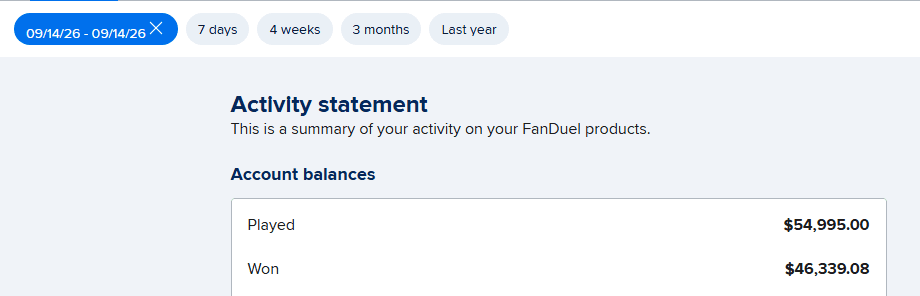
Sports Betting TikTok is the live betting account behind The Best Bet on Sports, covering NFL, NCAAF, NBA, NCAAB, MLB and WNBA markets in real time. The account has been limited on all six major U.S. sportsbooks — FanDuel, DraftKings, Caesars, BetMGM, Fanatics and ESPN BET — for winning on live betting, with $367,520 in verified profit since 2005. View full profile →
Past results do not guarantee future performance. Must be 21 or older to wager.
Related Articles
MLB Pinch Hitter and Double Switch Live Betting Strategy May 2026
MLB Catcher Framing Pop Time Totals Props May 2026
MLB Extra Innings Ghost Runner Betting Strategy May 2026: How the Zombie Runner Rule Reshapes Totals, Run Lines, and Live Bets
MLB Starting Pitcher Pitch Count Live Totals Betting May 2026
MLB Lefty-Righty Platoon Splits Betting in May 2026: How LHP/RHB Matchups Reshape Run Lines, Totals, and Player Props
MLB Wind and Weather Betting in May 2026: How Wind Direction Reshapes Park Total Lines
Get real live betting picks
From $39.95/mo · Cancel anytime · Email + Discord delivery
● Get The Picks
Choose your package
Tap any tier below to select · Subscribe in one tap
👇 Tap any package to select it
✓ You're selecting
25 Units · $99.95/month
25 unit picks per month. Sweet spot for most bettors — plenty of action without going all-in.
- ✓25 live betting selections/month
- ✓Email + Discord delivery
- ✓All sports (NFL, NCAAF, NBA, NCAAB, MLB)
- ✓Mix of 1, 2, 3, 5-unit rated plays
- ✓Cancel anytime
Secure PayPal · Cancel anytime · No hidden fees · 21+ · +$367K verified
+$367,520 verified · Limited on 6 sportsbooks · 20 years documented · See Proof
Join Our Newsletter
Get free expert sports picks and analysis delivered weekly.