MLB Starting Pitcher Pitch Count Live Totals Betting May 2026

MLB starting pitcher pitch count is the most predictive live in-game variable for second-half totals betting. When a starter exits before the fifth inning at 90+ pitches, the bullpen exposure adds 1.5 to 2.5 expected runs to the remaining game. The live total moves slowly because sportsbooks weight the posted total too heavily, creating a repeatable second-half over edge that sharp bettors have attacked for two decades.
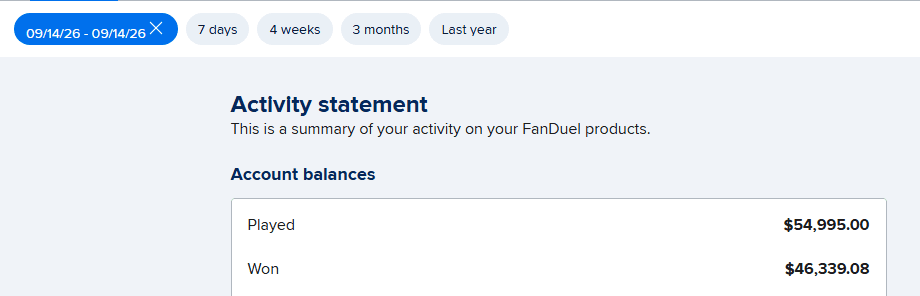
MLB starting pitcher pitch count is the single most predictive live in-game variable for second-half totals betting because pitch count drives bullpen exposure, and bullpen exposure drives runs. When a starting pitcher exits before the fifth inning carrying a pitch count of 90 or higher, the receiving bullpen typically faces 12 to 18 additional batters, adding an expected 1.5 to 2.5 runs to the remainder of the game. The Best Bet on Sports has built a portion of its $367,520 in verified profit on the simple observation that live totals move too slowly when starters are pulled early — sportsbooks anchor the live number to the posted total instead of fully repricing the bullpen exposure.
Most bettors watch a starting pitcher labor through 4.2 innings on 95 pitches, see the manager walk to the mound, and shrug. They miss the most repeatable in-game total edge in baseball. Bullpen pitchers throw with higher walk rates, higher home run rates, and higher BABIP exposure than the starters they replace. Across a six-month season, the run-environment shift between a starter at 90+ pitches and a fresh middle reliever is roughly 1.0 expected runs per inning of difference, and that math compounds across multiple innings of bullpen exposure.
This guide walks through the specific pitch-count thresholds that produce the cleanest live total edge, the bullpen-quality factors that shift the math, and the in-game timing that gives sharp bettors a price advantage. For broader context, see our MLB picks page and our deep dive on MLB wind, weather, and park totals.
Why Pitch Count Drives Live Totals
Three things happen when a starting pitcher's pitch count climbs above 90:
1. Velocity drops — fastball velocity at pitch 95 is on average 0.8 to 1.4 mph slower than at pitch 15, which translates directly to higher contact quality. 2. Command erodes — late-pitch walks rise sharply, and walks compound run expectancy. 3. Manager pulls the starter — once the starter exits, the receiving bullpen has to cover the remaining outs.
The third factor is the live betting driver. A starter at 95 pitches who exits with two outs in the fifth inning leaves 13 outs for the bullpen to record. The bullpen's expected runs allowed across 13 outs is meaningfully higher than the same starter's projected runs across the same outs would have been. The live total has to absorb that shift quickly — and it almost never does.
The Pitch Count Threshold Table
Across the modern data sample (post-2015 statcast era), the pitch count threshold at which bullpen exposure becomes the dominant total driver looks like this:
| Pitch Count by Inning | Bullpen Exposure Risk | Live Total Edge |
|---|---|---|
| 70+ pitches by end of 4th | Moderate | Watch only |
| 90+ pitches by end of 5th | High | Live over edge |
| 100+ pitches by end of 5th | Very high | Strong live over edge |
| 90+ pitches with 4.2 innings or fewer | Very high | Strongest live over edge |
| Starter pulled before 4 innings, any count | Critical | Bullpen game — strong over edge |
The cleanest spot is the starter who exits with 90+ pitches and fewer than 5 full innings. The bullpen has to cover at least 13 outs, the live total typically moves only 0.5 to 1.0 runs at the moment of the pull, but the expected run environment for the remaining innings has shifted by 1.5 to 2.5 runs.
How the Live Total Mispricing Happens
Sportsbooks update live totals algorithmically based on score, inning, base-out state, and a model of the remaining pitchers. The model is good — but it is anchored heavily to the posted total at first pitch. When a starter is pulled early, the algorithm subtracts a fixed amount of "starter run prevention" and adds a fixed amount of "bullpen run prevention" based on team-level bullpen ERA.
The flaw: bullpen ERA is a season-long aggregate. It does not reflect the specific arm coming in, the specific matchup faced, or the high-leverage usage pattern (e.g., a closer warming for the 6th inning is unusual and signals the manager is in win-now mode, which often means lower-leverage arms in the 7th and 8th).
The result: the live total typically moves 0.5 to 1.0 runs when a starter is pulled early. The actual run environment shifts 1.5 to 2.5 runs. Sharp money attacks that gap before the algorithm fully catches up — usually within 30 to 90 seconds of the bullpen entry.
Bullpen Quality Modifiers
Not every early-exit spot produces the same live total edge. Bullpen quality matters. Specifically:
| Bullpen Quality (Season Bullpen ERA) | Live Over Edge |
|---|---|
| Top 10 bullpen (ERA under 3.50) | Smaller edge — under 1.0 run shift |
| Middle 10 bullpen (ERA 3.50-4.20) | Standard edge — 1.0 to 1.5 run shift |
| Bottom 10 bullpen (ERA over 4.20) | Large edge — 1.5 to 2.5 run shift |
| Bullpen used 3+ innings yesterday | Add 0.3-0.5 runs to projection |
| Bullpen used 5+ innings yesterday | Add 0.5-1.0 runs to projection |
The bottom-bullpen + heavy-yesterday-usage spot is the cleanest live over signal in baseball. When the live total shifts only modestly after an early starter exit and the receiving bullpen is both bottom-tier and gassed from yesterday, the over has historically been a comfortable bet.
When the Pattern Reverses: Bullpen Game Day Differences
A small but important caveat. Some MLB teams routinely script bullpen days — games where no starter is scheduled to throw 5+ innings, and the bullpen is set up to cover from the second or third inning forward. On bullpen days, the live total math is different because the sportsbook's pre-game total already prices the heavy bullpen exposure.
The signal that tells you it is a bullpen day rather than an unplanned early exit:
- Starter listed as an "opener" pre-game
- Starter projected for 1-2 innings only
- Multiple relievers warming from the first inning
- Pre-game total already 0.5 runs above season average
When you see a bullpen day, the live over edge is smaller because the market priced it correctly from first pitch. The live edge appears when the early exit is unplanned — a starter who was projected for 6 innings exits in the 5th.
For more on how to research weather and park factors that interact with pitch-count exposure, see our MLB wind, weather, and park totals breakdown and our MLB lefty-righty platoon splits guide.
The Live Betting Timing Window
The 30 to 90 second window between the starter walking off the mound and the new pitcher's first pitch is the most actionable. During that window:
1. The live total is typically still close to its pre-pull number 2. The algorithm has not yet recalibrated for the new pitcher's specific matchup 3. The market does not yet know which inning the closer is being saved for 4. Public bettors have not yet reacted to the pitching change
By the time the new pitcher delivers his first warm-up pitch, the live total has typically moved 0.5 to 1.0 runs. By the time he records his first out, the line has usually settled near its new equilibrium. The window is short, but the math is consistent.
This is also where the umpire strike zone factor compounds. A wider-zone umpire combined with an early starter exit produces a slightly smaller bullpen run impact (more strikeouts, fewer walks). A tighter-zone umpire compounds the bullpen exposure (more walks, more contact, more runs).
Why This Edge Is Hard to Beat at Scale
The live total edge on early starter exits is real — but it is hard to bet at scale because:
1. Time pressure: the window is 30 to 90 seconds. Manual research is impossible. 2. Limit constraints: live limits are lower than pre-game limits. You can place a 1-unit bet, not a 3-unit bet. 3. Limit-flagging: bettors who consistently win on early-exit live overs get flagged quickly. The pattern is too clean for sportsbooks to ignore.
This is part of why The Best Bet on Sports has been limited on all six major U.S. sportsbooks (FanDuel, DraftKings, Caesars, BetMGM, Fanatics, ESPN BET). Live betting markets are where the edge is, which is also where sportsbooks watch most carefully. See our why sportsbooks limit winning live bettors breakdown for more.
Common Mistakes Bettors Make on Live MLB Totals
1. Betting the live over before the pitching change is announced — the line has not yet adjusted, but neither has the actual exposure. 2. Ignoring bullpen quality — top-bullpen teams produce smaller over edges than bottom-bullpen teams. 3. Missing the bullpen-fatigue factor — a bullpen that threw 5+ innings yesterday is a different beast than a fresh bullpen. 4. Confusing bullpen days with early exits — bullpen days are priced; early exits are not. 5. Holding the live over too long — the edge is in the first 60 to 90 seconds. By the third batter of the bullpen appearance, the line has caught up.
How Our Team Approaches MLB Live Totals
Every starter we model is graded for projected pitch count by inning, with a separate model for the receiving bullpen's expected run environment. Our no-vig fair price calculation is run on the live total at the moment of the pitching change, and we release plays only when the live total is at least 1.0 runs below our projected new equilibrium. Plays are delivered through email and Discord.
For complete daily access across MLB, NBA, NFL, college football, and college basketball, see our packages and verified results ledger.
Frequently Asked Questions
What pitch count threshold signals a live total edge?
The cleanest live total edge appears when a starting pitcher exits before completing five full innings while carrying a pitch count of 90 or higher. At that point, the bullpen must cover at least 13 outs, the live total typically moves only 0.5 to 1.0 runs at the moment of the pull, but the actual run-environment shift is closer to 1.5 to 2.5 runs. The mismatch is the edge.
Why does the live total move so slowly on early starter exits?
Sportsbook live total algorithms anchor heavily to the posted pre-game total. When a starter is pulled early, the algorithm subtracts a fixed amount of starter-pitching value and adds a fixed amount of bullpen-pitching value based on season bullpen ERA. The model is reasonable, but it does not account for bullpen fatigue, specific matchup, or high-leverage manager usage patterns, so the live total under-adjusts.
Does bullpen quality change the live total edge?
Yes. Top-10 bullpens (season ERA under 3.50) absorb early starter exits with a smaller run-environment shift, so the live over edge is smaller. Bottom-10 bullpens (season ERA over 4.20) produce the largest run-environment shift and the cleanest live over edge. Bullpen fatigue from heavy usage the previous day adds another 0.3 to 1.0 runs to the projection.
What is the difference between an early exit and a bullpen day?
A bullpen day is scheduled in advance, with an opener starting and the bullpen covering most of the game. The pre-game total already prices the heavy bullpen exposure, so there is no live edge. An early exit is an unplanned removal of a starter who was projected to go 5+ innings — the pre-game total assumed standard starter coverage, and the live total has to reprice the bullpen exposure mid-game. The edge appears only on unplanned early exits.
When should I place the live over bet on an early starter exit?
The actionable window is the 30 to 90 second period between the starter walking off the mound and the relief pitcher's first warm-up pitch. During that window, the live total is close to its pre-pull number, the algorithm has not yet recalibrated for the specific reliever, and the public has not yet reacted. By the time the new pitcher records his first out, the line has typically caught up.
How does the home plate umpire factor in?
The umpire's strike zone size interacts with bullpen exposure in important ways. A wider-zone umpire produces more strikeouts and fewer walks, slightly muting the bullpen run impact. A tighter-zone umpire produces more walks and more contact, compounding the bullpen exposure and widening the live over edge. For a deeper breakdown, see our umpire strike zone totals piece.
Will betting live MLB totals get me limited?
Consistently winning on live MLB totals — especially on early starter exits — is one of the fastest paths to being limited at sportsbooks. The pattern is too clean for the algorithm to ignore. The Best Bet on Sports has been limited on all six major U.S. sportsbooks partly because of this exact pattern. Live edges are real, but they come with limit-flagging risk.
Final Word
The most repeatable live total edge in baseball is also the simplest. When a starting pitcher exits early with a high pitch count, the receiving bullpen is exposed to more outs than the algorithm fully prices. The live total moves modestly. The actual run environment shifts substantially. The window between the pitching change and the line's full adjustment is short — 30 to 90 seconds — but the math has held up across a decade of statcast-era data.
For our complete daily plays, verified results, and full subscription access, see our packages page.
The Best Bet on Sports · 1.5M followers on TikTok
Sports Betting TikTok is the live betting account behind The Best Bet on Sports, covering NFL, NCAAF, NBA, NCAAB, MLB and WNBA markets in real time. The account has been limited on all six major U.S. sportsbooks — FanDuel, DraftKings, Caesars, BetMGM, Fanatics and ESPN BET — for winning on live betting, with $367,520 in verified profit since 2005. View full profile →
Past results do not guarantee future performance. Must be 21 or older to wager.
Related Articles
MLB Pinch Hitter and Double Switch Live Betting Strategy May 2026
MLB Catcher Framing Pop Time Totals Props May 2026
MLB Extra Innings Ghost Runner Betting Strategy May 2026: How the Zombie Runner Rule Reshapes Totals, Run Lines, and Live Bets
MLB Doubleheader Game 2 Betting Strategy May 2026: Bullpen Carryover, Position Player Rest, and Total Mispricing
MLB Lefty-Righty Platoon Splits Betting in May 2026: How LHP/RHB Matchups Reshape Run Lines, Totals, and Player Props
MLB Wind and Weather Betting in May 2026: How Wind Direction Reshapes Park Total Lines
Get real live betting picks
From $39.95/mo · Cancel anytime · Email + Discord delivery
● Get The Picks
Choose your package
Tap any tier below to select · Subscribe in one tap
👇 Tap any package to select it
✓ You're selecting
25 Units · $99.95/month
25 unit picks per month. Sweet spot for most bettors — plenty of action without going all-in.
- ✓25 live betting selections/month
- ✓Email + Discord delivery
- ✓All sports (NFL, NCAAF, NBA, NCAAB, MLB)
- ✓Mix of 1, 2, 3, 5-unit rated plays
- ✓Cancel anytime
Secure PayPal · Cancel anytime · No hidden fees · 21+ · +$367K verified
+$367,520 verified · Limited on 6 sportsbooks · 20 years documented · See Proof
Join Our Newsletter
Get free expert sports picks and analysis delivered weekly.