NFL Division Odds 2026: The Eight Races Ranked by How Little the Market Knows

NFL division odds for 2026 show the defending champion Seahawks priced second in their own division and two races that are near coin flips. Ranking all eight divisions by the no-vig gap between the favorite and the second choice produces a map of where the market is uncertain — and uncertainty, not team quality, is what determines how a division's weekly spreads behave all season.
NFL division odds for the 2026 season contain a fact worth stopping on: the Seattle Seahawks won Super Bowl LX seven months ago and are the second choice in their own division at +215, behind the Los Angeles Rams at -105. That is not a mistake, and it is not disrespect. A division future is not a power ranking — it is a statement about how much the market thinks it knows. Strip the vig out of all eight division boards and rank them by the gap between the favorite and the second choice, and you get something more useful than a list of good teams: a map of where the outcome is genuinely undecided. The AFC West separates its top two by 3.7 percentage points. The NFC West separates them by 17.9. Those two divisions will behave nothing alike on a weekly basis, and the difference has direct consequences for how you bet them.
The NFL season opens Wednesday, September 9, when the Seahawks host the Patriots at Lumen Field in a rematch of a Super Bowl Seattle won 29-13. Between now and then, rosters get cut to 53, three or four starting quarterback jobs get settled, and the futures board gets its last meaningful revision before real games start pricing it.
Right now that board says something interesting, and almost nobody reads it correctly.
All odds below reflect the DraftKings 2026 division winner market as of August 26, 2026. Futures prices move on every injury report and every depth chart announcement — confirm the current number before betting anything.
The Full Board, All 32 Teams
| Division | Favorite | 2nd | 3rd | 4th |
|---|---|---|---|---|
| AFC East | Bills -136 | Patriots +125 | Jets +1900 | Dolphins +4000 |
| AFC North | Ravens -112 | Bengals +184 | Steelers +510 | Browns +2100 |
| AFC South | Texans +110 | Jaguars +245 | Colts +380 | Titans +800 |
| AFC West | Chiefs +160 | Chargers +190 | Broncos +225 | Raiders +2000 |
| NFC East | Eagles +120 | Cowboys +205 | Commanders +500 | Giants +600 |
| NFC North | Lions +170 | Packers +225 | Bears +305 | Vikings +510 |
| NFC South | Buccaneers +170 | Saints +270 | Panthers +310 | Falcons +400 |
| NFC West | Rams -105 | Seahawks +215 | 49ers +305 | Cardinals +10000 |
Read straight down, those prices are close to useless for comparison. A -136 favorite in one division and a +110 favorite in another are not directly comparable, because the price includes the book's margin and because four-team fields hold differently depending on how the money is distributed. You have to take the vig out first.
How to Actually Read a Futures Price
Convert each price to its implied probability, add up the four numbers in a division, and divide each one by that total. The sums are the first thing worth noticing: every division on this board totals between 108.5 percent and 109.5 percent. That is the hold. Books are keeping roughly 8.5 to 9.5 percent on a division future, roughly double what they keep on a standard -110 side. We have written before about why the same arithmetic makes a parlay an expensive way to express a simple opinion, and the mechanism is identical here — the margin is baked into a single settlement that happens once, at the end.
Normalizing removes that margin and leaves the market's honest opinion. Here is what falls out, ranked from the least-decided division to the most-decided:
| Rank | Division | Favorite (no-vig) | 2nd choice (no-vig) | Gap |
|---|---|---|---|---|
| 1 | AFC West | Chiefs 35.5% | Chargers 31.8% | 3.7 |
| 2 | NFC North | Lions 34.0% | Packers 28.3% | 5.8 |
| 3 | NFC South | Buccaneers 34.2% | Saints 24.9% | 9.2 |
| 4 | NFC East | Eagles 41.6% | Cowboys 30.0% | 11.6 |
| 5 | AFC East | Bills 52.6% | Patriots 40.6% | 12.0 |
| 6 | AFC North | Ravens 48.5% | Bengals 32.3% | 16.2 |
| 7 | AFC South | Texans 43.9% | Jaguars 26.7% | 17.2 |
| 8 | NFC West | Rams 47.1% | Seahawks 29.2% | 17.9 |
The gap is the number that matters, and it is not the same thing as the favorite's price. Baltimore and Philadelphia are both strong favorites, but Baltimore's division is settled and Philadelphia's is not — the Ravens hold a 16.2-point cushion over Cincinnati while the Eagles hold 11.6 over Dallas from a much lower base. Meanwhile Kansas City is the shortest-priced team on a board where the market has essentially thrown up its hands.
The Two Coin Flips
AFC West (gap: 3.7). The Chiefs at 35.5 percent, the Chargers at 31.8, the Broncos at 28.4. Three teams inside 7.1 points, which is as close to a genuine three-way toss-up as a division board ever gets. Those three combine for 95.6 percent of the division's probability, with the Raiders at 4.4 accounting for the remainder. The market is not saying these teams are mediocre. It is saying it cannot separate them, which is a different and more honest claim.
Part of that is Patrick Mahomes. He tore his ACL and LCL in December, had surgery on the 16th, and has been full-go in camp without missing a rep — but he has not taken a preseason snap, the first time in his career that has happened, and Kansas City opens against Denver on Monday, September 14, two days short of the nine-month mark from surgery. Mahomes has said repeatedly that starting Week 1 remains the goal and that he feels great. The board has priced a healthy Mahomes and left the division tight anyway, which tells you the Chargers and Broncos are doing real work in the model, not just filling space behind an injury discount.
NFC North (gap: 5.8). Lions 34.0, Packers 28.3, Bears 22.7, Vikings 15.1. This is the most evenly distributed four-team division on the board — no team is dead, and the spread from first to fourth is only 18.9 points. The AFC West has three live teams and a corpse. The NFC North has four teams that all have a real path.
The Three Settled Ones
NFC West (gap: 17.9). The widest separation on the board, and the one that produces the headline. The defending champions are a 29.2 percent second choice behind a Rams team the market gives 47.1. The 49ers sit at 22.7, and the Cardinals at +10000 are priced at 0.9 percent — the deadest team in football relative to its own division, before a snap has been played.
AFC South (gap: 17.2). Houston at 43.9 after winning 12 of its last 14 the previous season, Jacksonville a distant 26.7, Indianapolis 19.2, Tennessee 10.2. A clear favorite with a long tail.
AFC North (gap: 16.2). Baltimore 48.5, Cincinnati 32.3. This one is settled at the top and interesting underneath — Pittsburgh at 15.0 percent is the fifth-most-likely non-favorite on the entire board, which is a strange thing to say about a team most previews have written off.
The Flattest Board Nobody Is Talking About
The NFC South deserves its own paragraph, because the gap metric undersells it. Tampa Bay leads at 34.2, but the fourth-place team — Atlanta at 18.4 — is the highest-priced last choice in the league. Every team in that division sits between 18 and 35 percent. No other division can say that. The AFC West is tighter at the top; the NFC South is flatter all the way down.
Atlanta is also carrying the last genuinely unresolved quarterback situation of the preseason. Tua Tagovailoa is starting the preseason finale against Miami, the team that released him, while Michael Penix Jr. sits out — Penix has not been fully cleared following surgery on a partially torn ACL last fall, though he took full-team reps this week, and first-year head coach Kevin Stefanski has not named a Week 1 starter for the September 13 opener at Pittsburgh. A division where the last-place team on the board is at 18 percent and its quarterback job is undecided is not a division anyone should feel confident about.
Why the Gap Predicts How the Weekly Board Behaves
Here is the part that turns a futures table into something you can use.
A division with a wide gap gets priced with a wide gap every week. The Rams will be laying big numbers against Arizona. Houston will be laying big numbers against Tennessee. Those spreads are stable, they move slowly, and by November the games have low leverage because the standings are already decided. When the outcome is not in doubt, the interesting question stops being who wins and becomes by how much — which is why value in settled divisions migrates from sides toward totals and toward specific situations rather than season-long positions.
A division with a narrow gap does the opposite. AFC West games get priced inside a field goal, they move on every injury designation, and by December they carry playoff leverage that changes how teams actually play the fourth quarter. That combination — close numbers, high leverage, live consequences — is exactly the environment where a pregame number set on Tuesday stops describing the game by the middle of the third quarter.
That is the case for watching, not projecting. A live in-game position is priced off what is happening on the field right now, which is the one input a futures market built in July cannot contain. The tightest divisions on this board are the ones most likely to produce games where the pregame number and the actual game diverge, and our NFL picks are built to work in that gap rather than to beat a season-long projection.
The Cost Futures Bettors Never Price
The 8.5 to 9.5 percent hold is the obvious cost of a division future. It is not the biggest one.
The bigger cost is time. Money placed on the Chiefs at +160 today is committed until early January. It settles once. It cannot be adjusted when Mahomes is limited in Week 3, it cannot be reduced when the Chargers start 5-0, and it earns nothing while it waits. The same bankroll cycling through in-play positions across an 18-week season turns over dozens of times, and every one of those turns is a fresh decision made with information that did not exist in August.
That is not an argument against ever holding a futures ticket. It is an argument for sizing them honestly. A division future is a small, patient position on an outcome four months away, competing for space against a season's worth of shorter, better-informed ones. Anyone treating a futures slip as their primary football exposure has, functionally, made one bet and then watched football for four months.
What Is Still Unpriced Before Week 1
Three things move this board between now and kickoff. Roster cutdowns land Saturday, August 30 — the deadline moved to a Sunday-adjacent slot this year, which compresses teams and gives the market more absorption time, not less. Quarterback jobs finish resolving, with Atlanta the last significant one outstanding. And medical clearances land, Mahomes chief among them.
None of those three will move a division price by 18 points. All of them can move one by three or four, which is precisely the size of the entire AFC West gap.
Get Tonight's Live Picks
Want tonight's live in-game picks delivered to your phone via Email and Discord during the game — read off what is actually happening on the field rather than off a number set before kickoff?
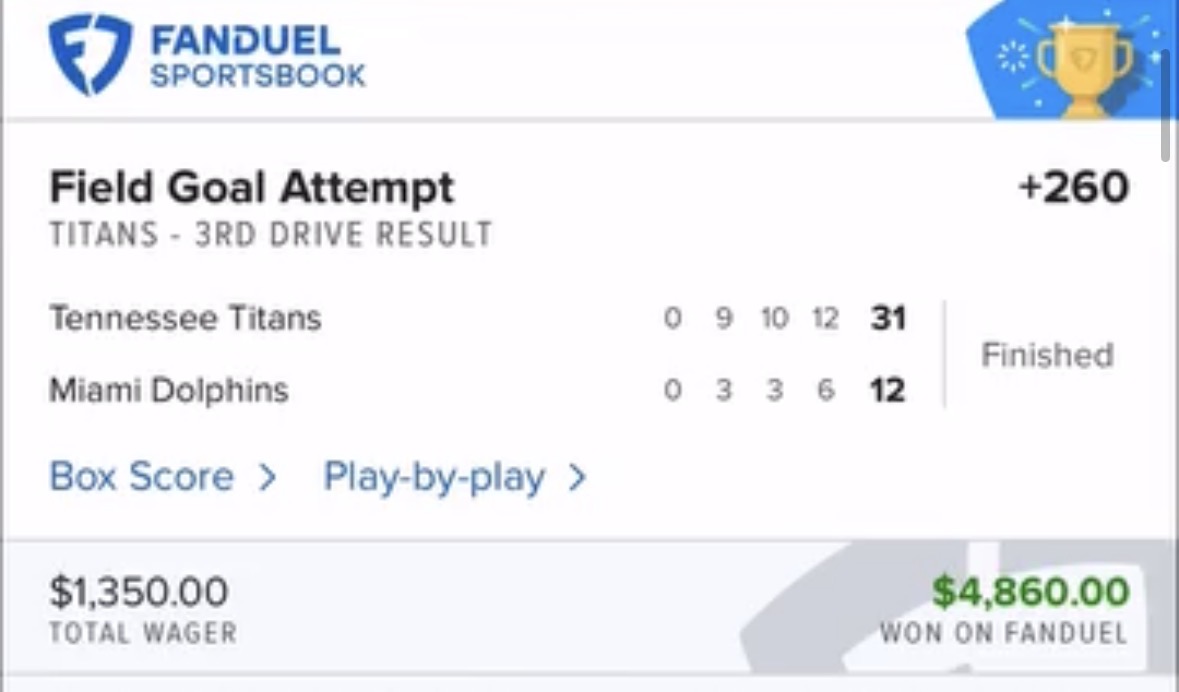
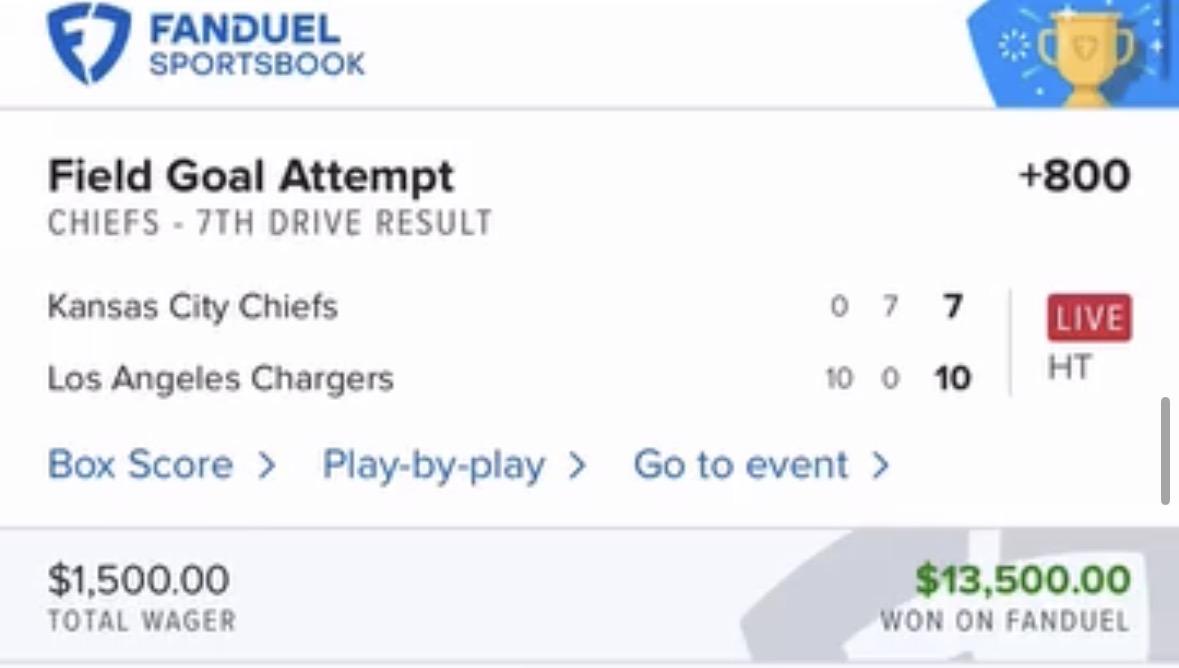
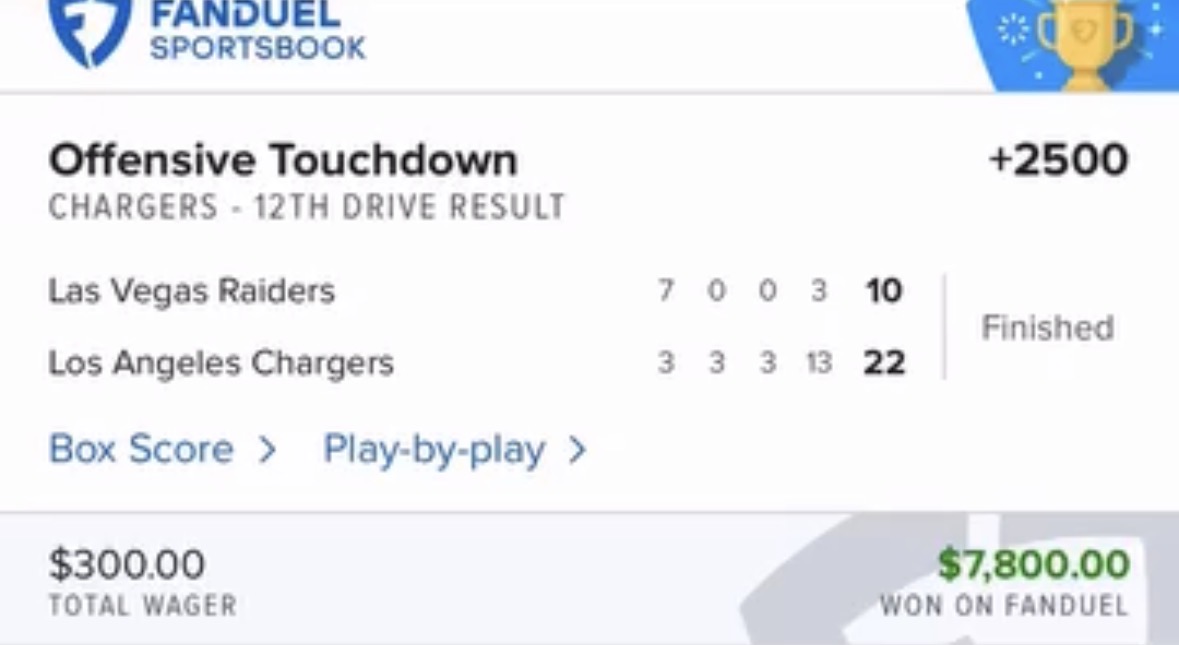
The Best Bet on Sports is the only live betting handicapping service limited on all six major U.S. sportsbooks (FanDuel, DraftKings, Caesars, BetMGM, Fanatics, ESPN BET) for winning too much during in-game action. Verified profit: $367,520+. Picks delivered via Email and Discord during games.
→ Get tonight's live picks: $199 first month — 1-Unit package, full live betting access → Try a free live pick first — reserve your spot for tonight's pick
More coverage at football picks, NFL handicappers, college football picks, sports handicappers, the blog, and our results.
Frequently Asked Questions
Which NFL division is the closest race in 2026?
The AFC West, by a wide margin. After removing the sportsbook's margin, the Chiefs sit at 35.5 percent, the Chargers at 31.8, and the Broncos at 28.4 — three teams inside 7.1 percentage points, with the Raiders at 4.4 accounting for everything left over. No other division has three teams that tightly clustered. The NFC North is second-closest at the top with a 5.8-point gap between Detroit and Green Bay, and it is arguably the more balanced division overall because all four teams are alive rather than three.
Why are the defending champion Seahawks not favored in the NFC West?
Because a division future prices a 17-game schedule against three specific opponents, not last season's result. The Rams are at -105 and Seattle at +215, which after removing vig is 47.1 percent to 29.2 percent. The market is expressing a view about roster and schedule, not relitigating Super Bowl LX. It is also worth noting the Seahawks are still the second-most-likely team in one of the strongest divisions in football — the 49ers at 22.7 percent would be a live contender in most other divisions.
How much do sportsbooks hold on NFL division futures?
Roughly 8.5 to 9.5 percent on this board. Every 2026 division market sums to between 108.5 and 109.5 percent when you add up the four teams' implied probabilities, and the excess over 100 is the book's margin. That is about double the roughly 4.5 percent hold on a standard -110 point spread. The margin is not the only cost, though — a futures ticket also ties up capital for four months and settles exactly once, which is the larger practical expense for most bettors.
What does removing the vig from division odds actually tell you?
It converts prices into comparable probabilities. Raw odds cannot be compared across divisions because each board carries its own margin and its own distribution of money. Convert each price to implied probability, sum the four teams, and divide each by that sum — the result is the market's honest opinion, normalized to 100 percent. Once you do that, the gap between the favorite and the second choice becomes readable as a measure of how confident the market is, which raw prices obscure completely.
Does a tight division mean better betting opportunities?
It means different ones. Tight divisions produce close weekly spreads, more line movement on injury news, and December games with real playoff leverage — which is the environment where a pregame number is most likely to stop describing the game once it starts. Settled divisions produce large, stable spreads and low-leverage late-season games, where the more interesting questions tend to be totals and situational rather than sides. Neither is inherently more profitable; they call for different tools.
When does the 2026 NFL season start and which Week 1 games matter most for these divisions?
The season opens Wednesday, September 9, with the Seahawks hosting the Patriots at Lumen Field in a Super Bowl LX rematch. San Francisco and the Rams meet in Melbourne, Australia on Thursday, September 10, which is a direct NFC West measuring stick in the opening week. The main slate follows on Sunday, September 13, including Atlanta at Pittsburgh, and Denver at Kansas City closes Week 1 on Monday, September 14 — a game between two of the three teams the market cannot separate in the AFC West.
Should I bet a division future or wait for the season to start?
If you are betting one, the strongest argument for waiting is that three inputs are still unresolved: roster cutdowns on August 30, the last open quarterback competitions, and medical clearances including Patrick Mahomes. None of those will swing a division price by more than a few points — but a few points is the entire AFC West gap. The more important question is sizing. A division future is a small patient position competing against an entire season of shorter, better-informed decisions, and it should be sized like one rather than treated as your primary exposure to the sport.
The Best Bet on Sports · 1.5M followers on TikTok
Sports Betting TikTok is the live betting account behind The Best Bet on Sports, covering NFL, NCAAF, NBA, NCAAB, MLB and WNBA markets in real time. The account has been limited on all six major U.S. sportsbooks — FanDuel, DraftKings, Caesars, BetMGM, Fanatics and ESPN BET — for winning on live betting, with $367,520 in verified profit since 2005. View full profile →
Past results do not guarantee future performance. Must be 21 or older to wager.
Related Articles
NFL Week 1 Overreaction Index: Ten Early-Season Traps Ranked
Malik Nabers Took Seven Reps. The Market Prices Zero or All.
Dallas Signed Von Miller. The Market Still Can't Price This Pass Rush.
Myles Garrett's Knee Keeps Coming Back: The Relapse the Market Never Prices
Kyler Murray Is the Vikings' QB1. That News Is a Calendar, Not a Number.
NFL Week 1 Parlay Strategy: The Hidden Correlation
Get real live betting picks
From $39.95/mo · Cancel anytime · Email + Discord delivery
● Get The Picks
Choose your package
Tap any tier below to select · Subscribe in one tap
👇 Tap any package to select it
✓ You're selecting
25 Units · $99.95/month
25 unit picks per month. Sweet spot for most bettors — plenty of action without going all-in.
- ✓25 live betting selections/month
- ✓Email + Discord delivery
- ✓All sports (NFL, NCAAF, NBA, NCAAB, MLB)
- ✓Mix of 1, 2, 3, 5-unit rated plays
- ✓Cancel anytime
Secure PayPal · Cancel anytime · No hidden fees · 21+ · +$367K verified
+$367,520 verified · Limited on 6 sportsbooks · 20 years documented · See Proof
Join Our Newsletter
Get free expert sports picks and analysis delivered weekly.