NFL Cut Day Moved to a Sunday: What the August 30 Deadline Actually Changes

The NFL has moved its 53-man roster cutdown deadline up two days to 6 p.m. ET on Sunday, August 30, with waiver claims due at 1 p.m. ET Monday. It is the largest single-day information release on the football calendar, and shifting it compresses how long teams get to decide while extending how long the market gets to absorb the result. Those two effects point in opposite directions.
The NFL has moved its 53-man roster cutdown deadline to 6 p.m. ET on Sunday, August 30, 2026 — two days earlier than the Tuesday deadline used in recent seasons — with waiver claims due by 1 p.m. ET on Monday, August 31. Every team goes from a 90-man camp roster to 53, meaning as many as 1,184 players are released across roughly 24 hours. It is the single largest release of roster information in American sports, and the two-day shift cuts how long teams have to decide while giving markets two extra days to price the result before the September 9 opener.
Most coverage of cut day treats it as a transactions story: who got kept, who got claimed, which sixth-round pick survived. That is the least interesting version of it. The useful version is that cut day is the moment 32 organizations stop speculating in public and commit in writing, all at once, on a hard clock — and this year the clock moved.
The New Calendar
The change was reported by NFL Network's Tom Pelissero and confirmed in team-side postings around the league. Here is what the compressed sequence looks like against the version the sport has run for years.
| Recent seasons | 2026 | |
|---|---|---|
| Cutdown deadline | Tuesday after final preseason week, 4 p.m. ET | Sunday, Aug. 30, 6 p.m. ET (3 p.m. PT) |
| Waiver claims due | Wednesday, ~noon ET | Monday, Aug. 31, 1 p.m. ET (10 a.m. PT) |
| Practice squads assembled | Wednesday afternoon onward | Monday afternoon onward |
| Days from cutdown to Week 1 opener | ~8 | ~10 |
The regular season opens Wednesday, September 9, with the defending champion Seattle Seahawks hosting New England at 8:20 p.m. ET — a Super Bowl LX rematch, and the first Wednesday opener the league has staged in well over a decade. The 49ers and Rams then play in Melbourne, Australia on Thursday, September 10, before the main slate on Sunday the 13th and Denver at Kansas City on Monday the 14th.
No public rationale accompanied the change. One plausible reading, offered as observation rather than explanation: Week 1 is unusually front-loaded this year, with a midweek opener and an international game requiring a trans-Pacific flight, and two additional days of roster certainty is worth more to the clubs facing that travel than to anyone else.
The Compression Lands on Teams, Not on the Market
Here is the part worth sitting with, because it runs opposite to how a schedule change usually gets described.
Moving a deadline earlier sounds like it makes everything more rushed. It does — for exactly one party. A team's final preseason game now sits somewhere between one and three days before the decision is due. The film review, the medical checks, the trade calls, the salary-cap math, the conversations about whether a fringe player is better than the fringe player another club is about to expose — all of that now happens inside a shorter window than it did last August.
That means the decisions themselves get made on slightly less deliberation. Not less information — the information was largely gathered over five weeks of camp — but less time to argue about it. Marginal roster calls at the back end of a depth chart are close by definition, and close calls made faster are close calls made with more noise in them.
For everyone else, the effect inverts. Cut day is when the last genuinely unknown thing about a roster becomes known, and it now becomes known two days sooner. The market that has to price NFL Week 1 does not lose two days. It gains them.
The Absorption Window Got Longer
This is the practical conclusion, and it points somewhere specific.
August prices — win totals, division odds, futures — have been standing on eight months of projection. Roster construction has been the last major unresolved input. Once the 53s are posted and the waiver wire clears, that input resolves, and the numbers that were waiting on it get one clean pass.
More time between the information event and the first kickoff means a more thoroughly repriced Week 1 board, not a less one. Anyone who has been holding a season-long position on the theory that cut day will produce a chaotic, underpriced opening week has the direction wrong. The chaos, such as it is, resolves ten days out and gets absorbed. The market is not short of time this year. It has more of it than usual.
Which is a genuinely useful thing to know before deciding where to put money in September, and it argues for the same discipline that NFL futures always argues for: fewer positions, taken with more conviction, rather than a stack of small ones accumulated across three weeks of camp reports.
Two Different Doors Out of a Roster
The mechanism most casual observers miss is that "cut" describes two completely different events depending on the player's service time.
| Fewer than 4 accrued seasons | 4+ accrued seasons (vested veteran) | |
|---|---|---|
| Process | Placed on waivers | Released outright |
| Who decides where he goes | Claiming team with highest priority | The player |
| Timeline | Claims due 1 p.m. ET Monday | Free agent immediately |
| Contract | Claiming team inherits it | Negotiates a new one |
A twenty-four-year-old third-year receiver has no say in his destination. A thirty-year-old with five accrued seasons picks his own next stop and can take a call from any of the other 31 clubs the moment his release processes.
The Worst Teams Get First Claim, the Best Teams Get First Call
That distinction produces a structural asymmetry almost nobody talks about, and it is the most interesting thing on the whole calendar.
Waiver priority through Week 3 of the regular season runs in the previous season's draft order — worst team first. So on the young-player side of cut day, the teams that finished at the bottom of the league get first crack at everyone who gets waived. That is competitive balance working as designed.
The veteran side runs the other way. A vested veteran is a free agent instantly and chooses his own landing spot, and players choose contenders, playing time and situations that make sense. So the same twenty-four-hour window that hands the league's worst rosters first claim on young talent simultaneously gives the league's best rosters the strongest pitch for experienced talent.
Both mechanisms fire at once, out of the same pool of released players, in opposite directions. The net effect on any individual team is small — these are back-of-the-roster players, and the difference between the 53rd man and the 56th man is not a difference that decides games in isolation. But it is real, it is systematic, and it is invisible in any preseason projection, because projections are built on the roster a team had in July, not the one it assembles on the last Monday in August. Team-by-team reads are at NFL picks and across the division pages: AFC East, AFC West, NFC North and NFC West.
What Cut Day Does Not Tell You
A discipline section, because this is where the overreaction lives.
Cut day resolves who is on the roster. It does not resolve how any of them play. Those are different questions, and only the first one gets answered on August 30.
The bottom fifteen or twenty spots on a 53-man roster are special teams contributors, developmental linemen, third and fourth cornerbacks, and the emergency answer at three positions. Their combined effect on a season is genuinely meaningful — injuries ensure some of them will play real snaps — but it is also almost entirely unforecastable from a transaction wire. A claimed player arriving on a Monday has ten days to learn a system before a Wednesday opener. Whether he can is not something a cut sheet tells you.
The failure mode is reading a roster move as a repricing event. A team that claims three players did not just improve by three players; it upgraded its 51st, 52nd and 53rd spots, which is worth a fraction of what the transaction volume feels like it is worth. Practice squads hold 16 players, or 17 with an International Player designation, and those bodies are one phone call from a game-day elevation — which is another way of saying the boundary between "on the roster" and "not on the roster" is considerably softer than a headline count suggests.
Where the Residual Uncertainty Actually Lives
So if cut day gets absorbed, and the back of the roster is unforecastable, where does the genuine uncertainty go?
It goes into games. Specifically, it goes into the moments when a roster's depth is tested in real time and there is no prior for how it holds.
A backup guard rotating in on a fourth possession, a claimed corner playing his eighth NFL snap in a new scheme, a special teams unit assembled eleven days earlier — none of that has a pregame market, and none of it is knowable from a depth chart. It becomes knowable by watching it, drive by drive, in the first few weeks of a season. And in-play markets reprice on scoring events and possession changes, which means the number lags the condition by a drive or two even when the condition is plainly visible on the broadcast.
That gap between an observable situation and a posted price is the entire operating window for live betting. It is widest in September, for exactly the reason this article has been circling: the fallback assumptions everyone is using are built on rosters that were finalized a week and a half ago and have never played a real snap together. By Week 6 the priors are accurate and the lag matters less. In Week 1 the priors are a guess. The general case is walked through at how to bet live during NFL games, and the reason a service operating in that window ends up restricted is documented at why sportsbooks limit winning live bettors.
What This Does Not Change
Two days is two days. The NFL did not restructure its roster rules; it moved a deadline inside the same week, and the 90-to-53 mechanic, the waiver system, the vested-veteran carve-out and the practice squad rules are all unchanged.
Nobody should build an approach around a calendar adjustment. The reason it is worth 1,500 words is narrower: it is a clean, dated, verifiable example of how the football information cycle actually works — where the news is generated, how long it takes to reach a price, and which parts of it never reach a price at all. That is the same structure that governs camp injuries, depth chart resolution, and every other August event, and it is why NFL preseason markets behave so differently from the ones that open in September.
Rosters are final on Sunday. Nobody knows what they are worth until they play.
Get Tonight's Live Picks
Want tonight's live in-game picks delivered to your phone via Email and Discord during the game — read off what is actually happening on the field rather than off a number set before kickoff?
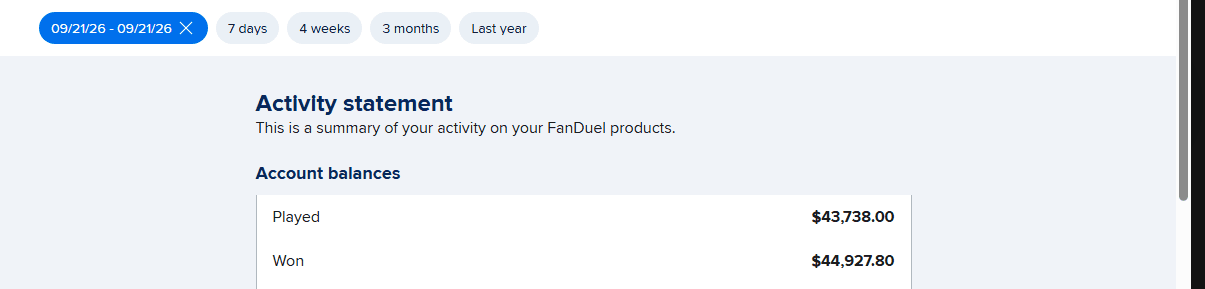
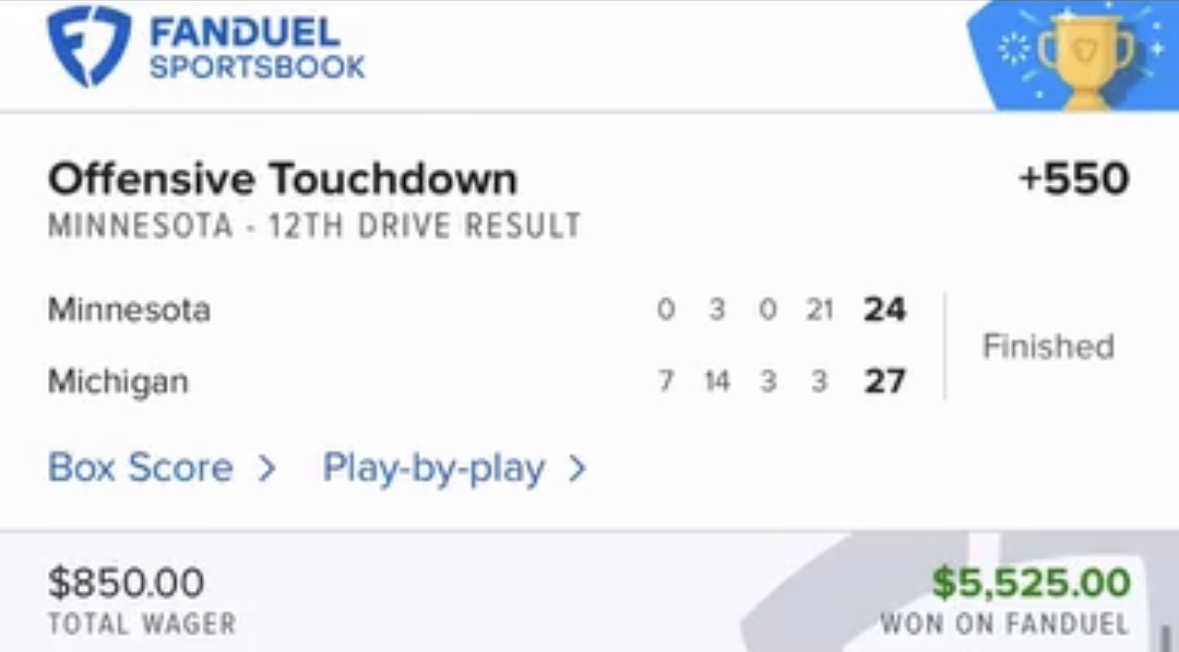
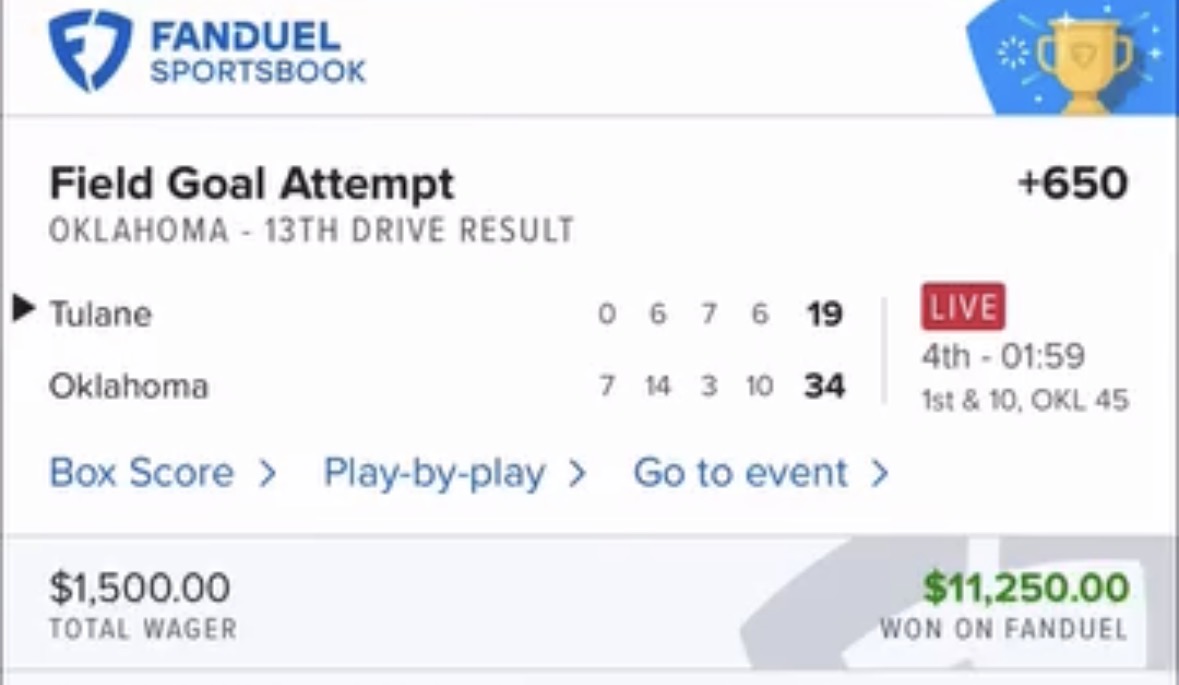
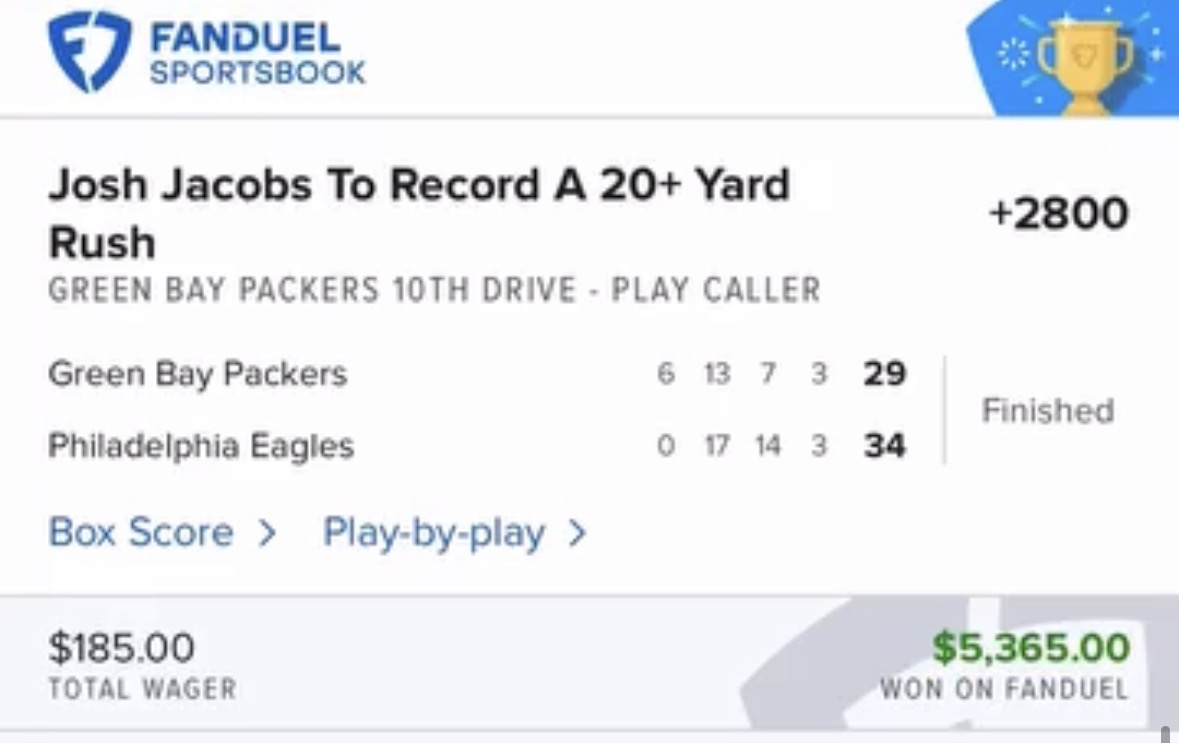
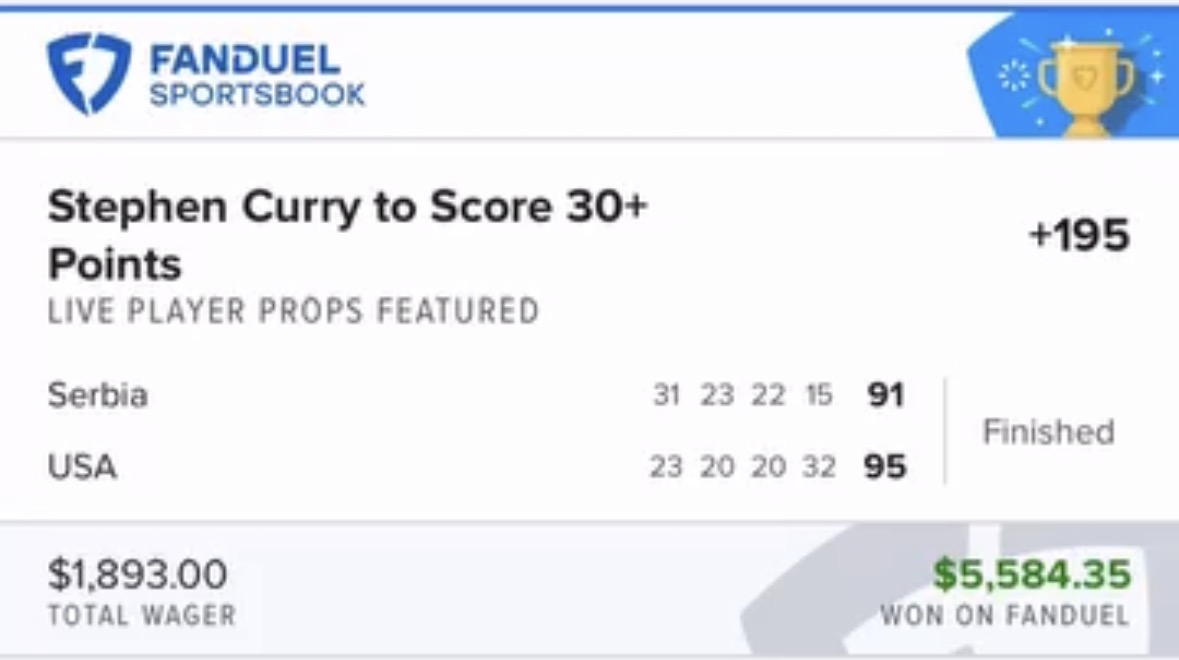
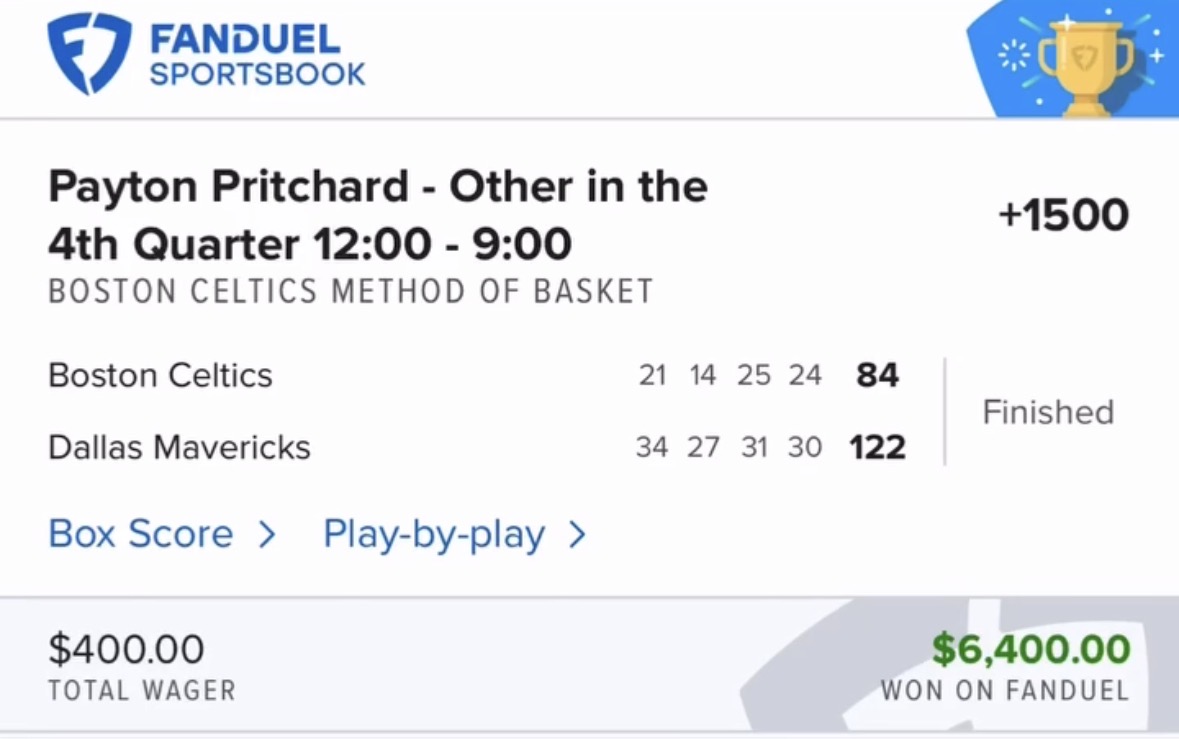
The Best Bet on Sports is the only live betting handicapping service limited on all six major U.S. sportsbooks (FanDuel, DraftKings, Caesars, BetMGM, Fanatics, ESPN BET) for winning too much during in-game action. Verified profit: $367,520+. Picks delivered via Email and Discord during games.
→ Get tonight's live picks: $199 first month — 1-Unit package, full live betting access → Try a free live pick first — reserve your spot for tonight's pick
More coverage at football picks, NFL handicappers, football betting picks, college football picks, sports handicappers, and our results.
Frequently Asked Questions
When is the 2026 NFL roster cutdown deadline?
Sunday, August 30, 2026, at 6 p.m. ET (3 p.m. PT). Every club must be down to a maximum of 53 players by that moment. This is two days earlier than the Tuesday deadline the league used in recent seasons, a change reported by NFL Network's Tom Pelissero and confirmed through team channels. Waiver claims on the players released are due the following day, Monday, August 31, at 1 p.m. ET (10 a.m. PT), after which teams begin assembling practice squads.
How many players get cut on NFL cutdown day?
Teams may carry up to 90 players through training camp and must be at 53 by the deadline, so a club at the full limit releases 37. Across all 32 teams that is as many as 1,184 players changing status inside roughly a day. Not all of them leave the league — a portion are claimed on waivers, and many of the rest re-sign to practice squads, which hold 16 players, or 17 when one carries an International Player designation.
What is the difference between being waived and being released?
Service time. A player with fewer than four accrued seasons is placed on waivers, meaning other clubs can claim him and inherit his existing contract, with claims awarded by priority order. A vested veteran — four or more accrued seasons — is released outright and becomes a free agent immediately, free to negotiate with any team he chooses. The practical result is that young players are assigned to a destination while veterans pick one.
How does NFL waiver priority work at cutdown?
Through the first three weeks of the regular season, waiver priority follows the previous season's draft order, which means the team that finished worst claims first, the second-worst claims second, and so on. After Week 3 it switches to the current season's standings in reverse order. Because vested veterans bypass waivers entirely, the system hands bottom-of-the-league teams first access to young talent while contenders retain the stronger recruiting pitch for experienced players.
Does the earlier cut deadline make Week 1 harder to predict?
It arguably makes it easier. Cutdown resolves the last major unknown about a roster's construction, and moving it forward two days means that information reaches the market roughly ten days before the September 9 opener instead of eight. The compression falls on teams, who now have less time between their final preseason game and their decision. Markets get more time to absorb the result, not less — so expecting an underpriced opening week because of roster churn has the direction backwards.
Should I bet NFL win totals before or after roster cuts?
There is a reasonable argument for waiting, but not a dramatic one. Roster construction is one input among many, and the players decided on cut day occupy the back end of a depth chart, where the difference between the 53rd and 56th man rarely decides a season on its own. The bigger risk in August is not timing — it is accumulating a stack of small season-long positions across weeks of camp news and arriving at Week 1 holding bets whose reasoning you can no longer reconstruct.
When does the 2026 NFL regular season start?
Wednesday, September 9, 2026, when the defending champion Seattle Seahawks host the New England Patriots at 8:20 p.m. ET on NBC and Peacock in a rematch of Super Bowl LX. It is the league's first Wednesday opener in more than a decade. San Francisco and the Los Angeles Rams meet in Melbourne, Australia on Thursday, September 10, with the main Week 1 slate on Sunday, September 13, and Denver at Kansas City on Monday, September 14.
The Best Bet on Sports · 1.5M followers on TikTok
Sports Betting TikTok is the live betting account behind The Best Bet on Sports, covering NFL, NCAAF, NBA, NCAAB, MLB and WNBA markets in real time. The account has been limited on all six major U.S. sportsbooks — FanDuel, DraftKings, Caesars, BetMGM, Fanatics and ESPN BET — for winning on live betting, with $367,520 in verified profit since 2005. View full profile →
Past results do not guarantee future performance. Must be 21 or older to wager.
Related Articles
Two ACLs, One Tuesday, and No Game Was Played
NFL Week 1 Parlay Strategy: The Hidden Correlation
Jonnu Smith to Green Bay: The Signing Is News About Musgrave
Malik Nabers Took Seven Reps. The Market Prices Zero or All.
Dallas Signed Von Miller. The Market Still Can't Price This Pass Rush.
The Cardinals' Win Total Moved Two Games Overnight
Get real live betting picks
From $39.95/mo · Cancel anytime · Email + Discord delivery
● Get The Picks
Choose your package
Tap any tier below to select · Subscribe in one tap
👇 Tap any package to select it
✓ You're selecting
25 Units · $99.95/month
25 unit picks per month. Sweet spot for most bettors — plenty of action without going all-in.
- ✓25 live betting selections/month
- ✓Email + Discord delivery
- ✓All sports (NFL, NCAAF, NBA, NCAAB, MLB)
- ✓Mix of 1, 2, 3, 5-unit rated plays
- ✓Cancel anytime
Secure PayPal · Cancel anytime · No hidden fees · 21+ · +$367K verified
+$367,520 verified · Limited on 6 sportsbooks · 20 years documented · See Proof
Join Our Newsletter
Get free expert sports picks and analysis delivered weekly.