NFL Week 1 Parlay Strategy: The Hidden Correlation

NFL Week 1 parlays fail for a reason that has nothing to do with picking games. A standard multi-game parlay is priced as if every leg is independent, and across a normal Sunday that assumption is close enough to correct. In Week 1 it is not. Every game in the league is being played by offenses that have never run a live snap together, which means one league-wide factor sits underneath all of your legs at once.
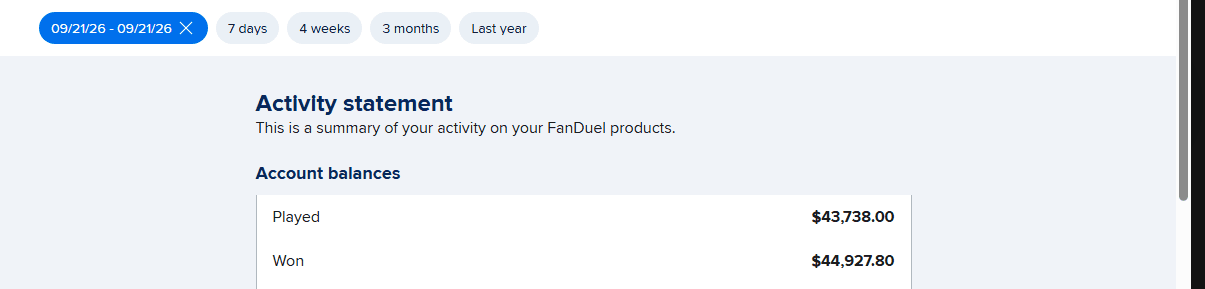
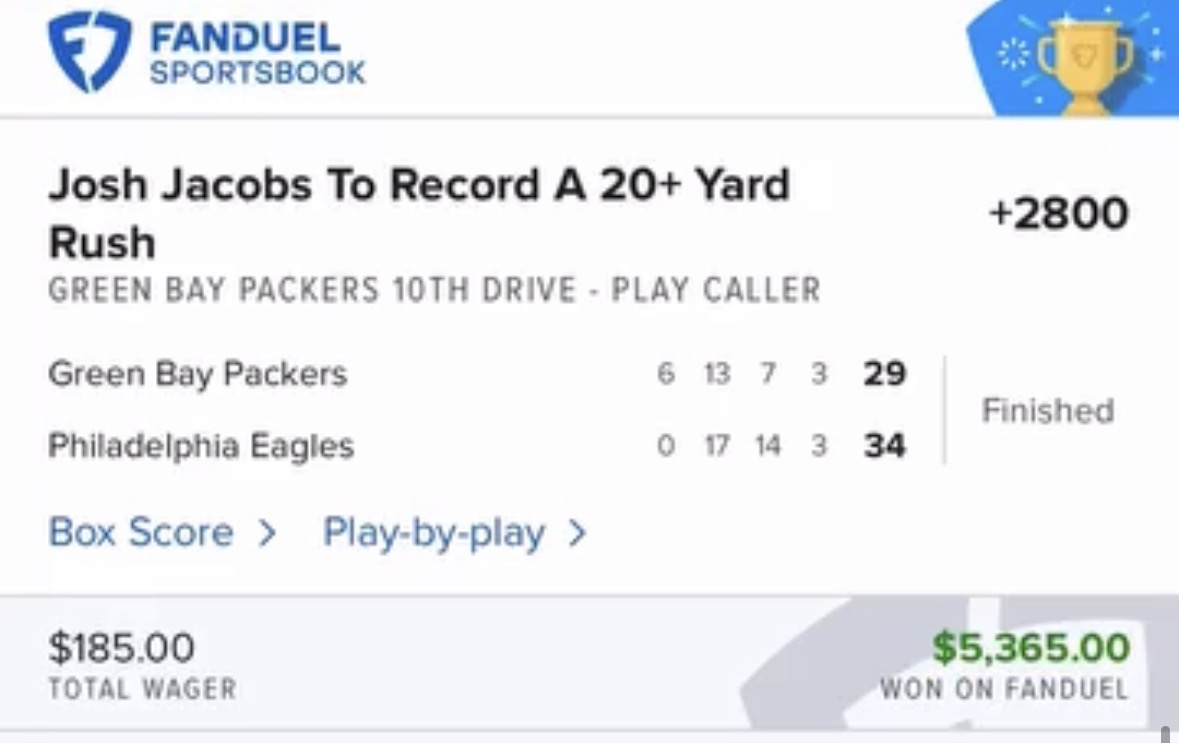
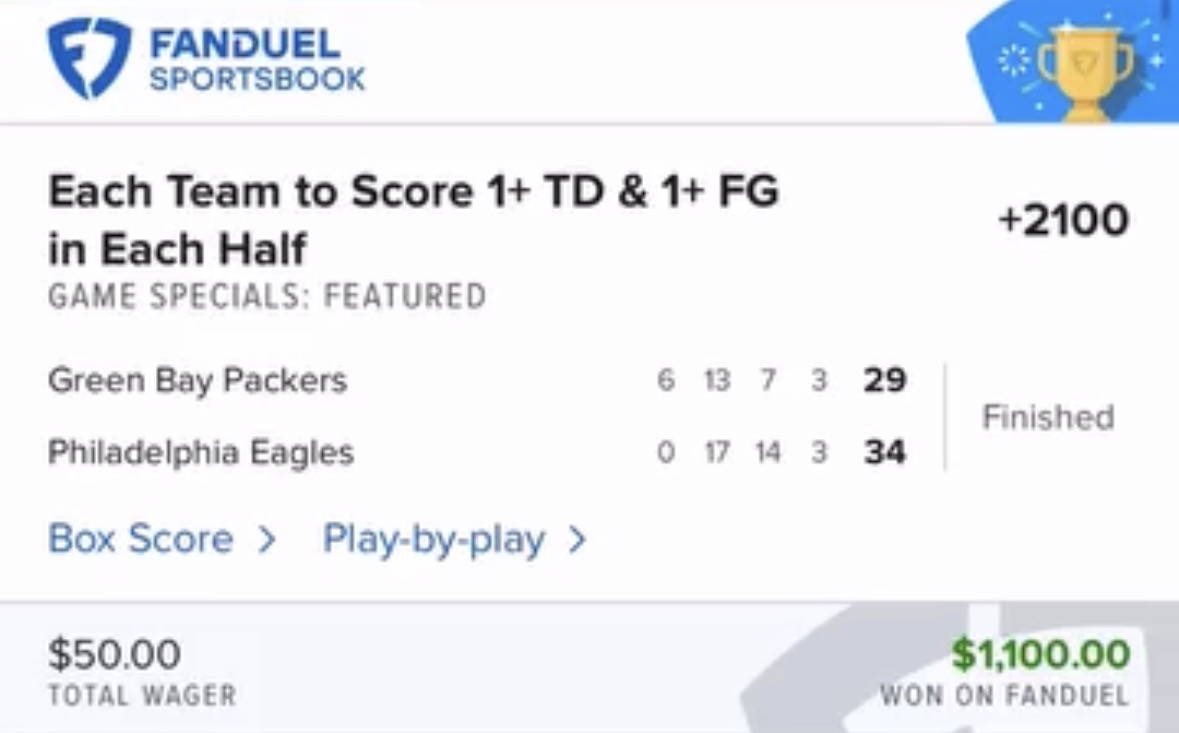
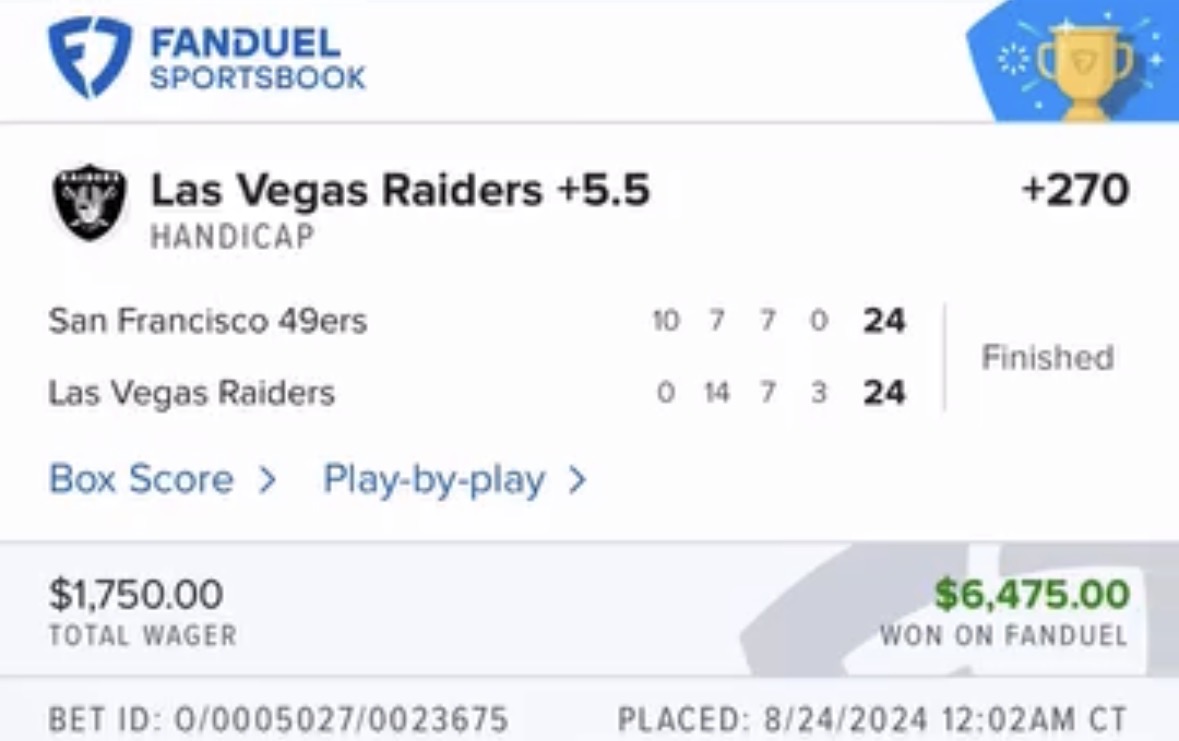
An NFL Week 1 parlay is priced as if each leg is an independent event, and in Week 1 that assumption breaks in a way it does not break in Week 9. Every offense on the board is running its first live snaps of the year at the same time, which means a single league-wide condition — installation, timing, penalty rates, starter workloads — sits underneath every leg on your ticket simultaneously. Four legs across four different games is supposed to be four separate bets. In the opening week it is closer to one bet on the league's first-weekend environment, made four times. The Best Bet on Sports has run live in-game picks for more than twenty years with a verified $367,520+ in profit across all sportsbooks, and the single most useful thing we can tell you about the first Sunday of the season is that the parlay rule you use every other week has an exception here.
Week 1 is the highest-volume parlay weekend of the American sports calendar. It is also the one weekend where the standard construction advice — spread your legs across different games so the outcomes are truly independent — is at its weakest. This is not a reason to avoid Week 1 tickets. It is a reason to build them differently, and the adjustment is specific enough to write down.
All math below is illustrative. It is included to show the direction and rough size of an effect, not to quote a market price.
Why Week 1 Legs Move Together
Start with the rule that works the other sixteen weeks. Our Sunday parlay guide makes the standard case: keep every leg in a different game, because two legs inside one game rise and fall together and the book prices that correlation into a same-game ticket. That is correct, and it is the right default from late September onward. It also assumes every leg starts at the same time, which stops being true the moment you bridge a Saturday college slate into an NFL Sunday and hold an open ticket across a 24-hour gap.
The reason it works is that by Week 6, the thing that determines whether the Bengals go over is mostly specific to the Bengals. Their offensive line has settled. Their play-caller knows what he has. Whatever league-wide noise exists — officiating trends, rule-change adjustments, weather — is small relative to the team-specific signal, so two different games really are close to independent.
Week 1 inverts that ratio. In the opening week, the largest single driver of what happens in every game is the same thing: nobody has played football that counts since January. That produces a set of conditions that hit all thirty-two teams at once.
Offenses are behind defenses. This is the oldest observation in football and it is true for a boring structural reason: offense requires eleven players to execute a coordinated sequence, defense requires eleven players to react. Coordination degrades over an eight-month layoff faster than reaction does, and it is rebuilt with reps that starters largely do not take in August.
Penalty rates run high. Officiating crews are also in their first week, points of emphasis get enforced most aggressively early, and new-look offensive lines commit the kind of pre-snap penalties that kill drives.
Playing-time patterns are unfamiliar. Snap counts, personnel packages, and rotation plans that were theoretical in camp become real for the first time, and none of them are public before kickoff.
Every one of those factors pushes in the same direction across the whole slate. That is what a common factor means: it is not that your Bengals leg causes your Seahawks leg, it is that a third thing sits underneath both.
What the Common Factor Does to Your Ticket
Here is the part that matters for money. A parlay's payout is built by multiplying the legs, which is correct when the legs are independent. When they share a hidden common factor, the true joint probability of hitting all of them is higher than the independent product — and so is the true joint probability of missing all of them. The distribution gets fatter at both ends.
That sounds like it might help you, and in one narrow case it does. But look at what it actually does to a ticket:
| Ticket structure | What you think you own | What you actually own in Week 1 |
|---|---|---|
| 4 unders, 4 different games | Four independent bets on four coaching staffs | One bet on the league's opening-weekend scoring environment, sized 4× |
| 4 overs, 4 different games | Four independent bets on four offenses | One bet against that same environment, sized 4× |
| 4 favorites, 4 different games | Four independent bets on four talent gaps | Mostly independent — talent gaps are team-specific |
| 2 unders + 2 favorites | A diversified ticket | Partially diversified — two legs share the factor, two don't |
The trap is the first two rows, and they are exactly the rows recreational tickets live in, because thematic parlays are easy to build. "Week 1 unders" is a coherent-sounding thesis. It is also, structurally, a single large bet on one league-wide condition, wearing the costume of a four-leg parlay. If the opening weekend happens to come in high-scoring, all four legs die together, and you had far less diversification than the payout implied you were being compensated for.
The correct way to state it: in Week 1 you should diversify by bet type, not by team. Four different games is not diversification if all four legs are the same kind of bet.
Which Week 1 Legs Are Least Exposed
If the common factor is "nothing has been installed yet," then the legs that carry the least exposure are the ones whose outcomes do not depend on installation. Ranked from least exposed to most:
Team talent gaps (sides). A spread is largely a bet on which roster is better. Rosters are known in August. This is the most Week-1-resistant leg on the board, which is why sides belong at the base of an opening-week ticket.
Established run games. A returning back behind a returning line running a scheme he ran last year needs less installation than anything else in football. Volume-based legs here are relatively insulated.
Kicking and field-position markets. Almost entirely independent of offensive timing.
Team totals and game totals. Directly exposed. A total is a bet on offensive efficiency, which is the exact thing that is degraded and degraded league-wide.
Passing props involving new personnel. The most exposed leg type on the board. A receiver-yardage prop for a player who joined the team in March is a bet on chemistry that has been practiced in shorts.
That ordering gives you a build rule: anchor Week 1 tickets on sides, and if you want a second leg type, take it from the top half of that list. Our step-by-step parlay construction guide covers the anchor principle in general; Week 1 simply narrows what qualifies as an anchor.
Why Week 1 Same-Game Parlays Are a Different Problem
A same-game parlay is the deliberate version of correlation — you stack outcomes that genuinely move together and accept the book's adjusted price for it, as laid out in our correlated parlays explainer. That structure is sound. In Week 1 it has a specific weakness that has nothing to do with the common factor above.
An SGP price is generated from a correlation estimate: how tightly does this quarterback's yardage move with this receiver's receptions, how often does this team's cover coincide with this game going over. Those estimates are built from data. In Week 1, the only data available describes a team that no longer exists in the same form — different coordinator, different line, different third receiver, different snap distribution.
So a Week 1 SGP is priced off a correlation structure that is a year stale, applied to personnel that changed. That cuts both ways, and it is genuinely a two-sided error rather than a one-sided edge. What it is not is a reliable place to be aggressive. If you build a Week 1 SGP, build it small and build it on the relationships least likely to have changed — a starting quarterback and his returning primary target, not a quarterback and the free agent he met in May.
How Many Legs a Week 1 Ticket Should Have
Fewer than your normal number. The general leg-count logic in our leg-count guide points at two to three as the practical sweet spot in ordinary conditions. Week 1 should sit at the bottom of that range, and the reason is not caution for its own sake — it is that leg count multiplies exposure to the common factor rather than diluting it.
Consider the arithmetic in the direction that matters. If four legs were genuinely independent at 55% each, the ticket hits about 9.2% of the time. If a shared opening-week factor pulls them together, the ticket's hit rate rises somewhat — but the payout you were quoted was calculated from the independent number, and the loss concentration rises at the same time. You are not being paid for the fat tail you actually own. Two legs carry a fraction of that distortion. Six legs are almost entirely a bet on the factor.
The practical translation: two legs in Week 1, three if the third is a side. Save the wide builds for a week when the league has shown you something.
Where the Week 1 Edge Actually Lives
Everything above describes a pregame problem: the market and the bettor are both working from stale priors, and neither one can resolve the uncertainty before kickoff. That is not a solvable pregame problem. It is a resolvable in-game one.
The entire Week 1 information gap closes on the field, in order, in the first quarter. Whether an offense is in rhythm, whether the new left tackle is holding up, whether the rebuilt secondary can play the coverage it practiced, whether the officiating crew is calling the game tight — all of it becomes observable within a drive or two, and the live number is still being generated by a model whose priors were set in August.
That is the structural reason our own live betting picks work hardest in the opening weeks of a season, and it is why the six major U.S. sportsbooks limited us for in-game action rather than for pregame sides. A pregame market has all summer to be right. A live market has to reprice a Week 1 offense in real time, off a model that has never seen it play.
If you want multi-leg exposure in Week 1, build it after kickoff. Watch the opening drives, confirm which of your Week 1 assumptions survived contact, and construct a two-leg ticket out of games you have actually seen. You will take worse prices than the pregame number offered. You will also be betting on football rather than on an August projection. Our NFL picks page covers how we structure the opening weeks, and why most parlays lose covers the general math underneath all of this.
One last note on timing. If you are working through the preseason first, the preseason parlay guide covers the August version of this problem — which is the same problem, worse, because in August you also do not know who is playing.
Get Tonight's Live Picks
Want tonight's live in-game parlay picks delivered to your phone via Email and Discord during the game?
The Best Bet on Sports is the only live betting handicapping service limited on all six major U.S. sportsbooks (FanDuel, DraftKings, Caesars, BetMGM, Fanatics, ESPN BET) for winning too much during in-game action. Verified profit: $367,520+. Picks delivered via Email and Discord during games.
→ Get tonight's live picks: $199 first month — 1-Unit package, full live betting access → Try a free live pick first — reserve your spot for tonight's pick
Frequently Asked Questions
Why are NFL Week 1 parlays harder than regular-season parlays?
Because the legs are less independent than the price assumes. A parlay payout is calculated by multiplying the legs, which is correct when each leg's outcome is driven by team-specific factors. In Week 1, the largest driver of what happens in every game is the same league-wide condition — offenses that have not run live snaps together, unfamiliar personnel packages, and early-season officiating. Four legs across four games end up functioning closer to one bet on the opening-weekend environment made four times, which means you are carrying more concentrated risk than the payout compensates you for.
How many legs should an NFL Week 1 parlay have?
Two, or three if the third leg is a side. Leg count multiplies your exposure to the shared opening-week factor rather than diluting it, so the usual two-to-three-leg guidance should sit at the bottom of its range in Week 1. Wide six- and seven-leg builds in the opening week are effectively a single large wager on how the league's first weekend plays out, priced as though they were six separate wagers.
What does it mean that Week 1 parlay legs are correlated?
It means a third factor sits underneath multiple legs at once. Your Seahawks leg does not cause your Bengals leg, but both are affected by the same condition — first live action since January. When legs share a hidden common factor, the true probability of all of them hitting is higher than the independent product, and so is the probability of all of them missing. The distribution gets fatter at both ends while the payout is still calculated from the independent assumption.
Which Week 1 bet types are safest to put in a parlay?
Sides are the most Week-1-resistant, because a spread is mainly a bet on which roster is better and rosters are known in August. Established run-game volume comes next, since a returning back behind a returning line needs less installation than anything else in football. Totals are directly exposed, because a total is a bet on offensive efficiency and that is exactly what is degraded league-wide. Passing props involving personnel who arrived in the offseason are the most exposed legs on the board.
Should I build a same-game parlay in NFL Week 1?
Only small, and only on relationships unlikely to have changed. Same-game parlay prices come from correlation estimates built on historical data, and in Week 1 that data describes a team with a different coordinator, different line, and different snap distribution. The estimate is stale in both directions, which makes it unreliable rather than exploitable. A returning quarterback and his returning primary target is a defensible Week 1 SGP pairing. A quarterback and an offseason addition is not.
Is Week 1 a good week to bet NFL totals?
Totals are the market most affected by the opening-week factor, which cuts both ways: the uncertainty is real, but it is also visible to the oddsmaker, so the number already carries a wider error band than it does in November. The practical answer is that totals are a poor choice for a pregame parlay leg in Week 1 and a strong candidate for live betting once the opening drives have shown you what the offenses actually look like.
Why is live betting better than pregame betting in NFL Week 1?
Because the entire Week 1 information gap resolves on the field within a quarter, and the live number is still generated by a model whose assumptions were set in August. Whether an offense is in rhythm, whether a rebuilt line is holding, and whether the crew is calling the game tight all become observable in the first two drives. A pregame market has months to be right about a team. A live market has to reprice an offense in real time that it has never seen play, and that gap is at its widest in the opening week of the season.
The Best Bet on Sports · 1.5M followers on TikTok
Sports Betting TikTok is the live betting account behind The Best Bet on Sports, covering NFL, NCAAF, NBA, NCAAB, MLB and WNBA markets in real time. The account has been limited on all six major U.S. sportsbooks — FanDuel, DraftKings, Caesars, BetMGM, Fanatics and ESPN BET — for winning on live betting, with $367,520 in verified profit since 2005. View full profile →
Past results do not guarantee future performance. Must be 21 or older to wager.
Related Articles
NFL Cut Day Moved to a Sunday: What the August 30 Deadline Actually Changes
NFL Week 1 Overreaction Index: Ten Early-Season Traps Ranked
Tua Tagovailoa's Oblique: The Injury a Spread Can't Price
Jonnu Smith to Green Bay: The Signing Is News About Musgrave
NFL Division Odds 2026: The Eight Races Ranked by How Little the Market Knows
Two ACLs, One Tuesday, and No Game Was Played
Get real live betting picks
From $39.95/mo · Cancel anytime · Email + Discord delivery
● Get The Picks
Choose your package
Tap any tier below to select · Subscribe in one tap
👇 Tap any package to select it
✓ You're selecting
25 Units · $99.95/month
25 unit picks per month. Sweet spot for most bettors — plenty of action without going all-in.
- ✓25 live betting selections/month
- ✓Email + Discord delivery
- ✓All sports (NFL, NCAAF, NBA, NCAAB, MLB)
- ✓Mix of 1, 2, 3, 5-unit rated plays
- ✓Cancel anytime
Secure PayPal · Cancel anytime · No hidden fees · 21+ · +$367K verified
+$367,520 verified · Limited on 6 sportsbooks · 20 years documented · See Proof
Join Our Newsletter
Get free expert sports picks and analysis delivered weekly.