Two ACLs, One Tuesday, and No Game Was Played

Texans receiver Jayden Higgins and Chargers center Tyler Biadasz both tore an ACL on Tuesday, August 18, in joint practices against the Raiders and 49ers. Season-long NFL markets are open and liquid right now, and the two events that moved them this week happened at closed practices with no broadcast, no clock and no injury report. That gap between where the information is generated and where the price is posted is the structural story of August.
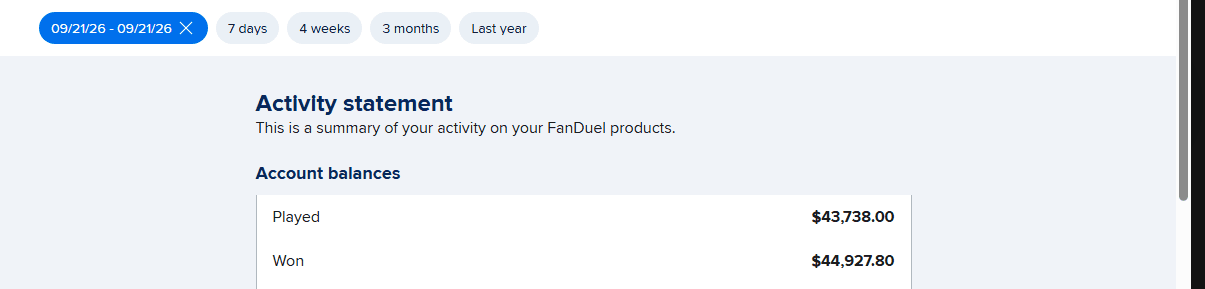
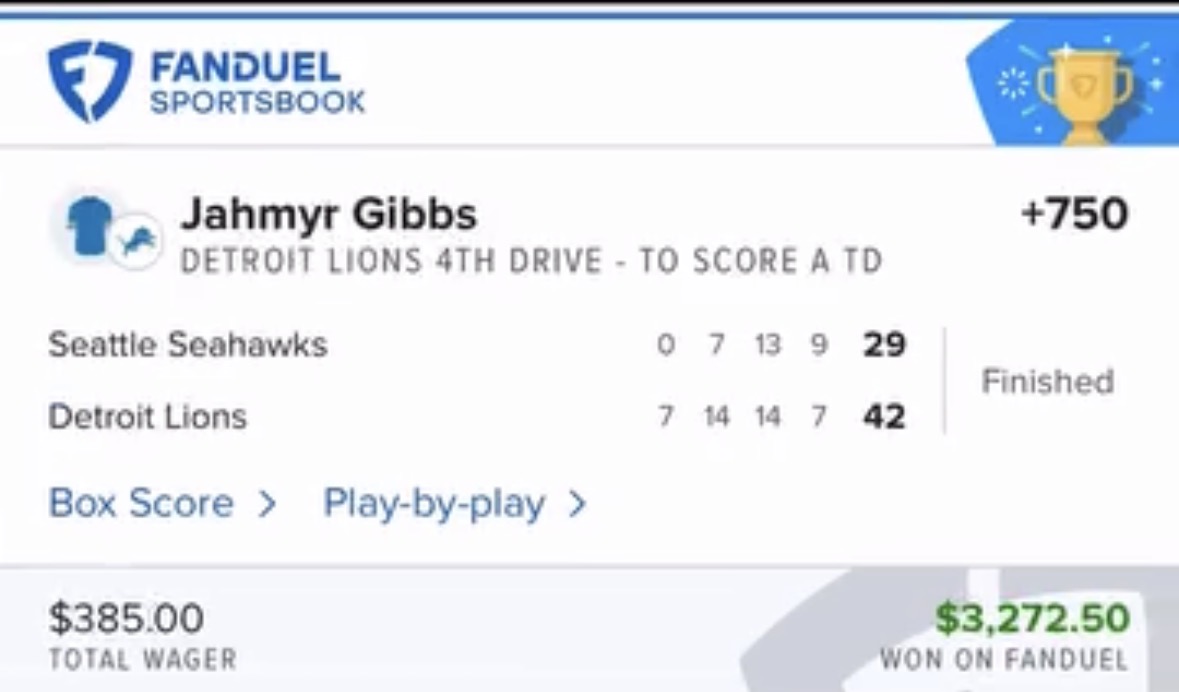
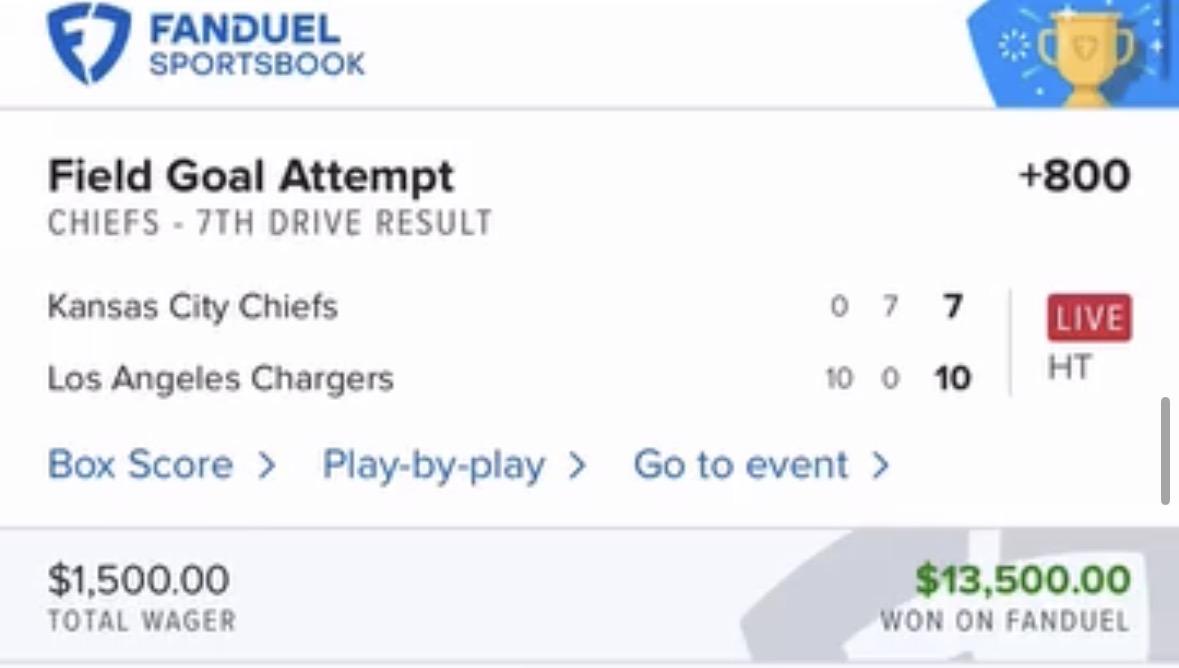
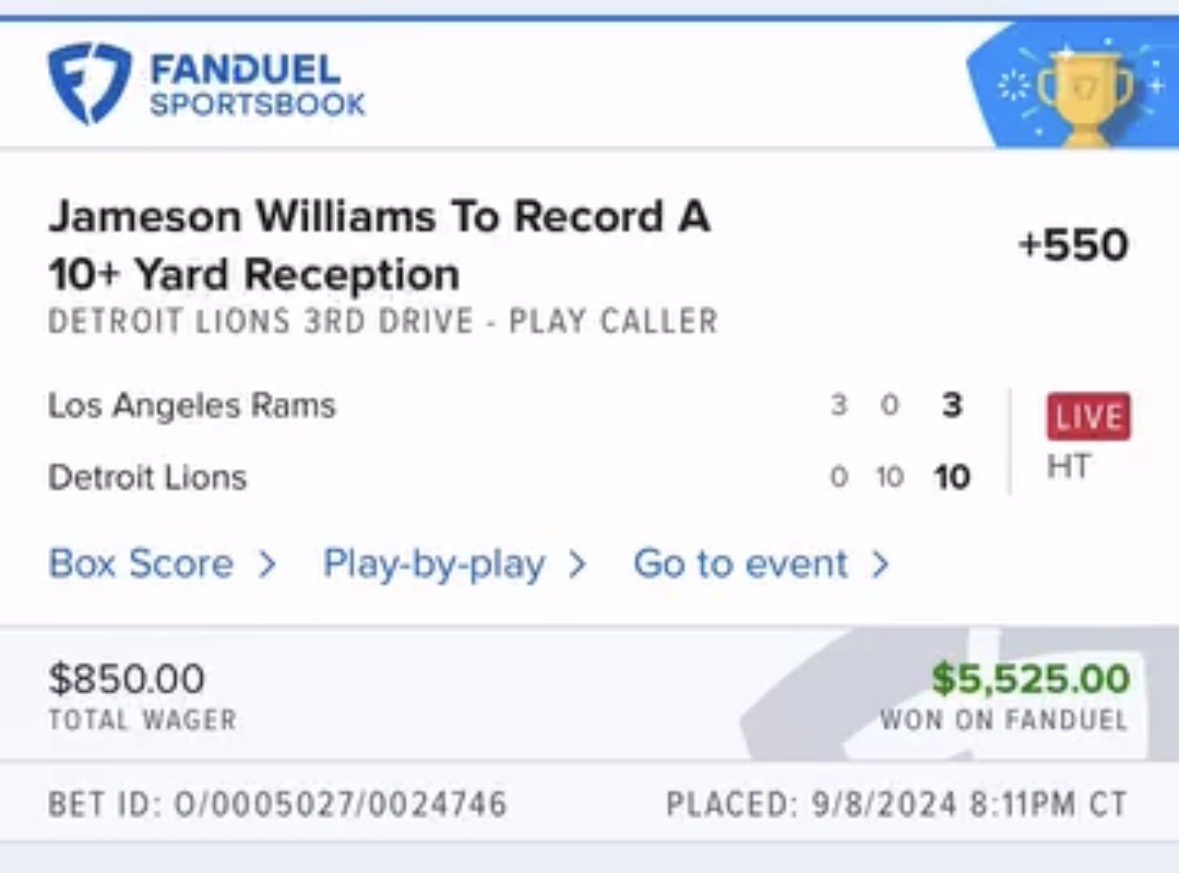
On Tuesday, August 18, two NFL teams lost a starter for the year, and neither loss happened in a game. Houston receiver Jayden Higgins tore an ACL running a red-zone route in a joint practice against the Raiders. Los Angeles Chargers center Tyler Biadasz was carted off a joint practice against the 49ers with ACL damage and additional injuries to his left knee. Both were reported the following day. Season-long markets were open the entire time, priced off information that had not arrived yet. The Best Bet on Sports has run live in-game picks for more than twenty years with a verified $367,520+ in profit across all sportsbooks, and August is the clearest annual demonstration of why the timing of information matters more than the information itself.
The instinct is to treat these as two injury stories. They are more usefully read as one story about a specific week on the calendar, when the most consequential football events happen in places no market can see.
What Actually Happened
| Jayden Higgins | Tyler Biadasz | |
|---|---|---|
| Team | Houston Texans | Los Angeles Chargers |
| Position | Wide receiver | Center |
| Where | Joint practice vs. Las Vegas | Joint practice vs. San Francisco |
| When | Tuesday, Aug. 18 | Tuesday, Aug. 18 |
| Injury | Torn ACL | ACL damage plus additional left knee injuries |
| Status | Out for the 2026 season | Out indefinitely |
Higgins is a 2025 second-round pick who caught 41 passes for 525 yards and six touchdowns as a rookie. He went down during red-zone eleven-on-eleven work, fell awkwardly, and limped off under his own power; head coach DeMeco Ryans said afterward the team was still evaluating the severity, and the diagnosis was confirmed the next day.
Biadasz signed a three-year, $30 million contract in March and was brought in specifically to fix an interior offensive line that has struggled to stay intact. He got tangled with a 49ers defensive tackle who fell across his lower body, and was carted off. He is gathering additional opinions.
Two teams, two joint practices, one Tuesday.
Joint Practices Are the Most Violent Non-Games on the Calendar
This is not coincidence, and it is worth understanding why before drawing any betting conclusion from it.
A joint practice exists because coaches want game intensity without game exposure. In an intrasquad practice, everyone knows each other's tendencies, the tempo is managed, and there is an unwritten understanding about how hard to finish a rep. Against another organization, none of that holds. Players are competing for jobs in front of a second set of evaluators, nobody has an established rhythm with the man across from them, and the reps are full speed against unfamiliar bodies moving in unfamiliar ways. That is why most joint-practice injuries are noise, and why the exceptions demand a different exercise entirely — pricing something like the Myles Garrett knee has almost nothing in common with pricing a camp tweak.
Biadasz's injury is the archetype: a defensive tackle falls across a knee in a pile. That happens when two units that have never worked against each other are going at game tempo without game officiating.
So the intensity is not a bug. It is the reason the practice is scheduled. And the practical consequence is that a meaningful share of the injuries that shape a season are generated in a setting that has no broadcast, no play-by-play, no official participation report, and no synchronized moment when everyone learns the same thing at once.
The Market Prices the Name That Left, Not the One That Arrives
Here is the mechanism that actually matters for anyone holding a season-long position.
When a known player is removed, a number moves. That part works. Books have a value for Higgins, they have a value for Biadasz, and both were subtracted this week. What no market can price with any precision is the replacement, because the replacement has no number attached to him.
Higgins's 41 catches and 525 yards do not evaporate. Targets are conserved — the throws still get thrown, to somebody. The team-level effect of losing him is the difference between what he would have done with those targets and what the next man does with them, and that difference is genuinely small relative to how large the news feels. The individual-level effect is enormous and lands on players whose markets are thin, lightly modeled and slow to update.
This is the standing asymmetry of every skill-position injury, and it runs in the opposite direction from intuition. The headline number — a win total, a division price — moves more than it should, because the name is famous. The obscure number — a backup's season yardage, a tight end's target share — moves less than it should, because nobody is watching it closely enough to reprice it fast. The broader version of how camp injuries actually filter into win totals is worked through in the 2026 NFL training camp injury report ranked by betting impact, and the season-long numbers themselves sit at NFL win totals 2026.
A Center Is Almost Unpriceable, Which Is the Interesting Part
Biadasz is the harder and more instructive case, because there is no market for what he does.
You can bet a quarterback's passing yards. You can bet a receiver to score. You cannot bet interior offensive line quality, anywhere, in any form. There is no line for pressure rate allowed, no market on snap integrity, no price on whether the pocket holds. And yet the center position governs protection calls, sets the front identification, and sits directly upstream of nearly every quarterback outcome that does have a market.
A team paid $30 million in March to solve a specific problem. The market never explicitly priced the solution — there was no "Chargers interior line improved" line to bet — which means it now has no explicit mechanism for pricing the removal of it either. Whatever adjustment happens has to travel indirectly, through a win total or a quarterback prop, where it competes for attention with a dozen other inputs.
That is worth sitting with. The injury with the clearer betting market is the receiver, whose replacement-level cost is arguably smaller. The injury with the murkier market is the lineman, whose absence propagates into more outcomes. Priceability and importance are not the same thing, and August is when the gap between them is widest. Team-specific reads are at Houston Texans picks and Los Angeles Chargers picks.
Information Arrives Crooked in August, and That Is the Whole Problem
During the season, football information is synchronized. A game is broadcast, everyone sees the same snap at the same instant, the market reprices in front of a shared audience, and an official injury report follows on a published schedule.
August has none of that infrastructure. What happened Tuesday in Houston and Los Angeles reached the world through beat reporters standing on a sideline, then through national aggregation, then through a confirmation the next day. Between the moment a knee buckled and the moment a number moved, there was a window measured in hours, and during that window season-long markets stayed open and takeable.
Nobody should build a strategy around beating beat reporters to a post. The realistic reading is narrower and more useful: prices you see this month are standing on information that is less complete and less evenly distributed than prices you will see in October. That is an argument for smaller season-long positions in August, not for cleverer ones. It is also part of why the NFL preseason window behaves so differently from the regular season, and why preseason games themselves are a poor vehicle for most approaches.
What This Does Not Change
A discipline point, because August rewards overreaction and punishes it later.
Neither of these injuries changes a season's shape by much. One team lost a second-year receiver who was probably its second or third option. The other lost an interior lineman who was an upgrade rather than a franchise cornerstone. Both are real, both cost something, and neither is the sort of event that should move a win total by a full game.
The failure mode this month is treating every camp report as a repricing event and accumulating a portfolio of small season-long positions taken on incomplete information across three weeks. By Week 1 you are holding a stack of bets whose theses you can no longer reconstruct. If you are going to hold season-long exposure, hold less of it and hold it in fewer places. NFL futures rewards patience considerably more than it rewards reaction speed.
Where a Line Injury Actually Becomes Bettable
The reason a center's absence is worth writing about at all is that it does eventually become visible — just not in a season-long market.
Interior line degradation shows up on the field almost immediately. Time to throw shortens. Pressure comes up the middle rather than off the edge, which is the version quarterbacks handle worst because it collapses the pocket toward them rather than around them. Play-action gets less reliable. Third-and-medium starts converting at a lower rate. All of that is observable within two drives by anyone watching the broadcast with a specific thing to watch for.
Live markets, meanwhile, reprice on scoring events and possession changes. There is no direct mechanism by which "the replacement center has been beaten inside on four of eleven dropbacks" enters a number. It arrives eventually, through the score, after it has already been true for a quarter. That lag between an observable condition and a posted price is the entire operating window for in-play work, and it is why the same information that is nearly unusable in a futures market is genuinely usable in a live one. The general case is at how to bet live during NFL games and live betting picks; the reason a service operating in that window ends up restricted is documented at why sportsbooks limit winning live bettors.
Week 1 markets will open with both of these absences already priced in at the team level. The parts that are not priced — how a replacement center holds up against a specific front, how a target share redistributes in a real game plan — will not be knowable until they are being watched. That is not a futures problem. It is a Sunday problem. Current boards are at NFL picks and NFL Week 1 picks, with individual markets at NFL player props.
Get Tonight's Live Picks
Want tonight's live in-game picks delivered to your phone via Email and Discord during the game — read off what is actually happening on the field rather than off a number set before kickoff?
The Best Bet on Sports is the only live betting handicapping service limited on all six major U.S. sportsbooks (FanDuel, DraftKings, Caesars, BetMGM, Fanatics, ESPN BET) for winning too much during in-game action. Verified profit: $367,520+. Picks delivered via Email and Discord during games.
→ Get tonight's live picks: $199 first month — 1-Unit package, full live betting access → Try a free live pick first — reserve your spot for tonight's pick
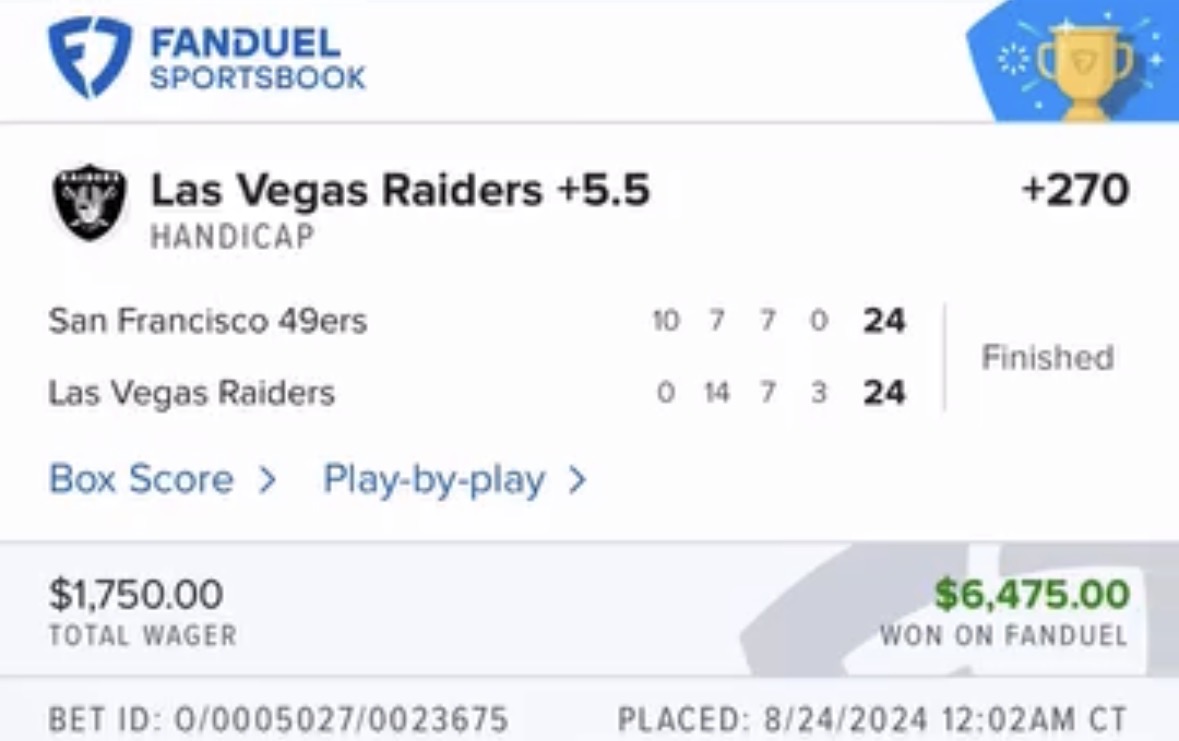
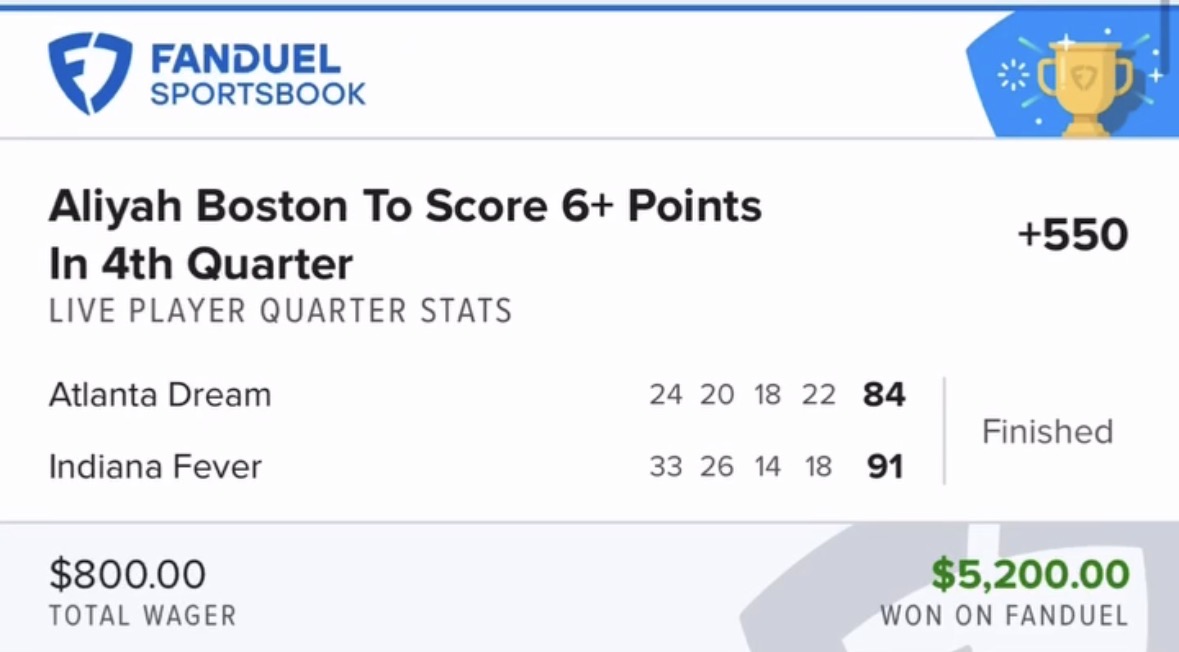
More coverage at NFL betting, live betting picks, sports handicappers, and our results.
Frequently Asked Questions
What happened to Jayden Higgins and Tyler Biadasz?
Both tore an ACL on Tuesday, August 18, 2026, in separate joint practices. Higgins, the Texans' second-year receiver and a 2025 second-round pick, went down running a red-zone route in eleven-on-eleven work against the Raiders and is out for the season. Biadasz, the Chargers' center, was carted off a joint practice against the 49ers after a defensive tackle fell across his lower body, suffering ACL damage plus additional injuries to his left knee, and is out indefinitely.
Why do so many serious injuries happen at joint practices?
Because joint practices are built to deliver game intensity, which is the point of scheduling them. Players are going full speed against an unfamiliar opponent, competing for roster spots in front of a second coaching staff, without the established rhythm and unspoken restraint that governs an intrasquad session. There is no game officiating and no shared understanding of how to finish a rep. The intensity that makes the practice valuable to a coaching staff is the same intensity that produces the injury rate.
How much should a camp injury move a season win total?
Usually less than the coverage implies. Removing a known player subtracts a real amount, but the production does not vanish — targets and snaps redistribute to a replacement, and the team-level cost is the gap between the two rather than the departed player's full statistical line. Losing a genuine franchise cornerstone can be worth a meaningful fraction of a win. Losing a secondary receiver or an interior lineman upgrade is worth considerably less than the headline suggests, and August markets frequently overreact to the name.
Why is an offensive lineman's injury harder to price than a receiver's?
Because there is no market for what a lineman does. You can bet passing yards, receptions and touchdowns, so a skill-position absence has an obvious place to land. There is no line on interior pressure allowed or pocket integrity, so a center's absence has to travel indirectly through a win total or a quarterback prop, competing with a dozen other inputs. The result is an odd inversion: the injury with the clearer market is often the one with the smaller real effect.
Should I bet NFL futures based on training camp injury news?
Cautiously and in small size, if at all. August prices stand on information that is less complete and less evenly distributed than in-season prices, because much of the news is generated at closed practices and reaches the market through beat reporters over a period of hours. The common mistake is accumulating a stack of small season-long positions across three weeks of camp reports and arriving at Week 1 holding bets whose reasoning you can no longer reconstruct. Fewer positions, held with more conviction, ages better.
Where does an offensive line problem actually become bettable?
In-game. Interior line degradation is visible within two drives to anyone watching for it: time to throw shortens, pressure arrives up the middle rather than off the edge, play-action loses reliability, third-and-medium conversion falls. Live markets reprice on scoring plays and possession changes, and have no direct mechanism for "the backup center has been beaten inside repeatedly." The condition is observable well before it reaches the number, and that lag is where in-play work operates.
Do markets adjust before or after this kind of news becomes public?
After, in most cases, but the adjustment is uneven. There is no synchronized moment in August comparable to a broadcast snap during the season, so information moves from a sideline reporter to national aggregation to confirmation over a period of hours. Season-long markets stay open throughout. This is not a realistic edge to chase — beating reporters to a post is not a strategy — but it is a good reason to treat August prices as standing on softer footing than the same markets will have in October.
The Best Bet on Sports · 1.5M followers on TikTok
Sports Betting TikTok is the live betting account behind The Best Bet on Sports, covering NFL, NCAAF, NBA, NCAAB, MLB and WNBA markets in real time. The account has been limited on all six major U.S. sportsbooks — FanDuel, DraftKings, Caesars, BetMGM, Fanatics and ESPN BET — for winning on live betting, with $367,520 in verified profit since 2005. View full profile →
Past results do not guarantee future performance. Must be 21 or older to wager.
Related Articles
Malik Nabers Took Seven Reps. The Market Prices Zero or All.
NFL Cut Day Moved to a Sunday: What the August 30 Deadline Actually Changes
Dallas Signed Von Miller. The Market Still Can't Price This Pass Rush.
Pending NFL Discipline Is a Bet on a Calendar Nobody Publishes
NFL Week 1 Overreaction Index: Ten Early-Season Traps Ranked
Kyler Murray Is the Vikings' QB1. That News Is a Calendar, Not a Number.
Get real live betting picks
From $39.95/mo · Cancel anytime · Email + Discord delivery
● Get The Picks
Choose your package
Tap any tier below to select · Subscribe in one tap
👇 Tap any package to select it
✓ You're selecting
25 Units · $99.95/month
25 unit picks per month. Sweet spot for most bettors — plenty of action without going all-in.
- ✓25 live betting selections/month
- ✓Email + Discord delivery
- ✓All sports (NFL, NCAAF, NBA, NCAAB, MLB)
- ✓Mix of 1, 2, 3, 5-unit rated plays
- ✓Cancel anytime
Secure PayPal · Cancel anytime · No hidden fees · 21+ · +$367K verified
+$367,520 verified · Limited on 6 sportsbooks · 20 years documented · See Proof
Join Our Newsletter
Get free expert sports picks and analysis delivered weekly.