Ashton Jeanty's Ankle: A Props Problem, Not a Sides Problem

Ashton Jeanty left Raiders practice with what is reported as a low ankle sprain, and his Week 1 status against Miami is up in the air. A questionable running back barely moves a spread, because a spread does not care which of two backs takes the carries. The prop board is a different story — and it splits in opposite directions on the same player.
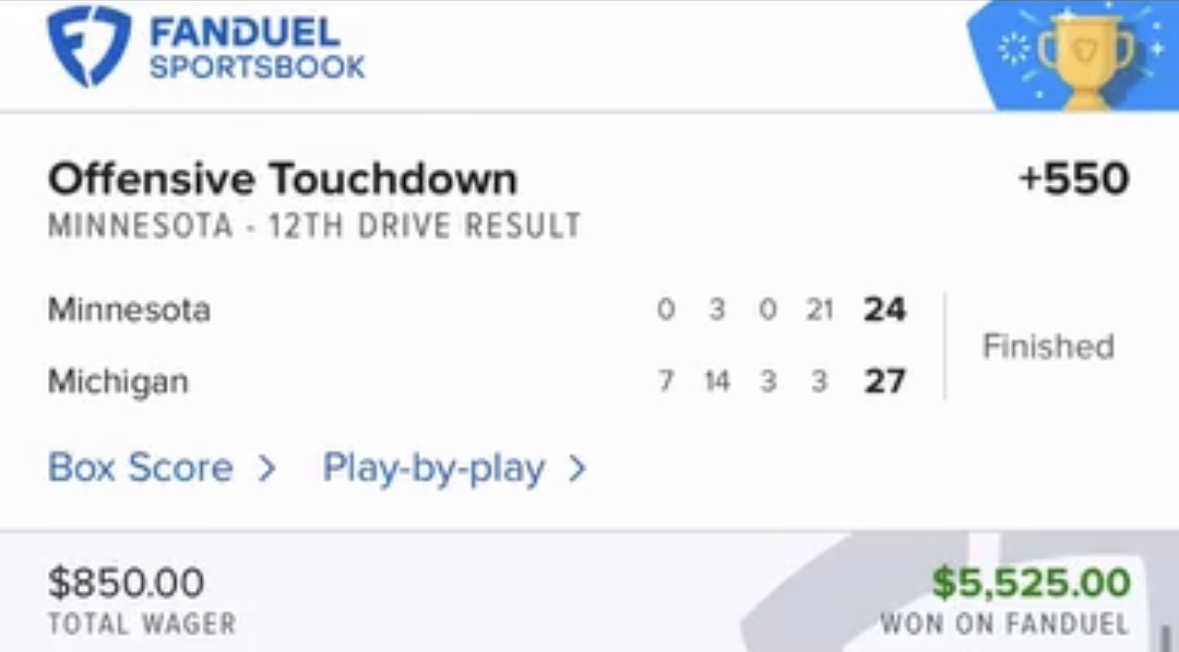
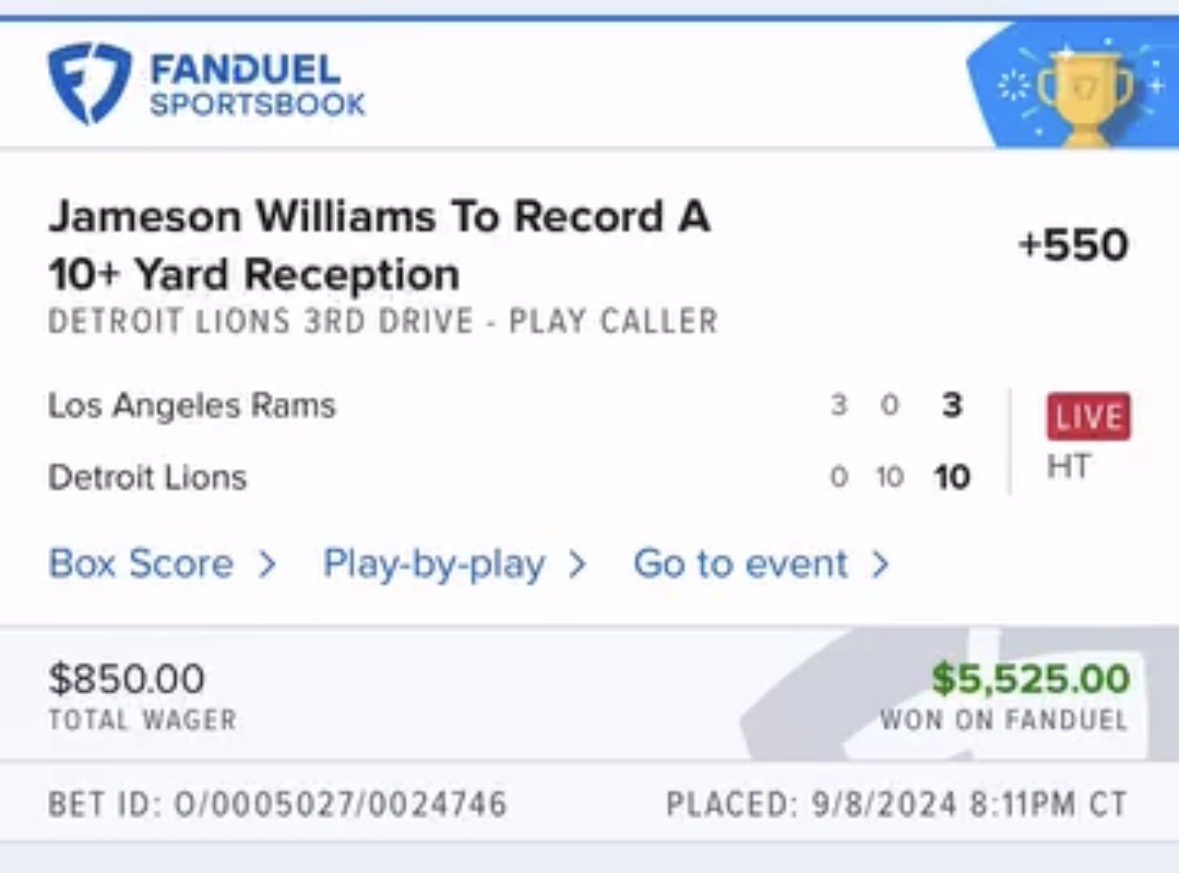
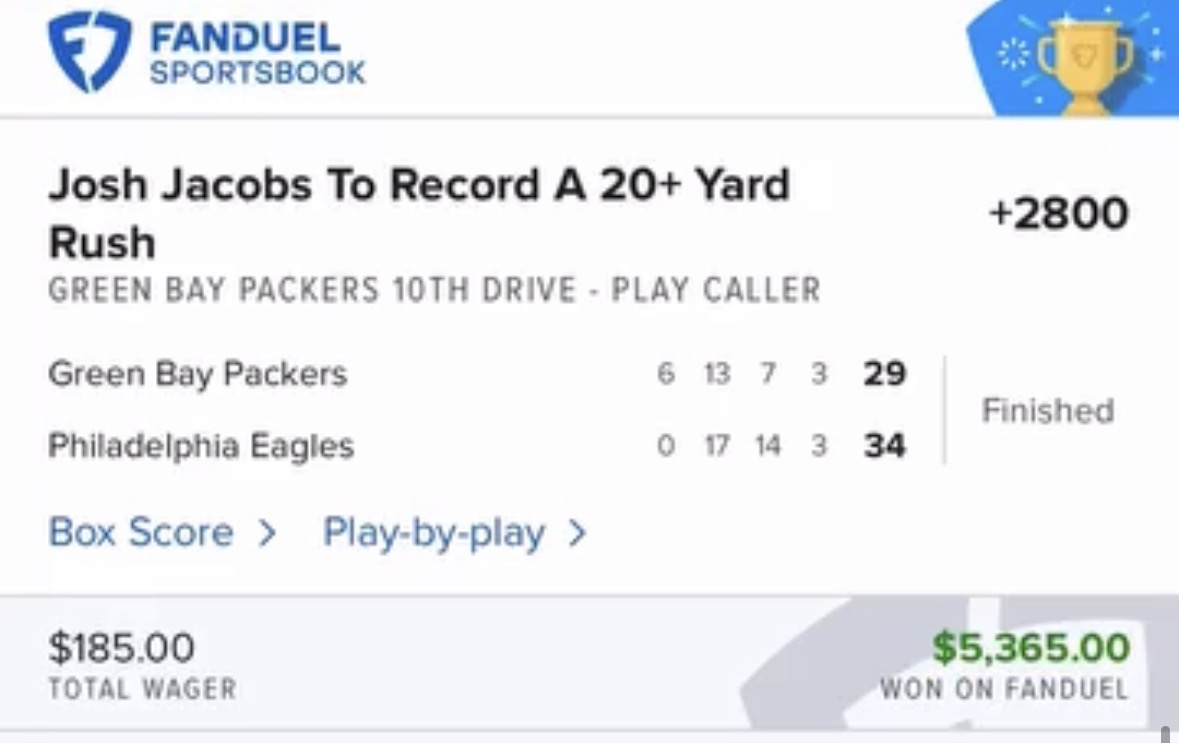
Las Vegas running back Ashton Jeanty left practice on Sunday unable to put weight on his right leg after reaching for a low throw in a non-contact period, and reporting since has landed on an ankle sprain believed to be more low than high and not considered a long-term injury — with his availability for the opener against Miami described by NFL Network's Ian Rapoport as still up in the air. The instinct is to treat that as a spread story. It is not. A team spread is close to indifferent about which of two running backs takes the carries, and the Raiders were already splitting first-team reps at the position before Jeanty went down. The story lives entirely on the prop board, where the same uncertainty pushes two different markets in opposite directions. The Best Bet on Sports has worked in-play NFL markets for more than twenty years with a verified $367,520+ in profit across all sportsbooks, and separating the news that moves a number from the news that only moves a headline is most of the job.
The reason this one is worth working through is that it is the most common injury situation in football and the one bettors handle worst: a real player, a real injury, and no answer for two weeks.
The Committee Was Already Forming
Start with the fact that gets skipped. Rookie running back Mike Washington Jr. took the first-team reps for the rest of practice after Jeanty left — but he had been alternating starting reps with Jeanty before the injury.
That single detail changes the entire pricing question.
When a genuine bell-cow back goes down, the market has to reprice a workload transfer: one player was getting the overwhelming share of the touches, and now someone else is. That is a large, identifiable change, and the number moves. When a back in an already-forming committee goes down, there is far less to transfer. The team's number was never built on the assumption that one player would carry it.
This is the same principle that made a much more severe injury barely register earlier this month, covered in why the 49ers market barely moved on Ricky Pearsall: sportsbooks do not price the player who got hurt, they price the gap between him and whoever takes his snaps. Here that gap is unusually narrow before you even get to the injury, because the coaching staff had already been narrowing it in practice.
So the first honest read is deflationary. A Raiders team total, a Week 1 spread, and a season win number are all built on the offense as a unit, and the unit changes less than the name does.
Why a Spread Barely Notices a Running Back
There is a structural reason beyond the committee, and it is worth stating plainly because it applies every week of the season.
A spread prices the expected margin between two teams. Running back play is the position where the gap between a very good player and an ordinary one converts to the fewest points of margin, because so much of a back's production is determined by the five people in front of him and the play called. Move a quarterback and a spread moves multiple points. Move a left tackle and the shape of the outcomes changes even if the average does not, which is the argument in Laremy Tunsil's injury and the tails. Move a tight end and the effect leaves the side almost entirely and reappears on the team total, which is the case worked through in what a tight end loss really moves. Move a running back inside a committee and you are asking a spread to notice a difference it is not built to detect.
That does not mean nothing happens. It means the thing that happens is small, and small is exactly the range where a bettor's confidence most reliably exceeds the actual effect.
Here is the honest layout of where a questionable committee back does and does not matter:
| Market | Does Jeanty's status matter? | Why |
|---|---|---|
| Game spread | Barely | Margin is driven by quarterback play, line matchups, and script |
| Game total | Barely | Two backs, similar volume, similar pace |
| Team total | Slightly | Only through red zone efficiency |
| Rushing yards prop | Enormously | Pure volume-times-efficiency bet |
| Anytime touchdown prop | Substantially, in the other direction | Role-based, not explosiveness-based |
| Longest rush prop | Enormously | Entirely an explosiveness bet |
The bottom half of that table is the actual news event. The top half is where most of the betting conversation will happen anyway.
The Prop Board Splits in Two Directions on the Same Player
This is the part that makes an ankle different from a knee, and it is why the single "questionable" tag is such a poor instrument.
An availability designation has one dimension: he plays or he does not. A low ankle sprain, if he plays, produces an outcome that designation cannot express — a back who is available but not the same. And "not the same" hits the prop board unevenly:
Rushing yardage is an explosiveness bet. A meaningful share of any back's yardage total comes from a handful of long runs, which require cutting, planting, and accelerating out of a break. Those are precisely the movements a compromised ankle limits first. A back at eighty-five percent can absolutely run between the tackles for three yards. What he cannot reliably do is turn a five-yard gain into a thirty-yard one, and the yardage prop is priced with those thirty-yard runs inside it.
Anytime touchdown is a role bet. Short-yardage and goal-line carries are the least athletic touches in football. They are assignments, not athletic feats, and a coaching staff hands them to the back it trusts near the end zone. A limited Jeanty is far less limited in that role than in the open field.
So the same fact — plays but not at full health — argues one direction on a yardage number and close to no direction on a touchdown number. A single injury tag cannot carry that, and a market that only has "in or out" to work with will not price it. That is the same gap between availability and workload that showed up in Malik Nabers taking seven reps, arriving here through a different door: not a ramp back from surgery, but a healthy player playing hurt.
If you are building prop tickets around a questionable back, that asymmetry is the whole board. The general mechanics of stacking those legs are in player prop parlay strategy.
The Calendar Is the Worst Part
Now the timing, which is what makes this genuinely hard rather than merely uncertain.
Jeanty is not going to play in the preseason. Roster cutdown lands this weekend, which means the next two weeks of practice reports will compete for attention with a hundred transactions across the league — a scheduling crunch worth understanding on its own, covered in the roster cutdown deadline. And a Week 1 opener carries no current-season data for anyone.
Put those together and you get a market with an unusual property: the question will not be answered until ninety minutes before kickoff, when the inactives are published. That is after every pregame price you can take.
Which produces a genuinely bad set of choices for a pregame bettor:
- Bet it early and you are guessing at a designation the team itself has not settled.
- Wait for Friday's report and you will likely get "questionable," which is the designation that carries the least information in football.
- Wait for inactives and the number has already adjusted, if he is out.
There is no version of this where a pregame bettor gets both the information and the price. That is not a failure of research. It is the structure of the situation.
The Read That Actually Resolves It
Here is the part that gets lost in two weeks of injury-report parsing: the question resolves itself on the field, quickly, and in public.
If Jeanty is active against Miami, the first fifteen offensive snaps tell you what two weeks of reporting could not. Watch the split. Is he taking first and second down and coming off on third? Is the rookie getting the two-minute work? Does he get the first goal-line carry? Is he being used as a receiver out of the backfield, which requires the exact lateral movement an ankle limits?
None of that is available to anyone at any price on Saturday night. All of it is available for free by the middle of the first quarter — and the in-game markets are still repricing while you watch it, because a live number responds to the score and the clock faster than it responds to a usage pattern that has only just become visible.
That is the whole reason live betting exists as a discipline rather than a convenience. The pregame market's job is to price uncertainty. The in-play market's job is to price the score. Neither of them is built to price a usage split that becomes obvious ten minutes into a football game, and the gap between what the field is showing and what the number reflects is the window we work. That is what our live betting picks and NFL picks coverage is built around, and the same logic applies to every questionable player on every Sunday of the season — the mechanics are in how joint practice injuries move betting markets.
The most useful thing to do with this news, then, is almost nothing pregame. Do not chase a spread that will not move for a running back. Do not buy a yardage prop before you know whether he can plant on that ankle. Note that the touchdown market and the yardage market disagree about what "limited" means, and be ready to act on the first quarter rather than on the second week of practice reports.
Get Tonight's Live Picks
Want tonight's live in-game NFL picks delivered to your phone via Email and Discord during the game?
The Best Bet on Sports is the only live betting handicapping service limited on all six major U.S. sportsbooks (FanDuel, DraftKings, Caesars, BetMGM, Fanatics, ESPN BET) for winning too much during in-game action. Verified profit: $367,520+. Picks delivered via Email and Discord during games.
→ Get tonight's live picks: $199 first month — 1-Unit package, full live betting access → Try a free live pick first — reserve your spot for tonight's pick
More coverage at expert sports picks, football betting picks, football handicappers, daily sports betting picks, and our results.
Frequently Asked Questions
What is Ashton Jeanty's injury?
Jeanty left Raiders practice on Sunday after reaching for a low throw during a non-contact team period and landing awkwardly, and he could not put weight on his right leg as he left the field. Reporting since has settled on an ankle sprain believed to be more low than high and not considered a major or long-term injury. NFL Network's Ian Rapoport has described his availability for the season opener against Miami as still up in the air, with the team hopeful but no commitment either way.
Will Ashton Jeanty's injury move the Raiders' Week 1 spread?
Very little, and less than the name suggests. A spread prices expected margin, and running back is the position where the difference between a very good player and an ordinary one converts to the fewest points, because so much of the production depends on the offensive line and the play call. The effect is smaller still here because rookie Mike Washington Jr. had already been alternating first-team reps with Jeanty before the injury, meaning the number was never built on a bell-cow workload in the first place.
Why does a low ankle sprain matter more for props than for sides?
Because the question a prop asks is different. A spread asks how much better one team is than another, and a committee back barely changes that answer. A rushing yardage prop asks how many yards one specific player gains, which is a direct function of his volume and his ability to accelerate out of a cut — exactly what a compromised ankle limits. The same injury that is nearly invisible to a spread sits directly on top of the number a yardage prop is built from.
Does a limited running back hurt touchdown props the same way?
No, and that is the useful asymmetry. Short-yardage and goal-line carries are the least athletic touches in football — they are assignments handed to the back a coaching staff trusts near the end zone rather than plays that require breaking into the open field. A back playing at less than full health is far less limited in that role than he is on the perimeter, so "plays but limited" argues meaningfully against a yardage number while arguing much less against an anytime touchdown number on the same player.
What does a "questionable" designation actually tell a bettor?
Less than almost any other tag in football. It carries one dimension — likely to play or not — while the outcome that matters most for a prop bettor is a third possibility the designation cannot express: available but not the same. A player listed questionable who suits up and takes seventy percent of his usual snaps at eighty-five percent of his usual burst produces results that neither the "in" nor the "out" branch of the market priced.
When does the Jeanty question actually get answered?
Formally, ninety minutes before kickoff, when inactives are published — which is after every pregame price a bettor can take. Practically, it gets answered on the field in the first quarter. The snap split, whether he stays on for third down, who takes the first goal-line carry, and whether he is used as a receiver out of the backfield all become visible within the first dozen offensive plays, and none of it was available at any price the night before.
How should a bettor handle a questionable running back in Week 1?
By doing very little before kickoff. Chasing a spread on running back news is betting on an effect too small for the market to be wrong about. Buying a yardage prop before knowing whether he can plant on the ankle is buying the one number the injury sits directly on. The more productive approach is to note that the touchdown market and the yardage market disagree about what "limited" means, then act in-game once the usage pattern is visible and the live number is still reacting to the score rather than to the snap count.
The Best Bet on Sports · 1.5M followers on TikTok
Sports Betting TikTok is the live betting account behind The Best Bet on Sports, covering NFL, NCAAF, NBA, NCAAB, MLB and WNBA markets in real time. The account has been limited on all six major U.S. sportsbooks — FanDuel, DraftKings, Caesars, BetMGM, Fanatics and ESPN BET — for winning on live betting, with $367,520 in verified profit since 2005. View full profile →
Past results do not guarantee future performance. Must be 21 or older to wager.
Related Articles
Laremy Tunsil's Injury: The Betting Impact Sits in the Tails
Ricky Pearsall's Injury: Why the 49ers Market Barely Moves
Tua Tagovailoa's Oblique: The Injury a Spread Can't Price
Aaron Rodgers to the Steelers: How Sportsbooks Repriced the AFC North and Where the Bet Value Is Now
Do Parlay Legs Include Overtime? How Each Leg Settles
Sam Darnold's Hip: What It Does to Seattle's Numbers
Get real live betting picks
From $39.95/mo · Cancel anytime · Email + Discord delivery
● Get The Picks
Choose your package
Tap any tier below to select · Subscribe in one tap
👇 Tap any package to select it
✓ You're selecting
25 Units · $99.95/month
25 unit picks per month. Sweet spot for most bettors — plenty of action without going all-in.
- ✓25 live betting selections/month
- ✓Email + Discord delivery
- ✓All sports (NFL, NCAAF, NBA, NCAAB, MLB)
- ✓Mix of 1, 2, 3, 5-unit rated plays
- ✓Cancel anytime
Secure PayPal · Cancel anytime · No hidden fees · 21+ · +$367K verified
+$367,520 verified · Limited on 6 sportsbooks · 20 years documented · See Proof
Join Our Newsletter
Get free expert sports picks and analysis delivered weekly.