Player Prop Parlay Strategy: The Volume Ceiling Problem

Player prop parlays fail for two reasons that have nothing to do with picking the right players. Stacked overs from the same team compete for a finite number of plays, and prop markets carry two to three times the juice of a side, which compounds on every leg. Understanding both changes how many legs you use and which props you are willing to stack.
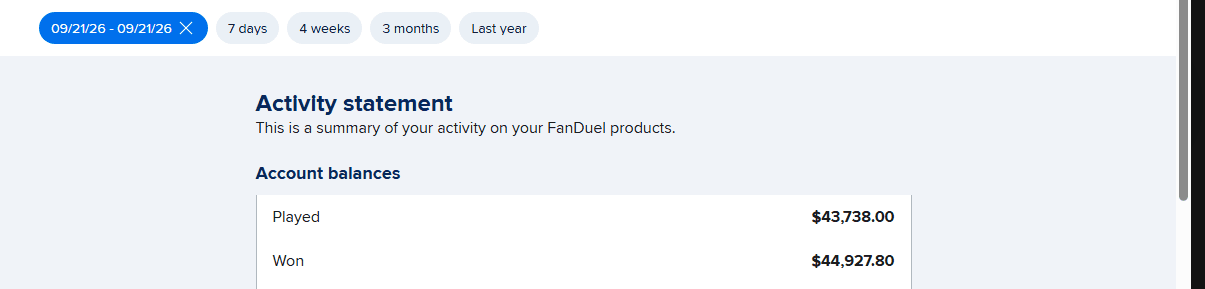
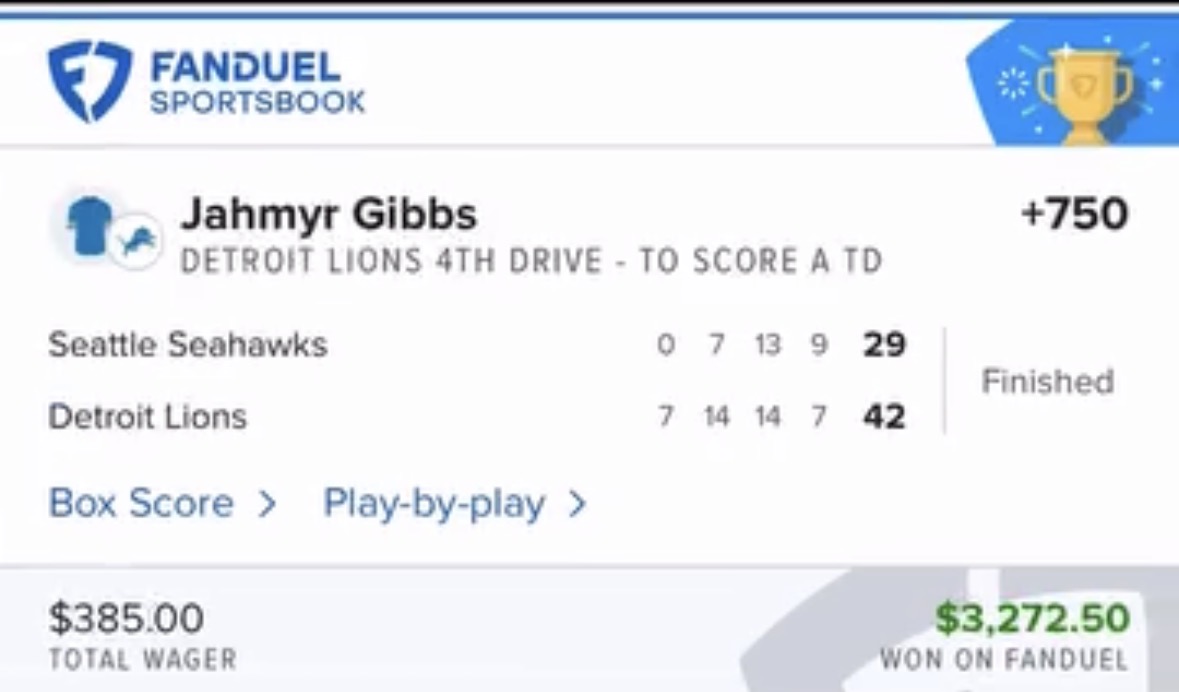
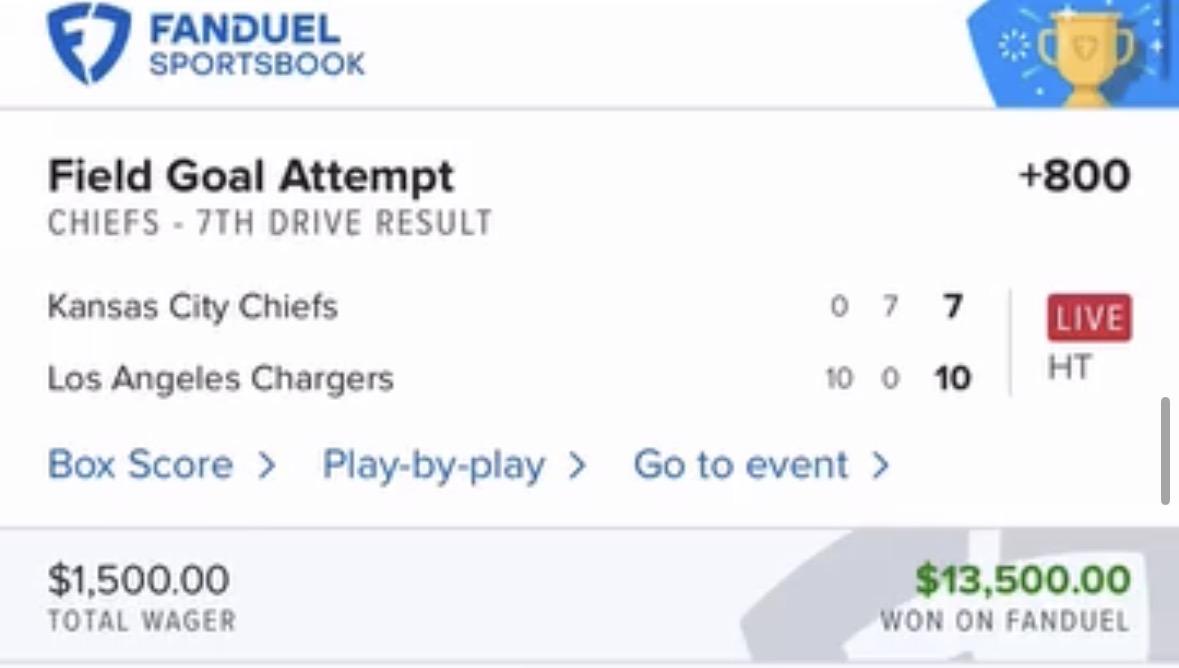
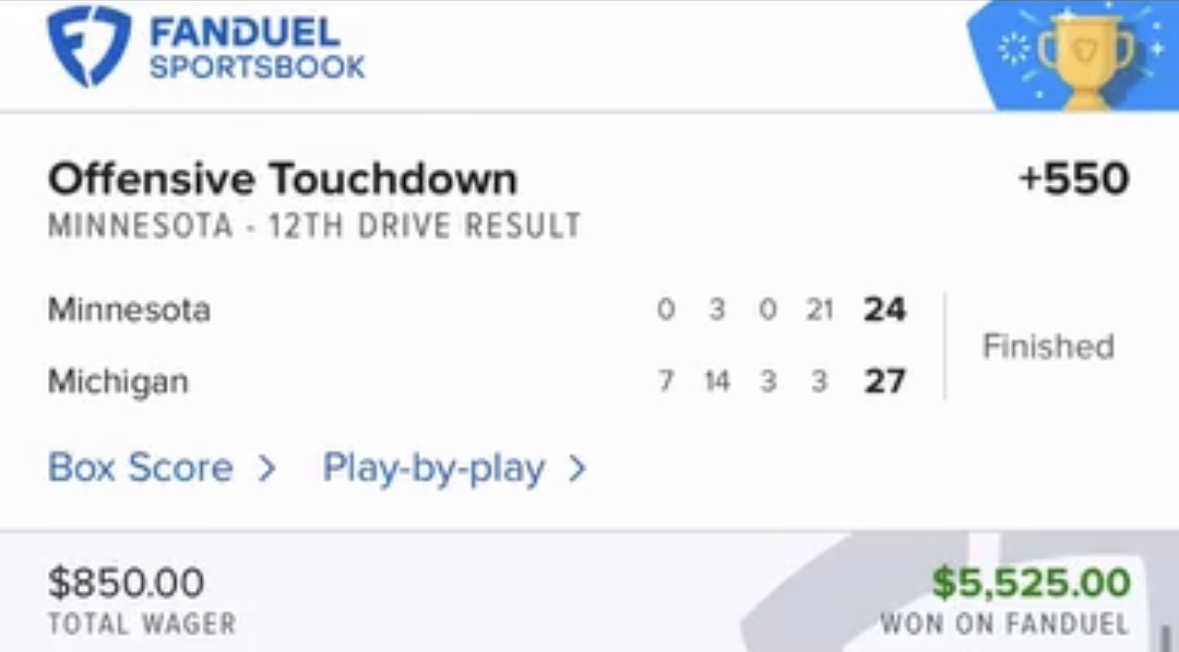
A player prop parlay is the most popular ticket in American sports betting and the worst-understood one. Two structural problems sit underneath it. First, a game contains a finite number of plays, so stacking overs on multiple players from the same offense is not four bets on four players — it is one bet on pace and volume, made four times. Second, prop markets are priced with two to three times the margin of a point spread, and that margin compounds on every leg you add. The Best Bet on Sports has run live in-game picks for more than twenty years with a verified $367,520+ in profit across all sportsbooks, and prop parlays are where we see recreational tickets bleed the most value without the bettor ever noticing why.
Props are the softest market on the board. That is true, and it is why sharp bettors work them. But softness in the underlying number does not survive contact with parlay construction. A prop parlay takes the one advantage props offer — occasionally mispriced individual lines — and buries it under two costs that scale faster than the edge does.
This piece is about those two costs and how to build around them.
All figures below are illustrative. They show the direction and rough size of an effect, not a quoted market price.
The Volume Ceiling: Why Same-Team Prop Overs Compete With Each Other
Start with the problem nobody prices correctly on a recreational ticket.
A football game has roughly 120 to 130 offensive plays split between two teams. A basketball game has a possession count set by pace. A baseball game has 27 outs per side and a plate-appearance distribution determined by how many runners reach. In every sport, the raw material that props are built from is fixed before kickoff, and it is shared.
Now consider a common four-leg build: a quarterback over on passing yards, his top receiver over on receiving yards, the second receiver over on receptions, and the running back over on rushing yards.
That looks like four different players. It is not four different bets. It is one bet that this offense runs a lot of plays and moves the ball efficiently — and inside that bet, two of the legs actively work against each other. Rushing volume consumes clock and reduces pass attempts. The receiving yards leg and the receptions leg draw from the same pool of targets the quarterback leg needs.
You have taken a ticket that pays as though the legs are independent and filled it with legs that are partly the same bet and partly in competition. The distribution gets fatter at both ends: the ceiling outcome where everything hits is more likely than the multiplied price implies, and so is the outcome where a slow, low-play, three-and-out game kills all four at once. What you lose is the middle, which is where most games actually land.
Our guide to correlated parlay construction covers the general version of this. The prop-specific version is worse, because prop stacking feels diversified in a way that stacking four sides does not.
What actually shares a volume ceiling
| Prop pairing | Relationship | Usable in one parlay? |
|---|---|---|
| QB pass yards + WR1 receiving yards (same team) | Strongly positive, shared pool | Only as a deliberate SGP, priced accordingly |
| WR1 receiving yards + WR2 receptions (same team) | Positive on pace, competing on targets | Weak — you are paying for two views of one thing |
| RB rush yards + QB pass yards (same team) | Competing for the same play count | Poor — legs fight each other |
| RB rush yards + opposing team total under | Positive (run-heavy script, clock burn) | Reasonable, and often already priced |
| Player prop + a side in a different game | Close to independent | Best structural pairing available |
| Two players on opposing teams, both overs | Positive on shared game pace | Moderate — one common factor, not four |
The pattern is simple. Legs from the same offense share a ceiling. Legs from opposing teams share a pace factor but not a target pool. Legs from different games are the only ones that behave the way the payout math assumes.
The Juice Problem: Why Prop Parlays Cost More Than They Look
The second cost is arithmetic, and it is the one bettors underestimate most.
A standard point spread is priced at -110 on both sides. That produces an implied probability of 52.38% per side, or 104.76% total — a theoretical hold of about 4.5%. Player props are routinely priced at -115, -120, or worse on both sides, because the market is thinner and the book needs more protection.
Here is what that does across a parlay, using a two-way hold on each leg:
| Price per side | Two-way hold, 1 leg | Compounded, 3 legs | Compounded, 4 legs | Compounded, 5 legs |
|---|---|---|---|---|
| -110 (typical side) | 4.6% | 14.3% | 19.5% | 25.1% |
| -115 (common prop) | 6.5% | 20.9% | 28.8% | 37.3% |
| -120 (common prop) | 8.3% | 27.2% | 37.8% | 49.3% |
| -125 (thin prop) | 10.0% | 33.1% | 46.4% | 61.0% |
Read the bottom-right corner of that table. A five-leg prop parlay built entirely from -125 markets is carrying an overround in the neighborhood of 60%. You do not need to be wrong about the players to lose money on that ticket over time. You need only to be not right enough, by a margin that grows with every leg.
This is the mechanical reason we treat leg count as the first decision rather than the last. Our breakdown of how parlay payouts are calculated shows the multiplication; this table shows what the multiplication is quietly doing to the price you receive.
How to Build a Prop Parlay That Survives Both Problems
Three rules follow directly from the two costs above.
Rule one: cap it at two or three legs. Not because short parlays are inherently better, but because both of your costs compound per leg. Every leg you add multiplies the vig and, if the legs come from the same game, concentrates the volume ceiling. Two legs at -115 carry about 13% overround. Five carry roughly 37%. The payout does not grow fast enough to pay you for that. If you want the discussion in general terms, how many legs a parlay should have works through the tradeoff for straight sides.
Rule two: prefer props that are structurally hard to share. Not every prop draws from the same well.
- Anytime scorer and touchdown markets depend on red-zone opportunity, which is scarcer and less pace-dependent than yardage.
- Defensive props (tackles, sacks) run inverse to your own offense's volume, since a defense on the field longer accumulates more.
- Baseball props are the cleanest structurally, because plate appearances are distributed by lineup slot rather than by play-calling choice.
- Yardage overs on the same offense are the most-shared prop type in football and should be your least-stacked.
Rule three: put your legs in different games unless you are deliberately buying correlation. If you want two legs from one game, do it inside a same-game parlay where the book has priced the relationship, and accept that the price already reflects it. Do not build a "spread across four players" ticket from one offense and tell yourself it is diversified. Our same-game parlay guide for the NFL covers when the priced correlation is worth paying for and when it is not.
Where Live Betting Changes the Prop Math
There is one condition under which both problems shrink at once, and it is the reason live in-game work is the core of what we do.
Before kickoff, the volume ceiling is unknown. You are guessing at pace, script, and play count. That guess is exactly what makes stacked prop overs so fragile — every leg depends on an unobserved variable.
By the second quarter, the variable is partly observed. You know the pace. You know whether the game is a shootout or a slog, whether a team has abandoned the run, whether a player is being featured or shadowed. The volume ceiling is no longer a guess; it is a number you can read off the box score and extrapolate.
Live prop markets are also repriced under time pressure by models that must move fast across many games at once. That is the window where a number gets loose — and it closes in seconds, which is why we cover how quickly you need to act on a live alert as its own topic.
The juice problem does not disappear in-play — live markets are often priced wider, not tighter. Which is precisely why leg count matters more live than pre-game, not less. A two-leg live prop ticket built on observed volume is a fundamentally different wager from a five-leg pre-game ticket built on projected volume, even though the bet slip looks similar.
Our live betting picks work runs on this principle, and the results page shows how it settles. If you are new to the in-play side of props, what makes a good live betting pick is the better starting point.
A Note on Bet Sizing
Prop parlays should be sized as the long-shot positions they are. A three-leg prop ticket at plus money is a small-percentage-of-bankroll position, not a headline play. The bankroll math for $100 to $500 bettors applies here without modification: the correct response to a ticket with a wide outcome distribution is a smaller stake, not a bigger one to "make it worth it."
For the pre-game side of the board across sports, NFL picks, NBA picks, and MLB picks each carry their own prop dynamics, and the volume-ceiling problem looks different in each.
Get Tonight's Live Picks
Want tonight's live in-game player prop picks delivered to your phone via Email and Discord during the game?
The Best Bet on Sports is the only live betting handicapping service limited on all six major U.S. sportsbooks (FanDuel, DraftKings, Caesars, BetMGM, Fanatics, ESPN BET) for winning too much during in-game action. Verified profit: $367,520+. Picks delivered via Email and Discord during games.
→ Get tonight's live picks: $199 first month — 1-Unit package, full live betting access → Try a free live pick first — reserve your spot for tonight's pick
Frequently Asked Questions
Why do player prop parlays lose more often than they should?
Two compounding costs. First, props are priced with a wider margin than sides — often -115 to -125 per side versus -110 — and that margin multiplies on every leg, so a five-leg prop parlay can carry an overround near 40 to 60% depending on the prices. Second, props stacked from the same offense share a finite pool of plays and targets, so the legs are not independent even though the payout is calculated as if they were. The ticket looks diversified and behaves concentrated.
What is the volume ceiling in a prop parlay?
The fixed amount of raw material a game produces. Football gives roughly 120 to 130 offensive plays split between two teams; basketball is capped by possession count; baseball by outs and plate appearances. When you stack overs on a quarterback, two receivers, and a running back from the same team, all four legs are drawing from that shared pool. Some of them actively compete — rushing volume burns clock and reduces pass attempts. You have made one bet on game pace, four times, at a price that assumes four separate bets.
How many legs should a player prop parlay have?
Two or three. Both structural costs scale with leg count: the juice compounds multiplicatively and, if the legs share a game, so does the volume-ceiling exposure. Two legs priced at -115 carry roughly 13% overround; five carry closer to 37%. Parlay payouts increase geometrically, but so does the house margin, and past three legs the margin generally grows faster than any realistic edge on the individual props.
Which player props are least correlated with each other?
Props that draw on different resources. Defensive props like tackles and sacks run inverse to your own offense's play volume, since a defense on the field longer accumulates more. Touchdown and anytime-scorer markets depend on red-zone opportunity rather than raw pace. Baseball props are structurally cleanest because plate appearances are distributed by lineup position rather than play-calling decisions. Same-offense yardage overs are the most-shared prop type in football and should be stacked least.
Should I use a same-game parlay for player props instead?
Only when you are deliberately buying a correlation the book has already priced. A same-game parlay reduces the payout to account for the relationship between legs, which is the honest version of what you are doing. The mistake is building a multi-player ticket from one offense as a standard parlay and treating it as diversified — you get the concentrated risk of a same-game parlay while being told you are getting independent legs. If the legs come from one game, put them in an SGP and evaluate the reduced price on its merits.
Are live player props better than pre-game player props?
They answer a different question. Pre-game props require you to project pace, script, and play count before any of it is observable. By the second quarter, those variables are partly known — you can read the pace off the box score, see whether a team has abandoned the run, and tell whether a player is being featured. That converts the volume ceiling from a guess into an extrapolation. Live markets are often priced wider than pre-game ones, though, so leg discipline matters more in-play, not less.
How much of my bankroll should go on a prop parlay?
Less than you would put on a single side. A multi-leg prop ticket has a wide outcome distribution and a large embedded margin, which makes it a speculative position by construction. Standard unit sizing applies: keep these tickets to a small fraction of a normal play, and resist the instinct to increase the stake because the payout looks large. A bigger stake on a high-variance ticket does not improve the expected value — it only increases the size of the swing.
The Best Bet on Sports · 1.5M followers on TikTok
Sports Betting TikTok is the live betting account behind The Best Bet on Sports, covering NFL, NCAAF, NBA, NCAAB, MLB and WNBA markets in real time. The account has been limited on all six major U.S. sportsbooks — FanDuel, DraftKings, Caesars, BetMGM, Fanatics and ESPN BET — for winning on live betting, with $367,520 in verified profit since 2005. View full profile →
Past results do not guarantee future performance. Must be 21 or older to wager.
Related Articles
Your Parlay Is Graded by a Data Feed, Not by the Game
How to Build a Parlay Around an Anchor Leg
The 1 PM Problem: When Sunday Parlays Actually Die
Key Numbers and Parlays: The Three-Point Problem
The 2026 NFL Rule Changes That Move Live Betting Numbers
Do Parlay Legs Include Overtime? How Each Leg Settles
Get real live betting picks
From $39.95/mo · Cancel anytime · Email + Discord delivery
● Get The Picks
Choose your package
Tap any tier below to select · Subscribe in one tap
👇 Tap any package to select it
✓ You're selecting
25 Units · $99.95/month
25 unit picks per month. Sweet spot for most bettors — plenty of action without going all-in.
- ✓25 live betting selections/month
- ✓Email + Discord delivery
- ✓All sports (NFL, NCAAF, NBA, NCAAB, MLB)
- ✓Mix of 1, 2, 3, 5-unit rated plays
- ✓Cancel anytime
Secure PayPal · Cancel anytime · No hidden fees · 21+ · +$367K verified
+$367,520 verified · Limited on 6 sportsbooks · 20 years documented · See Proof
Join Our Newsletter
Get free expert sports picks and analysis delivered weekly.