Your Parlay Is Graded by a Data Feed, Not by the Game

Parlays do not settle against the game you watched. They settle against an official data feed, and some stat categories on that feed get revised after the fact while others never do. A straight bet meets a marginal grading call and loses one wager. A parlay meets the same call and loses the whole ticket, which makes the stability of a stat category a leg-selection criterion in its own right.
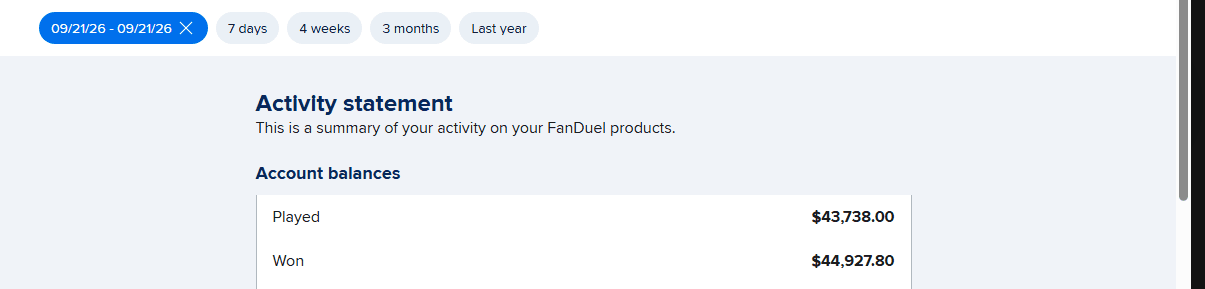
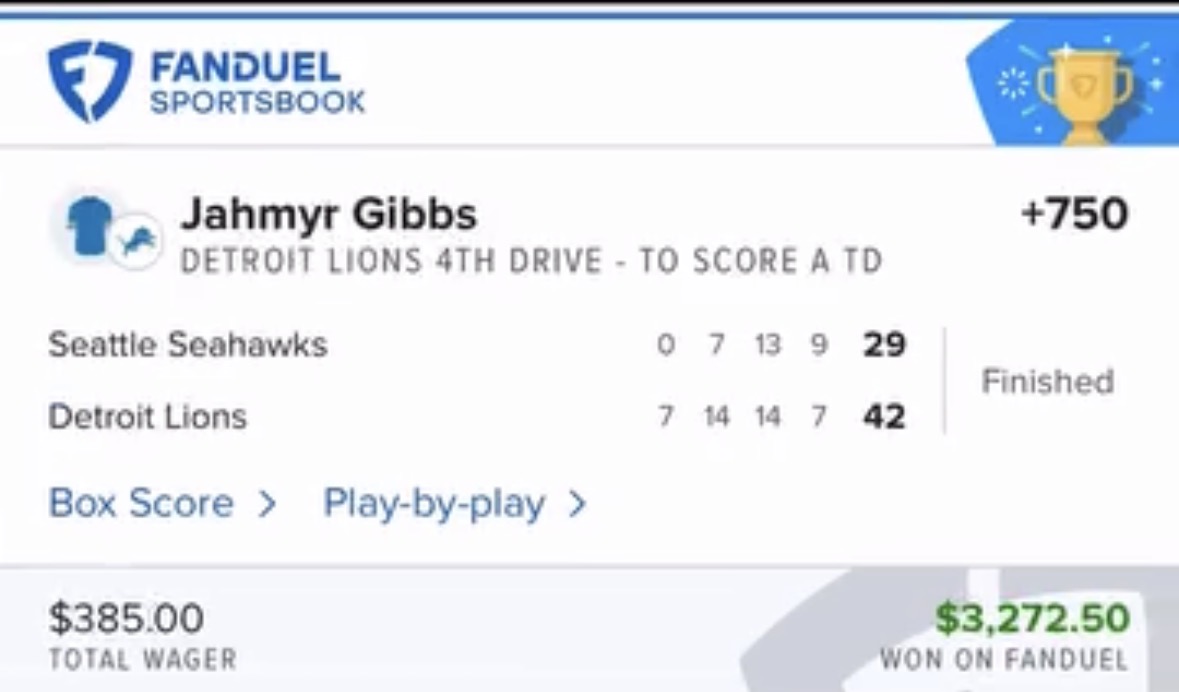
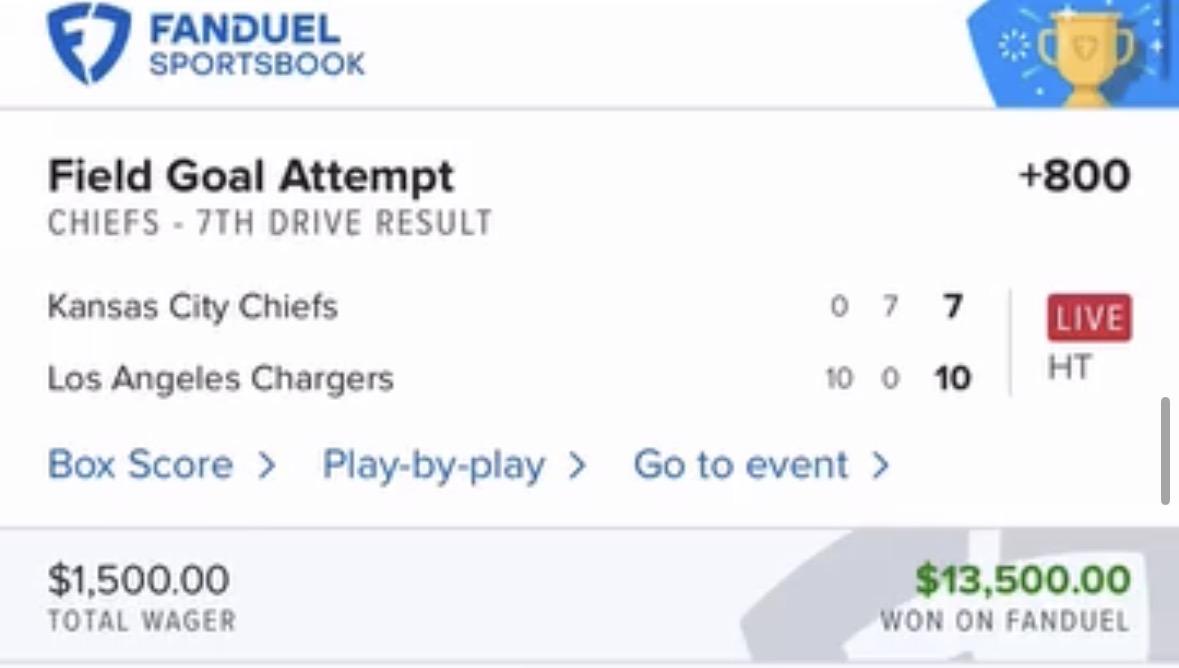
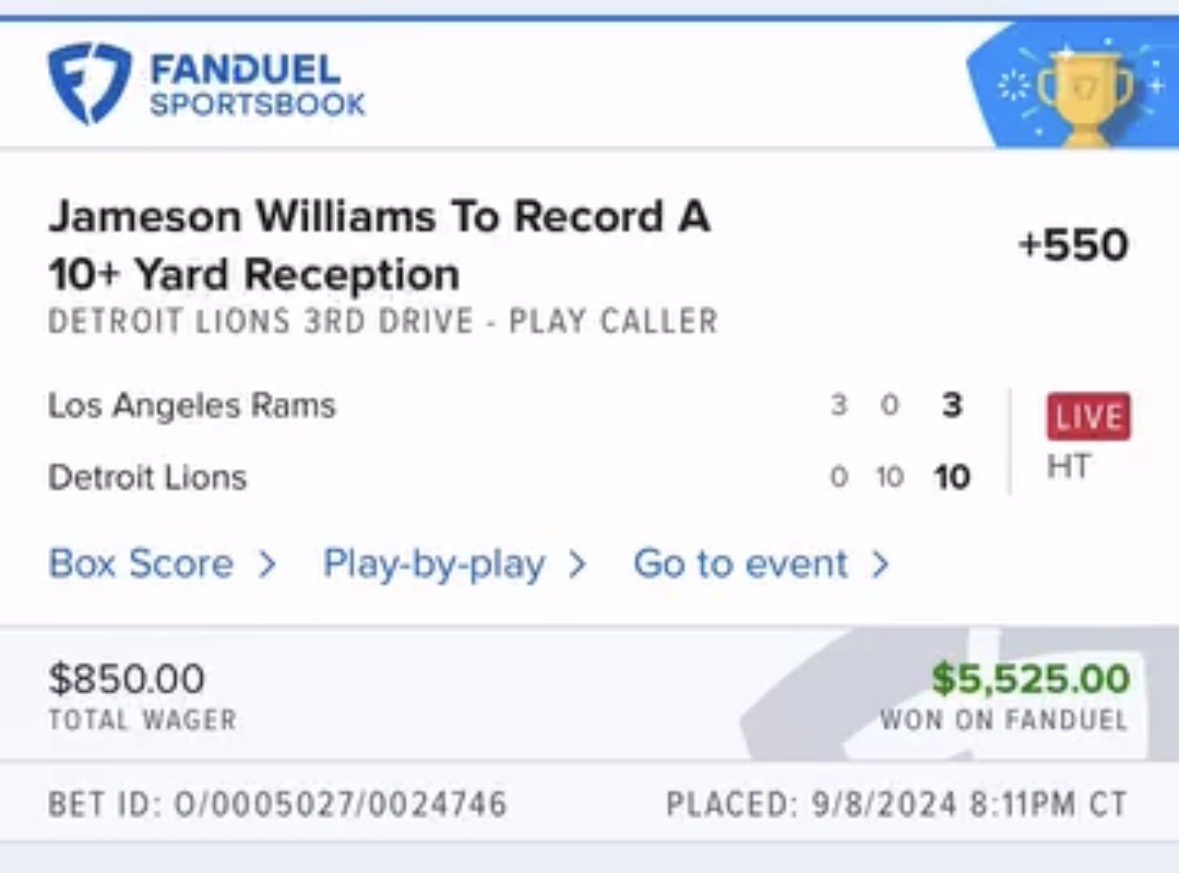
A parlay is not graded against the game. It is graded against an official data feed, and the difference matters because some of the stat categories on that feed are scoreboard facts that never change while others are scorer judgments that get revised hours or days later. On a straight bet, a marginal grading call costs you one wager. On a parlay, the same call costs the entire ticket — which means the leg most likely to be revised is carrying the whole thing. The Best Bet on Sports has run live in-game picks for more than twenty years and posted a verified $367,520+ in profit across all sportsbooks, and the settlement layer is the part of betting almost nobody reads about until it costs them a ticket they thought they had won.
Most bettors have never once considered where the number that settles their bet actually comes from. That is reasonable. It is also the reason a certain category of parlay loss feels like a robbery when it is really a rule you never read.
The Scoreboard and the Settlement Are Two Different Documents
When your parlay grades, your sportsbook is not looking at the broadcast, at the box score on your phone, or at the graphic that flashed after the play. It is reading a data feed — the official league statistics as distributed by the league's scoring operation and, in most cases, passed through a commercial data provider the book has a contract with.
Three sources of truth exist at any given moment during a game:
- The scoreboard, which is operated by game officials and is authoritative in real time.
- The official statistics, which are compiled by an official scorer and are authoritative after the fact — including the ability to change what was already published.
- Whatever your phone is showing you, which is a downstream copy of one of the first two with a delay attached.
For the overwhelming majority of wagers, all three agree and none of this is interesting. The problems live in a narrow band: bets that resolve on a number an official scorer assigns rather than on an event the scoreboard records.
This is a different question from what happens when a leg pushes or voids. Those are outcome rules, they are standardized across the major books, and we cover them in detail in what happens when a parlay leg pushes. This article is about the layer underneath: who produces the number in the first place, and what happens when that number changes.
Why a Parlay Is Disproportionately Exposed
Here is the structural point, and it is the whole reason this is a parlay article rather than a general one.
A straight bet has exactly one grading surface. If the number that settles it is revised, you lose one bet, sized at whatever you normally stake. Annoying, survivable, and roughly a one-unit event.
A parlay has one grading surface per leg, and it dies on any of them. A six-leg ticket is not one exposure to a settlement question. It is six independent exposures, any one of which takes the whole payout to zero. And because the payout on a parlay is concentrated rather than spread, the dollar cost of meeting a revision is far larger than the same event on a straight bet.
| Ticket | Grading surfaces | Cost if one is revised against you |
|---|---|---|
| Single game-line bet | 1 | One unit |
| 2-leg parlay | 2 | The full ticket, roughly 2.6x your stake in lost return |
| 4-leg parlay | 4 | The full ticket, roughly 12x |
| 6-leg parlay | 6 | The full ticket, roughly 46x |
Read that table the way it is meant to be read. Adding legs did not spread your grading risk across more outcomes. It multiplied the number of places a revision can reach you, while simultaneously increasing what a single revision costs. You did not diversify the settlement risk by adding legs. You compounded it.
Which leads to a rule most bettors have never been given: on a parlay, the reliability of the stat category is a selection criterion, exactly like the number and the matchup. A leg you love on a stat that gets revised is a worse leg than a leg you merely like on a stat that never does.
The Categories That Get Revised, and the Ones That Never Do
Not all statistics are equally stable. Some are recorded by officials on the field in front of 70,000 people and are effectively final the instant they happen. Others are one person's judgment, entered into a system that explicitly permits later correction.
| Stat category | Revision risk | Why |
|---|---|---|
| Game winner, final score, point total | Effectively zero | Recorded by game officials on the scoreboard; disputes are resolved before the game ends |
| Team totals, spreads, halves and quarters | Effectively zero | Derived directly from the scoreboard |
| Anytime touchdown scorer | Low but real | Ruling on who possessed the ball in the end zone, whether a lateral occurred, or whether a runner was down can change attribution |
| Rushing and receiving yards | Moderate | Yardage is assigned per play, and a play reclassified from a forward pass to a lateral moves yards from one category to another entirely |
| Passing yards and completions | Low to moderate | Same reclassification issue, plus spot adjustments after review |
| Defensive tackles and assists | High | The most subjective count in football; who "made" a gang tackle is a scorer's call and home scorers have reputations |
| Hits versus errors (baseball) | High | Assigned by an official scorer, explicitly changeable after the game, and formally appealable |
| Assists (basketball and hockey) | Moderate to high | Requires a judgment about whether a pass directly led to the score; league reviews do change them |
The pattern is clean once you see it. Scoreboard facts are settled by officials in real time under public scrutiny. Counting statistics are settled by a scorer afterward, and anything settled afterward can be settled differently afterward.
So the practical construction rule for parlays is: build out of scoreboard facts, and treat scorer judgments as legs you take deliberately and sparingly, not as filler. A three-leg ticket of sides and totals has approximately no settlement risk. A three-leg ticket of tackle props has a meaningful amount, and it is a risk you were not being paid for, because the price did not compensate you for it — nothing in the odds reflects whether the underlying number is stable.
This does not mean player props are bad legs. It means props built on discrete events (a player scored a touchdown, a player hit a home run, a player recorded a shot on goal) are far more stable than props built on accumulated judgment totals, and that distinction is invisible on a bet slip where both appear as identically formatted lines.
Buying the Cushion Is Cheaper Than It Looks
If your exposure is that a leg dies by a yard or two on a reclassification, the direct answer is to move the leg far enough from the edge that a revision cannot reach it.
Alternate lines exist for exactly this, and the reason bettors avoid them is that they read the price as a cost rather than as the purchase of a specific risk removal. Consider a four-leg ticket built on receiving yardage props:
| Version | Legs | Approximate ticket price | Revision band removed |
|---|---|---|---|
| Standard lines, each near the projection | 4 at roughly -115 | ~+1150 | None — every leg can die on a yard |
| Cushioned, each moved ~5 yards in your favor | 4 at roughly -155 | ~+520 | The entire realistic revision range on all four |
That is a real cost and it is not small. But note what you are comparing it against. You are not comparing +1150 to +520; you are comparing +1150-with-four-fragile-legs to +520-with-four-stable-ones. If your read is that a receiver clears his number comfortably, the cushioned version is closer to what you actually believe, and the standard version was quietly charging you nothing for a risk it was quietly handing you.
The general principle we apply to buying points on any market is in alternate lines and buying points, and it applies with extra force on a parlay, because the cushion is protecting a multiplied payout rather than a single bet.
There is a cheaper version of the same fix that costs nothing: do not build a parlay leg that needs the number to be exactly right. If your projection says 62 yards and the line is 59.5, that is not a leg. That is a coin flip with a settlement risk attached.
The Part Nobody Warns You About: A Win Can Come Back
Here is the piece of this that genuinely surprises people.
Sportsbooks settle on the feed as it exists at the time of settlement. If the official statistics change afterward, what happens next is entirely a matter of the individual book's house rules — and those rules are not uniform. The general shape across the major U.S. operators is that once a wager is settled it stays settled, with exceptions carved out for obvious errors, and that the operator reserves the right to correct a settlement made in error in either direction.
That last clause is the one worth reading twice. A correction that arrives Tuesday can, at some books and under some circumstances, reverse a payout that landed Sunday night. It is rare. It is also not hypothetical, and it is written down in the rules section every bettor agrees to and nobody opens.
Two practical consequences:
First, if your ticket cleared on a judgment-stat leg — a tackle count, a hit-versus-error call, a contested assist — do not treat that payout as spent money until the stat is a couple of days old. This is a small habit that costs nothing.
Second, read the settlement and official-results section of the rules at whichever book you use most, once, before you need it. It takes ten minutes and it is the only way to know whether your operator regrades corrections, ignores them, or reserves the choice. The related question of when a book can hold or refuse a payout at all is covered separately in can a sportsbook refuse to pay you.
The Same Feed Runs the Live Market — Which Is Where It Becomes an Asset
Everything above treats the data feed as a hazard. In-play, it is the opposite, and this is the part of the article that is genuinely useful rather than merely defensive.
Live markets price off that same feed in real time. That is precisely why a live market suspends after a scoring play, a turnover, a review, or an injury stoppage — the book has to wait for the feed and the officials to reconcile before it can quote a number it is willing to stand behind. The suspension is not a technical glitch. It is the book admitting, publicly and briefly, that it does not currently know the game state well enough to price it.
Then the market reopens, and the reopen is a moment we have written about on its own terms in suspended markets and the reopen window.
The symmetry is worth stating plainly. On a parlay, the grading feed is invisible to you and shows up only as a settlement you cannot argue with. In-play, the same feed's uncertainty is displayed on your screen as a suspended market, in real time, while the game is still running. One version of the mechanism takes money from you silently. The other version announces itself and gives you a window.
That is a fair description of why our own work sits in live markets rather than in parlay construction. It is not that parlays are unbeatable — it is that the parts of a parlay you cannot see are the parts that decide it, and the parts of a live market you cannot see get advertised to you the moment they matter. How we build the positions themselves is on our live betting picks page, and the graded record is at verified results.
Where This Argument Stops
Three limits, and the third one argues against the article.
Revisions are rare. This is a tail risk, not a weekly one. A bettor who plays two-leg sides-and-totals parlays may go an entire career without meeting a meaningful stat correction. Nothing here justifies rearranging a betting approach around an event that happens to a small fraction of tickets.
None of this makes parlays profitable. The dominant reason parlays lose is the compounded hold, which is arithmetic and applies to every ticket regardless of how stable its legs are. That case is made in full in why most parlays lose, and a grading-aware ticket is still fighting the same margin as an unaware one. This article makes a bad structure slightly less leaky. It does not make it a good structure.
And do not become a person who disputes settlements. The honest reality is that the large majority of "my leg should have won" complaints are a bettor reading a different box score, misremembering the line they took, or misunderstanding how a specific market is defined. Books make errors, and they are a small minority of the cases where bettors believe they have found one. The correct use of everything above is to build tickets that never meet the question — not to open a support chat.
The Thirty-Second Version
Before you place a multi-leg ticket, run three checks.
Ask whether each leg resolves on the scoreboard or on a scorer's judgment, and count how many of the judgment ones you are carrying. Ask whether any leg needs the number to land within a yard or two of your projection, and if so either cushion it with an alternate line or cut it. And ask whether you would be comfortable with that ticket still being unsettled in your mind on Tuesday morning.
Three questions, thirty seconds, and they cost nothing. The rest of parlay construction — leg count, correlation, exit planning — is covered across how many legs a parlay should have and building the ticket for its exit. This is simply the layer beneath all of it, and it is the one nobody checks.
Get Tonight's Live Picks
Want tonight's live in-game picks delivered to your phone via Email and Discord, on markets that settle on the scoreboard rather than on somebody's scoring decision?
The Best Bet on Sports is the only live betting handicapping service limited on all six major U.S. sportsbooks (FanDuel, DraftKings, Caesars, BetMGM, Fanatics, ESPN BET) for winning too much during in-game action. Verified profit: $367,520+. Picks delivered via Email and Discord during games.
→ Get tonight's live picks: $199 first month — 1-Unit package, full live betting access → Try a free live pick first — reserve your spot for tonight's pick
Sport-specific coverage is at NFL picks, football picks, college football picks, MLB picks, and NBA picks.
Frequently Asked Questions
How does a sportsbook actually grade a parlay?
It grades each leg against an official data feed, not against the broadcast or the box score on your phone. That feed carries the league's official statistics, usually delivered through a commercial data provider the operator contracts with. For scoreboard outcomes such as the final score, a spread, or a total, the feed simply mirrors what game officials recorded. For counting statistics such as yardage, tackles, hits, or assists, the feed carries what an official scorer assigned — and that assignment can be revised after the game.
Can a stat correction change a parlay that already settled?
Sometimes, and it depends entirely on your sportsbook's house rules. Most major U.S. operators treat a settled wager as final while reserving the right to correct settlements made in error, which is written broadly enough to work in both directions. That means a correction arriving days later can in principle reverse a payout as well as create one. It is rare, but the rule exists in the terms every account holder agrees to. Reading the settlement section of your book's rules once, before you need it, is the only way to know which policy applies to you.
Which stat categories are most likely to be revised?
Anything decided by a scorer's judgment rather than by the scoreboard. In baseball, hits versus errors are the classic case — they are assigned by an official scorer, explicitly changeable, and formally appealable. In football, defensive tackles and assists are the most subjective count, and yardage can move between categories when a play is reclassified. In basketball and hockey, assists require a judgment about whether a pass directly produced the score. Final scores, spreads, totals, and team totals essentially never change.
Why does a stat correction hurt a parlay more than a straight bet?
Because a parlay dies on any single leg. A straight bet has one grading surface, so a revision costs you one wager at your normal stake. A six-leg parlay has six grading surfaces, and a revision on any of them takes a payout worth roughly forty-six times your stake down to zero. Adding legs did not spread the settlement risk across more outcomes — it created more places for a revision to reach you while raising what each one costs.
Should I stop using player props in parlays?
No, but the type of prop matters more than most bettors realize. Props that resolve on a discrete event — a player scored a touchdown, hit a home run, recorded a shot on goal — are stable, because the underlying fact is recorded in real time and rarely reconsidered. Props that resolve on an accumulated judgment total, such as tackles or assists, carry real revision risk. Both look identical on a bet slip, and nothing in the price distinguishes them, which is exactly why the distinction has to be made by you.
How do I protect a parlay leg from a marginal grading call?
Move the leg away from the edge. If a projection says 62 yards and the line is 59.5, a single reclassified play decides your ticket, and an alternate line five yards in your favor removes that entire band at a known and quotable cost. The cheaper version costs nothing at all: do not build a leg that needs the number to be exactly right. A leg you are confident about by a comfortable margin is worth more on a parlay than a leg you are confident about by half a yard, even at a worse price.
Does the same data feed affect live betting?
Yes, and it is the reason in-play markets suspend. When a scoring play, turnover, review, or injury stoppage occurs, the book pauses the market because the feed and the officials have not yet reconciled the game state, and it will not quote a price it cannot stand behind. The useful difference is one of visibility: on a parlay, the feed's uncertainty is invisible and only appears as a settlement you cannot argue with, while in-play that same uncertainty is displayed on your screen as a suspended market while the game is still running.
The Best Bet on Sports · 1.5M followers on TikTok
Sports Betting TikTok is the live betting account behind The Best Bet on Sports, covering NFL, NCAAF, NBA, NCAAB, MLB and WNBA markets in real time. The account has been limited on all six major U.S. sportsbooks — FanDuel, DraftKings, Caesars, BetMGM, Fanatics and ESPN BET — for winning on live betting, with $367,520 in verified profit since 2005. View full profile →
Past results do not guarantee future performance. Must be 21 or older to wager.
Related Articles
Do Parlay Legs Include Overtime? How Each Leg Settles
Player Prop Parlay Strategy: The Volume Ceiling Problem
The 1 PM Problem: When Sunday Parlays Actually Die
Key Numbers and Parlays: The Three-Point Problem
The 300-to-1 Rule: Why Your Parlay Pays Less Than the Slip Says
Six Parlays, One Bet: The Overlap Hiding in Your Ticket Stack
Get real live betting picks
From $39.95/mo · Cancel anytime · Email + Discord delivery
● Get The Picks
Choose your package
Tap any tier below to select · Subscribe in one tap
👇 Tap any package to select it
✓ You're selecting
25 Units · $99.95/month
25 unit picks per month. Sweet spot for most bettors — plenty of action without going all-in.
- ✓25 live betting selections/month
- ✓Email + Discord delivery
- ✓All sports (NFL, NCAAF, NBA, NCAAB, MLB)
- ✓Mix of 1, 2, 3, 5-unit rated plays
- ✓Cancel anytime
Secure PayPal · Cancel anytime · No hidden fees · 21+ · +$367K verified
+$367,520 verified · Limited on 6 sportsbooks · 20 years documented · See Proof
Join Our Newsletter
Get free expert sports picks and analysis delivered weekly.