The Last Leg Decides Your Parlay: Build the Ticket for Its Exit

Every hedge or cash-out decision you will ever make on a parlay is a decision about one leg — whichever one is still unresolved when the others have settled. Most bettors choose that leg by accident, through kickoff times they never looked at, and end up holding a ticket with no exit. Here is how leg selection, start times, and market liquidity decide whether your parlay has an escape route before you ever place it.
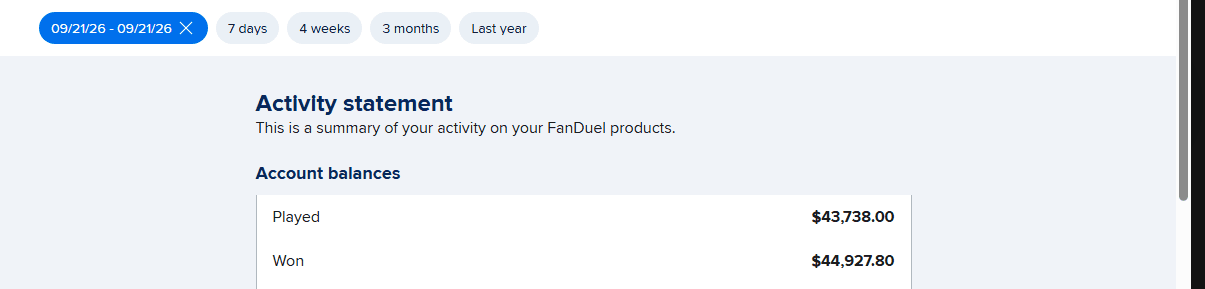
A parlay is not one bet with several parts — it is a sequence of positions that collapses, one leg at a time, into a single wager you never consciously chose. By the time you have a decision to make, the ticket you built no longer exists. What you are holding is one bet, at long odds, on whichever leg happens to still be running. The Best Bet on Sports has been placing live in-game wagers since 2005 and carries a verified $367,520+ in documented profit across every major U.S. sportsbook, and the single most underrated skill in parlay construction is not picking legs. It is deciding, on purpose, which leg you want to be standing on at the end.
Almost every piece of parlay advice ever written is about selection: how many legs, which markets, which correlations, how much to stake. All of it is about the ticket in the state it will spend the least amount of time in — fully unresolved. The state that actually determines what you can do is the one at the other end, when everything has settled except one leg. That state is where hedges happen, where cash-out buttons get pressed, and where the difference between a bettor with options and a bettor with a prayer gets decided.
And here is the part nobody tells you: you pick that final leg at the moment you build the ticket, without knowing it. Not by choosing the leg you like least or trust most — by choosing, implicitly, whatever game happens to kick off last.
Why Does Only One Parlay Leg Ever Matter?
Run the arithmetic on a four-leg ticket. To be paid, all four must win. That means every scenario in which you have a live, valuable position at the end is a scenario where exactly three have already graded. There is no version of the story where you sit on two unresolved legs and make a clean decision — with two outstanding, your remaining position is itself a parlay, and a parlay is the one thing you cannot cleanly hedge, because you would need to cover two outcomes at prices that move independently.
So the practical life of a parlay looks like this. For most of its existence you can do nothing useful. Then, at some specific moment, it converts into a single bet at a long price, and for a window of minutes or hours you have real choices: let it run, hedge part of it, hedge all of it, or take the book's cash-out number. Then it grades and the story is over. The number you locked keeps moving during that dead stretch, and knowing what your parlay leg is worth after the line moves is what tells you whether the exit window is actually favorable or just visible.
That conversion moment is the entire decision surface of the wager. Everything before it is watching. Everything after it is accounting.
Which means the useful question about a parlay is not "how likely is each leg to win." It is: when this becomes one bet, what bet will it be, and will there be a market open on it?
What Makes a Leg a Good Exit?
Three properties, in order of importance, and only one of them has anything to do with whether the leg is likely to win.
Is there a live market on that exact leg? Sides, totals and moneylines on major sports are priced continuously in-game at every book. Player props are priced live at some books, in fewer markets, at wider prices, and with more frequent suspensions. Exotic legs — alternate lines deep off the number, obscure team props, first-half markets after halftime — often have no live equivalent at all. If your final leg is one of these, your parlay's exit is whatever cash-out figure the book decides to show you, take it or leave it, with no second opinion available anywhere.
Is the market two-sided? To hedge, you need to be able to bet against your own leg at a price you can see. That is trivial on a spread or a total, where the other side is right there on the screen. It is awkward on a moneyline three-teamer where the opponent is a heavy favorite. It is often impossible on a player prop — plenty of books will let you bet the over on receiving yards live and will simply not offer the under.
Does the leg genuinely finish last in real time? Not on the bet slip. On the clock. A leg listed fourth on your slip that kicks off at 1:00 p.m. resolves before a leg listed first that kicks at 8:20 p.m. The slip order is cosmetic. Kickoff order is the real order, and it is the one you can look up before you bet.
| Final-leg type | Live market available | Two-sided | Practical exit |
|---|---|---|---|
| NFL/NBA side or total | Yes, continuously | Yes | Full hedge or partial, at a visible price |
| Moneyline on a live dog | Yes | Yes | Cheap hedge — the other side is a favorite |
| Moneyline on a big favorite | Yes | Yes | Expensive hedge — you must lay a long price |
| Mainstream player prop | Sometimes | Often not | Cash-out only, usually |
| Alt line / niche team prop | Rarely | No | No exit at all |
| Futures leg (season win total, division) | No, until markets reopen | No | Nothing until the market returns |
The pattern in that table is the whole argument. The properties that make a leg a good exit are properties of the market, not the team. You are not choosing the leg most likely to win — you have already done that work. You are choosing what kind of instrument you want to be holding when the ticket converts.
Why Is "Put the Safe Leg Last" Backwards?
The conventional advice — heard in every group chat in America — is to order your parlay so the leg you trust most runs last, on the theory that you sleep better going into the final leg with your best play still alive.
That advice optimizes for comfort. It systematically destroys value.
Think about what a hedge actually costs. To hedge, you bet against your own surviving leg, and the price you pay is the current price of the other side. If your last leg is a heavy favorite — the "safe" one — the other side is a big underdog, which means covering your position requires laying out a lot of money to buy back a small fixed slice of it. The hedge is expensive precisely because the leg feels comfortable.
Flip it. If your final leg is a live underdog, the other side is a favorite, and a modest stake against yourself locks in a meaningful chunk of the ticket. The uncomfortable ending is the one that gives you the cheapest, most flexible exit.
There is a second, less obvious cost to the safe-leg-last habit. Books price cash-out offers off the current market value of the remaining position, then take their margin out of it. On a heavy favorite, that offer arrives as a small number relative to the payout, which is exactly when a bettor is most tempted to decline it on emotion and let a big ticket ride on a coin flip. The structure of the ticket walked you into the worst decision-making conditions available.
None of this means you should deliberately construct worse legs to improve your exit. That trade is always bad — you never take a worse number or a worse read to buy optionality. It means that when two constructions are close on merit, the tiebreaker should be which one leaves you holding a tradeable market at the end. That tiebreaker comes up far more often than most bettors realize, because the last leg is usually a scheduling accident, and scheduling accidents are free to fix.
How Do Start Times Set Your Exit Before You Bet?
Here is the consequence almost nobody has thought through: legs that run simultaneously have no exit at all.
Build a three-leg NFL ticket entirely out of the 1:00 p.m. window. All three games kick off within minutes of each other, run concurrently, and finish within the same half hour. There is never a moment where two are settled and one is live. The parlay does not convert into a single bet — it stays a parlay right up until it either cashes or dies, at which point there is nothing to decide. You have built a wager with a completely fixed outcome path. The cash-out button will show you numbers along the way, and each one will be an offer on a three-leg position with the book's margin baked in, which is the worst possible price you can be quoted.
Now stagger it. One leg in the early window, one in the late window, one in primetime. The same three legs, the same price, the same probability — but now the ticket converts twice, and by roughly 8 p.m. you are holding a single live bet on a game that has not started, with an open two-sided market and hours of in-game repricing ahead of it. You can hedge before kickoff. You can hedge at halftime. You can hedge after a first-quarter blowout has moved the number. You can do nothing, which is also usually right, but you can do it as a decision instead of as a default.
Two tickets, identical on paper. One has an escape hatch and one does not. That difference cost nothing to acquire — it came from looking at kickoff times, which takes about eight seconds. Our Sunday parlay approach leans on window structure for a related reason: staggered windows let early games inform late ones. This is the same schedule, read for a different purpose. The early games are information, and the late game is your exit.
The rule that falls out is short. Never build a parlay whose legs all resolve at once unless you are content to have no decisions available. For a small-stakes ticket, that is a perfectly reasonable thing to be content with. For a ticket large enough that you would genuinely consider hedging it, it is close to a construction error.
What Does This Say About Same-Game Parlays?
The same-game parlay is the extreme case, and the analysis is unforgiving.
Every leg of an SGP lives inside one game. They all resolve through the same sixty minutes of clock. There is no last leg — there is only a last minute. The ticket never converts into a single tradeable position, because at every point in the game every leg is still partially unresolved. A rushing-yards leg and a game total and a first-touchdown scorer do not settle in sequence; they settle together, at the whistle.
That means an SGP's only exit, at any point, is the cash-out number, and the cash-out number on an SGP is derived from the same private correlation model that priced the ticket in the first place — a model no book publishes and nobody audits, as we covered in why the same parlay pays differently at every sportsbook. You are asking the counterparty to quote you an exit price on an instrument only it can value.
This is not an argument against ever playing an SGP. It is an argument that the exit cost of an SGP is real and invisible, and it should be counted alongside the correlation premium you are already paying. If you would not accept "no secondary market, dealer quotes only" on any other bet, notice that you are accepting it here.
Cross-game parlays sit in between. Traditional multi-game parlays, staggered across start times, are the only common structure that reliably produces a clean single-leg endgame.
When Should You Actually Use the Exit?
Having an exit and using it are different questions, and the honest answer to the second one is: less often than you want to.
Hedging costs expected value. So does cashing out — usually more, because the book's margin is built into every offer it shows you, which is the entire argument in should you cash out a parlay early. If you hedge every ticket that reaches its final leg, you will convert a high-variance strategy into a low-variance strategy with a worse long-run number. That is a real cost and it is not small.
The cases where taking the exit is genuinely defensible are narrow and mostly about the size of the ticket relative to your bankroll. If the outstanding payout is large enough that the outcome would meaningfully change your betting life — up or down — variance reduction is worth paying for, and that is a bankroll decision rather than a handicapping one. If the game state has moved decisively against your leg and the live price has not caught up, a hedge can be positive value on its own merits. And if you have information the pregame price did not have — an injury in warmups, a weather turn, a starter pulled — that is the same in-game repricing logic we use on every live wager. The mechanics of sizing that hedge are covered in how to hedge a live parlay mid-game.
What makes all three of those cases possible is the same thing: there is a market open on your last leg. That is the resource this entire article is about acquiring, cheaply, at construction time. Whether you spend it is a separate decision you get to make later, with better information than you have now.
Two honest limits before the takeaway. First, books can and do suspend live markets — during scoring plays, injuries, reviews, and sometimes for no visible reason at all. A leg with a live market in theory can have no live market in the ninety seconds you actually want it. Second, sequencing by start time only helps if the legs were worth betting in the first place. No amount of exit optionality rescues a ticket built out of legs you did not want.
Get Tonight's Live Picks
Want tonight's live in-game picks — including the in-play positions that make a hedge or a parlay exit actually worth taking — delivered to your phone via Email and Discord during the game?
The Best Bet on Sports is the only live betting handicapping service limited on all six major U.S. sportsbooks (FanDuel, DraftKings, Caesars, BetMGM, Fanatics, ESPN BET) for winning too much during in-game action. Verified profit: $367,520+. Picks delivered via Email and Discord during games.
→ Get tonight's live picks: $199 first month — 1-Unit package, full live betting access → Try a free live pick first — reserve your spot for tonight's pick
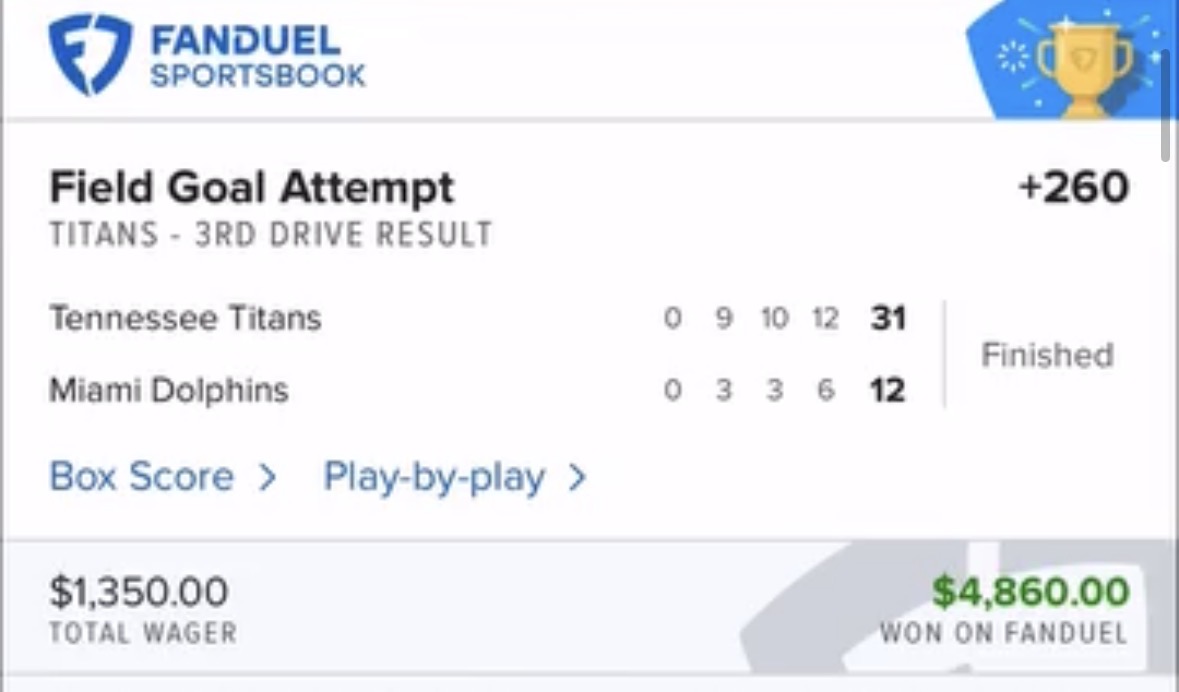
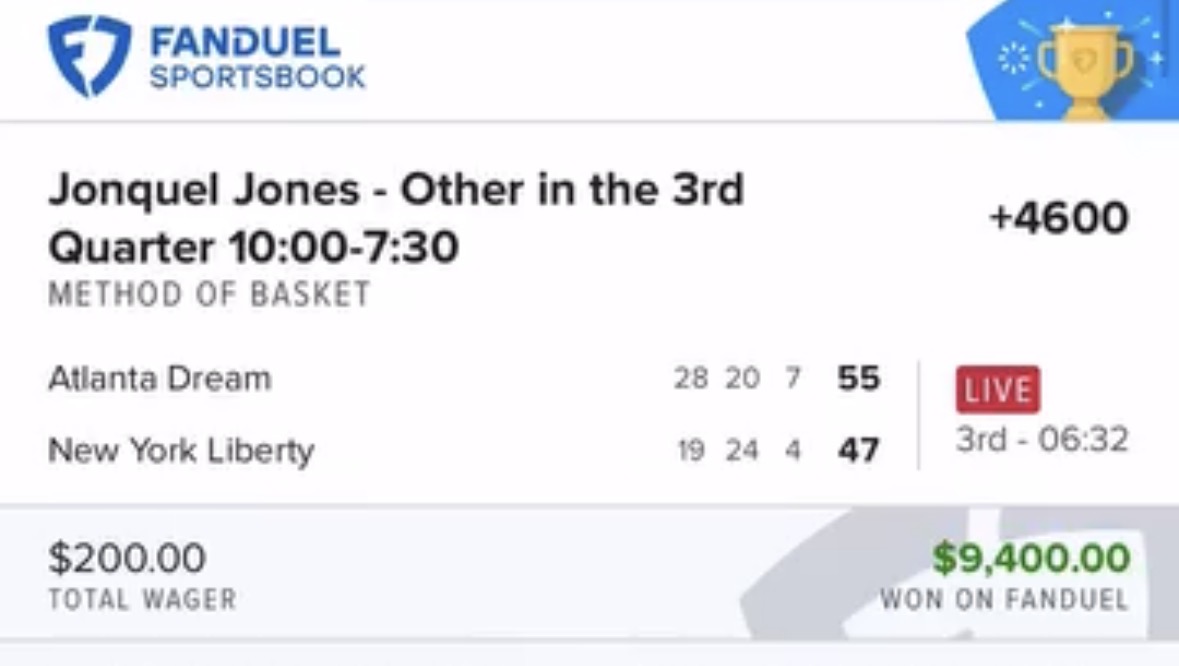
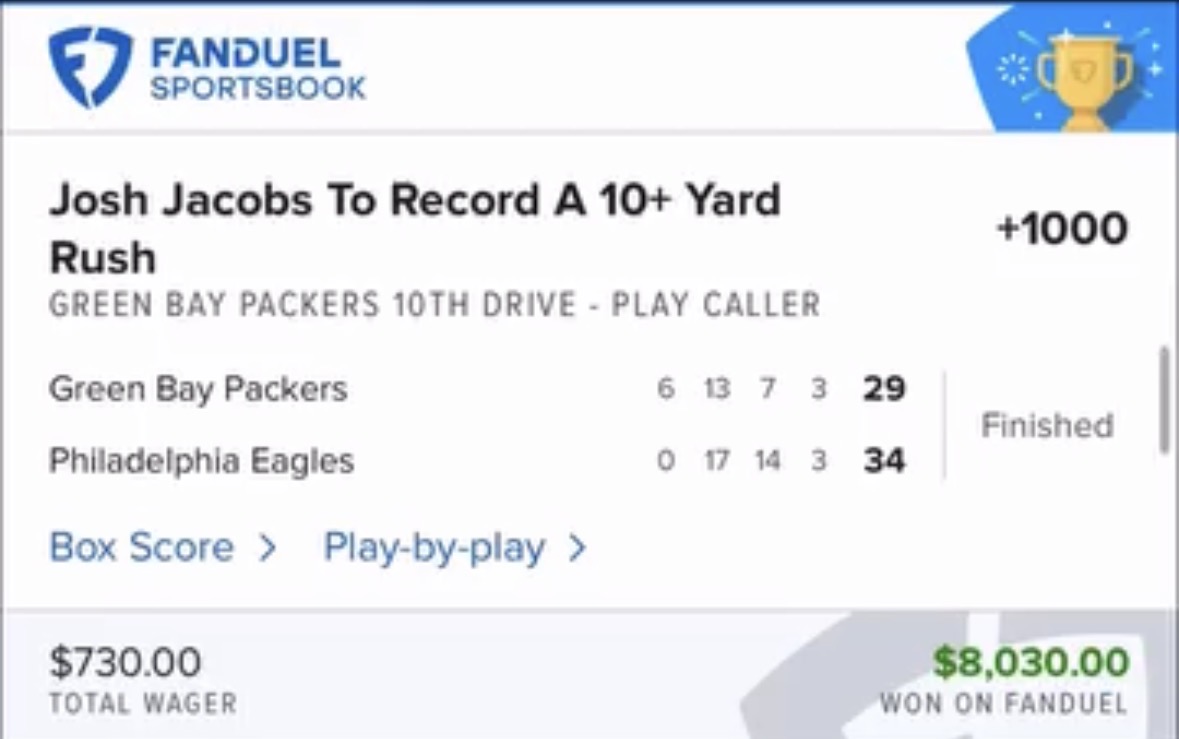
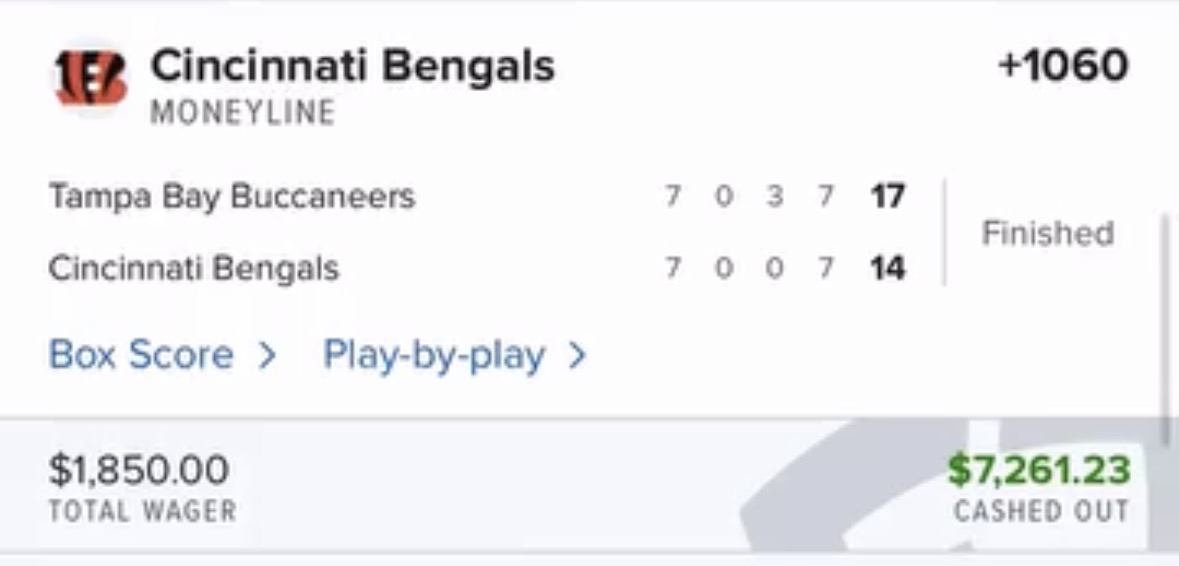
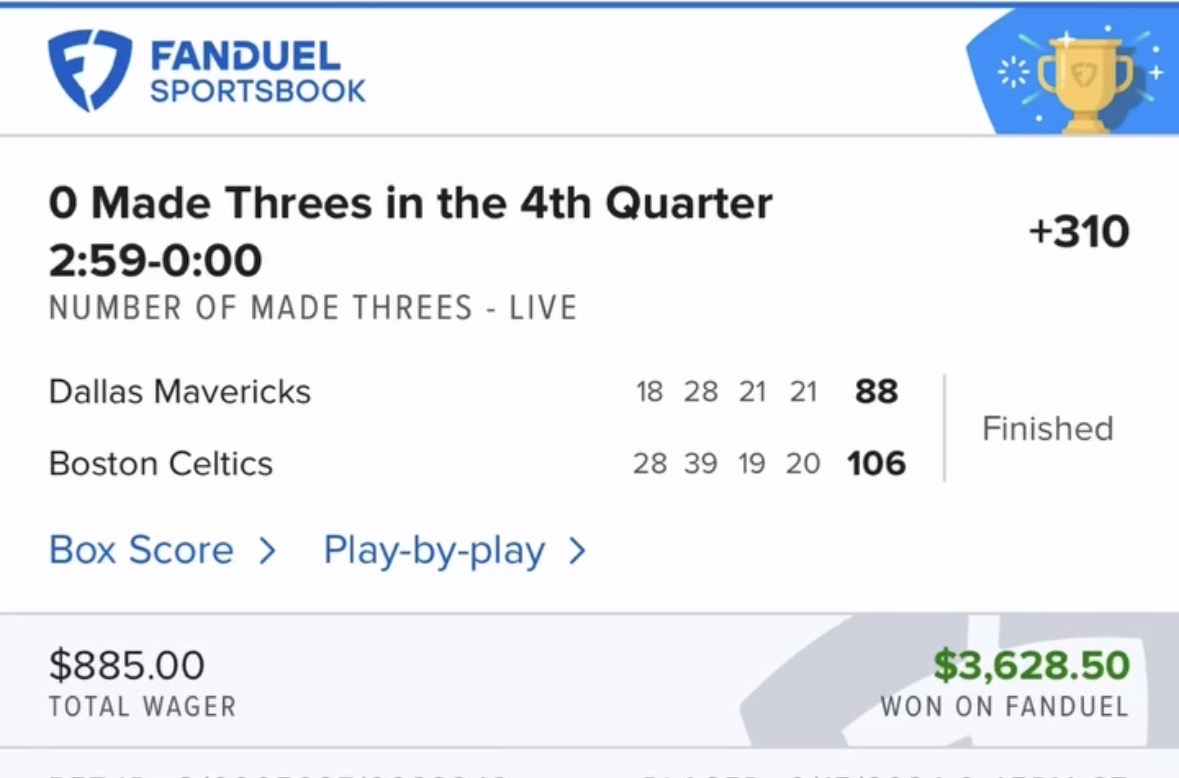
You can review the full record on our verified results page, and see how in-play positions get built on our live betting picks page. For sport-specific coverage, start with NFL picks, college football picks, or NBA picks.
Frequently Asked Questions
What is the last leg of a parlay and why does it matter so much?
The last leg is whichever leg is still unresolved after all the others have graded. It matters because that is the only point in a parlay's life where you have decisions available. Until then you cannot hedge cleanly, because hedging two outstanding legs means covering two independently moving prices. Once the ticket converts to a single position, you can hedge it, partially hedge it, take a cash-out offer, or let it run. Every meaningful choice you make on a parlay is a choice about that one leg.
Does the order of legs on my bet slip change anything?
No. Sportsbooks grade every leg as it settles regardless of the order you added them, and the slip order has no effect on price, payout, or grading. What matters is the order the games actually finish in, which is set by kickoff and tip-off times. A leg you added first can settle last and a leg you added last can settle first. Check start times, not slip position.
Should I put my most confident pick last in a parlay?
Usually not, if you care about having a usable exit. A heavy favorite as your final leg means the opposite side is a long underdog, so hedging requires staking a large amount to secure a small fixed return, and the cash-out offer will look small relative to the payout. A live underdog as the final leg gives you a much cheaper hedge, because the side you would bet against yourself is the favorite. Comfort and optionality point in opposite directions here.
Can you hedge a parlay if all the games start at the same time?
Not as a parlay, no. If every leg runs simultaneously, there is never a moment when the ticket has collapsed to a single position, so there is nothing clean to hedge against. Your only option is whatever cash-out figure the sportsbook chooses to display, priced on a multi-leg position with the book's margin included. Staggering legs across different start times is what creates a hedgeable endgame, and it costs nothing to do.
Why is a same-game parlay harder to exit than a regular parlay?
Because all of its legs resolve inside the same game clock, an SGP never converts into a single tradeable bet. There is no last leg, only a last minute. That leaves the sportsbook's cash-out offer as the only exit, and that offer is generated by the same private correlation model that priced the ticket — a model no operator publishes. You are asking your counterparty to quote you the only price available on an instrument only it can value.
Is hedging a parlay actually a good idea?
Often it is not. Hedging costs expected value, and cashing out usually costs more because the sportsbook's margin is built into every offer. Hedging every ticket that reaches its final leg will lower your long-run return. The defensible cases are narrow: when the outstanding payout is large relative to your bankroll and variance reduction is genuinely worth paying for, when the live price has not caught up to a decisive change in game state, or when you have information the pregame market did not have.
How do I build a parlay with a better exit without weakening the ticket?
Use it as a tiebreaker, not a primary filter. Pick your legs on merit first. Then, when two constructions are close in quality, prefer the one whose final-resolving leg sits in a liquid, two-sided market — a side, total, or moneyline in a major sport — and whose start times are staggered rather than concurrent. Never take a worse number or a worse read to improve your exit. The optionality is only worth having when it is close to free, and because the last leg is usually a scheduling accident, it very often is.
The Best Bet on Sports · 1.5M followers on TikTok
Sports Betting TikTok is the live betting account behind The Best Bet on Sports, covering NFL, NCAAF, NBA, NCAAB, MLB and WNBA markets in real time. The account has been limited on all six major U.S. sportsbooks — FanDuel, DraftKings, Caesars, BetMGM, Fanatics and ESPN BET — for winning on live betting, with $367,520 in verified profit since 2005. View full profile →
Past results do not guarantee future performance. Must be 21 or older to wager.
Related Articles
NFL Preseason Parlay Strategy: Why August Football Breaks the Math
Why Your Sportsbook Keeps Recommending Parlays
Best NFL Parlays for Thursday Night Football: One Game, No Escape Route
How Many Legs Should a Parlay Have? The Sweet Spot
Progressive Parlay Strategy: How the Miss-a-Leg Bet Works
Should You Cash Out a Parlay Early? The Real Math
Get real live betting picks
From $39.95/mo · Cancel anytime · Email + Discord delivery
● Get The Picks
Choose your package
Tap any tier below to select · Subscribe in one tap
👇 Tap any package to select it
✓ You're selecting
25 Units · $99.95/month
25 unit picks per month. Sweet spot for most bettors — plenty of action without going all-in.
- ✓25 live betting selections/month
- ✓Email + Discord delivery
- ✓All sports (NFL, NCAAF, NBA, NCAAB, MLB)
- ✓Mix of 1, 2, 3, 5-unit rated plays
- ✓Cancel anytime
Secure PayPal · Cancel anytime · No hidden fees · 21+ · +$367K verified
+$367,520 verified · Limited on 6 sportsbooks · 20 years documented · See Proof
Join Our Newsletter
Get free expert sports picks and analysis delivered weekly.