Your Parlay Leg Moved After You Bet It. Here's What That's Worth.

When a parlay leg's line moves after you place the ticket, the bet you hold is worth more or less than you paid, and you can price it exactly: find what your number costs on the alternate-line menu today, rebuild the parlay at current prices, and solve for the stake that returns the same money. That replacement value is the only honest number. Cash-out quotes sit below it, and the gap grows with the ticket.
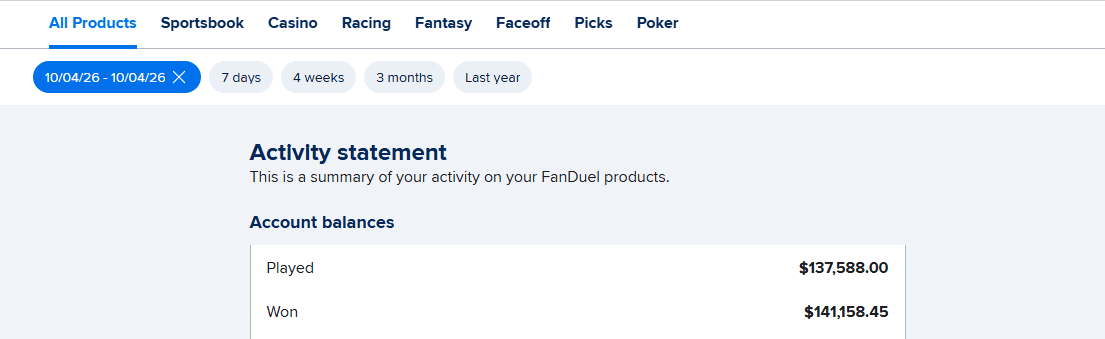
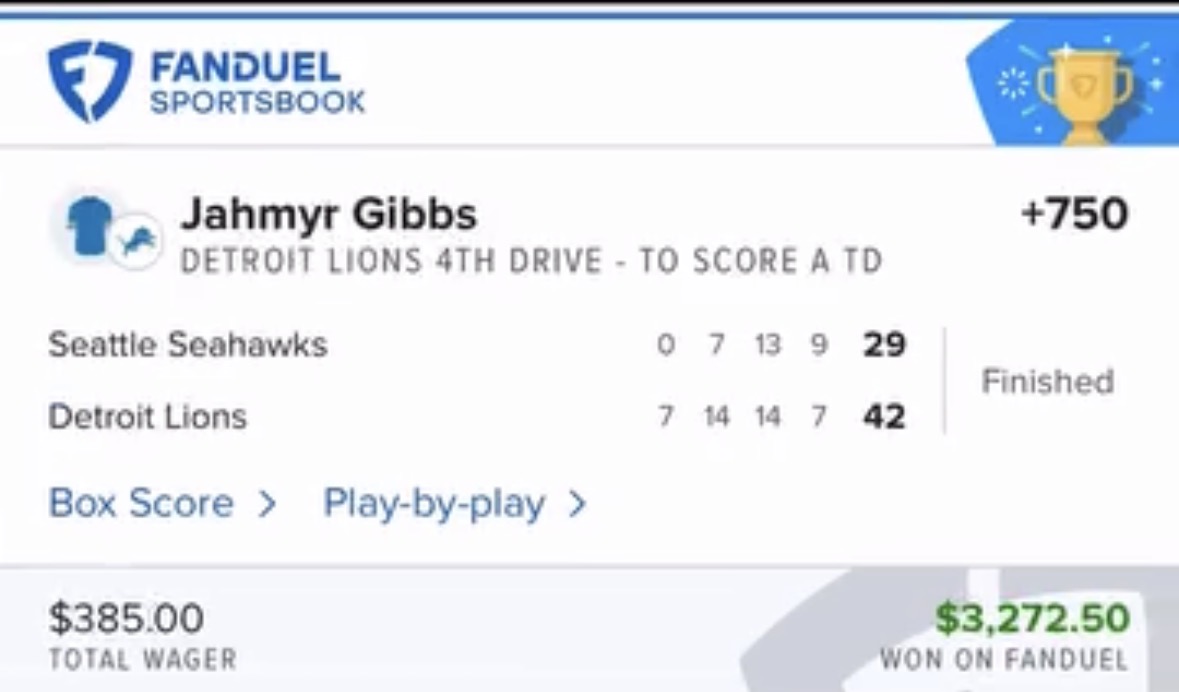
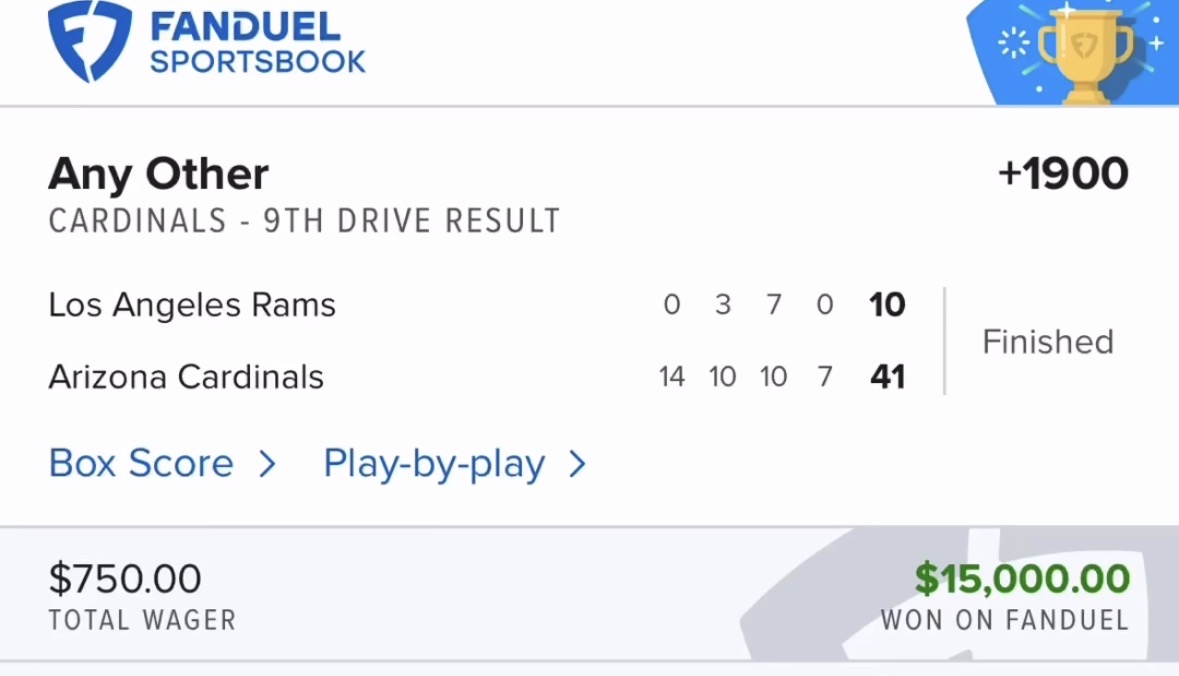
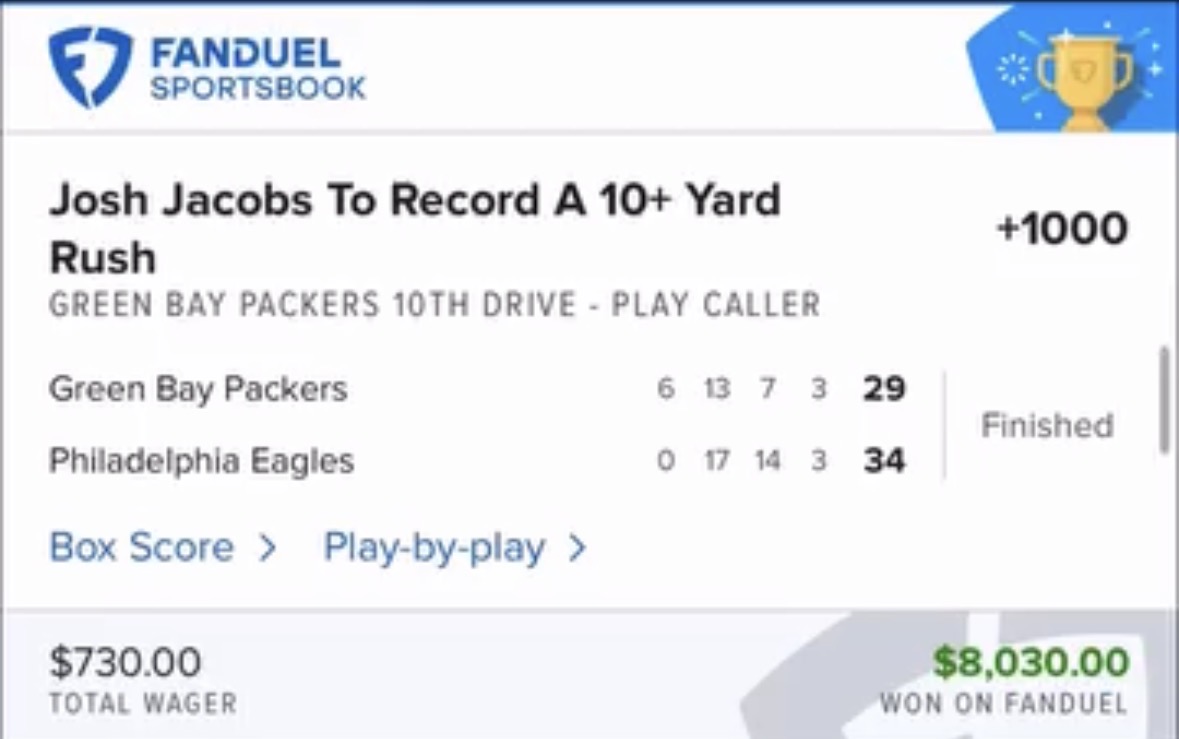
When a leg of your parlay gets repriced after you place it, the ticket in your account is no longer worth the hundred dollars you staked, and you can calculate what it is actually worth in about ninety seconds. Find what your number costs on today's alternate-line menu, rebuild the same parlay at current prices, and solve for the stake that would return the same payout. That figure is the ticket's replacement value. Every cash-out quote you will ever see sits below it, and the gap between the two grows in dollars exactly when the move went your way. The Best Bet on Sports has run live betting since 2005 with a verified $367,520+ in profit and is limited on all six major U.S. sportsbooks (FanDuel, DraftKings, Caesars, BetMGM, Fanatics, ESPN BET) for winning too much in-game — which is the version of betting where you act after the information arrives instead of before it.
This is the most common thing that happens to a parlay and one of the least understood. You build a two-leg college football ticket on Tuesday. By Friday afternoon one of your teams has moved three and a half points in your direction, and the app shows a cash-out button with a green number on it. Most bettors do one of two things: take the money because green feels like winning, or ignore it entirely because the ticket "hasn't happened yet." Both are decisions made without knowing the number.
What Your Parlay Is Actually Worth After a Leg Moves
A parlay is not a lottery ticket that has no value until the last leg settles. It is a claim on a fixed payout, and that claim has a market price the moment the underlying prices change. The price is not mysterious. It is the answer to one question: what would it cost me to buy this exact same payout today?
If it would cost more today than you paid, the ticket gained value. If it would cost less, it lost value. That is the entire concept, and it is the same logic a book uses when it builds a cash-out quote — except the book adds a margin on top and shows you the result instead of the arithmetic.
The reason this matters is that almost every decision you might make about a moved parlay — hold it, sell it, hedge one leg, hedge everything — is a decision about whether some offered number beats the replacement value. Without the replacement value, you are not comparing anything. You are just reacting to a color on a screen. That comparison is what makes the last leg of a parlay an exit decision rather than a waiting game, and it is a different calculation from what happens when a leg pushes, where the ticket regrades instead of repricing.
The Arithmetic, With Real Inputs
Work a concrete example. You put $100 on a two-leg parlay, both legs priced at −110. In decimal terms −110 is 1.9091, so the parlay multiplier is 1.9091 × 1.9091 = 3.6446. Your ticket returns $364.46 if both legs land — $264.46 of profit on the $100.
Now the market moves. Your first leg was Team X at −3, and by Friday the market has Team X at −6.5. Your number is now a bargain, and the book will tell you exactly how much of one: look at the alternate-line menu for that game and find what −3 costs today. Suppose it prices at −200, which is 1.50 in decimal.
Rebuild your parlay at today's prices: 1.50 × 1.9091 = 2.8636. To return the same $364.46 at that multiplier, you would have to stake $364.46 ÷ 2.8636 = $127.27.
That is the honest answer. The ticket you own would cost $127.27 to buy this afternoon. You paid $100 for it. You are up $27.27 in value, none of which has settled and none of which you can spend.
| At placement | After the move | |
|---|---|---|
| Your leg (Team X −3) | −110 (1.9091) | −200 (1.5000) |
| Second leg | −110 (1.9091) | −110 (1.9091) |
| Parlay multiplier | 3.6446 | 2.8636 |
| Payout on the ticket you hold | $364.46 | $364.46 |
| Stake required to buy that payout | $100.00 | $127.27 |
Two things to notice. First, the payout column never changes — that is the whole point of a fixed-odds bet. Second, the only figure that moved is what the payout now costs, and that is your ticket's value. Every legitimate question about the bet is a comparison against $127.27.
Why the Cash-Out Button Is Most Expensive Exactly When It Looks Best
Sportsbooks do not quote cash-outs at replacement value. They quote below it, because the buyback is a separate transaction with its own margin — one layered on top of the margin already baked into both legs. You already paid the vig to get in. The button charges you again to get out.
The important part is that the haircut is proportional, not fixed. If a book quotes roughly twelve percent under fair value, then:
| Scenario | Replacement value | Typical quote | What the button costs you |
|---|---|---|---|
| Leg moved your way | $127.27 | ~$112 | $15.27 |
| Leg moved against you | $79.55 | ~$70 | $9.55 |
Same percentage, very different dollars — and the expensive one is the case where the screen shows a profit. When your ticket is worth more, there is more value for the margin to bite into. The cash-out button is at its most costly precisely in the moment it feels most like free money, and at its cheapest in the moment you least want to press it.
(The second row uses the same method in reverse: if your −3 has become a bad number and the alternate menu now prices it at +140, the rebuild is 2.40 × 1.9091 = 4.5818, and $364.46 ÷ 4.5818 = $79.55.)
None of this makes cashing out always wrong. It makes cashing out a transaction with a knowable price, which is a different thing from a button you press on feel. If your read on the remaining leg has genuinely turned, paying twelve percent to exit a position you no longer believe in can be correct. Paying twelve percent to exit a position you still like, because the number is green, is not.
Why You Cannot Cleanly Hedge One Leg of an Unsettled Parlay
The obvious counter is to skip the button and hedge yourself at the counter. On a single bet that works cleanly, and we have written the arithmetic for the live parlay case. On a multi-leg ticket with nothing settled yet, it gets slippery fast.
Your leg is Team X −3. The current line is Team X −6.5. To hedge it you would buy the other side at +6.5. Trace the outcomes:
- X wins by 7 or more. Your leg cashes, your ticket stays alive pending the second leg, the hedge loses.
- X wins by 4, 5, or 6. Your leg cashes and the hedge cashes. This is the middle the move created.
- X wins by three or less, or loses outright. Your leg is dead, the whole ticket is dead, and only the hedge pays.
Read that carefully and the problem appears: the hedge pays in full in the scenario where your ticket is worthless, and pays nothing in the scenario where your ticket is most likely to cash. That is real insurance. But how much insurance to buy depends on what the ticket is worth, and what the ticket is worth depends on the second leg's current price — which is itself still moving, and will keep moving until kickoff. You are sizing a hedge against a target that will not hold still.
And each correction costs. The hedge pays its own vig. If the second leg then moves and you hedge that too, you pay again. The number of vig charges you absorb scales with the number of times you try to fix the ticket, which is the structural reason a moved parlay is so hard to bank at a fair price: the instrument has one payout and three or four prices attached to it, and every attempt to reconcile them is a new transaction with a fee.
Why College Football Week 1 Produces the Biggest Moves of the Year
If you have noticed this happening to you constantly over the last week, that is not bad luck. Opening-weekend college football numbers are set with less information than any other slate on the calendar, and they correct hard.
Nothing has been played yet, so the entire board is priced off last season, spring practice, preseason polls, and roster projections. The transfer portal and current roster-construction rules mean a meaningful share of two-deeps genuinely turned over since anyone last saw these teams play. Availability reporting across college football is not standardized the way it is in the NFL, so a starter's status can become public on a Thursday and reprice a Saturday game in minutes. And early limits are thin, which means the number that is up on Tuesday has not yet absorbed serious money.
Put those together and the Tuesday price and the Saturday close on the same game can be several points apart — not because anyone was wrong, but because five days of information arrived in between. Any ticket built early in that window will be repriced. Our Week 1 board and the broader college football picks coverage both work off the current number rather than the opener for exactly this reason.
What the Move Is Actually Telling You
Here is the part worth sitting with. A leg that moves three and a half points in your favor feels like a reward for getting there first. Structurally, it is a notification that the information which decided the game's price arrived after you committed your money.
That is the same news in either direction. When the line moves your way, you happened to be on the right side of information you did not have. When it moves against you, you were on the wrong side of it. In both cases you made the bet with less than the market ultimately knew, and the moving line is the market telling you so in real time. A parlay compounds that, because you took the early number on two games instead of one.
You cannot fix this by betting later — bet at the close and you are simply paying the fully-informed price, which is the point of a closing line. The only structure that inverts it is betting inside the event, where the information arrives continuously and prices have to be redrawn on the fly by a model that cannot see what a person watching the game can see. That gap is where live betting picks come from, and it is why six books limited our accounts rather than beat us on the number.
If you want the practical version: build fewer early parlays, price the ones you hold using the replacement-value method above instead of the button, and understand that a moved leg is information, not a prize. For the tickets you do want to build, parlay picks and the football betting picks desk both work off live numbers, and our results are graded at the price actually posted. And on the rare night one of these tickets actually cashes, the next decision is the one most bettors get wrong — you hit a big parlay: how long will you keep it covers what happens to that money.
Get Tonight's Live Picks
Want tonight's live in-game college football and NFL picks delivered to your phone via Email and Discord during the game?
The Best Bet on Sports is the only live betting handicapping service limited on all six major U.S. sportsbooks (FanDuel, DraftKings, Caesars, BetMGM, Fanatics, ESPN BET) for winning too much during in-game action. Verified profit: $367,520+. Picks delivered via Email and Discord during games.
→ Get tonight's live picks: $199 first month — 1-Unit package, full live betting access → Try a free live pick first — reserve your spot for tonight's pick
More coverage at buy sports picks, expert sports picks, football handicappers, daily sports betting picks, and sports handicapping service.
Frequently Asked Questions
How do I calculate what my parlay is worth after a line moves?
Convert every leg to decimal odds at today's prices, multiply them together to get the current multiplier, then divide your ticket's payout by that multiplier. The result is the stake it would take to buy your exact payout right now, which is the ticket's replacement value. Example: a $100 two-leg parlay at −110/−110 returns $364.46. If one leg's number now prices at −200, the current multiplier is 1.50 × 1.9091 = 2.8636, and $364.46 ÷ 2.8636 = $127.27. That is what the ticket is worth.
Where do I find what my old number costs today?
The alternate-line menu for that game. Books post prices at spreads above and below the main number, so if you hold Team X at −3 and the main line is now −6.5, the menu will show you what −3 costs at current market. That single price is the input the whole calculation depends on. If your book does not post the alternate you need, check a second book — the price is close enough across books to do the arithmetic with.
Should I cash out a parlay when a leg moves in my favor?
Usually no, because the cash-out quote sits below replacement value and the gap is proportional to the ticket's worth — meaning it costs you the most dollars in exactly the situation where the button looks most attractive. A ticket worth $127.27 quoted at $112 is a $15.27 charge to exit. Cashing out is defensible when your read on the remaining legs has genuinely turned negative or when the reduced amount protects a bankroll you cannot afford to swing. It is not defensible simply because the number on the screen is green.
Can I hedge just one leg of a parlay that hasn't settled?
You can place the bet, but you cannot size it precisely. The correct hedge stake depends on what the whole ticket is worth, and that depends on the current price of the legs that have not been repriced yet — prices that keep moving until kickoff. You end up sizing against a moving target, and every hedge you place pays its own vig on top of the vig already in the original legs. Hedging is far cleaner once the other legs have settled and only one game is left.
Does a line moving my way mean I got a good bet down?
It means you were on the right side of information that arrived after you bet, which is not the same as having had an edge when you bet. The move is the market repricing on news you did not have. That is useful feedback about the number you got, but a favorable move on one ticket is a single data point and tells you very little about whether your process is profitable. Judge that over hundreds of graded bets, not over one repriced leg.
Why do college football lines move so much in Week 1?
Because opening-weekend numbers carry the least information of any week on the calendar. There is no current-season data, roster turnover between seasons is substantial, availability reporting is not standardized across programs the way it is in the NFL, and early betting limits are small enough that the opening price has not absorbed serious money yet. Five days of news then arrives between the Tuesday number and the Saturday close, so early tickets get repriced more in Week 1 than at any other point in the season.
Is it better to bet parlays early or close to kickoff?
Neither is free. Betting early means accepting a number set with less information, which is why your legs get repriced. Betting at the close means paying the fully-informed price, which is what a closing line is. The structural way out is not a better pregame timing rule but a different market: betting inside the game, where information arrives continuously and the price has to be redrawn faster than a model can fully absorb. That is where our live betting work happens and why our accounts are limited at all six major books.
The Best Bet on Sports · 1.5M followers on TikTok
Sports Betting TikTok is the live betting account behind The Best Bet on Sports, covering NFL, NCAAF, NBA, NCAAB, MLB and WNBA markets in real time. The account has been limited on all six major U.S. sportsbooks — FanDuel, DraftKings, Caesars, BetMGM, Fanatics and ESPN BET — for winning on live betting, with $367,520 in verified profit since 2005. View full profile →
Past results do not guarantee future performance. Must be 21 or older to wager.
Related Articles
Can You Parlay a Game That Already Started? The Mixed-Ticket Problem
The Saturday-to-Sunday Football Parlay: What the 24-Hour Gap Costs
Pick'em Apps vs. Sportsbook Parlays: The Per-Leg Price
College Football Round Robin Strategy: The 3-of-5 Line
The All-Overs Parlay: The Correlation You'd Need
Alt Lines in a Parlay: Which Leg Should You Buy Down?
Get real live betting picks
From $39.95/mo · Cancel anytime · Email + Discord delivery
● Get The Picks
Choose your package
Tap any tier below to select · Subscribe in one tap
👇 Tap any package to select it
✓ You're selecting
25 Units · $99.95/month
25 unit picks per month. Sweet spot for most bettors — plenty of action without going all-in.
- ✓25 live betting selections/month
- ✓Email + Discord delivery
- ✓All sports (NFL, NCAAF, NBA, NCAAB, MLB)
- ✓Mix of 1, 2, 3, 5-unit rated plays
- ✓Cancel anytime
Secure PayPal · Cancel anytime · No hidden fees · 21+ · +$367K verified
+$367,520 verified · Limited on 6 sportsbooks · 20 years documented · See Proof
Join Our Newsletter
Get free expert sports picks and analysis delivered weekly.