Pick'em Apps vs. Sportsbook Parlays: The Per-Leg Price

A pick'em app entry is a parlay with a fixed payout, and converting that payout to a per-leg price shows when it beats a sportsbook parlay. A 3-pick Power Play paying 6x works out to about -122 per leg, and a 2-pick paying 3x to about -137. Because the multiplier never changes with the pick, coin-flip props are cheaper at a sportsbook, and only props a book would charge roughly -135 or more for are cheaper on the app.
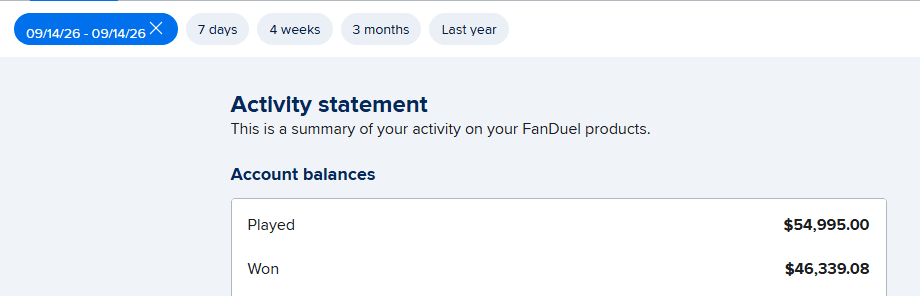
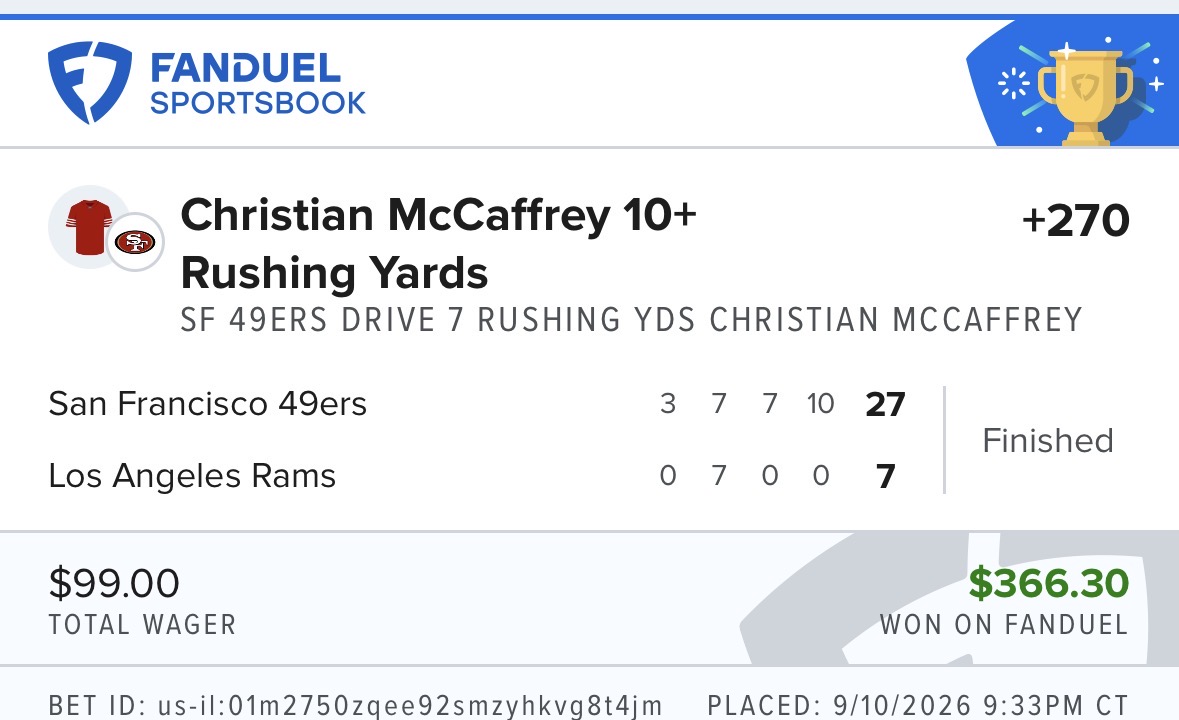
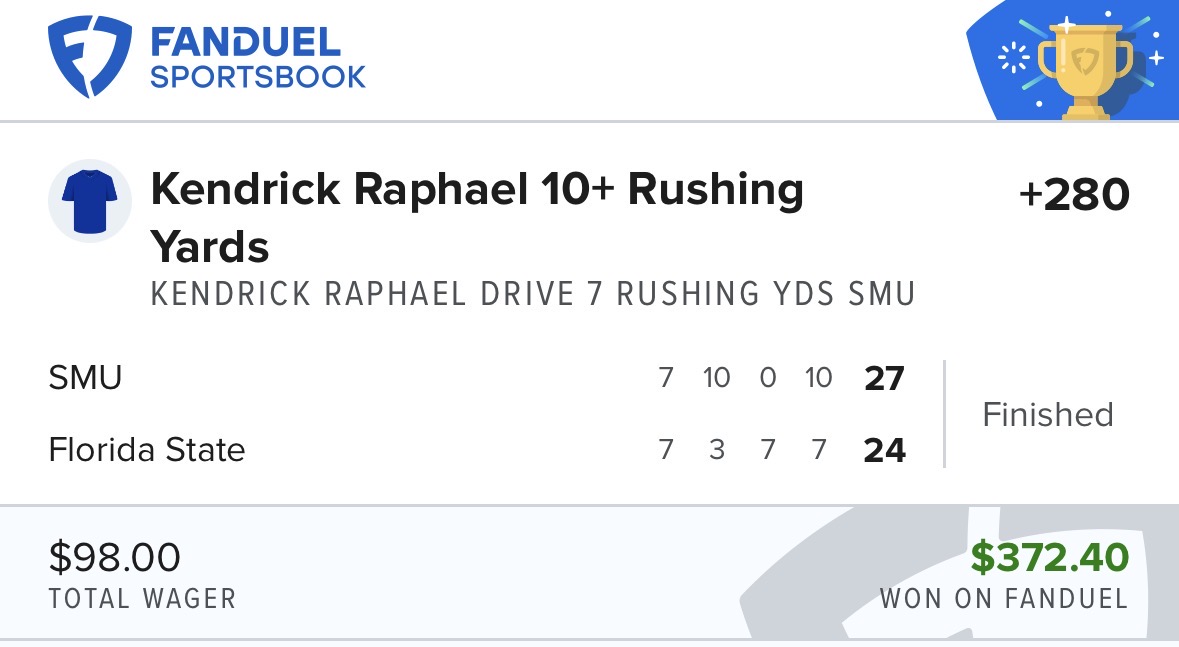
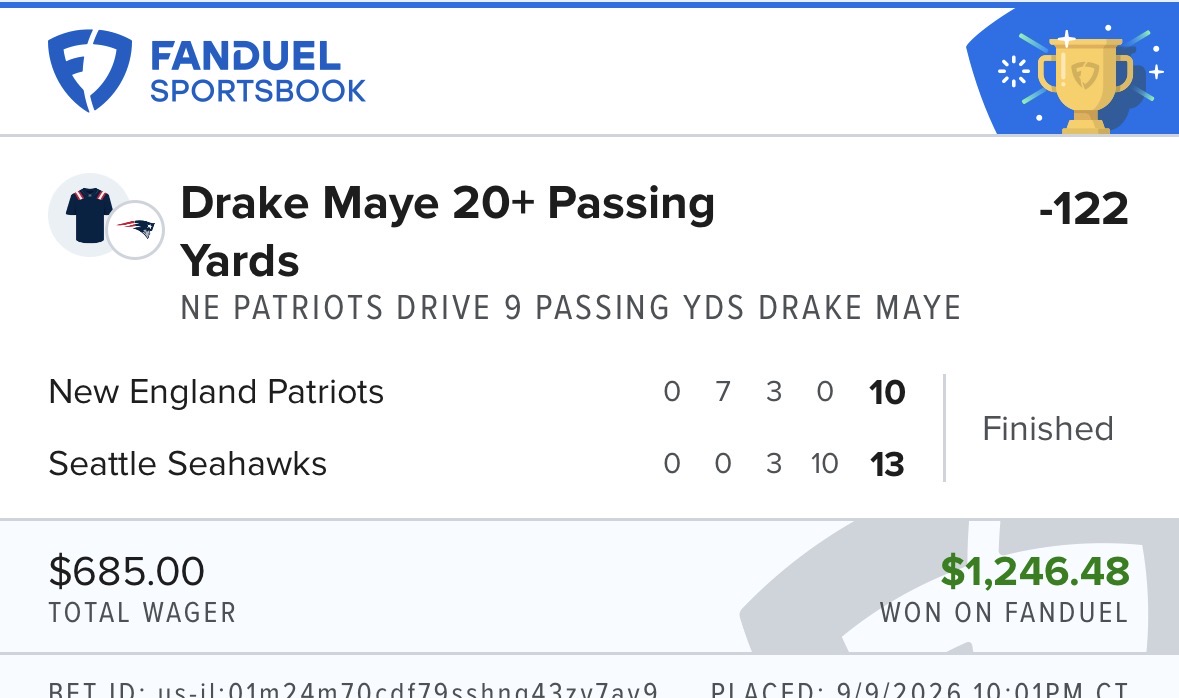
A pick'em app entry is a parlay with a fixed payout, and once you convert that payout into a price per leg, you can see exactly when it beats a sportsbook parlay and when it does not. A 3-pick Power Play paying 6x is mathematically the same as a three-leg parlay where every leg costs about -122. A 2-pick paying 3x is the same as every leg costing about -137. Because that price never changes with the pick, coin-flip props are cheaper at a sportsbook, and only props a sportsbook would charge roughly -135 or more for are cheaper on the app. The Best Bet on Sports has bet player markets live for more than twenty years with a verified $367,520+ in profit across all sportsbooks, and the per-leg price is the first number we would want anyone to calculate before choosing where to put a prop parlay.
The comparison usually gets argued with screenshots. Someone posts a 6-pick card that paid 37.5x, someone else posts a six-leg sportsbook parlay that paid 48x, and both sides declare victory. Neither screenshot says anything, because the two products charge for risk in completely different ways, and a single result cannot show which one charged you less.
This article converts both into the same unit. Everything below uses the Power Play and Flex Play tables PrizePicks publishes in its help center, which were last updated on Sept. 9, 2026. Those multipliers change from time to time, and entries with modified projections pay differently, so check the table in front of you before relying on any number here.
How Does a Pick'em Payout Compare to a Parlay?
A sportsbook parlay multiplies the price of each leg. Three legs at -110 pay about 6.96 times your stake because each leg pays 1.909 times and 1.909 cubed is 6.96. If one of those legs were -150 instead, the ticket would pay less, and if one were +120 it would pay more. The price follows the leg.
A pick'em entry does not work that way. A 3-pick Power Play pays 6x whether you picked three props that are coin flips or three props that are near certainties. The payout is attached to the number of picks, not to the picks themselves.
That means every pick'em entry has a hidden per-leg price. Take the multiplier, find the number that produces it when multiplied by itself once per pick, and convert that back to American odds. Here is what the current Power Play table implies:
| Power Play entry | Pays | Equivalent price per leg | Break-even win rate per pick |
|---|---|---|---|
| 2 picks | 3x | about -137 | 57.7% |
| 3 picks | 6x | about -122 | 55.0% |
| 4 picks | 10x | about -128 | 56.2% |
| 5 picks | 20x | about -122 | 54.9% |
| 6 picks | 37.5x | about -121 | 54.7% |
The comparison point is a standard sportsbook parlay leg at -110, which breaks even at 52.4% no matter how many legs are on the ticket.
Two things jump out. First, every Power Play entry charges more per leg than a -110 sportsbook leg. Second, the entries are not equally expensive. The 2-pick is by far the worst price on the board, and the 4-pick sits noticeably above the 3-pick and 5-pick on either side of it. If you are going to play a Power Play at all, the per-leg math says 3, 5 and 6 picks are the efficient sizes and 2 and 4 are the expensive ones.
What Happens When Every Pick Is a Coin Flip
Pick'em apps set their projections to be close to a median, the number a player goes over about half the time. A sportsbook sets its prop lines the same way. So the natural starting comparison is a card of genuine coin flips, bet both ways:
| Legs | Pick'em Power Play, expected return | Sportsbook parlay at -110, expected return |
|---|---|---|
| 2 | -25.0% | -8.9% |
| 3 | -25.0% | -13.0% |
| 4 | -37.5% | -17.0% |
| 5 | -37.5% | -20.8% |
| 6 | -41.4% | -24.4% |
On coin flips, the pick'em entry costs you roughly one and three-quarters to nearly three times as much as the sportsbook parlay with the same number of legs. That is not a small difference in house edge. It is the difference between a product that is expensive and a product that is punishing.
This is the version of the comparison that the screenshots hide. If you have no real opinion on your picks and are choosing props the way most people do, off a hunch or a highlight, the fixed multiplier is the worse deal at every size.
The sportsbook parlay is not cheap either. Parlay hold compounds with every leg, which we covered in detail in how many legs a parlay should have and parlays versus straight bets. The point here is narrower: on the same set of coin-flip props, the sportsbook version costs less.
When the Fixed Multiplier Is the Better Deal
The flat payout that makes pick'em expensive on coin flips is exactly what makes it valuable on picks that are not coin flips.
At a sportsbook, a prop that is more likely than not to hit gets a more expensive price. If a book believes an over hits 58% of the time, it will not offer it at -110. It will price it around -150, and at -150 you get paid about 1.67 times your stake on that leg instead of 1.91.
On a pick'em app, a standard projection pays the same multiplier regardless. If you find a pick that genuinely hits 58% of the time, the app is still charging you the equivalent of -122 on a 5-pick entry while the sportsbook would charge you about -150. On that pick, the app is the cheaper place to bet it.
That gives a usable rule. Take the break-even rate for your entry size, add back a normal sportsbook margin, and you get the sportsbook price at which the same pick becomes cheaper on the app. Assuming a typical two-way prop market where each side carries about half of a 4.5% margin, the thresholds look roughly like this:
| Entry | Pick'em break-even | Same pick becomes cheaper on the app when a sportsbook prices it at about |
|---|---|---|
| 3-pick Power | 55.0% | -134 or steeper |
| 4-pick Power | 56.2% | -141 or steeper |
| 5-pick Power | 54.9% | -134 or steeper |
| 6-pick Power | 54.7% | -132 or steeper |
| 2-pick Power | 57.7% | -150 or steeper |
Read that table as a filter, not a strategy. It says a pick'em entry only makes sense when every pick on the card is one a sportsbook would charge you a real premium for. Four picks that books have at -150 or -160 are a very different card from four picks at -110, even though the app pays both at 10x.
If you can see a prop priced at -155 at a sportsbook, and the same player, the same stat and the same number sit on a pick'em board at the standard multiplier, the app is effectively selling you that leg at a discount. That gap, between a sportsbook's juiced price and an app's flat one, is the entire source of value in the product.
Why the App Does Not Let That Last
If the flat multiplier gives away value on lopsided picks, the operator knows it, and the help center says plainly how it responds. PrizePicks states that lineups including Demon or Goblin projections, or other discounted projections, carry altered payout rates, and that lineups with multiple athletes playing in the same game may have reduced payout rates.
Both rules exist to close exactly the gaps described above.
Modified projections move the number instead of the price. A Goblin is an easier line with a lower payout; a Demon is a harder line with a higher one. When a projection is lopsided enough that a flat multiplier would be a gift, the app can shift the line, shrink the payout, or both. That turns the product back into something closer to a sportsbook, where the price follows the probability.
Same-game reductions are a correlation charge. Two picks from the same game are not independent. A quarterback's passing yards and his top receiver's receiving yards tend to rise and fall together, which makes the card more likely to hit than two unrelated picks would be. A sportsbook handles that with same-game parlay pricing or by refusing certain combinations, which we broke down in why sportsbooks reject same-game parlay legs. The pick'em app handles it by cutting the multiplier.
The practical meaning is that the easy version of the value, standard projections at standard payouts on picks that are obviously lopsided, gets harder to find the more obvious it is. What survives is the version that requires work: comparing app projections against sportsbook prices, one prop at a time, and passing on cards where the gap is not there.
Is Flex Play Better Than Power Play?
Flex Play pays a smaller top multiplier but still pays something if you miss a pick or two. Whether that is a good trade depends entirely on the size of the entry, and the per-pick break-even rates make it clear:
| Entry size | Power Play break-even | Flex Play break-even | Cheaper structure |
|---|---|---|---|
| 2 picks | 57.7% | 61.8% | Power |
| 3 picks | 55.0% | 57.7% | Power |
| 4 picks | 56.2% | 55.0% | Flex |
| 5 picks | 54.9% | 54.3% | Flex |
| 6 picks | 54.7% | 54.2% | Flex |
On small entries, Flex is a bad trade. A 2-pick Flex needs you to win almost 62% of your picks just to break even, because its consolation payout for going 1-for-2 is only half your entry back. On 4, 5 and 6 picks, Flex has a slightly lower break-even than Power, because the partial payouts are worth more than the top multiplier you give up.
This is the same trade-off a progressive parlay makes at a sportsbook, and the underlying logic of partial payouts is covered in our progressive parlay guide. It is also why the "I went 5-for-6 again" complaint deserves the treatment in our 4-of-5 near-miss math: a near miss on a Power Play is not bad luck, it is the most common losing outcome of a large entry.
The Number Nobody Can Measure for You
Every table above takes your win rate per pick as an input, and that is the part no calculator can supply.
Consider how thin the margins are. The 5-pick Power Play breaks even at 54.9%. At a 50% hit rate it loses 37.5% of what you put in. At 55% it is essentially break-even. At 58% it returns about 31%. The whole distance between a punishing product and a very good one is eight percentage points of pick accuracy.
Telling a 55% picker from a 58% picker is not something a few weeks of results can do. The difference is small relative to the natural swings of a small sample, and it takes hundreds of graded picks before a record says much of anything. A player who hits a few big cards early has usually learned about variance, not about skill. We made the same argument about pick services in win rate vs ROI, and it applies with more force to prop entries, where a single card can swing a month.
There is also a question of whether the product is available to you at all. Pick'em contests have been restricted or reshaped in a number of states, and in some places operators have moved to different formats. Check the rules where you live before building anything around one.
How We Would Actually Decide
Strip the argument down and it produces a short checklist.
1. Price every pick at a sportsbook first. If the sportsbook has the same side at -110 or -115, the app is the more expensive place to bet it. Build it as a sportsbook parlay or, better, bet it straight. 2. Use the app only for picks a book would charge a premium for. Use the threshold table above as the cutoff for your entry size. 3. Avoid 2-pick and 4-pick Power Plays. They are the most expensive per leg on the current table. 4. Use Flex only on 4 or more picks, and Power only on 3 or fewer. That is where each structure has the lower break-even. 5. Assume modified and same-game entries have been repriced against you until you have calculated otherwise. 6. Keep a separate ledger with the sportsbook price of every pick at the moment you entered it. That is the only record that will tell you, after a few hundred picks, whether you were actually finding value or just collecting results.
The honest summary is that a pick'em app is not a better or worse parlay. It is a parlay with a fixed price per leg, and a fixed price is a bargain on lopsided picks and a tax on coin flips. Most people play it with coin flips.
If you would rather have the prop and side work done for you, the expert sports picks page explains how releases are graded and priced, the football betting picks page covers the in-season football board, and our parlay picks page covers when a multi-leg ticket makes sense at all. For single-player markets specifically, see NFL player props and our guide to player prop parlays.
Get Tonight's Live Picks
Want tonight's live in-game prop and parlay picks delivered during the game, priced at the moment the edge appears?
The Best Bet on Sports is the only live betting handicapping service limited on all six major U.S. sportsbooks (FanDuel, DraftKings, Caesars, BetMGM, Fanatics, ESPN BET) for winning too much during in-game action. Verified profit: $367,520+. Picks delivered via Email and Discord during games.
→ Get tonight's live picks: $199 first month — 1-Unit package, full live betting access → Try a live pick first — reserve your spot for tonight's pick
Compare packages on the buy sports picks page, or see what a subscription includes before you pay for sports picks anywhere.

Frequently Asked Questions
Is a pick'em app better than a sportsbook parlay?
It depends on the picks. A pick'em entry pays a fixed multiplier regardless of how likely each pick is, which works out to about -121 to -137 per leg on the current Power Play table. A sportsbook parlay of -110 legs is cheaper on coin-flip props. The app is only the better price when every pick is one a sportsbook would charge a real premium for, roughly -135 or steeper depending on entry size.
What win rate do you need to break even on a Power Play?
On the current PrizePicks Power Play table, you need to win about 57.7% of picks on a 2-pick entry paying 3x, 55.0% on a 3-pick paying 6x, 56.2% on a 4-pick paying 10x, 54.9% on a 5-pick paying 20x, and 54.7% on a 6-pick paying 37.5x. A sportsbook parlay of -110 legs breaks even at 52.4% per leg at any size. Multipliers change, so recalculate from the table you are using.
Which Power Play size has the best odds?
Per leg, the 3-pick, 5-pick and 6-pick entries are the most efficient, each equivalent to roughly -121 or -122 per leg. The 2-pick entry is the most expensive at about -137 per leg, and the 4-pick sits in between at about -128. Larger entries still carry much more variance, so a lower per-leg price does not make a 6-pick card a better bet for most people.
Is Flex Play or Power Play better?
Power Play has the lower break-even on 2-pick and 3-pick entries, and Flex Play has the lower break-even on 4-, 5- and 6-pick entries. A 2-pick Flex is the worst structure on the board, needing about 61.8% accuracy per pick, because its payout for going one-for-two is only half the entry back. On larger entries, the partial payouts make Flex slightly cheaper.
How much does a pick'em entry cost on coin-flip picks?
If every pick is a genuine 50-50 proposition, a Power Play returns about 25% less than you put in on 2- and 3-pick entries, 37.5% less on 4- and 5-pick entries, and about 41% less on a 6-pick entry. The same props parlayed at -110 at a sportsbook cost about 9% on two legs and 24% on six. On coin flips the sportsbook is consistently the cheaper product.
Why do pick'em apps reduce payouts on same-game picks?
Because picks from the same game are correlated. A quarterback's passing yards and his receiver's receiving yards tend to move together, which makes the entry more likely to hit than two unrelated picks. A flat multiplier would overpay for that, so the app cuts the payout, the same way a sportsbook prices same-game parlays differently or refuses certain combinations. Modified Demon and Goblin projections are repriced for a similar reason.
Can you follow live betting picks on a pick'em app?
Generally not in a useful way. Live picks are priced and released during games in sportsbook markets, often drive-level or quarter-level props, while pick'em entries are built around pregame projections at fixed multipliers. A live release depends on a specific price at a specific moment, and that price does not exist on a pick'em board. Live picks need a sportsbook account where live markets are legal.
The Best Bet on Sports · 1.5M followers on TikTok
Sports Betting TikTok is the live betting account behind The Best Bet on Sports, covering NFL, NCAAF, NBA, NCAAB, MLB and WNBA markets in real time. The account has been limited on all six major U.S. sportsbooks — FanDuel, DraftKings, Caesars, BetMGM, Fanatics and ESPN BET — for winning on live betting, with $367,520 in verified profit since 2005. View full profile →
Past results do not guarantee future performance. Must be 21 or older to wager.
Related Articles
Should You Buy Parlay Picks? What It Means When a Service Sells Them
Your Parlay Leg Moved After You Bet It. Here's What That's Worth.
Alt Lines in a Parlay: Which Leg Should You Buy Down?
Same-Game Parlay Plus (SGP+): How Cross-Game SGPs Pay
6-Team Parlay Payout Calculator: What Six Legs Really Pay
The Last Two Minutes Kill More Parlays Than Bad Picks Do
Get real live betting picks
From $39.95/mo · Cancel anytime · Email + Discord delivery
● Get The Picks
Choose your package
Tap any tier below to select · Subscribe in one tap
👇 Tap any package to select it
✓ You're selecting
25 Units · $99.95/month
25 unit picks per month. Sweet spot for most bettors — plenty of action without going all-in.
- ✓25 live betting selections/month
- ✓Email + Discord delivery
- ✓All sports (NFL, NCAAF, NBA, NCAAB, MLB)
- ✓Mix of 1, 2, 3, 5-unit rated plays
- ✓Cancel anytime
Secure PayPal · Cancel anytime · No hidden fees · 21+ · +$367K verified
+$367,520 verified · Limited on 6 sportsbooks · 20 years documented · See Proof
Join Our Newsletter
Get free expert sports picks and analysis delivered weekly.