Football Bankroll Management Guide - How to Protect and Grow Your Betting Account

Football bankroll management is the single most important skill in football betting because even the sharpest picks cannot overcome reckless bet sizing that exposes your entire bankroll to normal variance. Professional football bettors use a unit-based system where one unit equals 1 to 2 percent of their total bankroll, allowing them to survive 15 to 20 game losing streaks while still maximizing profit during winning runs. Without disciplined money management, a 56 percent win rate bettor will go broke just as fast as a losing one.
Bankroll management is the single most important skill in football betting because even the sharpest picks in the world cannot overcome reckless bet sizing. Professional football bettors use a unit-based system where one unit equals 1 to 2 percent of their total bankroll, allowing them to survive 15 to 20 game losing streaks while still maximizing profit during winning runs. Without disciplined money management, a 56 percent win rate bettor will go broke just as fast as a 48 percent bettor.
I have seen it happen hundreds of times over my 20 years in this industry. A bettor finds a great handicapping service, follows the picks, hits 57 percent for the first month, and then blows up their bankroll in week five because they tripled their bet size chasing a bad weekend. Bankroll management is not the exciting part of sports betting. Nobody wants to talk about unit sizing when they could be talking about which side to take on a primetime NFL game. But at The Best Bet on Sports, I can tell you unequivocally that money management separates the bettors who last from the ones who disappear. This guide covers the strategies professional bettors use to protect and grow their accounts over full football seasons.
What Is a Bankroll and Why Does It Matter?
Your bankroll is the total amount of money you have set aside specifically for sports betting. This should be money completely separated from your daily life expenses, bills, and financial obligations. The moment you start betting with money that should go toward rent or groceries, you have already lost regardless of what happens on the field.
Rule number one of professional football betting is never bet with money you cannot afford to lose. This is not a cliche. It is a practical requirement for sound decision-making. When you bet with money you need, every loss creates emotional pressure that corrupts your decision process. You start chasing losses, increasing bet sizes, and abandoning the discipline that makes profitable betting possible.
The size of your starting bankroll determines your unit size, which determines how much you bet on each game. This chain of logic means that getting your bankroll right from the start sets the foundation for everything that follows. A bankroll that is too small for your desired unit size creates unnecessary risk. A bankroll that is too large relative to your unit size sacrifices growth potential.
Professional bettors I work with typically maintain bankrolls of 50 to 100 units. At 50 units, you have enough cushion to survive the inevitable losing streaks while maintaining meaningful bet sizes. At 100 units, you have maximum protection against variance with slightly slower growth. Either range works depending on your risk tolerance and experience level.
How Does the Unit System Work in Football Betting?
Professional bettors use a unit-based system to standardize bet sizing and remove emotion from the wagering process. One unit represents a fixed percentage of your total bankroll. This percentage stays consistent regardless of whether you are on a winning streak or a losing streak.
The three standard unit sizing approaches each have specific use cases. Conservative betting at 1 percent per unit means a 5,000 dollar bankroll produces 50 dollar bets. This approach gives you the most runway to weather losing streaks and is best for beginners or bettors with smaller bankrolls who cannot afford to reload. Standard betting at 2 percent per unit means that same 5,000 dollar bankroll produces 100 dollar bets. This is the most common approach among experienced bettors because it balances growth potential with risk management. Aggressive betting at 3 percent per unit means 150 dollar bets on a 5,000 dollar bankroll and is only recommended for experienced bettors with proven track records and the financial capacity to reload if necessary.
| Bankroll Size | 1% Unit (Conservative) | 2% Unit (Standard) | 3% Unit (Aggressive) |
|---|---|---|---|
| $1,000 | $10 per unit | $20 per unit | $30 per unit |
| $2,500 | $25 per unit | $50 per unit | $75 per unit |
| $5,000 | $50 per unit | $100 per unit | $150 per unit |
| $10,000 | $100 per unit | $200 per unit | $300 per unit |
| $25,000 | $250 per unit | $500 per unit | $750 per unit |
A professional sports handicapping service rates plays by confidence level using the unit system. A 1-unit play indicates standard confidence with solid value identified. A 2 to 3 unit play means above-average confidence where multiple factors align. A 5-unit play is the highest conviction, reserved for the absolute best plays of the week where the edge is significant. This tiered approach ensures your largest bets go on your strongest plays.
How Do You Size Bets Based on Confidence Level?
Not all picks are created equal, and your bet sizing should reflect that reality. The best handicappers identify some games where they have a 2-point edge on the market and other games where they have a 4-point edge. Betting the same amount on both games leaves money on the table.
The standard confidence tier system works like this. Your base plays get 1 unit. These are games where you see value but the edge is moderate, perhaps a 1.5 to 2 point discrepancy between your number and the market line. Above-average plays get 2 to 3 units. These games show a clear edge of 2.5 to 3.5 points with multiple supporting factors like a coaching mismatch, favorable weather, or a motivation advantage. Maximum conviction plays get 4 to 5 units and should represent no more than 5 to 10 percent of your total plays for the season. These are games where everything aligns: the numbers, the situation, the matchup, and the line.
The discipline required is in the proportions. If you are betting 5 units on three games every week, you are not using a confidence tier system. You are overbetting your top plays. True 5-unit plays should appear 8 to 12 times across an entire NFL season. If you are finding them every week, your threshold is too low.
What Does the Math Tell Us About Bankroll Survival?
Even a profitable bettor with a 55 percent win rate on minus 110 spreads will experience losing streaks that test their resolve and their bankroll. Understanding the math behind these streaks removes the emotional shock when they inevitably happen.
With 1 percent units, a 20-game losing streak reduces your bankroll by 20 percent. Painful but completely survivable. With 2 percent units, that same streak costs you 40 percent, which is difficult to recover from psychologically even though it is mathematically recoverable. With 5 percent units, a 20-game losing streak wipes out your entire account.
A 55 percent bettor placing 10 bets per week has roughly a 12 percent chance of experiencing a 10-game losing streak during any given NFL season. That probability is high enough that you must plan for it. The bettor who sizes their units assuming losing streaks will never happen is the bettor who goes broke when they do.
The goal of bankroll management is simple. Never go broke. You cannot win long-term if a bad run forces you out of the game. Every decision about bet sizing should be evaluated through the lens of bankroll survival first and profit maximization second.
What Are the Most Common Bankroll Management Mistakes?
After two decades of watching bettors succeed and fail, I can identify the bankroll mistakes that destroy the most money. These are not subtle analytical errors. They are behavioral patterns that override logical decision-making.
Chasing losses is the fastest way to blow up a bankroll. After a losing day, the temptation to double your next bet to get back to even feels rational in the moment but is mathematically catastrophic. Stick to your unit size regardless of recent results. The cards do not know what happened yesterday, and neither do the football games.
Betting too many games dilutes the strength of your card and increases your exposure to variance. More bets does not mean more profit. Some weeks there might only be 3 to 4 plays worth making, and that is perfectly fine. The weeks where you pass on marginal games are the weeks that protect your bankroll for the games where you have a genuine edge.
Ignoring the juice is a silent bankroll killer. The standard minus 110 vig means you need to win 52.4 percent of bets just to break even. Many bettors set profit expectations without accounting for this constant drag. A 55 percent win rate is excellent and very profitable over a full season. See our documented results page for proof of what disciplined bankroll management produces over time.
Emotional betting destroys discipline faster than anything else. Never bet on your favorite team or against a team you hate based on emotion alone. Every bet should be based on analysis and edge, not feelings. The moment you catch yourself saying you just know a team will win without any supporting analysis, step away from the sportsbook.
How Do You Adjust Your Bankroll Strategy During the Season?
Professional bettors do not set their bankroll strategy in September and forget about it. They make disciplined adjustments based on results while maintaining the core principles of their system.
If your bankroll grows by 25 percent or more, consider recalculating your unit size upward. A bankroll that started at 5,000 dollars and has grown to 6,500 dollars can support units of 65 dollars at 1 percent instead of the original 50. This adjustment compounds your advantage because you are now betting proportionally to your larger bankroll.
If your bankroll drops by 25 percent, recalculate downward. Reducing your unit size during a drawdown protects against the accelerating risk of further losses. A bettor who stubbornly maintains 100 dollar units after their bankroll shrinks from 5,000 to 3,500 is now risking nearly 3 percent per unit instead of 2 percent, dramatically increasing their risk of ruin.
Never make mid-week adjustments based on a single game or a single weekend. Bankroll recalculation should happen at natural breakpoints, such as monthly reviews or at the midpoint of the season. Reacting to short-term results with immediate bankroll changes is a form of emotional betting disguised as discipline. For a deeper look at how professional bettors handle extended losing runs, see our sports betting losing streak recovery guide and the money management tips from football handicappers.
How Does Line Shopping Impact Your Bankroll Growth?
Line shopping is the simplest bankroll multiplier that most bettors completely ignore. Having accounts at multiple sportsbooks and consistently getting the best available number on every bet adds up to significant profit over a season without requiring any improvement in your pick quality.
The difference between laying 3 and laying 2.5 on a key number NFL game might seem trivial on a single bet. Over 200 bets in a season, getting a half point better number on even a quarter of your bets swings multiple outcomes and directly impacts your bottom line. Professional bettors maintain accounts at a minimum of four to five sportsbooks for this exact reason.
Key numbers in football, specifically 3, 7, 6, and 10, are where games cluster in terms of final margin. Being on the right side of those numbers is one of the easiest ways to improve your results without changing your analysis at all. If your handicapper releases a play at minus 3, and you can find minus 2.5 at another book, take the 2.5 every single time.
How Do You Build Your Bankroll Over a Full Football Season?
With disciplined bankroll management and quality picks, realistic bankroll growth over a profitable football betting season follows predictable math. A 5,000 dollar starting bankroll using 2 percent units with a 55 percent win rate on 8 plays per week generates approximately 40 to 60 units of profit over a 20-week NFL season. That translates to 4,000 to 6,000 dollars in profit, growing the bankroll to 9,000 to 11,000 dollars.
These numbers are realistic but not guaranteed. Variance means some seasons you hit 58 percent and exceed these projections, while other seasons you grind at 53 percent and grow modestly. The key word is realistic. Anyone promising you will turn 500 dollars into 50,000 dollars is lying. Sustainable bankroll growth is measured in percentages per season, not multiples per month.
At The Best Bet on Sports, our unit-based system is designed to work hand-in-hand with proper bankroll management. Every pick comes with a unit rating so you know exactly how to size your bet. Check out our football picks packages and NFL picks page to get started with a system built for long-term profitability. For the analytical side of the equation, see how football handicapping strategies that work and the football betting secrets from professional handicappers guide complement sound money management.
Frequently Asked Questions
What is the ideal starting bankroll for football betting?
A minimum starting bankroll of 50 units provides enough cushion to survive normal variance. At 50 dollar units, that means 2,500 dollars. At 100 dollar units, that means 5,000 dollars. Starting with fewer than 30 units dramatically increases your risk of going broke during a normal losing streak, regardless of your long-term edge.
Should I ever increase my bet size after a winning streak?
Only through systematic bankroll recalculation, never through emotional confidence. If your bankroll has grown by 25 percent or more, recalculate your unit size based on the new total. Never double or triple a bet simply because you have been winning. The streak does not change the probability of the next game.
How many losing bets in a row should I expect?
A bettor hitting 55 percent should expect a 7 to 10 game losing streak at least once per NFL season. A 15-game losing streak is statistically possible though less common. Structuring your unit size to survive these inevitable runs is the entire point of bankroll management. If a 10-game losing streak would devastate your bankroll, your units are too large.
Is flat betting better than a confidence tier system?
Both approaches work when applied consistently. Flat betting is simpler and removes the temptation to oversize bets based on false confidence. A confidence tier system extracts more value from your strongest plays but requires honest self-assessment of your edge. Beginners should start with flat betting and transition to tiered betting only after establishing a profitable track record.
How does the juice affect my bankroll over a season?
At standard minus 110 juice, you lose approximately 4.5 cents on every dollar wagered. Over 200 bets at 100 dollars each, that is roughly 900 dollars in juice alone. This constant drag means you must win at a rate above 52.4 percent just to break even. Every percentage point above that threshold is pure profit, but the juice ensures that breaking even requires genuine skill.
Should I separate my NFL and college football bankrolls?
Maintaining a single bankroll for all football betting simplifies management and provides more accurate performance tracking. However, tracking your results separately by sport reveals whether your edge is stronger in one market versus the other. Some bettors discover they crush college football but only break even on NFL, which should inform how they allocate their weekly plays.
When should I stop betting and reassess my approach?
If your bankroll drops by 40 percent or more from its peak, stop betting and conduct a thorough review of your process. Examine whether the losses stem from bad luck, flawed analysis, or emotional decision-making. A drawdown of that magnitude either indicates a genuine cold streak that will reverse, or it reveals a problem in your approach that needs correction before you bet another dollar.
The Best Bet on Sports · 1.5M followers on TikTok
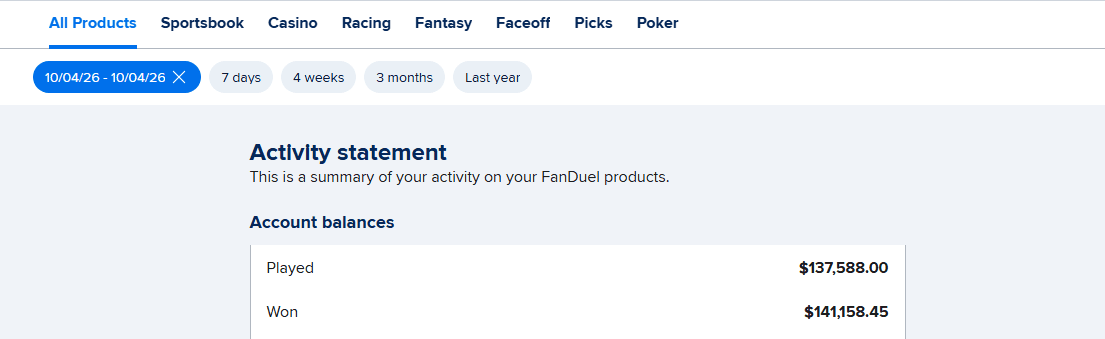
Sports Betting TikTok is the live betting account behind The Best Bet on Sports, covering NFL, NCAAF, NBA, NCAAB, MLB and WNBA markets in real time. The account has been limited on all six major U.S. sportsbooks — FanDuel, DraftKings, Caesars, BetMGM, Fanatics and ESPN BET — for winning on live betting, with $367,520 in verified profit since 2005. View full profile →
Past results do not guarantee future performance. Must be 21 or older to wager.
Related Articles
Sports Betting Unit Sizing and Bankroll Management: The Complete Guide
Kelly Criterion for Sports Betting: The Math Behind Optimal Bet Sizing
Kelly Criterion for Sports Betting: Optimal Bet Sizing Explained
How NFL Betting Units Work - A Complete Guide for Sports Bettors
What If a Live Pick Is on the Other Side of Your Bet?
Bankroll Management for $100 to $500 Bettors: Unit Sizing, Drawdown Math, and When a $199 Pick Service Pays for Itself
Get real live betting picks
From $39.95/mo · Cancel anytime · Email + Discord delivery
● Get The Picks
Choose your package
Tap any tier below to select · Subscribe in one tap
👇 Tap any package to select it
✓ You're selecting
25 Units · $99.95/month
25 unit picks per month. Sweet spot for most bettors — plenty of action without going all-in.
- ✓25 live betting selections/month
- ✓Email + Discord delivery
- ✓All sports (NFL, NCAAF, NBA, NCAAB, MLB)
- ✓Mix of 1, 2, 3, 5-unit rated plays
- ✓Cancel anytime
Secure PayPal · Cancel anytime · No hidden fees · 21+ · +$367K verified
+$367,520 verified · Limited on 6 sportsbooks · 20 years documented · See Proof
Join Our Newsletter
Get free expert sports picks and analysis delivered weekly.