March Madness Picks and NCAAB Best Bets - Complete College Basketball Betting Guide

March Madness picks require a fundamentally different analytical approach than regular-season college basketball betting because the single-elimination format amplifies defensive efficiency, coaching experience, and three-point shooting variance beyond their normal predictive weight. Expert NCAAB best bets during the tournament target first-round underdogs with elite defensive metrics, avoid public-favorite chalk in Round of 32 matchups, and exploit the systematic mispricing of mid-major programs whose regular-season performance data gets discounted by a market fixated on brand-name programs.
# March Madness Picks and NCAAB Best Bets - Complete College Basketball Betting Guide
March Madness picks that produce long-term profit come from analyzing defensive efficiency ratings, tempo matchups, coaching experience in elimination games, and exploiting the public's tendency to overvalue brand-name programs at the expense of tactically superior mid-major teams. The NCAA Tournament is the most bet sporting event in America, and the concentration of uninformed public money creates structural value that sharp bettors exploit every single March.
I have been breaking down March Madness at The Best Bet on Sports for over twenty years, and the tournament never stops teaching lessons. Last year I watched a client ignore my analysis on a 12-seed that checked every box in my system and bet the 5-seed instead because he recognized the name. That 12-seed won outright. It happens every year because the tournament rewards preparation and punishes brand loyalty. This guide covers the strategies that separate profitable March Madness bettors from the millions of people filling out brackets based on jersey color and childhood fandom.
What Are the Best Strategies for Making March Madness Picks?
The most important thing to understand about NCAA Tournament betting is that the public overwhelmingly bets on brand names. Duke, Kentucky, Kansas, and UNC attract massive public money regardless of their actual roster quality in any given year. This creates structural value on quality mid-major programs and underdog seeds that the public dismisses without any real analysis.
The 12-seed versus 5-seed matchup is the most well-documented upset spot in the tournament, occurring at a rate significantly higher than the seed differential implies. Over the past two decades, 12-seeds have won roughly 35% of these first-round matchups. That number alone does not make every 12-seed a bet, but it should make you look very carefully at every 5-seed the market treats as a lock.
Defensive efficiency outperforms offensive flash in tournament play. Games are officiated more tightly in March, and teams with elite defenses consistently outperform their seed relative to the spread. This is partly because defensive performance is more stable game to game than offensive performance, and partly because tournament pressure tends to tighten up offenses while defenses maintain their baseline.
Conference tournament fatigue is a real and measurable factor. Teams that played five or six conference tournament games in the week before March Madness show measurably worse early-round performance, particularly in the first game. The physical toll and mental drain of winning a conference tournament can create sluggish first-half performances that put teams in holes they cannot climb out of against fresh, motivated opponents.
| Seed Matchup | Historical Upset Rate | ATS Value for Lower Seed | Key Factors |
|---|---|---|---|
| 12 vs. 5 | ~35% | Strong | Mid-major depth, public 5-seed overvaluation |
| 13 vs. 4 | ~22% | Moderate | Style matchup dependent |
| 11 vs. 6 | ~37% | Strong | Play-in game momentum factor |
| 14 vs. 3 | ~15% | Selective | Only when 3-seed is flawed |
| 10 vs. 7 | ~39% | Moderate | Closest talent matchup |
How Do You Analyze College Basketball Spreads for the Tournament?
Spread analysis in college basketball requires understanding how two teams' playing styles interact. A slow, methodical team running 65 to 68 possessions per game faces a completely different challenge against an up-tempo team running 75 or more possessions than against another deliberate squad. Spread values are often calculated assuming average pace matchups. When pace mismatch is extreme, it can significantly affect actual game flow and create opportunities that the line does not account for.
Our basketball handicappers team weighs this heavily in tournament spots. Three-point shooting variance is uniquely volatile in college basketball because three-point shots represent a higher percentage of total shots than in the NBA. A team shooting 37% from three on the season will hit 45% in one game and 28% the next, and that is normal variance. Bettors who chase recent hot three-point shooting in tournament play often lose money when regression hits. A team that shot 48% from deep in its conference tournament semifinal is not a 48% shooting team. It is a team that got hot for one game and will almost certainly regress toward its season average.
The KenPom adjusted efficiency ratings remain the gold standard for evaluating college basketball teams. AdjO measures offensive efficiency per 100 possessions, AdjD measures defensive efficiency, and AdjEM combines them into an overall efficiency margin. When these ratings diverge significantly from public perception and therefore from the spread, it signals potential value. A team ranked 15th in AdjEM being treated as an 8-seed by the line is a situation that demands investigation. The analytics are publicly available, and many bettors still do not use them.
Rebounding rate differential is another factor that tournament bettors underweight. In a single-elimination game where every possession matters, the team that controls the glass controls second-chance opportunities and limits the opponent's margin for error. Teams with top-30 offensive rebounding rates paired with top-50 defensive rebounding rates have historically covered tournament spreads at rates above 55%.
What NCAAB Best Bets Exist in Conference Tournament Play?
Conference tournament picks require additional situational analysis beyond regular-season metrics. Single-elimination urgency changes how teams play. Teams that barely qualified for their conference tournament have nothing to lose, and bubble teams often exceed expectations as underdogs because they are playing with desperate motivation and no pressure.
Top-seed complacency is a real phenomenon in conference tournaments. The best team in a conference sometimes coasts through the regular season and faces a sharper, hungrier opponent who has been fighting for their tournament life for weeks. That motivational gap matters in games decided by two or three possessions.
Coaching matchup history deserves more attention at the college level than it gets. Some head coaches consistently underperform against specific peers because of scheme disadvantages or in-game adjustment tendencies. Tracking head-to-head coaching records matters enormously in college basketball where the same coaches face each other multiple times per season and develop counterpunching tendencies.
Conference tournament fatigue also works as a filter. The team that wins four games in four days to capture an automatic bid often arrives at the NCAA Tournament physically and mentally drained. Their first-round opponent has been resting and preparing for a specific matchup. This fatigue factor compounds when the conference tournament champion is a mid-major that had to play through the entire bracket rather than receiving a bye.
How Should You Bet the NCAAB Regular Season for Maximum Profit?
Regular-season college basketball offers betting opportunities five to seven nights a week from November through March, making it one of the longest continuous betting calendars in American sports. That volume creates opportunity, but it also creates noise that bettors need to filter ruthlessly.
Home court advantage is larger in college basketball than any other major sport, worth 3 to 4 points on average and significantly more in hostile environments like Cameron Indoor Stadium or Allen Fieldhouse. Books adjust for home court, but they cannot perfectly account for the specific atmosphere of each venue. Some arenas are genuinely worth an extra point or two beyond the generic home court adjustment.
Road team motivation matters more than most bettors realize. Some teams play harder on the road to prove a point for bracket selection, while others sleepwalk through mid-week road games against inferior opponents. Reading the motivation context of a specific game requires following the sport closely enough to understand where each team stands in conference races and at-large bubble discussions.
Mid-week versus weekend performance patterns are real and measurable. Teams often play better in high-profile weekend games with national television exposure than in low-stakes Tuesday night games where the arena is half empty. The preparation level from coaching staffs and the energy level from players both fluctuate based on the perceived importance of the game.
Our full college basketball picks and results are tracked at our results page throughout the season.
What Role Do KenPom Ratings Play in Tournament Handicapping?
KenPom ratings have become the standard analytical framework for college basketball handicapping, and for good reason. The adjusted efficiency metrics strip out pace and normalize performance to a per-possession basis, which gives you a much cleaner comparison between teams that play at different tempos.
However, KenPom ratings have limitations that sharp bettors understand. The ratings treat every game equally, but not every game is played at full intensity. Teams resting starters in late-season games against weak opponents will see their ratings diluted. Teams that played a brutal non-conference schedule may have depressed offensive ratings that do not reflect their actual ceiling.
The key is using KenPom as a starting point rather than an endpoint. Compare a team's KenPom rankings to the spread and look for significant discrepancies. A team ranked 20th in AdjEM getting 8 points against a team ranked 5th is a much tighter matchup than the public perceives. Then layer in the factors that KenPom does not capture: coaching experience, injury impacts, travel fatigue, and motivational dynamics.
Combining KenPom efficiency data with Barttorvik's T-Rank system gives you a second analytical lens that weighs recent performance more heavily. When both systems agree that a team is undervalued by the spread, the confidence level increases significantly. When they disagree, dig deeper to understand why.
How Do You Find Value in March Madness Totals Betting?
Totals betting during the NCAA Tournament is one of the most overlooked markets and often offers softer lines than sides. Tournament totals are set using regular-season pace data, but tournament basketball is played at a fundamentally different tempo. Defensive intensity increases, possessions become more precious, and coaches call more timeouts to manage critical moments.
First-round games between teams from different conferences often feature unfamiliar schemes that slow down both offenses in the first half while coaches make adjustments. This first-half effect makes first-half unders a historically profitable bet type in early tournament rounds.
Second-weekend games from the Sweet 16 onward tend to feature even tighter defensive play because coaching staffs have had multiple days to prepare specifically for one opponent. The totals in these games are frequently set too high because books anchor on the teams' regular-season scoring averages without fully accounting for the playoff-intensity defensive adjustment.
Weather is not a factor in indoor basketball, but fatigue absolutely is. Teams playing their third game in five days during the first weekend often show decreased offensive efficiency that pushes results under the total. Track the schedule carefully and identify when both teams in a matchup are playing on compressed rest.
Where Can You Find Expert March Madness Picks You Can Trust?
The Best Bet on Sports releases NCAA Tournament best bets from our expert college basketball handicappers in real time throughout March Madness. We cover every round from the First Four through the national championship game. Every pick includes full written analysis so you understand the reasoning, not just the side.
What separates our tournament coverage from the hundreds of free pick sites flooding social media in March is the depth of preparation. We begin building tournament models in January, tracking the specific metrics that predict March success rather than reacting to whatever happened in the last conference tournament game. That preparation gap is our edge, and our subscribers benefit from months of work that culminates in three weeks of concentrated action. Access our full tournament card through our sports picks packages and see every selection tracked on our results page.
Our basketball betting tips page covers the foundational strategies that apply year-round, while our tournament-specific analysis layers on the situational factors that make March Madness a unique betting environment.
How Do Conference Tournament Results Predict NCAA Tournament Performance?
Conference tournament performance is one of the most misused data points in March Madness handicapping. The public treats a hot conference tournament run as proof that a team is peaking at the right time. Sharp bettors know the reality is more complex.
Winning a conference tournament does build confidence and momentum, but it also creates fatigue and inflated public perception. A team that played four games in four days to win its conference tournament arrives at the NCAA Tournament having burned significant physical and emotional energy. Meanwhile, a team that lost in its conference tournament semifinal has had extra days to rest, recover, and prepare for its first-round NCAA opponent.
The most profitable use of conference tournament data is not evaluating the winner but evaluating the loser. A talented team that suffered an early conference tournament exit due to a bad shooting night or fluke result is often undervalued in the NCAA Tournament market. The public anchors on the recent loss and forgets the body of regular-season work that made the team a strong seed in the first place.
Track how teams performed in their conference tournament relative to expectations rather than just looking at wins and losses. A team that lost a close game to a tough opponent in the conference tournament semifinals is in a very different position than a team that got blown out by 20 in the first round.
For a closer look at this angle, our breakdown of our NCAAB picks and college basketball betting guide picks up where this leaves off.
Related Strategy Reading
For deeper context on the angles covered above, our analysis of ncaab betting lessons march madness and basketball handicapping tips nba ncaab pairs well with this guide; our basketball betting reflect these same principles applied to live games.
Frequently Asked Questions
What seed upsets the most in March Madness?
The 12-seed versus 5-seed matchup is historically the most common upset spot in the NCAA Tournament first round. Twelve-seeds win roughly 35% of these games historically, making 5-seeds consistent public-action favorites that can be overvalued by sportsbooks. The 11-seed versus 6-seed matchup is actually close in upset rate, but the 12 over 5 gets more attention because the seed gap feels larger to casual fans. The key is not blindly betting every lower seed but identifying which specific matchups feature the stylistic and motivational factors that produce upsets.
How do I pick March Madness games against the spread?
Focus on defensive efficiency ratings using KenPom AdjD, tempo matchups that reveal how two teams' styles will interact, conference tournament fatigue for teams that played deep into their league tournament, and coaching experience in high-pressure elimination environments. Avoid chasing the most recent game's performance because tournament teams' season-long efficiency metrics are far more predictive than their last two-week sample. Build a checklist of five to seven factors and evaluate each game systematically rather than relying on gut feel.
Is March Madness harder to bet than the regular season?
In some ways yes, because the single-elimination format means variance is higher and oddsmakers sharpen their lines significantly for marquee tournament games. However, early-round games involving mid-major programs can be softer markets with genuine value for bettors who have done their homework on both teams. The first round is where the most value exists because the public has the least knowledge about the lower seeds and the most bias toward the brand-name programs.
Should I bet March Madness futures before the tournament starts?
Tournament futures on specific teams to win the national championship can offer value if you identify a team that the market undervalues before bracket release. The challenge is that futures tie up capital for three weeks and the juice is typically steep. A better approach for most bettors is game-by-game betting where you can react to matchups, injury news, and in-tournament developments rather than locking in a position before the bracket is even set.
How important is three-point shooting in tournament betting?
Three-point shooting is enormously important in determining individual game outcomes but is one of the most volatile statistics in college basketball. Teams that rely heavily on three-point shooting are high-variance propositions in the tournament. They can catch fire and beat anyone, or they can go cold and lose to a significantly inferior opponent. For betting purposes, high three-point rate teams are better totals plays than sides plays because their games tend to produce extreme results in either direction.
What is the best way to build a March Madness betting bankroll?
Start with a dedicated tournament bankroll that you can afford to lose entirely. The three-week tournament window is too short for normal variance to smooth out, which means you could follow a sound strategy and still finish the tournament in the red through bad luck alone. Set your unit size at 2% to 3% of your tournament bankroll and resist the temptation to increase bet sizes after early wins or chase losses after early defeats. Discipline during March Madness is worth more than any specific analytical edge.
Do play-in game results predict first-round performance?
Play-in game winners face a unique challenge in the first round because they have already played one elimination game and face a quick turnaround against a rested, higher-seeded opponent. Historically, play-in game winners have underperformed expectations in the first round, likely due to fatigue and the emotional letdown after winning their play-in game. This creates a small but consistent edge for bettors who fade play-in winners in their first-round matchups, particularly when the play-in game went to overtime or was physically demanding.
The Best Bet on Sports · 1.5M followers on TikTok
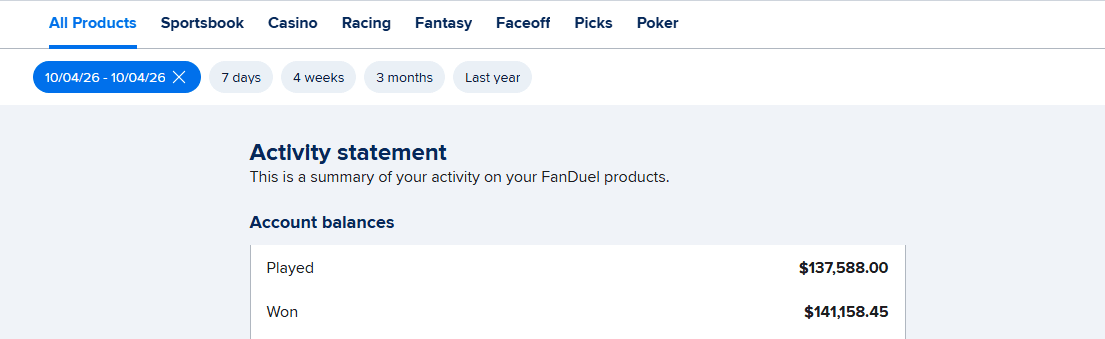
Sports Betting TikTok is the live betting account behind The Best Bet on Sports, covering NFL, NCAAF, NBA, NCAAB, MLB and WNBA markets in real time. The account has been limited on all six major U.S. sportsbooks — FanDuel, DraftKings, Caesars, BetMGM, Fanatics and ESPN BET — for winning on live betting, with $367,520 in verified profit since 2005. View full profile →
Past results do not guarantee future performance. Must be 21 or older to wager.
Related Articles
NCAAB Betting Lessons from March Madness 2026 - What Smart Bettors Learned
College Basketball Handicapping Strategies: KenPom, March Madness, and Beyond
College Basketball Picks Today: How to Bet NCAAB Games Successfully
Divisional Underdog Parlays: 11 Years of Real Results
Lamar Jackson's Ankle and the 9-Point Ravens Swing
NFL Referee Over/Under Trends, Tested on 11 Seasons
Get real live betting picks
From $39.95/mo · Cancel anytime · Email + Discord delivery
● Get The Picks
Choose your package
Tap any tier below to select · Subscribe in one tap
👇 Tap any package to select it
✓ You're selecting
25 Units · $99.95/month
25 unit picks per month. Sweet spot for most bettors — plenty of action without going all-in.
- ✓25 live betting selections/month
- ✓Email + Discord delivery
- ✓All sports (NFL, NCAAF, NBA, NCAAB, MLB)
- ✓Mix of 1, 2, 3, 5-unit rated plays
- ✓Cancel anytime
Secure PayPal · Cancel anytime · No hidden fees · 21+ · +$367K verified
+$367,520 verified · Limited on 6 sportsbooks · 20 years documented · See Proof
Join Our Newsletter
Get free expert sports picks and analysis delivered weekly.