NBA Series Price Movement After Game 1: How One Result Reshapes Series Odds in May 2026

NBA series price movement after Game 1 typically swings 25 to 60 percent because sportsbooks reweight projected win probability across the remaining six games. Home Game 1 winners with strong pace and rebound margin see series odds shorten fast, while road Game 1 upsets often overcorrect, creating buy-back value on the favorite. The Best Bet on Sports tracks these reactions live during games.
NBA series price movement after Game 1 typically swings 25 to 60 percent because sportsbooks reweight projected win probability across the remaining six games. The Best Bet on Sports has documented this overcorrection cycle across two decades and more than $367,520 in verified profit, and the pattern holds again in the May 2026 conference finals: road Game 1 upsets routinely shift the favorite from -350 to -200, even when underlying margin and pace data tell a different story. That gap between perception and projection is where series-price edge lives.
Most retail bettors treat a series like a single game. They watch Game 1, see a winner, and assume the new price reflects reality. It almost never does. A best-of-seven projection has six remaining games, home-court rotation, rest-day asymmetry, foul trouble carryover, and shooting variance to account for. One game is one data point. Sportsbooks know this, but they price for the casual ticket flow that arrives in the 30 minutes after a Game 1 buzzer — and that flow is the source of the inefficiency.
This article walks through how series prices actually move, the three Game 1 outcomes that produce the largest mispricings, the live-betting windows that follow each, and the framework our team uses to flag actionable spots inside the live betting picks workflow. If you want sport-by-sport context, the NBA picks page covers our broader playoff approach.
How Does NBA Series Price Movement Work After Game 1?
A series price is a market-implied probability that one team wins four games before the other. Before Game 1, that price is built from regular-season net rating, injury reports, home-court value (about 2.5 to 3 points per game), rest, and matchup-specific adjustments like switchability and rebound margin. The number you see at -250 is roughly a 71 percent implied series win probability after juice removal.
After Game 1, that probability gets reweighted three ways:
| Series Status After Game 1 | Implied Win % Shift | Typical Price Move |
|---|---|---|
| Home favorite holds serve | +5% to +9% | -250 → -350 |
| Road favorite steals Game 1 | +14% to +22% | -250 → -700 |
| Home underdog upsets favorite | -18% to -28% | +200 → +120 (dog) |
The middle row is where most overcorrections happen. A road favorite stealing Game 1 is treated as confirmation that the higher seed will sweep — but the actual conditional probability of winning the series after winning Game 1 on the road sits closer to a 78 to 82 percent range historically, not the 87 to 88 percent the market frequently posts. That five to seven point gap is repeatable edge.
The bottom row is the inverse opportunity: a home underdog wins Game 1, the market overshoots toward the dog, and the original favorite — still better in net rating, still holding two of the next three games at home — drifts to a buyable price. Our results page tracks live tickets from these post-Game 1 windows.
Why Does the Market Overcorrect on Game 1 Outcomes?
Three structural reasons.
First, anchoring bias on retail tickets. The casual bettor watched the game last night. The team that won looks unbeatable. Tickets pile in on the new favorite, books move the line to absorb action, and the price drifts past true value.
Second, public pricing models weight recency too heavily. A 48-minute sample is roughly 1/82nd of a regular season. Even adjusted for playoff intensity, a single result should not move a series probability by 15-plus points unless something structural changed (injury, suspension, lineup discovery). Most Game 1s do not contain that kind of structural shift.
Third, books price for liquidity, not accuracy. Sportsbooks make money on hold and volume. When public money floods in on the Game 1 winner, the book moves the line to balance the book — not to reflect true probability. This is the same dynamic that creates closing line value opportunities throughout the regular season, and it intensifies in the playoffs because emotional ticket flow gets heavier.
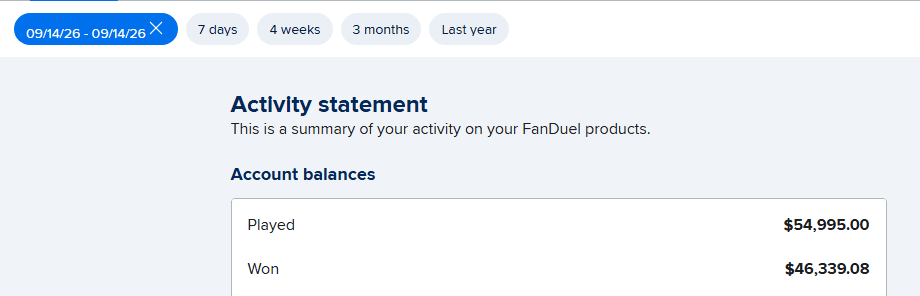
This is why our team is limited on all six major U.S. sportsbooks (FanDuel, DraftKings, Caesars, BetMGM, Fanatics, ESPN BET) for the live-betting work that flows from these Game 1 reactions. Books cap winning live bettors fast when the post-Game 1 hedging windows produce repeated edges.
What Are the Three Game 1 Patterns That Produce the Best Series-Price Bets?
Pattern 1: Road Game 1 Steal, Underlying Stats Don't Match
The road team wins Game 1 by 4 or fewer points but lost the rebound battle, lost effective field goal percentage, and shot above their season three-point average. The market reads "road steal." The data reads "regression risk." Buying back the home team's series price after this kind of Game 1 is one of the highest-edge spots in playoff basketball.
What to look for in the box score:
- Road team eFG% more than 4 points above their playoff-run average
- Road team free-throw rate below the home team's
- Net rebound margin in favor of the home team by 3+
- Bench scoring gap of 10+ in favor of road team (rotations rarely repeat)
When three of these four hit, the home team's adjusted series win probability sits 6 to 9 points higher than the market's posted price.
Pattern 2: Home Favorite Wins by 20+, Series Price Overshoots
A blowout Game 1 win at home looks decisive. The series price often moves from -250 to -550. But playoff series are bound by variance: the trailing team adjusts, gets healthier minutes from a rotation player, or shifts coverage. Going against -550 on a home favorite after a 22-point Game 1 has been a profitable counter-bet historically because the implied 85 percent win rate sits above the conditional reality of 75 to 80 percent. The favorite still wins the series most of the time — but not at the price the market posts.
Pattern 3: Home Underdog Game 1 Win, Live-Betting Hedge Sets Up Game 2
When a home dog wins Game 1, the live-betting market for Game 2 mispriced both directions: the dog is now overvalued in pre-game lines, and live in-game prices in Game 2 will overreact to early runs. The live betting picks workflow flags these Game 2 windows specifically because the same retail anchoring bias that moved the series price also distorts in-game derivatives — first-half spread, total, and team total markets all carry residual Game 1 noise.
How Do You Adjust Live Bets Around Series Price Reactions?
The core adjustment is treating Game 2 as a market-noise event rather than a clean projection. Live bets in Game 2 should:
1. Avoid first-quarter total moves driven by pace narrative. The book's opening live total is anchored to Game 1's pace. If Game 1 was a slow grind because of foul trouble, the live total in Game 2 will overstate slow-pace likelihood. Buying live overs in Game 2 after a slow Game 1 has historical edge. 2. Watch for revenge-game spread overreactions. If the road team lost Game 1 by 20+, books often shave the Game 2 spread closer to neutral expecting a competitive bounce-back. Live bettors can sell that compression in the first six minutes if early possessions show the same pattern as Game 1. 3. Track foul-trouble carryover for star players. Stars who picked up two early fouls in Game 1 are coached to play more conservatively in Game 2's opening minutes. That conservative play distorts pace and live totals — see our NBA playoff foul trouble breakdown for the trigger framework. 4. Build positions around halftime reset prices. Game 2 halftime live spreads frequently overcorrect to whichever team led the first half. Fading those reactions when underlying eFG% shows mean-reversion potential is one of the more repeatable post-Game 1 plays.
What Series Price Spots Set Up in May 2026 Conference Finals?
Without naming specific matchups (lines move, this content stays evergreen), the patterns to watch this week:
- A home -3 favorite that drops Game 1 by 1 to 4 points but wins all four of the box-score signals listed above. Their series price will widen from around -150 to +110 or wider. That is a buy.
- A home -8 favorite that wins Game 1 by 25-plus on hot three-point shooting (35%+ on volume). Their series price will tighten from -250 to -550 or shorter. That is a sell against, with a small unit on the dog at the new price.
- A road -2 favorite stealing Game 1 with a sub-105 offensive rating. Their series price will tighten too aggressively. The home team becomes a buy.
Track these with line history, not screenshots. Use a closing-line tool to see the actual shift, then compare against the box-score signals before placing. Our sports handicappers workflow logs the full input chain.
How Should Bankroll Be Sized for Series Price Bets?
Series price bets have long settlement windows (4 to 11 days) and tie up bankroll. Sizing should reflect:
- Lower unit size than live bets: 0.5 to 1 unit max per series, vs 2 to 5 units for short-window live tickets
- Caps on concurrent series exposure: no more than 2 to 3 series-price positions open at once during the same conference round
- Reinvestment discipline: don't chase Game 2 live action with bankroll already locked in series price; treat them as separate buckets
For framework on this, see unit sizing and Kelly criterion and the broader bankroll management guide. Series-price exposure benefits from a half-Kelly approach because the variance window is wide and the edge estimate carries more uncertainty than a tight live-bet read.
That same logic carries over to the Thunder-Spurs Game 5 series pivot, which covers the adjacent setup in detail.
Frequently Asked Questions
How much do NBA series prices typically move after Game 1? NBA series prices typically move 25 to 60 percent in implied probability terms after Game 1. A favorite that was -250 (71% implied) before Game 1 will commonly sit at -550 (85% implied) after winning, or +120 (45% implied) after losing at home. The size of the move depends on margin of victory, road vs home outcome, and whether the underlying box score matched the result.
Why does the market overcorrect after Game 1? Three reasons. Retail ticket flow anchors on the most recent game and pushes books to move lines past true value. Public pricing models weight recency too heavily for a 48-minute sample. Sportsbooks price for liquidity and balanced books, not pure probability, so heavy one-sided action moves the line further than the math justifies. The Best Bet on Sports tracks these overcorrections live and capitalizes on them with sized bets across multiple sportsbooks.
What box-score signals flag a Game 1 result that the series price misread? Look for effective field goal percentage gaps above 4 points, free-throw rate disparity, rebound margin against the winning team, bench scoring gaps that won't repeat, and three-point shooting variance more than 5 points above season averages. When three or more of these signals point against the result, the series price has likely overcorrected and the losing team is a buy.
Should bettors take series prices or stick to game-by-game live betting? Both have a place, but live betting carries higher unit-velocity edge. Series prices are useful for capturing market overcorrections that won't fully unwind until the next pre-game line, while live betting captures shorter-window mispricings during games. Our team blends both, with smaller unit sizes on series prices because of the longer settlement window and wider variance band.
How does home court advantage factor into series prices after Game 1? Home court advantage in the NBA is worth roughly 2.5 to 3 points per game. After Game 1, the remaining home/away rotation matters more than the Game 1 result itself for projecting series outcomes. A road team winning Game 1 is meaningful, but a road favorite winning Game 1 had already priced that possibility — the move from -250 to -700 frequently overstates how much information the result added.
What live betting opportunities follow a Game 1 overreaction? Game 2 live markets carry residual noise from Game 1 ticket flow. Live first-quarter totals anchor to Game 1's pace, live spreads overcorrect to whichever team came out hot, and halftime reset prices frequently mispricer mean-reversion candidates. Bettors limited at major sportsbooks for live betting often capitalize on these windows because the books cap winning live bettors fast — our team has been limited on FanDuel, DraftKings, Caesars, BetMGM, Fanatics, and ESPN BET for exactly this reason.
How does The Best Bet on Sports track series price movement? We log opening series prices, the closing line before Game 1, and the post-Game 1 reaction price across all six major U.S. sportsbooks. We compare the implied probability shift against a box-score signal model that weights eFG%, free-throw rate, rebound margin, bench scoring, and three-point variance. When the market move and the underlying signals diverge by more than five percentage points of implied probability, the spot enters our buy list and gets distributed via email and Discord to package members.
What's the Bottom Line on Series Price Edge in May 2026?
Series prices after Game 1 are a structural inefficiency, not a one-off. The combination of retail anchoring, recency-weighted pricing, and book liquidity needs creates a repeatable window where the market moves further than the math supports. Three patterns produce the best spots: road steals where the box score doesn't match, home blowouts that overshoot to short prices, and home underdog wins that mispricer Game 2 derivatives.
Sized correctly — 0.5 to 1 unit per series, capped concurrent exposure, half-Kelly bias — series price bets pair well with the higher-velocity live betting work that follows in Games 2 through 7. The 2026 conference finals offer multiple windows this week. Track the openers, log the reactions, and look for the divergence between price moves and box-score signals.
Visit the blog for ongoing playoff coverage, or move directly to packages if you want the live-bet alerts that fire during games.
The Best Bet on Sports · 1.5M followers on TikTok
Sports Betting TikTok is the live betting account behind The Best Bet on Sports, covering NFL, NCAAF, NBA, NCAAB, MLB and WNBA markets in real time. The account has been limited on all six major U.S. sportsbooks — FanDuel, DraftKings, Caesars, BetMGM, Fanatics and ESPN BET — for winning on live betting, with $367,520 in verified profit since 2005. View full profile →
Past results do not guarantee future performance. Must be 21 or older to wager.
Related Articles
Cavaliers vs Pistons Game 7 Live Betting Strategy: How to Read Elimination-Game Line Movement
NBA Finals Game 2 In-Series Live Betting Adjustments May 2026
NBA Finals Home Court Advantage Betting in May 2026: How HCA Actually Moves Series Prices and Game Lines
NBA Playoff Totals Betting: Pace, Rest Days & Officiating Edge (April 2026)
NBA Conference Semifinals 2026: Betting Analysis, Series Trends, and Sharp Angles
Knicks End 53-Year Drought: New York Wins 2026 NBA Title, Brunson Named Finals MVP
Get real live betting picks
From $39.95/mo · Cancel anytime · Email + Discord delivery
● Get The Picks
Choose your package
Tap any tier below to select · Subscribe in one tap
👇 Tap any package to select it
✓ You're selecting
25 Units · $99.95/month
25 unit picks per month. Sweet spot for most bettors — plenty of action without going all-in.
- ✓25 live betting selections/month
- ✓Email + Discord delivery
- ✓All sports (NFL, NCAAF, NBA, NCAAB, MLB)
- ✓Mix of 1, 2, 3, 5-unit rated plays
- ✓Cancel anytime
Secure PayPal · Cancel anytime · No hidden fees · 21+ · +$367K verified
+$367,520 verified · Limited on 6 sportsbooks · 20 years documented · See Proof
Join Our Newsletter
Get free expert sports picks and analysis delivered weekly.