NFL Explosive Plays: Do Big-Play Offenses Cover?

NFL explosive plays win games but don't repeat well. From 2016-2025, the team with more 20-yard plays won 64.42% of the time, yet a team's big-play rate over its first 8 games predicted the rest of its season at only 0.379, below base efficiency at 0.524. Offenses with no big plays and poor efficiency covered 46.03%.
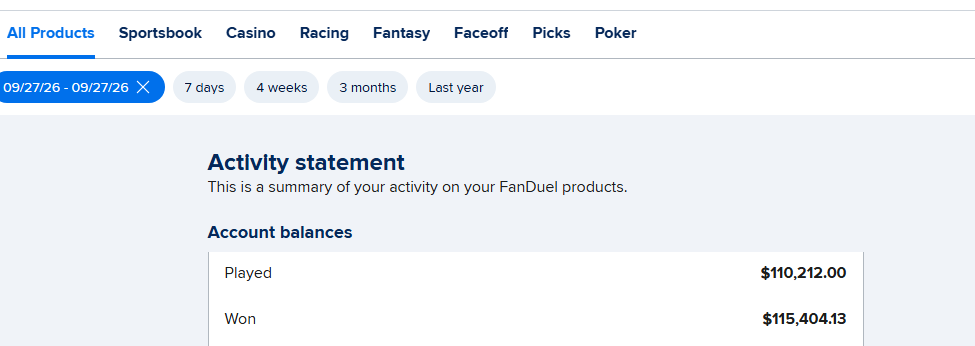
NFL explosive plays win games, but they don't repeat well. From 2016 through 2025, the team with more 20-yard gains won 64.42% of the time. Yet a team's big-play rate over its first eight games predicted its rate the rest of the year at a correlation of only 0.379, weaker than its yards per play on every other snap (0.524). On defense, big plays allowed carried over at just 0.187. Ranked by big-play rate alone, teams covered 48.24% to 51.86%. The one group that lost reliably was offenses with few big plays and poor efficiency, at 46.03%. The Best Bet on Sports has a verified $367,520+ in profit, and finding which stats are signal and which are noise is how a handicapper earns it.
"They're a big-play offense" is one of the most common things said about an NFL team. It's also one of the most misleading. A 60-yard touchdown moves the box score more than any other single play. It also tells you less about next week than a six-yard run on second down does. We tested how much of a team's big-play profile holds up, and whether the betting market overrates it.
How We Built the Study
We used nflverse play-by-play for every regular-season game from 2016 through 2025, plus the 2026 season through Thanksgiving. We counted every run and pass on a scrimmage down (scrambles and sacks included as pass plays) and marked an "explosive play" as any gain of 20 yards or more. That's the most common cutoff in the industry, and it applies to runs and passes the same way.
For each team, we also computed its "base" efficiency: yards per play on every snap that didn't go for 20 or more. That separates the two things a good offense does. It moves the chains on normal downs, and it occasionally breaks one.
For persistence, we split each of the 320 team-seasons into the first eight weeks and the rest. For the betting test, we used each team's rates entering each game, from Week 7 on, against the closing spread. Pushes are excluded.
How Much Do Explosive Plays Matter in a Single Game?
A lot. Across the decade, 5.94% of scrimmage plays went for 20 or more yards, about 3.7 per team per game. Those plays produced 32.8% of all yards. Passes accounted for 82.4% of them.
In games where one team had more explosive plays than the other, that team won 64.42% of the time, across 4,430 team-games. That's why the stat gets so much airtime. Look at any final score and the team with the long touchdowns usually won.
The problem is the jump from "this won the game" to "this will win the next one." The rate is also flat over time: 5.90% in 2016, 6.40% in 2018, 5.77% in 2025 and 5.76% in 2026. League-wide, big plays didn't disappear. They just don't stay with the same teams.
Is an NFL Team's Explosive Play Rate Real Skill?
Partly, and less than the rest of its offense. Here's how well each first-half stat predicted the same stat in the second half of the season.
| Stat (First 8 Weeks → Rest of Season) | Correlation |
|---|---|
| Offense: base yards per play (non-explosive snaps) | 0.524 |
| Offense: yards per play, all snaps | 0.496 |
| Offense: explosive play rate | 0.379 |
| Defense: base yards per play allowed | 0.418 |
| Defense: yards per play allowed, all snaps | 0.369 |
| Defense: explosive play rate allowed | 0.187 |
The mundane stat wins. A team's yards per play on its ordinary snaps carries over better than anything else on the list. Explosive rate is real, but it's about as stable as third-down rate, which we found at 0.364 in our third-down conversion rate study.
On defense, big plays allowed barely carry over at all. A secondary that gave up six 40-yard passes in September is almost as likely to be average in December as bad. One blown coverage, one missed tackle at the second level, and the stat jumps. That's why it doesn't hold.
The quartiles show how fast it pulls back to the middle.
| Offense Big-Play Rate, First 8 Weeks | First 8 Weeks | Rest of Season |
|---|---|---|
| Top quarter | 7.67% | 6.53% |
| Second quarter | 6.51% | 6.12% |
| Third quarter | 5.66% | 5.63% |
| Bottom quarter | 4.42% | 5.16% |
The top quarter gave back more than a full point. The bottom quarter gained most of a point. Defenses did the same, and faster: the worst quarter of defenses allowed 7.68% explosive plays over the first half and 6.26% after it, almost exactly league average.
Year to year, the gap widens. A team's explosive rate in one season predicted the next at 0.244. Yards per play held at 0.384.
Do Big-Play Offenses Beat the Spread?
Barely. We sorted every team-game from Week 7 on by the team's entering explosive rate.
| Entering Big-Play Rate | ATS Record % | Games | Average Line |
|---|---|---|---|
| Top quarter (about 7.6%) | 51.86% | 833 | Favored by 2.5 |
| Third quarter | 49.64% | 830 | Favored by 0.9 |
| Second quarter | 50.24% | 840 | Getting 0.6 |
| Bottom quarter (about 4.5%) | 48.24% | 825 | Getting 2.8 |
The market moves the line about five points from the top quarter to the bottom, and it gets almost all of it right. The top group covered 51.86%, which is within normal variance for 833 games. The net version, offense explosive rate minus defense explosive rate allowed, was flatter still. All four quarters landed between 48.98% and 50.79%.
So the answer to "should I bet big-play teams" is no, not on that alone. Oddsmakers have seen the highlights too.
Which Kind of Offense Actually Covered?
The split that mattered was combining the two halves of an offense. We crossed the entering explosive rate with entering base efficiency (above or below that season's median).
| Offense Type (Entering, Week 7+) | ATS | Record | Average Line |
|---|---|---|---|
| Few big plays, efficient base | 53.12% | 153-135 | Pick'em |
| Many big plays, efficient base | 52.53% | 301-272 | Favored by 3.9 |
| Many big plays, poor base | 52.06% | 139-128 | Pick'em |
| Few big plays, poor base | 46.03% | 249-292 | Getting 3.9 |
The losing group is the clear one. Offenses that couldn't break big plays and couldn't move the ball on normal downs either covered just 46.03% over 541 games, even after getting nearly four points on average. The market discounts those teams, but not by enough.
The other three groups all ran above 52%, but none of them holds up cleanly by era. The "many big plays, efficient base" group covered 55.40% from 2016 to 2019, then 50.88% and 50.79% in the two periods after. The boom-or-bust group swung from 53.40% to 48.31% and back to 54.67%. Treat those as leans, not rules.
The "few big plays, efficient base" result is the one that fits the story. These are the offenses the box score undersells, teams that grind out six yards at a time and rarely produce a highlight. Their 53.12% over 288 games is a modest sample, but it points the same way as the persistence numbers. The steady part of an offense is the part that lasts.
Which 2026 Offenses Fit Each Profile?
Here's how the league looks through Thanksgiving, using 2026 play-by-play. League-wide explosive rate is 5.76% and the median base efficiency is 3.81 yards per play.
| Team | Explosive Rate | Rank | Base YPP | Rank | Profile |
|---|---|---|---|---|---|
| Green Bay | 7.68% | 1 | 3.32 | 31 | Boom or bust |
| San Francisco | 7.27% | 2 | 4.83 | 1 | Complete |
| Jacksonville | 7.17% | 4 | 4.21 | 7 | Complete |
| Kansas City | 6.31% | 10 | 4.49 | 5 | Complete |
| Cincinnati | 5.81% | 16 | 4.74 | 2 | Efficient, middle big-play |
| L.A. Rams | 5.03% | 24 | 4.52 | 4 | Efficient grinder |
| Philadelphia | 4.66% | 27 | 3.28 | 32 | Few big plays, poor base |
| Denver | 4.48% | 30 | 3.69 | 20 | Few big plays, poor base |
| New Orleans | 4.26% | 31 | 3.64 | 23 | Few big plays, poor base |
| Arizona | 3.92% | 32 | 3.67 | 21 | Few big plays, poor base |
Green Bay is the extreme case. The Packers lead the league in 20-yard plays and rank 31st in yards per play on everything else. Their offense depends on the long gains, and the long gains are the part of the stat that doesn't hold. The Rams are the opposite: 24th in big plays, fourth in base efficiency.
Philadelphia is the reminder that a profile isn't a pick. The Eagles sit in the weakest bucket by these numbers and won outright as 8.5-point underdogs in Dallas on Thanksgiving. Profiles move a probability a few points. They don't call a game.
What Should Bettors Take From This?
Explosive plays are the most visible stat in football and one of the least repeatable. For betting, that leads to four takeaways:
1. Don't pay for highlights. A team that leads the league in big plays is usually priced as if that continues. It mostly doesn't. 2. Trust base efficiency more. Yards per play on ordinary snaps carried over at 0.524, the best of anything we tested. 3. Ignore big plays allowed in small samples. A defense's explosive rate allowed carried over at 0.187. One bad September game shouldn't drive a December number. 4. Fade offenses that have neither. Teams with few big plays and poor base efficiency covered 46.03%, the one result here big enough to matter.
This is the kind of filtering our NFL picks against the spread go through each week, and it's why NFL expert picks have to start from the stats that repeat, not the ones on the highlight reel. If you'd rather have that work done for you, a sports handicapping service is the shortcut, and our football handicappers page explains how we approach the weekly card. You can also follow our NFL picks for the full slate.
Get Tonight's Live Picks
Want live in-game NFL picks against the spread sent to your phone during Sunday's games, built for the moments when one long play moves the price more than it should?
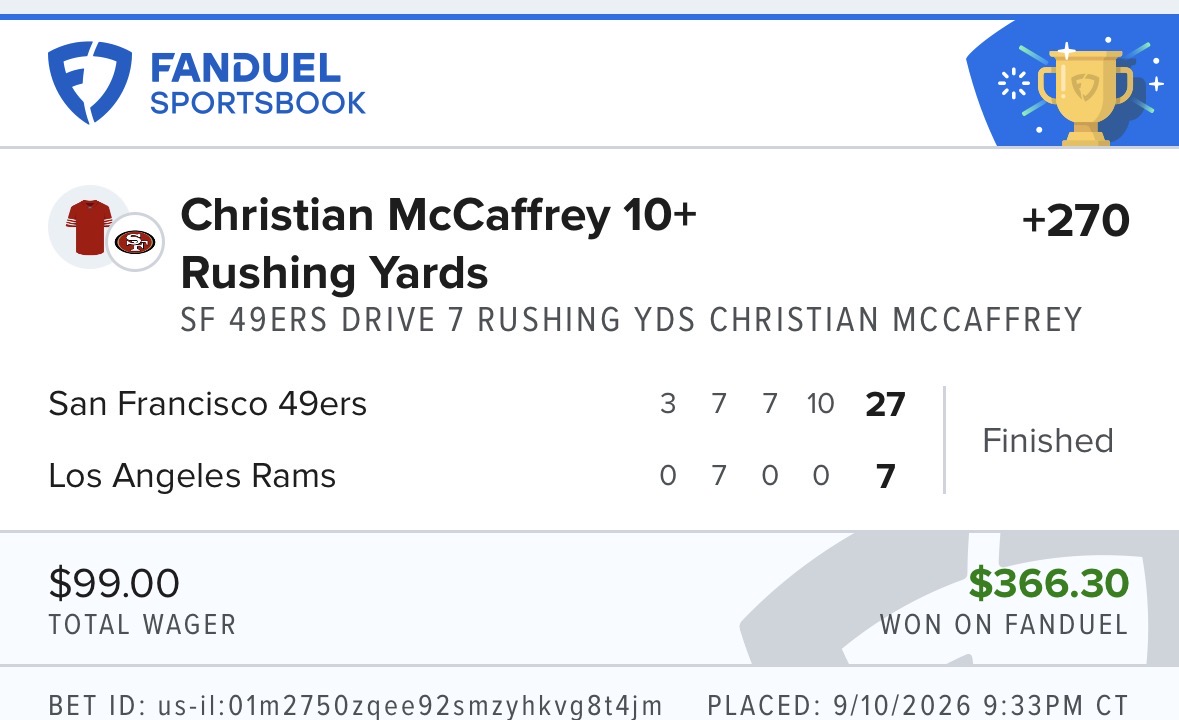
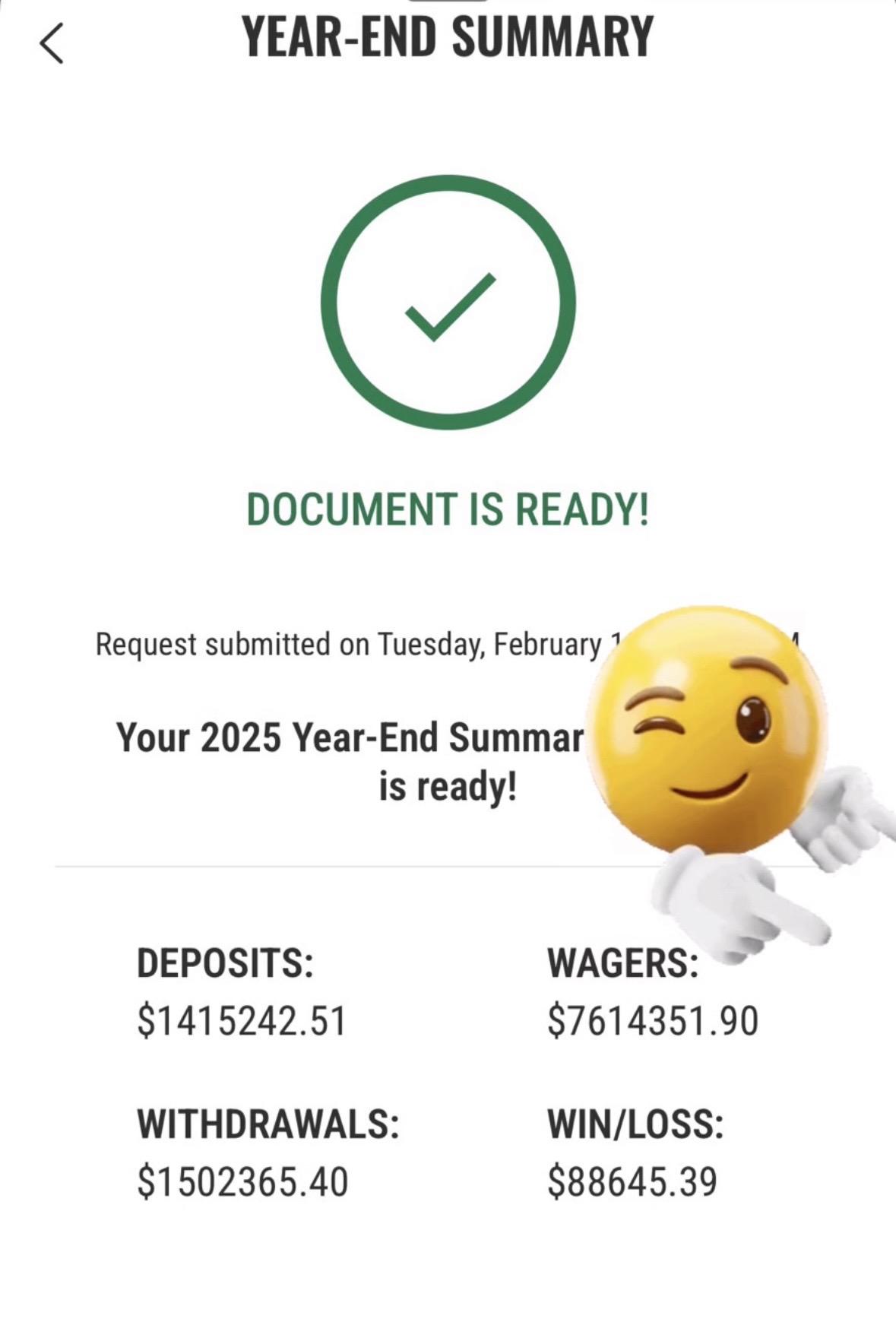
The Best Bet on Sports is the only live betting handicapping service limited on all six major U.S. sportsbooks (FanDuel, DraftKings, Caesars, BetMGM, Fanatics, ESPN BET) for winning too much during in-game action. Verified profit: $367,520+. Live calls go out through Email and Discord during games, and every bet in the $10,000 to $100,000 challenge is posted as it happens.
→ Join The Best Bet on Sports community — newsletter, live stream and Discord → Try a free live pick first — reserve your spot for tonight's pick
Frequently Asked Questions
What counts as an explosive play in the NFL?
The most common definition, and the one we used, is any run or pass that gains 20 or more yards. From 2016 through 2025, 5.94% of NFL scrimmage plays met that bar, about 3.7 per team per game. Those plays produced 32.8% of all yards, and 82.4% of them were passes.
Does the team with more explosive plays usually win?
Yes. In games where one team had more 20-yard plays than the other, that team won 64.42% of the time across 4,430 team-games from 2016 through 2025. That's why the stat gets so much attention. It explains past results well. It predicts future ones much less well.
Is a team's explosive play rate consistent during a season?
Only partly. A team's explosive rate over its first eight games predicted its rate the rest of the season at a correlation of 0.379. Its yards per play on non-explosive snaps carried over at 0.524. Top-quarter big-play offenses fell from 7.67% to 6.53%, and bottom-quarter offenses rose from 4.42% to 5.16%.
Do defenses that give up big plays keep giving them up?
Not reliably. A defense's explosive play rate allowed over its first eight games predicted the rest of its season at a correlation of only 0.187. The worst quarter of defenses allowed 7.68% explosive plays in the first half of the season and 6.26% afterward, close to league average. Base yards per play allowed held up better, at 0.418.
Should you bet on NFL teams with a lot of big plays?
Not on that alone. From Week 7 on, teams in the top quarter of entering explosive rate covered 51.86%, and teams in the bottom quarter covered 48.24%, both within normal variance. The spread already moves about five points between those groups. The net version, offensive explosives minus defensive explosives allowed, was flat at 48.98% to 50.79%.
Which NFL offenses cover the spread least often?
Offenses with few explosive plays and below-median efficiency on ordinary snaps. Entering games from Week 7 on, they covered just 46.03% from 2016 through 2025, a 249-292 record, while getting nearly four points on average. Offenses with few big plays but strong base efficiency covered 53.12%, 153-135.
How do handicappers use explosive play data?
Mostly as a warning about what not to overrate. Because explosive plays swing single games but carry over weakly, a good handicapper leans on base efficiency and discounts teams whose results come mostly from long gains. In live betting, it also means spotting when one long play has moved the line more than the rest of the game justifies.
The Best Bet on Sports · 1.5M followers on TikTok
Sports Betting TikTok is the live betting account behind The Best Bet on Sports, covering NFL, NCAAF, NBA, NCAAB, MLB and WNBA markets in real time. The account has been limited on all six major U.S. sportsbooks — FanDuel, DraftKings, Caesars, BetMGM, Fanatics and ESPN BET — for winning on live betting, with $367,520 in verified profit since 2005. View full profile →
Past results do not guarantee future performance. Must be 21 or older to wager.
Related Articles
NFL Third-Down Conversion Rate: Real Skill or Noise?
Do the NFL's Most-Penalized Teams Cover the Spread?
NFL Red Zone TD Rate vs the Spread: The Regression Is Priced In
NFL Picks Against the Spread When a Starting QB Returns
Fade the Second Road Game? ATS Test
Buy Teams After a Turnover Disaster? ATS Tested
Get real live betting picks
From $39.95/mo · Cancel anytime · Email + Discord delivery
● Get The Picks
Choose your package
Tap any tier below to select · Subscribe in one tap
👇 Tap any package to select it
✓ You're selecting
25 Units · $99.95/month
25 unit picks per month. Sweet spot for most bettors — plenty of action without going all-in.
- ✓25 live betting selections/month
- ✓Email + Discord delivery
- ✓All sports (NFL, NCAAF, NBA, NCAAB, MLB)
- ✓Mix of 1, 2, 3, 5-unit rated plays
- ✓Cancel anytime
Secure PayPal · Cancel anytime · No hidden fees · 21+ · +$367K verified
+$367,520 verified · Limited on 6 sportsbooks · 20 years documented · See Proof
Join Our Newsletter
Get free expert sports picks and analysis delivered weekly.