Fade the Second Road Game? ATS Test

Fading NFL teams on their second straight road game has not beaten the spread. From 2015 through 2025, teams playing a second consecutive road game covered 49.39 percent of 757 games, so betting against them won 50.61 percent, below the 52.38 percent break-even at standard juice. The gap existed from 2015 to 2019 and disappeared from 2020 on.
Fading NFL teams on their second straight road game is a classic situational angle, and eleven seasons of closing-line data say it has not made money. From 2015 through 2025, teams playing a second consecutive road game covered 49.39 percent of 757 games against the closing spread. Betting against them would have won 50.61 percent, short of the 52.38 percent needed to break even at -110. The gap that made the angle popular showed up from 2015 through 2019 and was gone by 2020. The Best Bet on Sports has built a verified $367,520+ in profit across all sportsbooks over more than twenty years by testing angles like this before trusting them.
The theory is easy to like. Travel wears teams down. A second week living out of a hotel means less practice time at home, more time on planes, and a locker room that has not slept in its own beds for two weeks. The home team, meanwhile, is rested and comfortable.
Every part of that story is plausible. The question that matters for anyone who buys or follows NFL picks is whether the closing spread already accounts for it.
How Was the Study Built?
We used the public nflverse game file, which records every regular-season game with its closing point spread, the location, and the final score. The sample covers the 2015 through 2025 regular seasons, measured from each team's own schedule.
A team's road streak counts consecutive road games in the same season:
- Road game 1: a road game after a home game, a neutral-site game, or the season opener.
- Road game 2: a road game immediately after another road game.
- Road game 3 or more: the rare third straight road game.
Two rules matter. A bye week does not break the streak, because the team's previous game was still on the road. And international or other neutral-site games count as neither home nor road, so they reset the streak.
Covers were measured against the closing spread. Pushes were recorded but left out of the cover rate. Plausible ranges come from a 2,000-sample bootstrap of the games in each group.
Do NFL Teams Cover Their Second Straight Road Game?
Not at a rate anyone can bet.
| Situation | Record against the spread | Cover rate | Plausible range | Return at -110 |
|---|---|---|---|---|
| Every road team | 1,422-1,351-73 | 51.28% | 49.4% to 53.2% | -2.10% |
| Road game 1 | 1,039-956-54 | 52.08% | 49.9% to 54.3% | -0.57% |
| Road game 2 | 365-374-18 | 49.39% | 45.9% to 52.9% | -5.71% |
| Road game 3 or more | 18-21-1 | 46.15% | 30.8% to 61.5% | -11.89% |
The direction matches the theory. Teams on their first road game covered a little more often than teams on their second. But look at the size of the gap and the size of the ranges.
The fade, betting against every team on its second straight road game, would have gone 374-365, a 50.61 percent cover rate. That loses money at standard juice. The third-road-game spot looks worse for the traveling team, but it happened only 40 times in eleven seasons, and its plausible range runs from 31 to 62 percent. That is not a finding. That is a coin with too few flips.
The average result tells the same story. Against the closing spread, teams on their first road game finished 0.24 points better than the number on average. Teams on their second road game finished 0.51 points worse. Less than a point of difference, on a game where the standard deviation of the final margin against the spread is around two touchdowns.
Does the Market Adjust for the Road Trip?
Barely, and it does not need to. The average closing spread for teams on their first road game was 1.85 points as an underdog. For teams on their second road game, it was 1.78. The market priced both groups almost identically, and the results came out almost identical.
That is exactly what an efficient line looks like. If a second road game cost teams a full point of performance, sharp bettors would have hammered it until the number moved. The fact that both the price and the result are nearly flat suggests the effect is small, and whatever is left is already in the line.
Is It Different for Favorites and Underdogs?
This is where a lot of situational trends get sold, so we checked.
| Team on 2nd or 3rd straight road game | Record against the spread | Cover rate | Plausible range |
|---|---|---|---|
| As a road underdog | 241-236-11 | 50.52% | 45.9% to 55.1% |
| As a road favorite | 141-157-8 | 47.32% | 41.6% to 53.0% |
Road favorites on the back half of a trip covered 47.32 percent. Fading them would have hit 52.68 percent across 298 decisions. That number sits barely above break-even, and the range around it stretches from roughly 47 to 58 percent. It is also one of several splits we ran, which means the best-looking one is expected to look better than it really is. We would not bet it and would not sell it.
Underdogs on the second road game covered 50.52 percent. Nothing there either.
Do Teams Coming Home Cover After a Long Trip?
The flip side of the road-trip theory is the homecoming bounce: a team returning from two straight road games should be refreshed and motivated at home. The data says no.
| Home team's previous situation | Record against the spread | Cover rate |
|---|---|---|
| Back home after 2+ straight road games | 327-353-19 | 48.09% |
| Back home after 1 road game | 551-559-30 | 49.64% |
| Second straight home game | 473-510-24 | 48.12% |
Teams returning from a long trip covered at essentially the same rate as teams that had been home all along. All three groups sit below 50 percent, which matches a broader fact about this era: NFL home teams covered just 48.72 percent from 2015 through 2025, a point our study of bye weeks and rest also found.
Did the Road Trip Angle Ever Work?
Yes, briefly. Splitting the sample by era shows where the trend came from.
| Seasons | Road game 1 cover rate | Road game 2+ cover rate |
|---|---|---|
| 2015-2019 | 53.96% (477-407-28) | 47.32% (159-177-12) |
| 2020-2025 | 50.59% (562-549-26) | 50.68% (224-218-7) |
From 2015 through 2019, there was a real-looking gap of more than six points between first and later road games. Anyone who studied this angle around 2020 would have seen it and believed it.
From 2020 on, it vanished. Teams on their second road game covered 50.68 percent, a hair better than teams on their first. The 2020 season, played largely without fans, is part of that window, but the gap did not come back afterward either.
The season-by-season record for teams on a second or later straight road game makes the noise plain:
| Season | Record | Season | Record |
|---|---|---|---|
| 2015 | 33-40 | 2021 | 37-35 |
| 2016 | 33-35 | 2022 | 38-33 |
| 2017 | 32-37 | 2023 | 37-36 |
| 2018 | 28-40 | 2024 | 36-43 |
| 2019 | 33-25 | 2025 | 39-39 |
| 2020 | 37-32 |
Four straight losing years for the traveling team, then a winning one, then a run of near-even seasons. That is how a short-lived pattern looks when it gets sold as a permanent rule. Our broader breakdown of NFL handicapping myths makes the same point about many other situational trends.
Through the 2026 games played so far, road teams on their first trip went 33-28-4 against the spread, and teams on a second straight road game went 11-12-1. Too small to mean anything, and consistent with the long-run picture.
Which Teams Are on a Second Straight Road Game in Week 7?
Two teams on the Week 7 board are in the spot, using the nflverse lines as of October 24:
- Cincinnati at Baltimore (Sunday): the Bengals' last game was the Week 5 trip to Miami, followed by a bye, so this counts as a second straight road game. nflverse lists Cincinnati as a 1.5-point road favorite.
- Dallas at Philadelphia (Monday night): the Cowboys played at Green Bay in Week 6. nflverse lists Dallas as a 4.5-point road favorite, with the Eagles playing without Jalen Hurts, as covered in our NFC East odds update.
Both are road favorites, the exact group that looked weakest in the split above. We are not taking a side on either game from this study. The fade-the-road-favorite number was 52.68 percent with a range that includes losing, and these two lines are driven by quarterback health, not travel. That is the point: the injury news moves these numbers by points, while the travel effect is worth a fraction of one.
To be clear about that callout: this study uses closing spreads and final scores only. It contains no in-game prices, so it cannot measure whether travel effects are easier to exploit live. The argument for working inside the game is structural reasoning, not a finding from these games.
How Should You Handicap a Team on a Long Road Trip?
Treat travel as a tiebreaker at most, and probably not even that.
1. Start with the number, not the schedule. If you cannot explain why the line is wrong without mentioning the road trip, you do not have a bet. 2. Look at what the trip actually involved. A short-week trip across three time zones is not the same as two drives up the same coast. The data here lumps them together, which is one reason the effect is so small. 3. Weight injuries and quarterback news far above travel. Both Week 7 examples prove it. 4. Distrust any trend that worked for five years and stopped. If it was real and big, the market found it.
Why This Matters If You Pay for Picks
A lot of NFL expert picks are justified with a schedule-spot sentence: "second straight road game," "letdown spot," "sandwich game." Those sentences are easy to write and almost impossible to verify from the outside.
Here is a fair test for any sports handicapping service. Ask whether the angle behind a pick has been measured against the closing line over a large sample. If the answer is a short highlight record, you are looking at the 2015-2019 version of this table, and the 2020-2025 version is coming.
The serious football handicappers we respect lead with price, then information the market has not fully priced, and treat schedule spots as context. If you are deciding whether to pay for sports picks, that is the standard to hold a service to. For the full weekly card, see our NFL picks against the spread and daily sports betting picks. The NBA calendar has even more road trips, and our basketball handicappers apply the same test to back-to-backs.
What Are the Limits of This Study?
- Closing lines only. A team's price earlier in the week may have been different. The results apply to the closing number.
- Travel is not measured directly. The study counts consecutive road games, not distance, time zones or short weeks. A finer travel measure could show a different result in a smaller group.
- Shared stadiums. The Rams and Chargers share a stadium, as do the Giants and Jets. A road game against a stadium-mate counts as a road game here even without travel.
- Multiple splits. We ran several cuts. The best-looking one, fading road favorites on a second trip, should be discounted for that reason.
- Regular season only. Playoff games were excluded.
Get Tonight's Live Picks
Want tonight's live in-game NFL picks, built on what the game is actually showing rather than a schedule trend, delivered to your phone during the game?
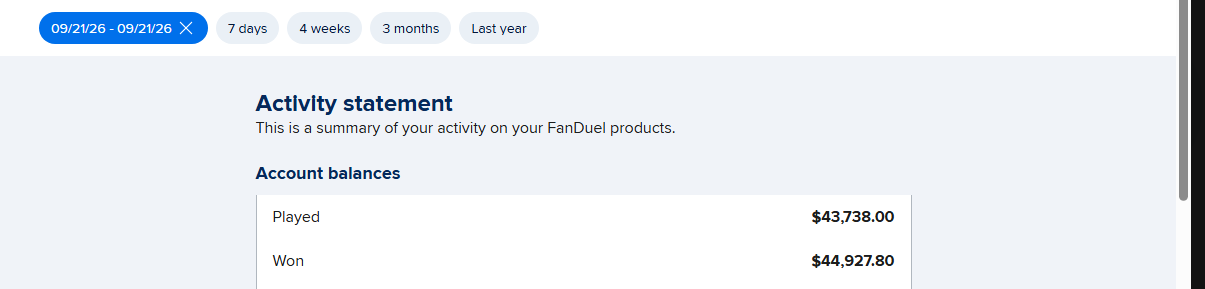
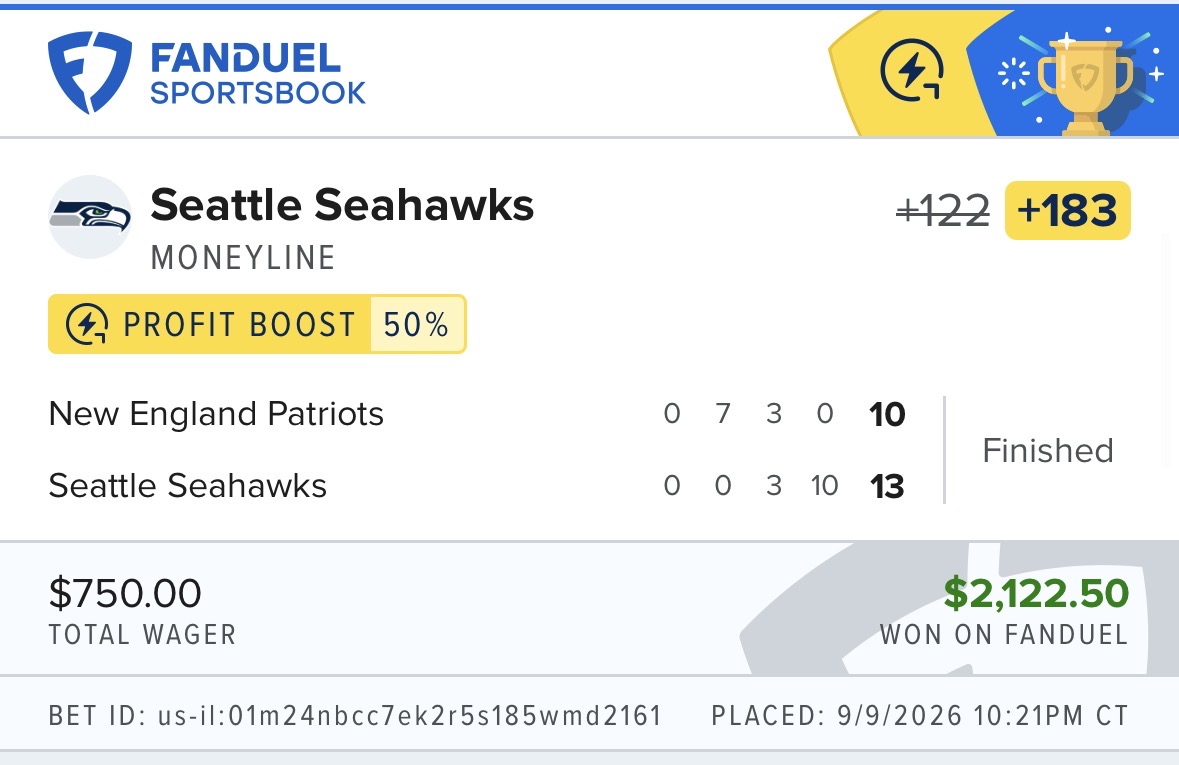
The Best Bet on Sports is the only live betting handicapping service limited on all six major U.S. sportsbooks (FanDuel, DraftKings, Caesars, BetMGM, Fanatics, ESPN BET) for winning too much during in-game action. Verified profit: $367,520+. Picks delivered via Email and Discord during games.
→ Get tonight's live picks: $199 first month — 1-Unit package, full live betting access → Try a live pick first — reserve your spot for tonight's pick
See the full record on our results page, browse this week's NFL picks, or read why bettors choose to buy sports picks from a live service.

Frequently Asked Questions
Should you bet against NFL teams on their second straight road game?
The data says no. From 2015 through 2025, teams on a second consecutive road game covered 49.39 percent of 757 games against the closing spread. Betting against them would have won 50.61 percent, below the 52.38 percent needed to break even at -110. The angle looked strong from 2015 through 2019 and disappeared from 2020 on.
Do NFL teams play worse on long road trips?
Slightly, if at all. Teams on their first road game finished 0.24 points better than the closing spread on average, while teams on their second straight road game finished 0.51 points worse. That is less than a point of difference, and the market priced both groups almost identically, so there was no bettable gap after the spread.
Does a bye week reset an NFL road trip?
In this study, no. A bye does not change the fact that a team's previous game was on the road, so a road game after a bye that followed a road game counts as a second straight road game. Neutral-site games, including international games, count as neither home nor road and reset the streak.
Are road favorites on a second straight road game a good fade?
Not reliably. Road favorites in that spot covered 47.32 percent of 306 games, so fading them would have hit 52.68 percent, barely above break-even, with a plausible range of about 47 to 58 percent. It was also one of several splits tested, which makes the best-looking result look better than it really is.
Do NFL teams cover at home after a long road trip?
No. Teams returning home after two or more straight road games covered 48.09 percent, essentially the same as teams playing a second straight home game at 48.12 percent. Home teams in general covered just 48.72 percent from 2015 through 2025, so there was no homecoming bounce to bet.
How much is travel worth to an NFL point spread?
Very little compared with injuries and quarterback news. In this sample, the difference between a first and second straight road game was less than a point against the closing spread, and it disappeared entirely after 2019. A single quarterback change can move a line by several points, which is why schedule spots work best as context, not as a reason to bet.
What should I look for in an NFL expert picks service?
Look for picks that explain why the price is wrong, not just why a team is in a good or bad spot. Ask whether any angle behind a pick has been tested against the closing line over a large sample. Situational trends that rely on short winning stretches tend to regress, as this road-trip angle did after 2019.
The Best Bet on Sports · 1.5M followers on TikTok
Sports Betting TikTok is the live betting account behind The Best Bet on Sports, covering NFL, NCAAF, NBA, NCAAB, MLB and WNBA markets in real time. The account has been limited on all six major U.S. sportsbooks — FanDuel, DraftKings, Caesars, BetMGM, Fanatics and ESPN BET — for winning on live betting, with $367,520 in verified profit since 2005. View full profile →
Past results do not guarantee future performance. Must be 21 or older to wager.
Related Articles
Buy Teams After a Turnover Disaster? ATS Tested
Should You Fade Rookie QBs Against the Spread? Tested
NFL Bounce-Back Spots After a Blowout, Tested
4-0 Against the Spread: What a Hot Start Predicts
The Bye-Week Edge, Tested on 11 NFL Seasons
Moneyline or Spread on NFL Favorites? 11 Years Tested
Get real live betting picks
From $39.95/mo · Cancel anytime · Email + Discord delivery
● Get The Picks
Choose your package
Tap any tier below to select · Subscribe in one tap
👇 Tap any package to select it
✓ You're selecting
25 Units · $99.95/month
25 unit picks per month. Sweet spot for most bettors — plenty of action without going all-in.
- ✓25 live betting selections/month
- ✓Email + Discord delivery
- ✓All sports (NFL, NCAAF, NBA, NCAAB, MLB)
- ✓Mix of 1, 2, 3, 5-unit rated plays
- ✓Cancel anytime
Secure PayPal · Cancel anytime · No hidden fees · 21+ · +$367K verified
+$367,520 verified · Limited on 6 sportsbooks · 20 years documented · See Proof
Join Our Newsletter
Get free expert sports picks and analysis delivered weekly.