Do Football Picks Get Worse Later in the Season?

A pregame football edge comes from disagreeing with a market that has limited current-season data, and that data gap closes a little every week. The same process that produces a strong September frequently produces a flat November without anything going wrong. If you are buying picks for a football season, the month a record was compiled in changes how much that record actually tells you about the service.
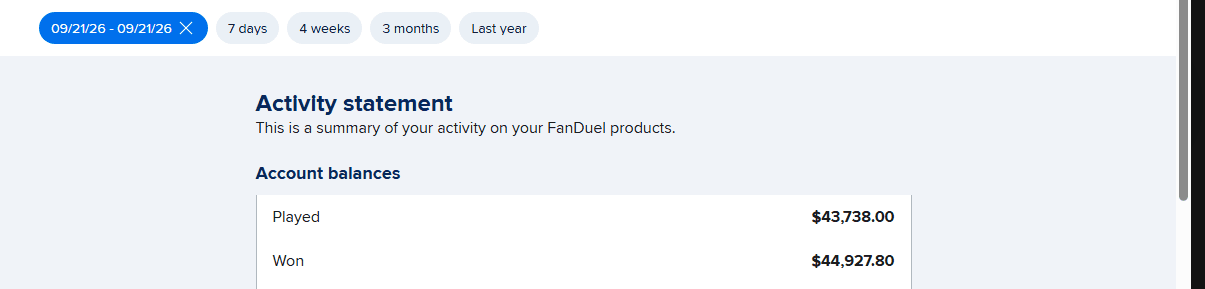
A pregame football pick is a claim that the market's number is wrong. That claim is easiest to make in September, when nobody has current-season data and the market is running on last year plus an estimate, and it gets progressively harder every week as real games accumulate and everyone's opinion converges on the same evidence. The practical consequence for anyone buying picks is uncomfortable and rarely stated: a hot September and a flat November can come from an identical process with nothing broken in between. The Best Bet on Sports has worked football markets for more than twenty years with a verified $367,520+ in profit across all sportsbooks, and the shape of that calendar is the single most misread thing in the pick-buying business.
This is not an argument that late-season football is unbeatable. It is an argument about what a record means depending on when it was compiled, which is a different and more useful question than the one most buyers ask.
Where a Point Spread Actually Comes From
A spread is a consensus estimate with money enforcing it. Underneath, every serious estimate is built from two ingredients: a prior — what we thought about these teams before the season, from returning production, recruiting, transfers, coaching, and last year's ratings — and current-season evidence, meaning what has actually happened on the field this year.
In Week 1 the mix is close to 100% prior and 0% evidence. By Week 12 it is heavily evidence. That single shift drives almost everything about how hard the market is to beat at different points on the calendar.
A pregame edge requires two things at once: your estimate has to differ from the market's, and you have to be right about the difference more often than the price implies. Notice that the first condition is not automatic. If every capable analyst in the country is looking at the same nine games of current-season data, run through broadly similar methods, the honest estimates cluster. There is simply less room for a defensible disagreement.
Why September Numbers Are Looser Than December Numbers
Early-season priors are noisy, and they have gotten noisier. Roster turnover through the portal and early departures means the team that finished last November is frequently not the team that starts this September. Two competent analysts can look at the same program, weight the same transfers differently, and arrive at ratings several points apart — both defensibly.
That dispersion is the raw material of a pregame edge. When honest estimates are scattered across a wide range, the posted number is one point inside a wide plausible band, and being materially right about where inside that band the truth sits is worth real money.
By late season the band has narrowed. Everyone has the same games, the same efficiency numbers, the same injury history. The market has corrected itself repeatedly. The scatter compresses, and a handicapper who was routinely finding two-point disagreements in September is now finding half-point disagreements — not because the process degraded, but because the room to disagree closed.
| Point in the season | What the market is running on | Range of defensible numbers | What beating it requires |
|---|---|---|---|
| Weeks 0–3 | Priors, last year, roster turnover | Widest | A better prior than the market's |
| Weeks 4–8 | Priors plus a real sample | Narrowing | A better read on which early results were real |
| Weeks 9–13 | Mostly current-season evidence | Narrow | Situational reads the data does not capture |
| Postseason | Full data, plus layoff and motivation | Narrow but strange | Context nobody has a sample for |
The Consequence Almost Nobody Prices
Here is the part that matters if you are about to spend money.
A service's record is not a uniform quantity. Ten plays in September and ten plays in December are graded the same way and printed in the same font, and they are not the same evidence about the same thing.
A strong September is partly evidence about the service and partly evidence about the opportunity. Larger edges were available; a competent operation should have done well. A strong December is a narrower claim, made against a tighter market, and therefore carries more information about skill per unit of sample.
That inverts the way most people shop. Buyers arrive in October having seen a service's September numbers, extrapolate them forward, and subscribe. The next eight weeks then produce something flatter, and the buyer concludes the service fell apart. Frequently nothing fell apart. The buyer bought an extrapolation of the loosest market of the year into the tightest.
The reverse error is just as common and more expensive: a buyer sees a mediocre late-season stretch, cancels, and misses the point that a break-even November against a fully informed market is a genuinely more impressive result than a strong September was. We wrote about the related problem of comparing the wrong metric entirely in win rate vs ROI, and about the gap between a posted record and what actually lands in your account in why your results differ from the service record.
College Football Never Fully Converges
The NFL has 32 teams playing 17 games each, with a schedule structure that produces heavy common-opponent overlap. By midseason the market has a genuinely large sample on every team and the convergence described above is close to complete.
College football does not work that way, and this is the strongest argument for why college football picks against the spread remain a real market rather than a nostalgic one. There are well over a hundred FBS programs playing twelve regular-season games, and enormous portions of the sport never play a common opponent at all. Conference schedules are unbalanced. Non-conference slates are frequently uninformative. The market's data problem in college football is never fully solved — it is only reduced.
So the decay curve is steeper in the NFL and shallower in college. A pregame college edge in Week 10 is a more plausible thing than a pregame NFL edge in Week 10, and any service that treats the two sports as interchangeable across the calendar has not thought about it carefully. That distinction shows up on our football handicappers and college football handicappers pages, which are separate for exactly this reason.
What Cuts the Other Way
An honest version of this argument has to include the part that runs against it.
Late-season football adds information the market handles poorly, and that partially replaces what convergence took away. Motivation becomes real and asymmetric — playoff position, bowl eligibility, a coach who has already been fired, a program in the middle of a coaching search, players managing an injury with nothing left to play for. Weather becomes a genuine variable in a way it is not in September. Teams have tape on each other and have made adjustments the ratings do not reflect.
None of that lives cleanly in an efficiency model. It is qualitative, it requires actually following the sport, and it is where a late-season pregame edge comes from when there is one. So the more precise version of the thesis is not that the edge disappears. It is that the edge changes character — from "I have a better estimate of how good these teams are" to "I have a better read on what this specific game means to these specific teams." The first is a modeling advantage. The second is an attention advantage, and it does not scale the same way.
The Live Edge Has a Different Shape Entirely
Everything above describes a pregame edge, because a pregame edge is an information advantage against a crowd, and crowds get better informed over a season.
An in-play edge is not that. It is a latency advantage against an automated pricing engine that reprices on scoring events, possession, and clock. That engine does not get smarter in December. It runs the same logic in the conference championship that it ran in Week 0, and it has the same structural blind spot all year: a team can control a game for a full quarter — winning at the line of scrimmage, generating pressure, converting on third down — before that control converts into the scoring events the model actually reacts to.
That gap is roughly constant across the calendar. It does not narrow as the market accumulates data, because it was never about data. The full version of that argument is in live betting vs pregame picks, and the specific NFL case is in is a live betting service worth it for NFL.
This is also why account restriction is the credential worth caring about. A book limits an account when the account keeps taking the right side of prices the book has not had time to defend. That happens all season, which is how The Best Bet on Sports ended up limited on all six major U.S. sportsbooks rather than on a seasonal basis.
What to Do With This Before You Pay for a Season
Four practical rules, in order of how much money they save.
Do not judge a service on a four-week window, in either direction. Football gives you a handful of plays a week. Four weeks is not a sample; it is an anecdote with a spreadsheet attached.
Ask when the record was compiled. A service advertising a strong record should be able to tell you how it distributed across the season. A record that is entirely front-loaded into September is a different product than one that held up through November, and the second is worth more.
Do not extrapolate the opening month. The market you are buying into in October is not the market that produced the September numbers you are looking at.
Know which product you are buying. A pregame side is a claim about a number that millions of people will shop. A live position is a claim about a number that exists for seconds. They are graded identically and they are not the same business, and the difference in how they behave across a season is exactly what this article has been about. If you are comparing options, buy sports picks and daily sports betting picks lay out what is actually being delivered in each case.
Get Tonight's Live Picks
Want tonight's live in-game football picks delivered to your phone via Email and Discord during the game — positions built from watching the game rather than from a preseason rating?
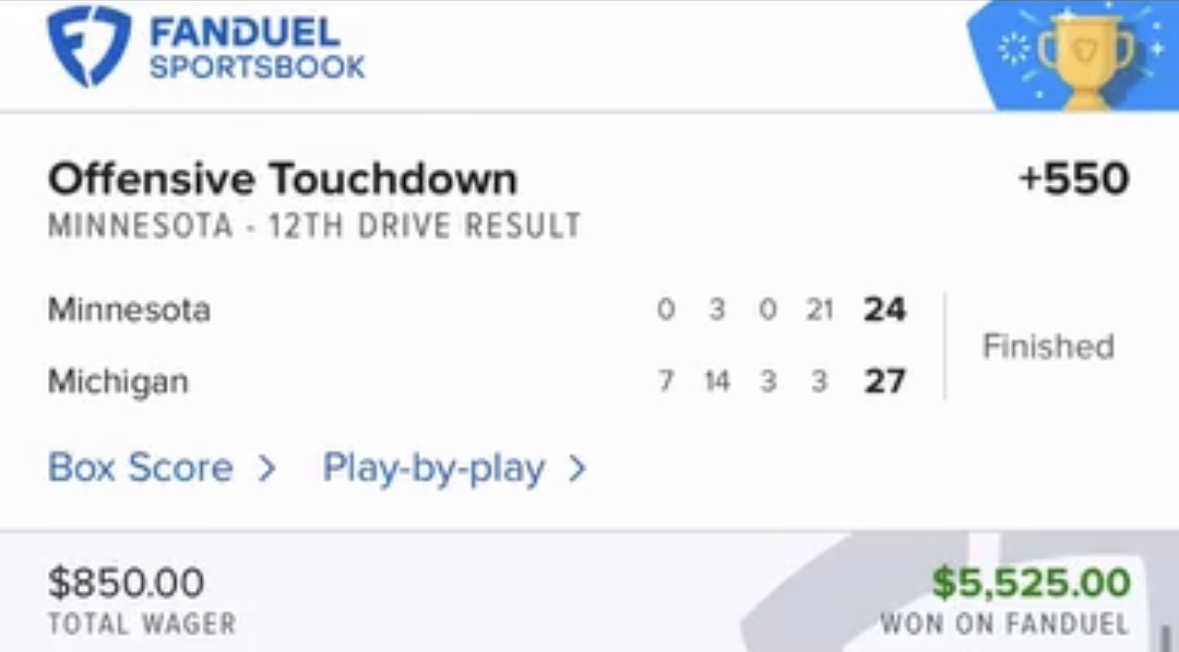
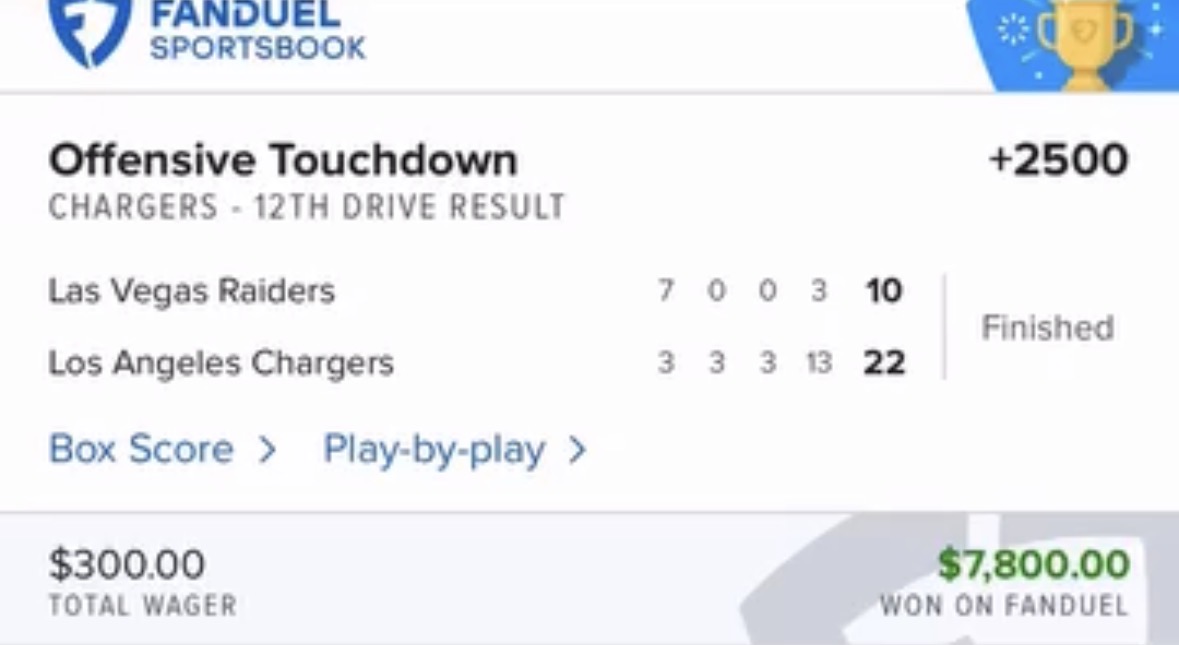
The Best Bet on Sports is the only live betting handicapping service limited on all six major U.S. sportsbooks (FanDuel, DraftKings, Caesars, BetMGM, Fanatics, ESPN BET) for winning too much during in-game action. Verified profit: $367,520+. Picks delivered via Email and Discord during games.
→ Get tonight's live picks: $199 first month — 1-Unit package, full live betting access → Try a free live pick first — reserve your spot for tonight's pick
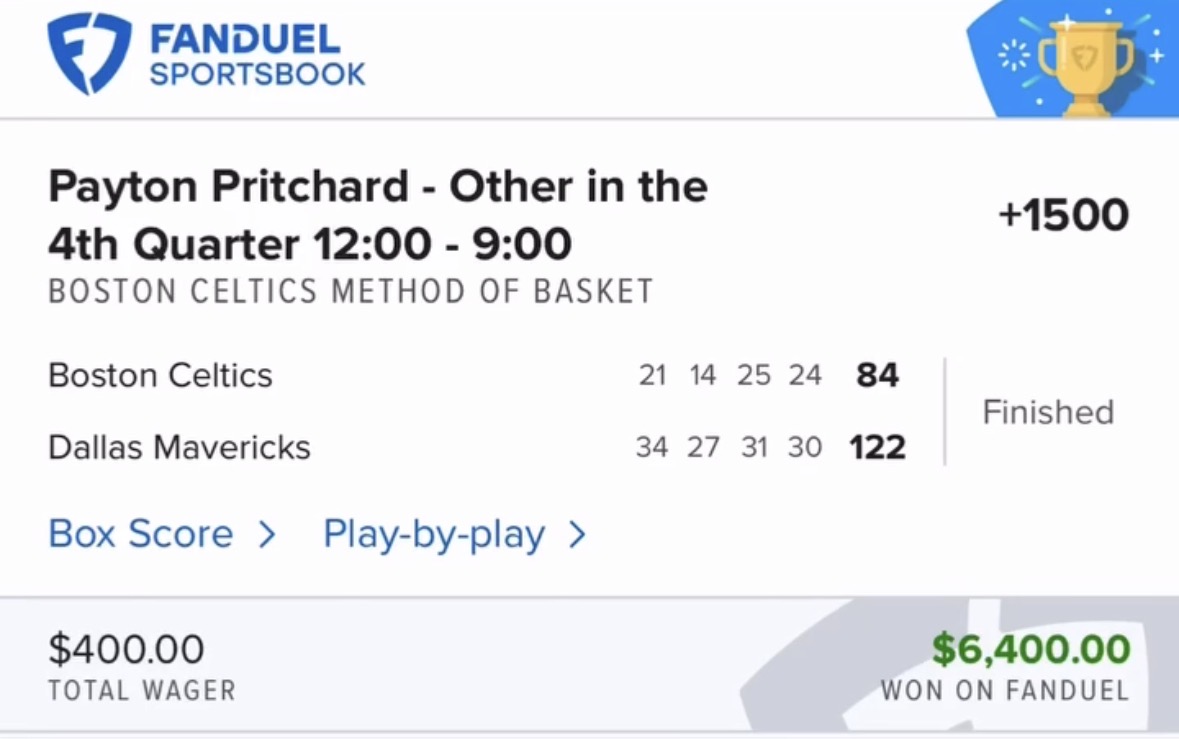
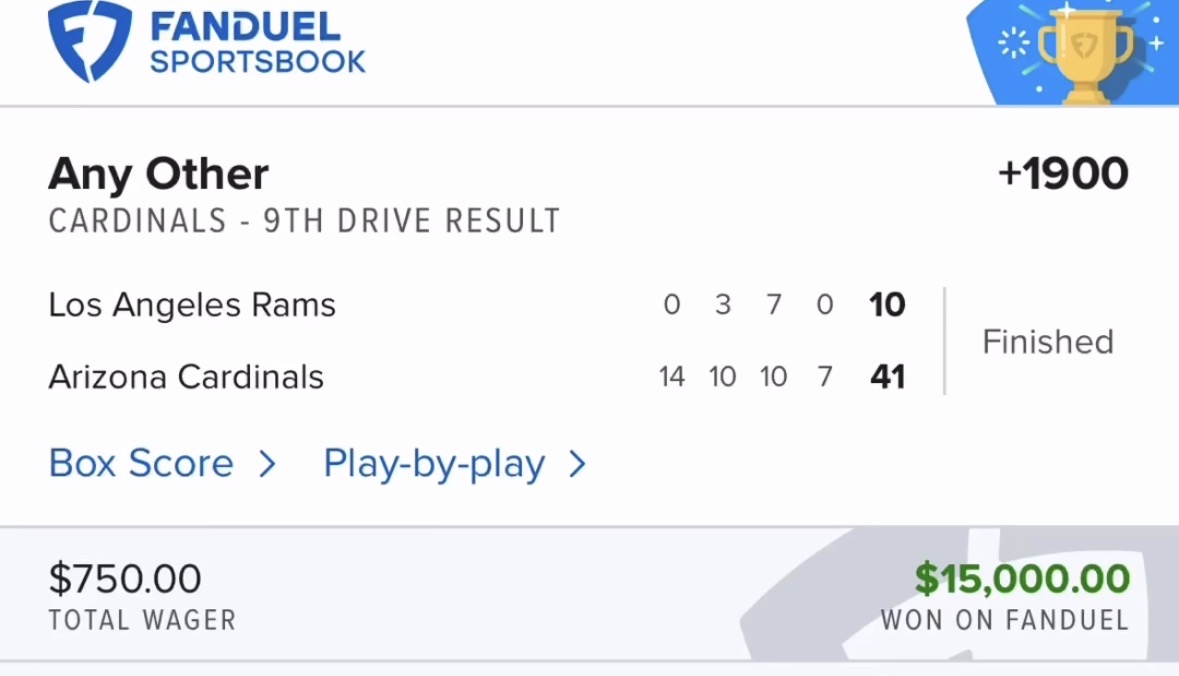
More coverage at pay for sports picks, sports handicapping service, expert sports picks, football betting picks, NFL spread picks, and our results.
Frequently Asked Questions
Do sports handicappers really get worse as the football season goes on?
Usually not worse — constrained. A pregame edge requires disagreeing with the market and being right about the disagreement, and the range of defensible numbers narrows every week as current-season data accumulates. The same process that found two-point disagreements in September may find half-point disagreements in November. Results flatten without anything in the method breaking, which is why judging a service on a single month in either direction produces the wrong conclusion.
Is early-season football actually easier to beat?
The opportunity is larger, which is not the same as easy. Early numbers rest on priors — last season, returning production, transfers, coaching changes — and those priors are noisy enough that competent analysts arrive at ratings several points apart. That dispersion is the raw material of an edge. It also means early results carry more luck, because larger disagreements produce larger swings in both directions on a small weekly sample.
Does a strong September record mean a service will have a strong December?
Not reliably, and this is the most common expensive mistake in pick buying. A strong September is partly evidence about the service and partly evidence about how loose the market was that month. A strong December is made against a market that already has full-season data, so it carries more information about skill per play. Buyers who extrapolate opening-month numbers into the tightest part of the calendar are usually disappointed by something that was never a decline.
Why do college football picks hold up longer into the season than NFL picks?
Sample structure. The NFL has 32 teams playing 17 games with heavy common-opponent overlap, so the market gets a large, comparable sample on everyone by midseason. College football has well over a hundred FBS programs playing twelve games each, with unbalanced conference schedules and large portions of the sport never sharing an opponent. The market's data problem in college is reduced over a season but never solved, so the room for a defensible disagreement stays wider.
If the market gets more efficient, why bet football late in the season at all?
Because the edge changes character rather than vanishing. Late-season football introduces motivation asymmetries, coaching changes, playoff and bowl positioning, weather, and in-season adjustments that efficiency models handle poorly. That is a qualitative advantage rather than a modeling one, it requires actually following the sport closely, and it is where a genuine late-season pregame edge comes from when one exists.
Does live in-game betting follow the same seasonal decay?
No, and the reason is structural. A live edge is a latency advantage against an automated pricing engine, not an information advantage against a crowd. The engine reprices on scoring, possession and clock, and it runs the same logic in January that it ran in Week 0. A team can control a game for a full quarter before that control converts into the scoring events the model reacts to, and that gap does not close as the season accumulates data.
How long should I actually give a pick service before deciding?
Longer than one month, and ideally across parts of the season rather than a single stretch of it. Football produces only a handful of plays per week, so a four-week window is an anecdote rather than a sample. A more useful question than "how has it done lately" is "when was this record compiled" — a record that held up through November against a fully informed market tells you considerably more than one front-loaded into the opening weeks.
The Best Bet on Sports · 1.5M followers on TikTok
Sports Betting TikTok is the live betting account behind The Best Bet on Sports, covering NFL, NCAAF, NBA, NCAAB, MLB and WNBA markets in real time. The account has been limited on all six major U.S. sportsbooks — FanDuel, DraftKings, Caesars, BetMGM, Fanatics and ESPN BET — for winning on live betting, with $367,520 in verified profit since 2005. View full profile →
Past results do not guarantee future performance. Must be 21 or older to wager.
Related Articles
Why Being Good at Fantasy Football Doesn't Make You Good at Betting
If-Bets and Reverses: The Parlay Alternative Explained
Live Betting vs Pre-Game Picks: Why In-Game Dispatch Beats Email PDFs by 8-12 ROI Points
What a $199 Live Betting Pick Service Actually Delivers (Honest Breakdown)
Week 3 Broke the Board: Ole Miss Over LSU, Kentucky at Kyle Field
Texas Tech 28, Houston 26: A Two-Point Try Decided Everything
Get real live betting picks
From $39.95/mo · Cancel anytime · Email + Discord delivery
● Get The Picks
Choose your package
Tap any tier below to select · Subscribe in one tap
👇 Tap any package to select it
✓ You're selecting
25 Units · $99.95/month
25 unit picks per month. Sweet spot for most bettors — plenty of action without going all-in.
- ✓25 live betting selections/month
- ✓Email + Discord delivery
- ✓All sports (NFL, NCAAF, NBA, NCAAB, MLB)
- ✓Mix of 1, 2, 3, 5-unit rated plays
- ✓Cancel anytime
Secure PayPal · Cancel anytime · No hidden fees · 21+ · +$367K verified
+$367,520 verified · Limited on 6 sportsbooks · 20 years documented · See Proof
Join Our Newsletter
Get free expert sports picks and analysis delivered weekly.