Anytime Touchdown Parlay Strategy: How to Build One That Wins

An anytime touchdown parlay stacks several 'player to score a TD' props onto one ticket. The winning approach favors high-volume goal-line backs and target-hog receivers on favored offenses, keeps the ticket to two or three legs, and avoids long-shot committee backs whose plus-money price is a trap, not a value.
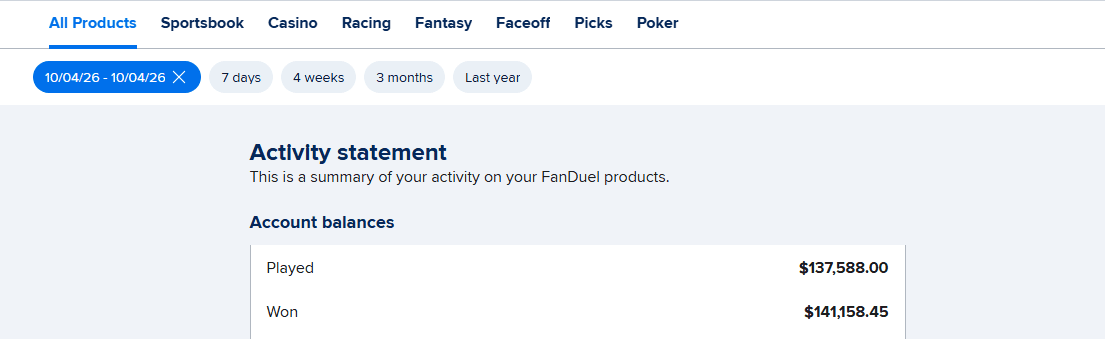
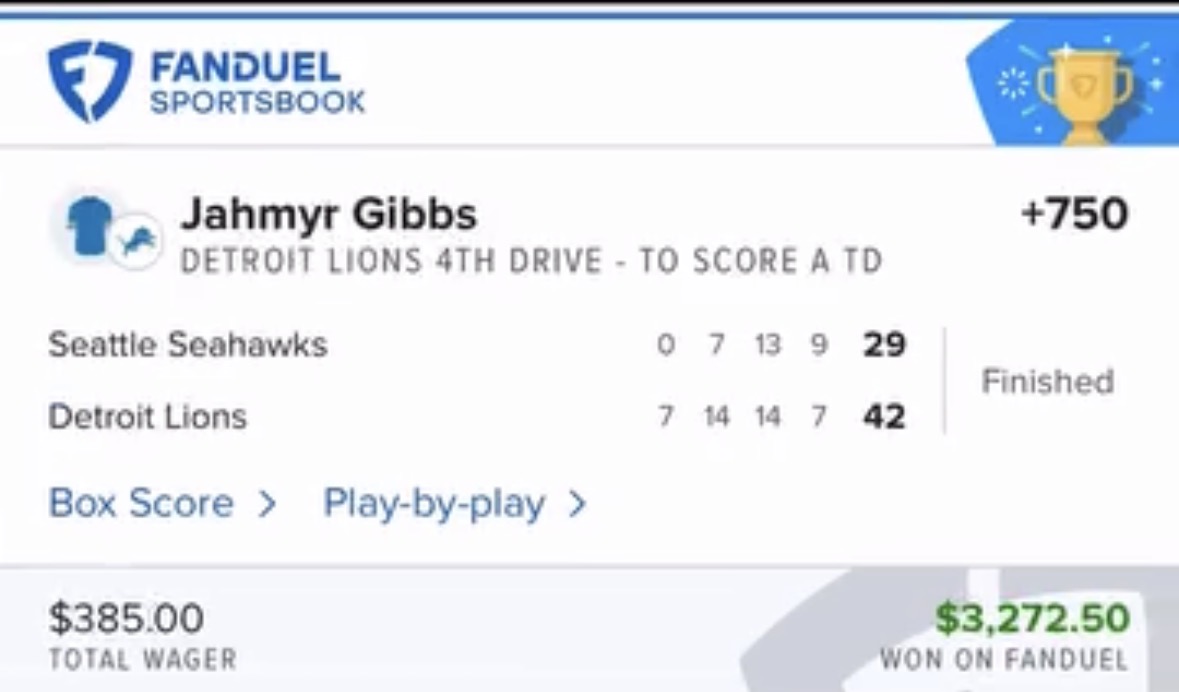
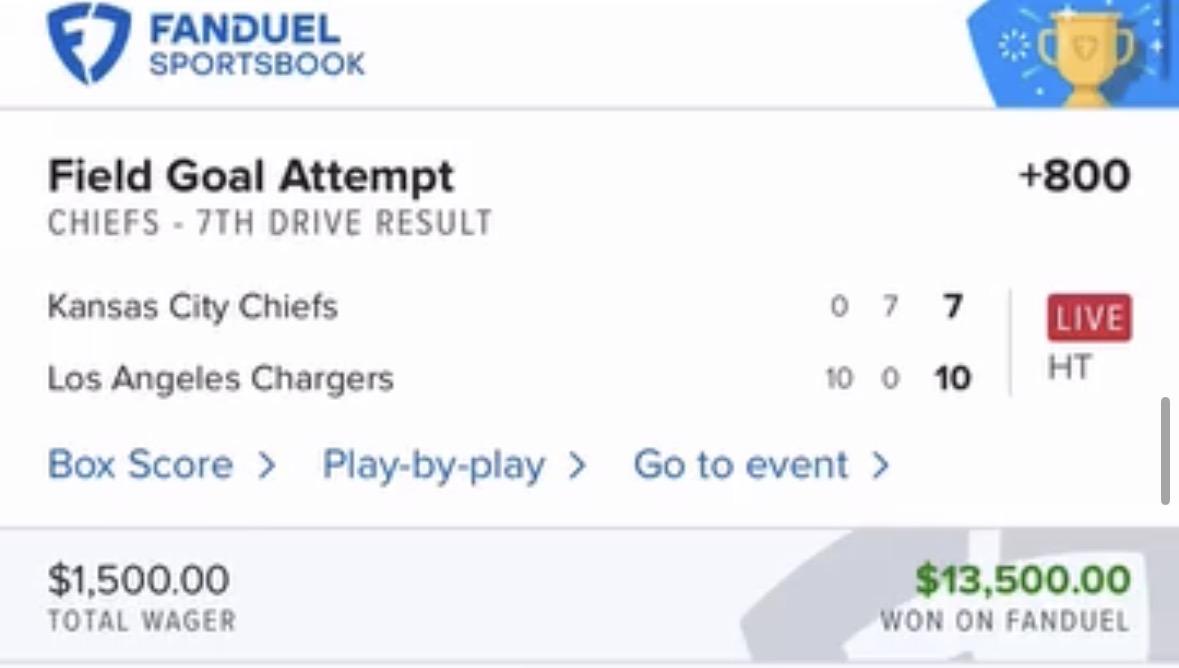
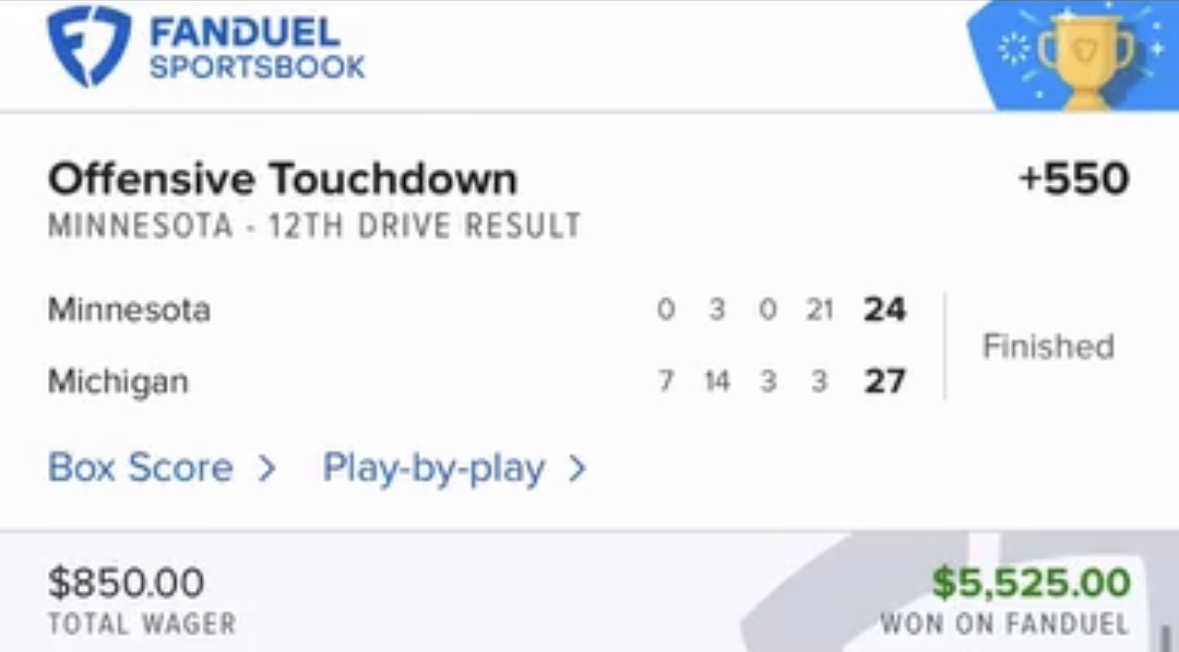
An anytime touchdown parlay combines multiple "player to score a touchdown" props into a single bet, and the version that actually wins is built on high-volume goal-line runners and target-hog receivers attached to favored offenses — kept to two or three legs, not five or six. The Best Bet on Sports has built a verified profit of $367,520+ across more than twenty years, enough that all six major U.S. sportsbooks have limited our accounts for winning too much during live in-game betting, and the single most common way we watch recreational bettors torch money in football season is the six-leg anytime-touchdown lottery ticket. It feels cheap. It pays huge. It almost never hits, and the math of why is not close.
This is the strategy piece for building an anytime-TD parlay that has a real chance instead of a hopeful one. It applies whether you are slipping a ticket for a Sunday slate in the fall or dabbling with preseason parlays in August.
What Is an Anytime Touchdown Parlay?
An anytime touchdown scorer prop pays if the named player scores a touchdown at any point in the game — rushing, receiving, or otherwise. It does not matter when, how many, or whether it is the first. One touchdown, anytime, and the leg cashes.
An anytime touchdown parlay stacks several of those props together. Every leg has to hit for the ticket to pay, and because each individual scorer is far from certain, the combined probability drops fast. That is the entire tension of the bet: the payout looks enormous precisely because the true odds of all those players finding the end zone in the same window are long.
There are two structurally different ways to build one, and confusing them is where most tickets go wrong:
- Cross-game anytime-TD parlay — one scorer from each of several different games. The legs are independent; one player's night has no effect on another's.
- Single-game anytime-TD stack — multiple scorers from the same game, which is really a same-game parlay and behaves very differently because the legs are correlated (more on that below).
Most people building "an anytime TD parlay" mean the cross-game version, so that is the primary focus here.
Why Most Anytime Touchdown Parlays Lose
Start with the base rate. A strong bet-on lead running back on a good offense might be priced around -160 to -200 to score anytime — an implied probability in the low 60s percent. A featured No. 1 receiver on a favored team might sit around -110 to +120, roughly 45–52%. Those are the good legs. The plus-money names bettors love to add — the change-of-pace back, the rookie, the third receiver — are frequently priced +250 or longer, meaning the book thinks they score less than 30% of the time.
Now multiply. Even a disciplined three-leg ticket built entirely from strong ~60% scorers pays for itself only when all three hit, and 0.60 × 0.60 × 0.60 is about 21.6%. Add a fourth strong leg and you are near 13%. Reach for a fifth leg with a +250 flyer and you have multiplied a 13% ticket by roughly 0.28 — down under 4%. The plus-money leg does not add payout at no cost. It quietly cuts your already-thin hit rate by more than half.
This is the same trap we cover in why most parlays lose: the marginal leg feels like upside because the number on the ticket gets bigger, but the probability collapses far faster than the payout grows. Anytime-TD props are an especially punishing place to make that mistake because touchdowns are low-frequency, high-variance events even for the players most likely to score.
How to Build a Winning Anytime Touchdown Parlay
The build rules that matter:
1. Anchor to goal-line role, not talent. The most reliable anytime-TD leg in football is the running back who gets the ball inside the five-yard line. Total yards and highlight ability are almost irrelevant to this specific prop — what matters is who the offense hands it to when they are about to score. A workmanlike back who owns the goal-line role on a good team is a better anytime-TD leg than a flashier back in a committee.
2. Favor favored offenses. Teams favored by a touchdown or more are, by definition, expected to score more and reach the red zone more often. Every scorer on that side gets more scoring chances. Building anytime-TD legs off implied team totals — the number of points the market expects a team to score — is far more predictive than picking players off name recognition.
3. Target volume at receiver. For pass-catchers, the anytime-TD leg you want is the target hog — the receiver or tight end who commands red-zone looks, not the deep threat who needs a 50-yard bomb to score. Red-zone target share is the receiving equivalent of the goal-line carry.
4. Cap it at two or three legs. This is the rule bettors resist most and the one that matters most. A two- or three-leg ticket of strong scorers keeps your hit rate in a range where a normal run of tickets can actually turn a profit. Six legs is entertainment, not strategy. If you want the big number, understand you are buying a lottery ticket and stake it like one — pennies, not units. Our full framing on this lives in how many legs a parlay should have.
5. Avoid the plus-money committee trap. The +250 and +300 names are priced that way because the book has real information: shared backfields, unclear roles, matchup problems. Occasionally one is genuinely mispriced. Usually the price is the truth.
Here is how the leg types stack up as anytime-TD building blocks:
| Player Type | Typical Anytime-TD Price | Reliability as a Leg |
|---|---|---|
| Goal-line RB, favored offense | -160 to -220 | Strongest — role-driven |
| No. 1 WR/TE, red-zone target share | -110 to +130 | Strong — volume-driven |
| Dual-threat QB (rushing TDs) | +140 to +200 | Situational — depends on scheme |
| Committee RB, no clear goal-line role | +180 to +280 | Weak — split touches |
| Deep-threat WR, low target share | +250 to +450 | Trap — needs a long score |
| Rookie / third-string flyer | +300+ | Lottery ticket only |
Single-Game Stacks: A Different Animal
When you put multiple anytime-TD scorers from the same game on one ticket, the legs stop being independent. If you stack a favored team's goal-line back and its No. 1 receiver, both legs benefit from the same thing — that offense having a big scoring day. That positive correlation is why sportsbooks price same-game touchdown parlays with a built-in adjustment, and it is why the payout on a correlated SGP is lower than multiplying the individual prices would suggest.
Correlation cuts both ways and is worth understanding fully before you build these — we break the mechanics down in correlated parlays explained. The short version: a same-game anytime-TD stack is a legitimate play when you have a strong read on a specific offense having a blowout scoring day, but it is not the same bet as a cross-game parlay and should not be sized the same way.
Where the Real Edge Is: In-Game, Not Pre-Game
Here is the part the pre-game ticket-slippers miss. The best time to bet a player to score is often after kickoff, not before it. A back who just ripped off a 40-yard run to the opponent's three-yard line has a dramatically higher chance of scoring on the next snap than his pre-game number implied — and for a few seconds, the live anytime-TD or next-score market may not have fully caught up. That gap between what just happened on the field and what the board currently shows is the entire premise of live betting versus pre-game picks.
This is exactly the kind of window that got our accounts limited on all six major books. When you are consistently on the right side of a number that is about to move, sportsbooks notice, and they cut you off. That is not a bug in our approach — it is the proof it works.
Whatever you build, stake it inside a plan. Anytime-TD parlays are high-variance by nature, and treating them as a small, defined slice of a bankroll rather than a swing-for-the-fences habit is what separates bettors who are still betting in December from the ones who busted in October. Our bankroll framework for $100 to $500 bettors covers exactly how to size volatile tickets like these.
Get Tonight's Live Picks
Want tonight's live in-game parlay picks delivered to your phone via Email and Discord during the game?
The Best Bet on Sports is the only live betting handicapping service limited on all six major U.S. sportsbooks (FanDuel, DraftKings, Caesars, BetMGM, Fanatics, ESPN BET) for winning too much during in-game action. Verified profit: $367,520+. Picks delivered via Email and Discord during games.
→ Get tonight's live picks: $199 first month — 1-Unit package, full live betting access → Try a free live pick first — reserve your spot for tonight's pick
Frequently Asked Questions
What is an anytime touchdown parlay?
An anytime touchdown parlay is a single bet that combines two or more "player to score a touchdown at any time" props. Every player on the ticket must score at least once for the parlay to pay. Because each scorer is individually uncertain, the combined odds are long and the payouts look large — which is exactly why the number of legs, and the quality of each one, matters so much.
How many legs should an anytime touchdown parlay have?
Two or three legs is the disciplined range. A ticket of two or three strong, role-based scorers keeps your hit rate high enough that a normal run of bets can profit. Beyond three legs, the probability of all players scoring in the same window collapses quickly, and each additional plus-money name cuts the ticket's chances more than it grows the payout. Treat anything five legs or longer as a lottery ticket and stake it accordingly.
Which players make the best anytime touchdown legs?
The most reliable legs are running backs who own their team's goal-line carries on a favored offense, and receivers or tight ends with a high red-zone target share. Both are role-driven rather than talent-driven — what matters is who gets the ball when the team is about to score, not who is the most talented player overall. Dual-threat quarterbacks who run near the goal line can also be strong situational legs.
Are plus-money touchdown scorers worth adding?
Usually not. A +250 or +300 anytime-TD price means the sportsbook believes that player scores less than about 30% of the time, often because he shares a backfield or lacks a defined red-zone role. Occasionally one is genuinely mispriced, but as a rule the long price reflects real uncertainty. Adding these legs to chase a bigger payout typically cuts the whole ticket's win probability by more than half.
What is the difference between a cross-game and single-game touchdown parlay?
A cross-game anytime-TD parlay takes one scorer from several different games, so the legs are independent — one player's result has no effect on another's. A single-game stack takes multiple scorers from the same game, which makes the legs correlated because they all benefit from the same offense having a big scoring day. Sportsbooks price the single-game version with an adjustment, so the two should not be built or sized the same way.
Is it better to bet touchdown scorers before or during the game?
Often during. A player's pre-game anytime-TD price is set on expected scoring chances, but game situations change fast — a runner who just reached the opponent's three-yard line is far likelier to score on the next play than his pre-game number implied. Live markets sometimes lag those situations for a few seconds, and betting into that gap is where consistent value lives. It is the same lag our in-game football picks are built to attack, and the reason our NFL picks lean live rather than pre-game. It is also why sportsbooks limit bettors who do it well.
How much should I stake on an anytime touchdown parlay?
Small and defined. Because touchdowns are low-frequency, high-variance events, even well-built anytime-TD parlays swing hard. Size them as a modest, planned slice of your bankroll rather than a core position, and never chase a losing streak by adding legs or raising stakes. A disciplined unit plan — the kind we outline for $100 to $500 bettors — is what keeps variance-heavy tickets from draining an account.
The Best Bet on Sports · 1.5M followers on TikTok
Sports Betting TikTok is the live betting account behind The Best Bet on Sports, covering NFL, NCAAF, NBA, NCAAB, MLB and WNBA markets in real time. The account has been limited on all six major U.S. sportsbooks — FanDuel, DraftKings, Caesars, BetMGM, Fanatics and ESPN BET — for winning on live betting, with $367,520 in verified profit since 2005. View full profile →
Past results do not guarantee future performance. Must be 21 or older to wager.
Related Articles
Two ACLs, One Tuesday, and No Game Was Played
Malik Nabers Took Seven Reps. The Market Prices Zero or All.
Pending NFL Discipline Is a Bet on a Calendar Nobody Publishes
Denzel Ward's Record Extension: The Real Betting Impact
How to Build a Winning NFL Parlay: A Strategy Guide
NFL's 4-0 Teams: Why Odds Still Favor the 2-2 Rams
Get real live betting picks
From $39.95/mo · Cancel anytime · Email + Discord delivery
● Get The Picks
Choose your package
Tap any tier below to select · Subscribe in one tap
👇 Tap any package to select it
✓ You're selecting
25 Units · $99.95/month
25 unit picks per month. Sweet spot for most bettors — plenty of action without going all-in.
- ✓25 live betting selections/month
- ✓Email + Discord delivery
- ✓All sports (NFL, NCAAF, NBA, NCAAB, MLB)
- ✓Mix of 1, 2, 3, 5-unit rated plays
- ✓Cancel anytime
Secure PayPal · Cancel anytime · No hidden fees · 21+ · +$367K verified
+$367,520 verified · Limited on 6 sportsbooks · 20 years documented · See Proof
Join Our Newsletter
Get free expert sports picks and analysis delivered weekly.